AI Dungeon Keeper Game: Solo RPG Campaigns With Persistent Memory
2026-10-17
Most AI dungeon keeper games tell a good story for an hour, then lose track of it. The villain forgets your name, the key you found disappears, and the campaign falls apart by session three. Jenova addresses this with AI game masters that narrate, run the world's characters, and keep a persistent record of your choices across sessions. As of October 2026, you can start a solo campaign on web, iOS, or Android at any hour without waiting for a group.
- ✅ Persistent cross-session memory. Your inventory, allies, and past decisions carry forward.
- ✅ Purpose-built game worlds. Horror, mystery, and gothic campaigns are designed for exploration and consequence.
- ✅ Multi-model access. Runs on current models from OpenAI, Anthropic, Google, DeepSeek, xAI, and more.
- ✅ Creator agents for homebrew. Design your own dungeons, lore, loot cards, and session recaps.
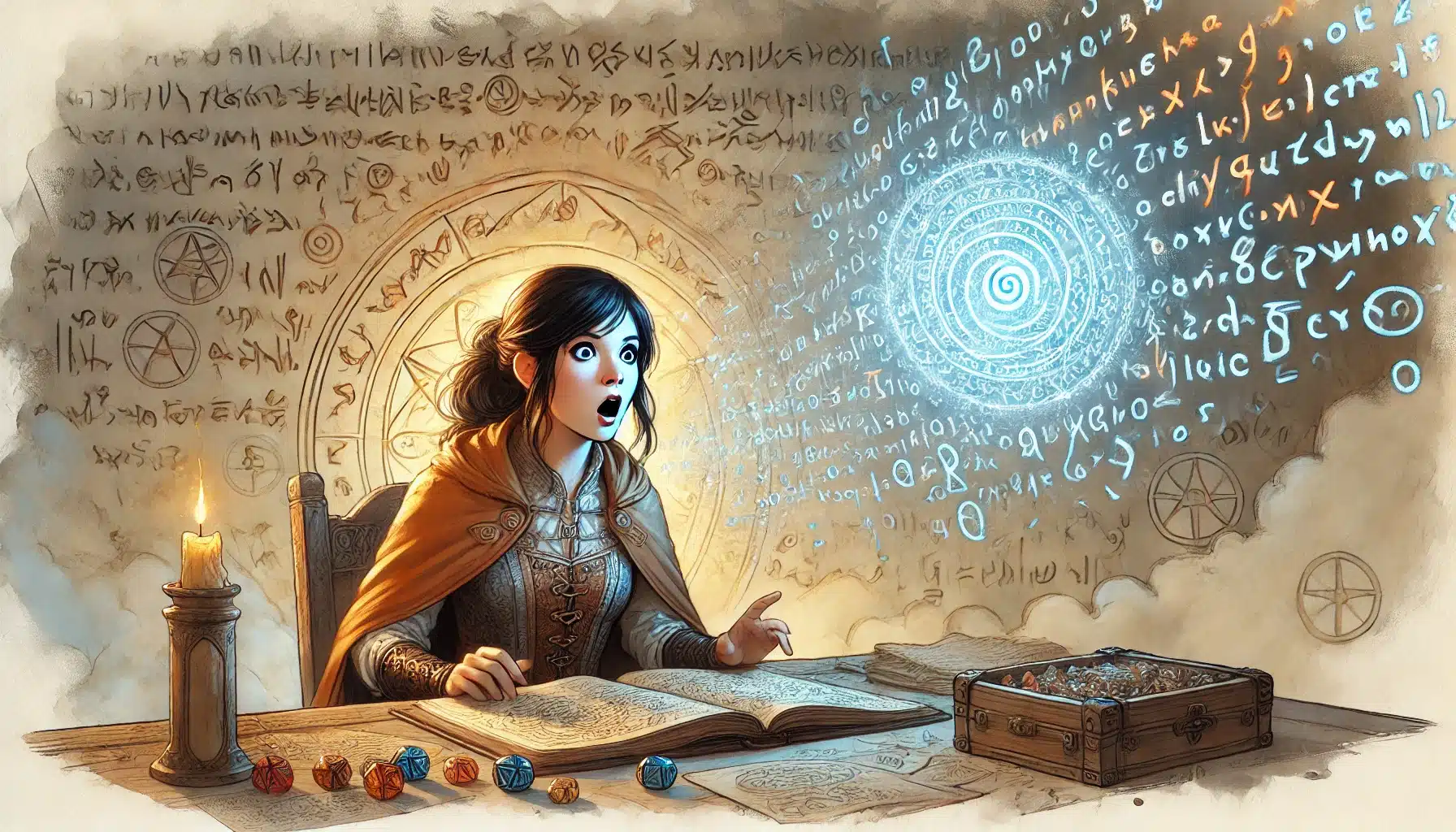
The appeal is easy to see: an AI keeper that's always available, never cancels, and can take your story anywhere. Delivering that over a full campaign is much harder than delivering it in a single evening. To see why, it helps to look at how dungeon-style play works today and where both human and AI game masters struggle.
Quick Answer: What Is an AI Dungeon Keeper Game?
An AI dungeon keeper game is an interactive role-playing experience where an AI acts as the game master — narrating the world, voicing characters, enforcing consequences, and remembering your choices — so you can play a full campaign solo, any time. The best versions combine strong storytelling with reliable long-term memory.
Key capabilities:
- Narration and world simulation. Rooms, wards, and corridors respond to what you do.
- Character voicing. Suspects, allies, and antagonists stay consistent from scene to scene.
- Continuity tracking. Items, clues, and relationships persist between sessions.
- Consequence enforcement. Bad decisions have costs, so tension is earned.
The Problem: Dungeon-Style Play Is Booming, but Hard to Sustain
Tabletop role-playing has grown well beyond a niche hobby, and AI is spreading through gaming at the same time:
**$2.41 billion** — [Estimated global TTRPG market value in 2026, projected to reach $6.59 billion by 2035](https://www.businessresearchinsights.com/market-reports/tabletop-role-playing-game-ttrpg-market-110856)
~13% — Share of US respondents who say they collect and play tabletop RPGs or wargames
**$3.4 billion** — [AI in games market in 2026, up from $2.87 billion in 2025](https://www.researchandmarkets.com/reports/6226222/ai-in-games-market-report)
22% — Share of all games released on Steam in 2025 that disclosed AI content (4,311 titles)
Dungeons & Dragons alone cleared an estimated $460 million in revenue in 2025. Even so, actually getting a campaign to the table remains frustratingly difficult:
- Groups are hard to assemble. Schedules rarely line up for four players plus a game master.
- Prep consumes the week. Running a campaign means hours of admin before anyone rolls a die.
- Generic AI forgets the story. Long campaigns exceed what a chatbot can reliably remember.
- Unbounded AI removes the stakes. If the AI never says no, nothing feels dangerous.
- AI quality is uneven. A flood of low-effort AI games makes good experiences harder to find.
Scheduling Kills More Campaigns Than Dragons Do
Most lapsed campaigns didn't end because of a bad plot. They ended because the table stopped meeting. One DM on Reddit described a
and asked which AI could help without replacing their creativity. When a single person's calendar changes, the whole group stalls.Prep Is the Hidden Tax on Every Session
Experienced game masters describe the routine plainly. One 2026 tool roundup calls it "the four hours of admin on the Tuesday before", and warns that the wrong tools scatter a campaign "across six tabs." Whole product categories have grown up around this burden, from AI tools that turn audio recordings into session summaries to campaign memory systems built to keep the DM human.
Continuity Is the Real Failure Point
The hardest technical problem for an AI keeper is remembering, not writing. According to the same 2026 analysis, the recurring failure mode in solo-play AI is continuity rather than prose. Over a long campaign, the model "forgets who holds the amulet, contradicts an earlier ruling, or invents a faction that never existed."
Solo engines such as AI Dungeon and Friends and Fables advertise persistent memory as a core feature for exactly this reason. Official platforms have noticed as well: D&D Beyond pitched its new Journals feature with the line "Never Lose the Story Again."
An AI That Never Says No Isn't a Keeper
A good dungeon keeper is partly an adversary. That same analysis observes that AI game masters often "never say no, which quietly removes the stakes." Without risk, a dungeon is just a guided tour.
Low-Effort AI Has Made Players Skeptical
Industry analyst Tommy Thompson notes that AI shovelware is flooding storefronts from Steam to the Nintendo eShop. He predicts growing player backlash against generative AI. Players have good reason to be wary of anything labeled "AI game," and a keeper has to earn their trust through design quality.
The AI game masters below were built to close these gaps.
The Jenova Solution: AI Game Masters That Remember
The platform approaches dungeon-style play with purpose-built game worlds rather than a blank chatbot prompt. Each world has its own premise, tone, and secrets, and runs on infrastructure with unlimited chat history and persistent memory. You decide what to do, and the keeper decides what it costs you.
| Traditional Approach | Jenova |
|---|---|
| Wait for four players and a DM to align schedules | Start a solo session at any hour, on any device |
| Hours of weekly prep before each session | Game worlds arrive fully built; creator agents draft the rest |
| Generic chatbots lose track of clues in long sessions | Unlimited chat history and persistent cross-session memory |
| Locked into one AI model's storytelling style | Choose models from OpenAI, Anthropic, Google, DeepSeek, xAI, and more |
| Separate apps for notes, art, and music | Specialized agents for design, fiction, cards, music, and comics in one place |
Horror and Survival Dungeons
The Mansion is a classic dungeon crawl in a haunted house. You wake inside with no memory of how you arrived. Every room hides secrets, every shadow could be your last, and escape requires uncovering the truth.
The Asylum casts you as an investigator sent to a shuttered psychiatric institution where something has gone wrong. Each ward is its own chamber of clues and threats, suited to players who like slow-burn investigation more than combat.
Mystery and Gothic Intrigue
One Among Us is a closed-circle murder mystery. You're a detective summoned to what seems like an ordinary gathering until a death occurs and you realize the killer is among the guests. It rewards careful questioning and memory, because the suspects remember what they told you.
Vesper Court moves the dungeon into a hidden vampire court. Dark romance, blood intrigue, and shifting allegiances mean every night changes the board.
Designing Your Own Dungeon
If you'd rather be the keeper than the adventurer, Game Designer Assistant handles brainstorming, systems analysis, documentation, and concept art for your own game. You can also create a custom agent in minutes. Give it your own instructions, preferred model, private knowledge base (such as your campaign bible), and tool configuration, and it becomes a personal keeper for your homebrew world.
Platform Capabilities That Keep a Campaign Coherent
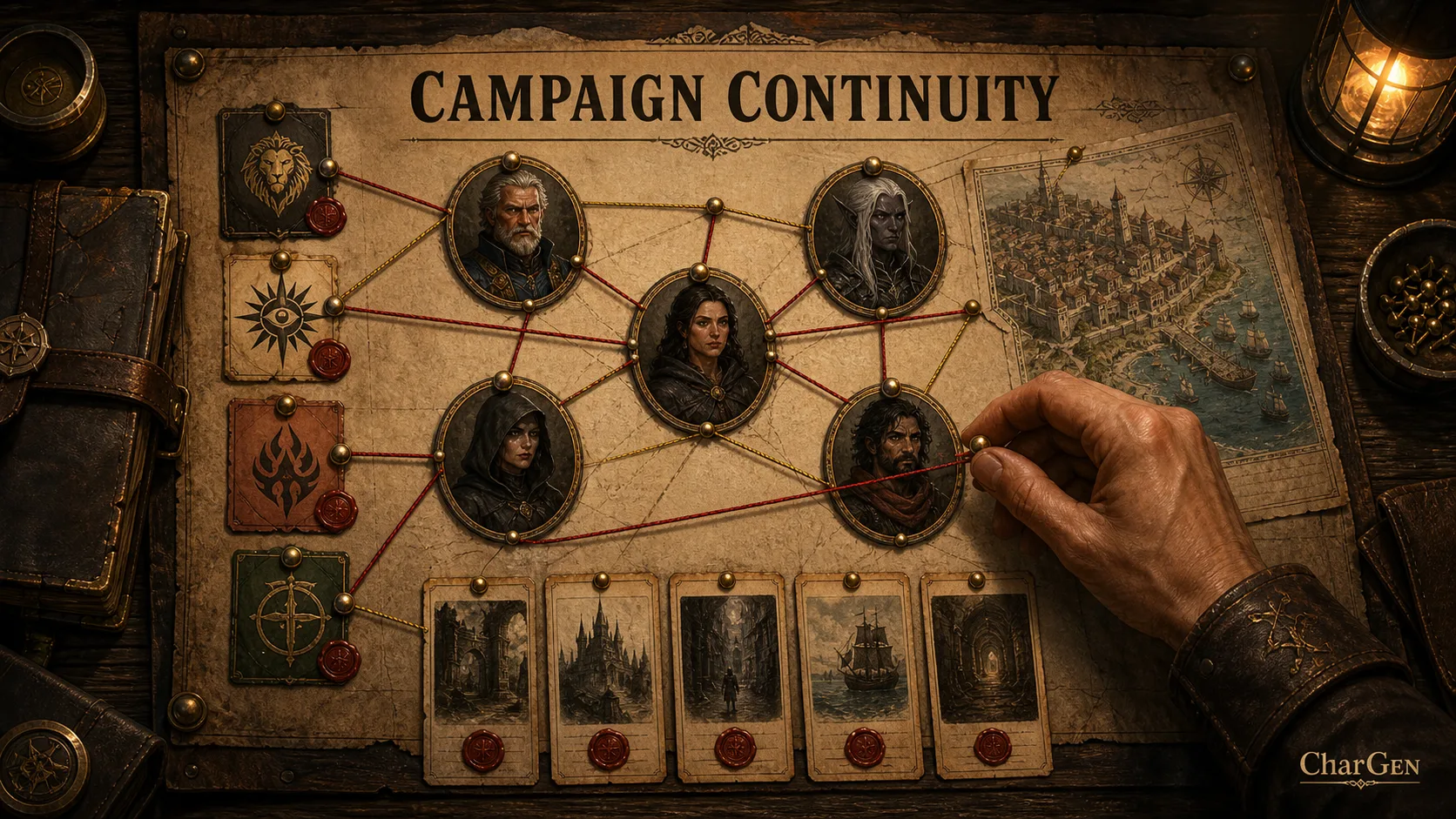
- Persistent memory. Agents remember preferences, past work, and long-running projects across sessions. This is the continuity layer that solo AI games usually lack.
- Multi-model access. Switch between providers freely when you want a different narrative voice, with no vendor lock-in.
- Attachable knowledge. Upload documents so a custom keeper stays grounded in your lore rather than inventing contradictions.
- MCP tool integration. Built on Model Context Protocol, so agents can use tools like Google Search when a campaign needs real-world research.
Specialized AI Agents for Building Your Own Dungeon
These agents cover the creator side of dungeon play, from first concept to post-campaign keepsakes. They're listed in the order of a typical workflow.
Design: Game Designer Assistant
Start here when you're building a dungeon, ruleset, or full campaign arc. Game Designer Assistant can stress-test your encounter math, document your systems, and produce concept art for key locations.
- Brainstorms dungeon themes, factions, and progression loops
- Analyzes systems for balance and pacing problems
- Generates concept art and design documentation
Narrative: Creative Fiction Writer
Once the skeleton exists, Creative Fiction Writer helps write the flesh: villain monologues, read-aloud room descriptions, and in-world documents players can find. It researches deeply to make settings feel authentic.
- Drafts original prose in any genre, from gothic horror to high fantasy
- Researches to ground fictional worlds in authentic detail
- Provides editorial feedback on your own campaign writing
Artifacts: Trading Card Game Creator
Physical props make a dungeon memorable. Trading Card Game Creator works as a full card design studio, which suits homebrew loot decks, spell cards, or monster cards for your table.
- Designs card mechanics and keeps sets balanced
- Writes lore text tied to your world
- Produces card art from concept through playable sets
Atmosphere: Music Composition Assistant
A recurring theme tells players something important is about to happen. Music Composition Assistant writes melody, harmony, and arrangements in text-based notation systems that you can play or import into music software.
- Composes leitmotifs for villains, factions, or locations
- Arranges themes across instruments and moods
- Explains the theory behind each choice so you can adapt it
Recaps: Comic Creator
When a campaign ends, or a session goes legendary, Comic Creator turns the story into sequential art. It's a memorable way to recap a session for players who missed it.
- Lays out dynamic multi-panel pages
- Maintains bold, consistent visual styles across issues
- Scales from a single recap page to graphic-novel arcs
All of these agents are free to try, with no credit card required.
How to Play an AI Dungeon Keeper Game
Step 1: Choose Your Dungeon Pick a world that matches your mood: haunted-house survival, asylum investigation, or a murder mystery. For a first run, The Mansion is a good introduction to exploration-driven play.
"I wake up. What do I see, and what's within reach?"
Step 2: Set the Terms of Play Tell the keeper how you like to play before diving in, including pacing, how punishing you want danger to be, and how much description you want. A keeper calibrated to your preferences feels far more personal.
"Keep descriptions tight, make danger real, and don't warn me before a bad decision."
Step 3: Explore, Investigate, and Commit Act the way you would at a real table: search rooms, question characters, and take risks. Specific actions get specific consequences, so "I check the fireplace for loose bricks" plays better than "I look around."
"I pocket the brass key, blow out the candle, and listen at the north door before opening it."
Step 4: Return Days Later and Pick Up the Thread Close the app and come back whenever you like. Persistent memory means the keeper knows what you carry, who you've angered, and which doors are still locked.
"Remind me what I've learned about the groundskeeper and what I still haven't explored."
Step 5: Build Your Own Keeper When you're ready to run your own world, use the creator agents above to design it. Then create a custom agent with your instructions and a knowledge base containing your maps, NPCs, and lore.
"You are the keeper of a flooded dwarven vault. Use my attached campaign bible and never reveal the traitor's identity unless the player finds the ledger."
Results & Use Cases
📱 A 25-Minute Mystery on the Commute
Scenario: A player wants something richer than a mobile puzzle game during a daily train ride.
Traditional Approach: Tabletop campaigns need scheduled multi-hour sessions, and most mobile games offer little narrative depth.
One Among Us: The player interrogates one suspect per commute, using speech-to-text on iOS or Android, and the case picks up exactly where it left off each morning.
- Full feature parity across web, iOS, and Android
- Voice input for hands-light play
- Suspects stay consistent across many short sessions
🕯️ A Multi-Week Solo Horror Campaign
Scenario: A player whose group disbanded wants a long-form horror investigation with real tension.
Traditional Approach: Finding a new group can take weeks, and generic chatbots tend to contradict earlier clues once a story runs long.
The Asylum: The investigation stretches across weeks of evening sessions. Ward by ward, the clues accumulate without the keeper losing the thread.
- Persistent memory preserves evidence and character states
- A purpose-built premise keeps the tone consistent
- Consequences carry over between sessions
🎲 A DM Stress-Tests a Homebrew Dungeon
Scenario: A game master wants to playtest a new five-room dungeon before running it for friends on Saturday.
Traditional Approach: Hours of solo prep, with balance problems only surfacing mid-session in front of players.
Game Designer Assistant: The DM walks through each room with the agent, which flags pacing dead zones and an over-tuned trap, and produces concept art for the boss chamber.
- Balance problems are caught before the table sees them
- Documentation is ready for the session
- Prep time shifts from admin to creative decisions
🛠️ A Personal Keeper for a Long-Running Homebrew World
Scenario: A worldbuilder has years of setting notes and wants to adventure inside their own world between group sessions.
Traditional Approach: Pasting lore into a generic chatbot at the start of every session, then correcting its mistakes.
A custom agent: The worldbuilder uploads their campaign bible as a private knowledge base, writes keeper instructions, and picks a preferred model. The result is an AI game master grounded in their own canon.
- Responses stay grounded in the creator's documented lore
- The model can be swapped at any time without rebuilding the agent
- Memory carries across every session
Frequently Asked Questions
Is there a free AI dungeon keeper game?
Yes. Jenova offers a free tier that includes all core features, including its game worlds, with limited usage. Players who want longer or more frequent campaigns can upgrade to Plus at $20/month for 30× the free usage and custom model selection. Higher tiers scale further. Usage resets monthly on your billing date, with no daily caps.
Does an AI dungeon master remember my campaign between sessions?
It depends on the tool. Many AI games rely on a limited context window, so older events fade as a campaign grows. Jenova provides unlimited chat history and persistent cross-session memory, so agents retain past choices, preferences, and long-running storylines. You can also attach documents to ground a custom keeper in your own lore.
Can an AI dungeon keeper replace a human game master?
For solo play, an AI keeper offers something a human can't: availability at any hour, with no scheduling. For long group campaigns, a 2026 review of AI DM tools still recommends a human in the chair, citing continuity and stakes as the persistent weaknesses of AI. Many players use both: AI for solo sessions and prep, humans for the table.
Are there AI dungeon games beyond fantasy dungeons?
Yes. The dungeon structure of exploring confined spaces, uncovering secrets, and surviving consequences works across genres. Horror and murder-mystery campaigns use the same format, and Vesper Court turns a hidden vampire court into a dungeon of political intrigue and dark romance, where every night shifts alliances.
Can I play an AI dungeon game on mobile?
Yes. Jenova offers full feature parity across web, iOS, and Android, and settings sync across devices. You can start a campaign on your laptop and continue it on your phone. Built-in speech-to-text lets you speak your actions instead of typing, which helps during short sessions on the go.
Can I build my own AI dungeon keeper?
Yes. You can create a custom agent in minutes by writing your own keeper instructions, choosing a preferred model, attaching a private knowledge base such as maps, NPC lists, and lore documents, and configuring tools. The platform handles memory and orchestration, so your keeper stays consistent with the world you've built.
Conclusion: A Keeper That Remembers the Story
Dungeon-style role-playing has never been more popular, yet schedules, prep, and unreliable AI memory still end campaigns early. A strong AI dungeon keeper game needs both storytelling and continuity: a world with real stakes and a game master that remembers what you did there.
Start with the haunted halls of The Mansion, the abandoned wards of The Asylum, or the murder mystery in One Among Us. When you're ready to run your own world, the creator agents and custom agent builder give you the tools to build your own AI game master. Explore the full agent library at Jenova.
For Developers: Every agent in this article is available programmatically via the Jenova API, so you can build AI game masters and interactive story features into your application with a single integration. Full documentation →