Dorian Gray AI Roleplay: Converse & Reshape Oscar Wilde's Canon
2026-11-11
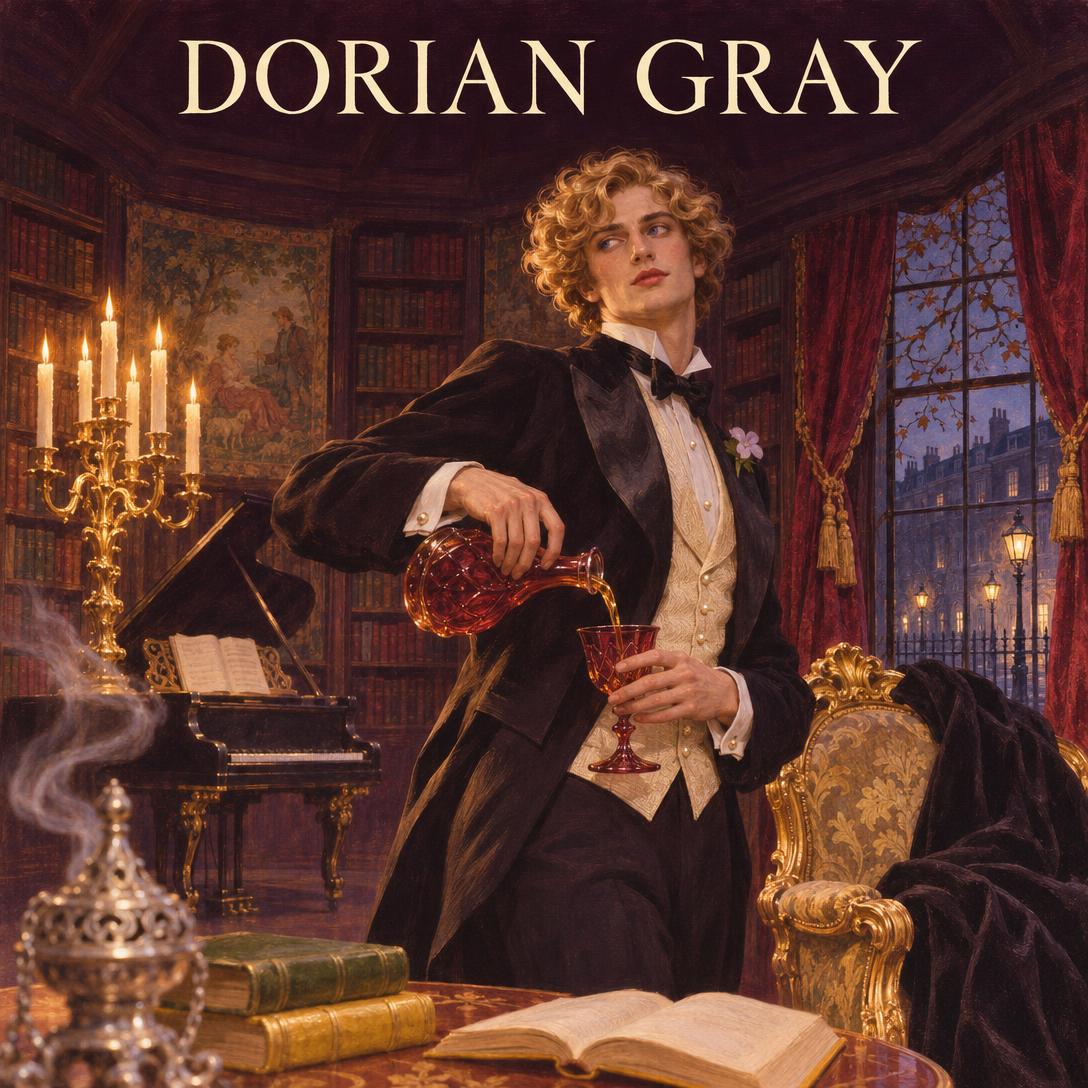
Roleplaying with Dorian Gray on Jenova lets you step into a living-world AI character simulation across his iconic canonical eras in fin-de-siècle Victorian London. Unlike static character chatbots that sit inside an empty digital room, blend conflicting plotlines, or bend instantly to every user command, this Dorian Gray AI roleplay experience connects you to an autonomous aristocrat whose social calendar, inner circle, and hidden portrait evolve in real time.
- ✅ Four era-locked canonical starting points spanning twenty-year-old innocence in Basil Hallward's studio to hunted winter twilight at Selby Royal, plus custom Victorian scenarios
- ✅ Lore-native cross-world connection where your words murmur beside Dorian's ear unseen—or custom face-to-face encounters inside gaslit London
- ✅ Independent aristocratic agency where trust, nocturnal confidences, and moral turning points must be genuinely earned through wit and candor
- ✅ Unlimited conversation memory and live world-state tracking that preserve every promise, secret, and timeline divergence without context loss
Whether you want to debate Aestheticism over midnight wine in Grosvenor Square, intervene before tragedy strikes at the Holborn theatre, or branch alternate "what-if" destinies at key Gothic crossroads, every session treats Oscar Wilde's world as an active, consequential reality rather than a scripted summary.
Quick Answer: What Is the Dorian Gray AI Roleplay Experience?
Dorian Gray on Jenova is an interactive AI character roleplay simulation that connects you to Oscar Wilde's ageless Victorian aristocrat inside an evolving, canon-faithful London across four distinct eras, letting your dialogue and choices reshape his fate in real time. Built with strict timeline boundaries and autonomous NPC dynamics, the simulation preserves literary authenticity while opening the story to completely new outcomes.
Key capabilities:
- Step into four canonical life phases or launch a custom face-to-face Victorian encounter anywhere in late-nineteenth-century England
- Converse while Lord Henry Wotton, Basil Hallward, Gladys (Duchess of Monmouth), and household servants move and speak naturally in Dorian's orbit
- Request first-person visual glimpses of Mayfair salons and rare collections, or receive in-character letters inscribed on cream-laid paper
- Branch any pivotal conversation using Conversation Forking to test alternate moral choices without losing your original storyline
Character World & Roleplay Features: Stepping Into Fin-de-Siècle London
Few figures in English literature embody the tension between outward perfection and private consequence as sharply as the protagonist of Oscar Wilde's The Picture of Dorian Gray. First published in the July 1890 issue of Lippincott's Monthly Magazine—a version preserved in early manuscript form at The Morgan Library & Museum—and expanded into the standard April 1891 novel edition by Ward, Lock and Co., Wilde's narrative relocated Gothic horror from ruined medieval castles into late-Victorian gentlemen's clubs, West End opera boxes, and East End opium dens.
"The terrible pleasure of a double life" — Literary historians at The British Library place The Picture of Dorian Gray alongside Strange Case of Dr Jekyll and Mr Hyde (1886) and Dracula (1897) as a defining fin-de-siècle study of respectable public masks concealing turbulent private desires.
Standard AI character bots struggle to capture that duality. On generic character chat platforms, literary personas typically float in a blank "waiting-room vacuum," spoil their own endings by mixing early youth with final-chapter guilt, forget secrets confessed thirty messages ago, and fold into polite, agreeable assistants the moment a user challenges them.
Examining how Dorian Gray operates on Jenova highlights the structural shift from a basic persona prompt to a true living-world character simulation:
| Static Character Chatbots | Dorian Gray on Jenova |
|---|---|
| Sits in an empty chat void waiting for prompts | Lives inside gaslit Mayfair mansions, studios, and country estates |
| Blends all chapters into one generic, spoiler-heavy voice | Locks strictly into the psychology and knowledge of your chosen era |
| Forgets plot twists, promises, and earlier disclosures | Retains unlimited chat history plus live world-state tracking |
| Agrees instantly like an obliging assistant | Responds with independent aristocratic pride, wit, suspicion, or earned devotion |
Authentic Canonical Phases & Era-Locked Worldviews
Across the textual history analyzed by Victorian scholars in Cahiers victoriens et édouardiens, Dorian evolves dramatically over eighteen years—from an earnest twenty-year-old muse blushing in sunlight to a thirty-eight-year-old aesthete haunted by sleepless paranoia. In this character simulation, choosing an era locks Dorian's exact age, memories, emotional register, and knowledge horizon to that specific juncture.
He possesses zero foreknowledge of future chapters and zero awareness of modern twenty-first-century culture. Grounded in the Aesthetic Movement's doctrine of "art for art's sake" and the artistic creed of Wilde's 1891 Preface, Dorian interprets everything you share through sensory late-Victorian touchstones—Chopin nocturnes, Parma violets, Venetian ruby glass, and candlelight—reacting with baffled curiosity if modern slang slips into your speech.
Unseen Metaphysical Connection & Living Mayfair Momentum
By default, you reach Dorian across worlds as an intimate, unseen voice murmuring out of the stillness beside his ear, carried along the same uncanny sympathy between soul and art that binds his wish to Basil Hallward's canvas. Nobody else in Victorian London can hear you, though anyone standing near Dorian will hear him if he answers aloud—forcing him to lower his voice behind a velvet curtain, dismiss his valet, or step onto a terrace before replying freely.
Meanwhile, his social world continues moving around him. Historical records from the Survey of London study of the Grosvenor Estate in Mayfair show how Grosvenor Square functioned as an ultra-exclusive aristocratic enclave—where nearly 69% of the square's residences were originally taken by peers and titled society—bordered closely by narrower streets of tradesmen, coachmen, and lodgers. Inside the simulation, valets like Victor or Francis knock with silver salvers, Lord Henry lounges in Curzon Street, and dinner invitations arrive on schedule; if you prefer shared physical space, you can either launch a custom in-person Victorian scenario at Turn 1 or cross the threshold mid-campaign through a midnight vigil before an antique looking-glass or the unveiled portrait.
Independent Aristocratic Agency & Open-Ended Sandbox
Both you and Dorian hold genuine autonomy. Your messages represent what you say or attempt, never a command that forces his compliance, and the narration never puppets your words or feelings.
If you lecture him sanctimoniously or pry clumsily at the locked upstairs schoolroom before earning his confidence, Dorian turns glacially polite, deflects with a barbed epigram, or returns to his Erard grand piano. Conversely, sharp wit, aesthetic sensibility, and fearless candor draw him into deep nocturnal confidences, magnetic romantic tension, and high-stakes moral drama—where your counsel can genuinely alter his choices and reshape what Basil's hidden canvas records, with no predetermined terminal ending.
"You keep telling yourself Lord Henry's epigrams are harmless, Dorian, yet you dismissed Victor the instant his eyes lingered on the upper landing. What is locked at the top of this house?"
In-World Visions, Handwritten Letters & Storyline Forking
Immersive capabilities operate seamlessly inside the narrative without breaking Victorian atmosphere:
- Shared Visions: Ask to behold a scene before his eyes—candlelight catching rare Nile-green bookbindings, frosted orchids at Selby Royal, or a treasured objet d'art—and receive era-accurate visual illustrations matched to your active phase.
- Inscribed Letters & Aesthetic Notes: Request a written reflection or formal invitation to receive an in-character document styled as a handwritten note from his satinwood writing-table.
- Mirrored Sharing & Storyline Forking: Share an image or text of your own, and Dorian perceives it fleetingly across dark mirror-glass or still wine; use Fork at any turn to split one conversation into parallel timelines.
"Play the Schumann piece you mentioned—and when the house is quiet tonight, write me the truth you refused to tell Basil Hallward."
This is exactly what the Dorian Gray character simulation was built for.
How to Roleplay with Dorian Gray: Step-by-Step Guide
Getting started requires no prompt engineering or lore setup—every session opens with a structured chronicle hook that places you straight into late-Victorian England.
Step 1: Choose Your Canonical Era or Custom Victorian Premise Open a new chat to roleplay with Dorian Gray and read the opening third-person fin-de-siècle chronicle. Choose one of the four numbered canonical phases—from the afternoon his portrait is finished to his later years at Selby Royal—or describe your own custom starting point anywhere in Wilde's London, including a face-to-face encounter in the same physical room.
"Let's begin in Phase 1: The Ageless Prince of Mayfair, right after Victor withdraws from the octagonal library."
Step 2: Make First Contact Inside an Active Scene Once you select your starting juncture, the simulation drops immediately into the middle of Dorian's ongoing evening using lean, objective third-person camera narration paired with live first-person dialogue in quotation marks. Speak to him across the quiet air (or greet him in person in a custom setup) and watch him pause mid-gesture—wondering whether your voice is waking reverie or subtle mesmeric thought-transference—before answering in character.
"Do not trouble looking toward the curtains, Mr. Gray. No one entered from Grosvenor Square—yet you left Covent Garden before the final act of Tannhäuser."
Step 3: Navigate Salon Society, Build Rapport, and Shape His Conscience Continue the conversation at your own pace: reply mid-scene to pick up at that exact second, or return after a natural parting to find London has progressed naturally into the next morning or evening engagement. Trade salon banter while Lord Henry or Lady Narborough is nearby, wait for solitude to probe deeper fears, and test whether your influence steers Dorian toward redemption, confession, or darker aesthetic indulgence.
"Basil Hallward asked for a private word with you this week. Hear him out in the library downstairs rather than letting paranoia dictate your evening."
Step 4: Request In-World Keepsakes and Branch Alternate Timelines When a moment calls for tangible immersion, ask Dorian to show you what lies before him or compose a letter at his desk, generating visual scenes or written keepsakes without ever stepping out of character. Whenever you reach a decisive dramatic crossroads, click Fork on any message to explore an alternate timeline while keeping your primary campaign intact.
Canonical Eras & Roleplay Scenarios
Because Dorian Gray's living world enforces strict phase isolation, each starting era feels like an entirely distinct psychological drama grounded in Oscar Wilde's 1891 text.
🎨 Golden Youth in Basil Hallward's Studio: Rewriting the Fateful Wish
Step into a sunlit late-June afternoon moments after Basil Hallward signs his name in long vermilion letters across the finished full-length portrait and twenty-year-old Dorian utters his reckless prayer to remain forever young. Basil and Lord Henry Wotton have stepped toward the garden door while Parker sets out iced strawberries and tea, leaving an unspoiled, boyishly willful Dorian alone before the wet canvas.
At this juncture, Dorian has not yet visited the Royal Theatre in Holborn where he meets Sibyl Vane, nor has he read Lord Henry's yellow-backed novel. Roleplayers can act as a counterweight to Harry's intoxicating philosophy of pleasure, warn Dorian before his vanity hardens into cruelty toward Sibyl, or accompany him through his very first London Season as an unseen confidant.
🕯️ The Ageless Prince of Mayfair: Midnight Salons & Aesthetic Intrigue
Enter the octagonal ground-floor library of Dorian's Grosvenor Square mansion on a late-autumn night in the late 1880s, ten years after the portrait was painted. Outwardly untouched past twenty, Dorian pours amber wine from a ruby Venetian decanter beside curling frankincense smoke while Chopin sheet music rests open on his Erard grand piano.
Sibyl Vane's tragic inquest lies ten years in the past and the altered canvas stands behind special locks upstairs, yet Basil Hallward is still alive, Alan Campbell is merely a distant former friend, and no irreversible bloodshed has occurred. This era is ideal for slow-burn Gothic intrigue, rich debates over Victorian Aestheticism and beauty, and intense emotional chemistry with Dorian at the height of his velvet-voiced magnetism.
🗝️ November Eve in the Locked Schoolroom: The Ultimate Moral Crossroads
Drop directly into the fog-choked night of November ninth, around eleven o'clock on the eve of Dorian's thirty-eighth birthday. Damp from yellow London mist, Dorian stands inside his cobwebbed boyhood schoolroom under the late Lord Kelso's roof, holding an oil lamp before the purple-and-gold Italian satin pall that shrouds his aged, cunningly lined portrait.
Downstairs the mansion is silent—Basil Hallward has not yet rung the street bell on his way to catch the midnight Paris train at Victoria Station. Using Conversation Forking, players can test two starkly different destinies from the exact same minute: convincing a taut, razor-edged Dorian to keep Basil safely away from the upper stairs, or daring him to unveil the truth and face its consequences in Victorian society.
📱 Winter Orchids at Selby Royal & Voice Roleplay on Mobile
Experience late-December twilight inside the frosted iron-and-glass conservatory of Selby Royal, Dorian's ancestral country estate, eighteen years after the studio prayer. Dressed in a bottle-green velvet smoking-jacket with silver flower-shears in hand, Dorian cuts white orchids before facing Gladys (Duchess of Monmouth), Lord Henry, Lady Narborough, and Sir Geoffrey Clouston at dinner—haunted by the watchful face he glimpsed pressed against the glass two nights earlier and the ancestral portraits analyzed in British Library Gothic scholarship.
With full synchronization across web, iOS, and Android, this atmospheric campaign translates naturally to mobile play. Turn on speech-to-text voice input and text-to-speech read-aloud during an evening walk or commute to whisper directly to Dorian across worlds—and hear his cultivated late-nineteenth-century cadence answer in hushed, defiant poise before dinner bells summon him back to his guests.
Try Dorian Gray free — no credit card required.
Frequently Asked Questions
Is the Dorian Gray AI roleplay experience free to use?
Yes. You can explore the Dorian Gray character simulation on Jenova's Free tier ($0) with access to all core features and limited monthly usage. For long-form Gothic campaigns, paid plans start with Plus at $20/month for 30× usage, custom model selection across leading providers, and watermark-free scene visuals, scaling through Premium ($50/month, 90× usage) and Pro ($100/month, 200× usage).
How is Dorian Gray on Jenova different from generic character chatbots?
Generic character chatbots typically place personas in an empty chat room, blend early and late canon spoilers together, and quickly turn agreeable whenever challenged. On Jenova, Dorian inhabits an objective Victorian reality locked to your chosen era, navigates live interruptions from servants and Mayfair acquaintances, maintains independent aristocratic agency, and tracks every relationship shift permanently.
Which canonical eras can I explore, and can my choices change Dorian Gray's story?
You can choose from four canonical phases—Golden Youth in Basil's studio, The Ageless Prince of Mayfair, The Locked Schoolroom on November Eve, or Winter Orchids at Selby Royal—or define any custom scenario in late-Victorian England. Canon holds strictly up to your entry point; from there, your counsel and choices can bend history freely with zero forced endings.
Can I roleplay with Dorian Gray on mobile with voice?
Yes. When you start a Dorian Gray roleplay session, your full conversation history, generated letters, visual scenes, and story state sync automatically across web, iOS, and Android. Mobile users can use built-in speech-to-text voice input and text-to-speech read-aloud for hands-free spoken dialogue that fits the unseen-voice premise naturally.
How does Dorian Gray remember our past conversations and story events?
Every session combines unlimited chat history with Jenova's live session state Tracker, which automatically records your active Victorian era, current room and company, promises kept or broken, confidences about Basil's portrait, and ongoing plot threads. Cross-session global memory stays isolated from character simulations so outside work context never bleeds into nineteenth-century London.
Step Behind the Velvet Curtain Into Dorian Gray's Living World
Great literary roleplay depends on consequence, atmosphere, and psychological truth. Instead of talking to a static quote generator floating in a blank chat window, Dorian Gray AI roleplay immerses you in a fin-de-siècle Victorian simulation where gaslit Grosvenor Square moves on its own schedule, every era preserves its authentic boundaries, and an ageless aristocrat weighs your words with real pride, fascination, and dread. Whether you come to challenge Lord Henry's philosophy, guard a perilous secret behind locked oak doors, or rewrite one of Gothic literature's sharpest tragedies across branching timelines, the story unfolds entirely through what you earn in conversation.
Try Dorian Gray now. Explore more at Jenova.
For Developers: Dorian Gray is available programmatically via the Jenova API — integrate living-world Victorian character roleplay and persistent narrative state into your application with a single API call. Full documentation →