AI DnD Homebrew Class Creator: Build Balanced 5e Classes & Subclasses
2026-10-20
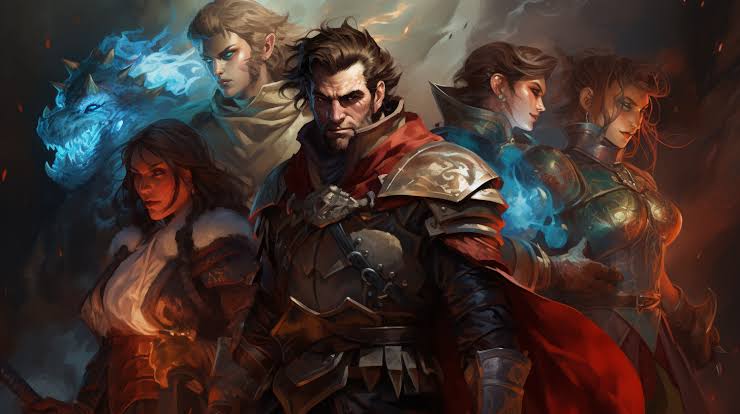
Game Designer Assistant is an AI DnD homebrew class creator. It helps you turn a rough concept, such as a shield-crushing juggernaut, a storm-bound tidecaller, or a cursed bloodline hunter, into a complete class or subclass you can playtest. It works through theme, chassis, level-by-level features, and balance checks with you, the way a professional systems designer would.
As of October 2026, most tables have moved to the revised fifth edition rules. Homebrew now has to fit alongside a larger and more tightly tuned set of official options. Designing a class that feels distinct without breaking the party is hard. This AI acts as a design partner that analyzes power curves, flags problem interactions, and documents the result clearly.
- ✅ Builds full classes and subclasses from a one-sentence theme
- ✅ Maps features to every level and compares them against official design patterns
- ✅ Tests multiclass, feat, and weapon-mastery interactions before they reach your table
- ✅ Produces structured write-ups you can format, print, or enter into your virtual tabletop
Most homebrew classes don't fail because the idea is bad. They fail because a 3rd-level feature outshines a 10th-level one, or because a feature combines with an official option nobody checked. To see why a dedicated design tool helps, it's worth looking at what homebrewers are up against.
Quick Answer: What Is a DnD Homebrew Class Creator?
A DnD homebrew class creator is a tool that helps you design custom Dungeons & Dragons classes and subclasses, including theme, hit dice, proficiencies, and level-by-level features, while checking that the result stays balanced against official options. AI-powered versions add systems analysis, so you get design feedback instead of a blank form.
Key capabilities:
- Concept-to-chassis design: turns a one-line fantasy into hit dice, primary abilities, proficiencies, and spellcasting decisions
- Full feature progression: places features from level 1 to 20, or at your subclass's specific levels
- Balance analysis: compares each feature to official features of the same level and flags outliers
- Documentation and visuals: produces formatted class write-ups and concept art direction
Why Homebrew Class Design Is So Hard to Get Right
The revised rules raised the bar for homebrew. The current core rulebook was rebuilt from a decade of community feedback, and any custom class has to share a table with everything in it:
12 classes, 48 subclasses, 75 feats, 391 spells — Content in the 2024 Player's Handbook that homebrew options must coexist with
70% satisfaction as a "floor" — The minimum score Wizards of the Coast targets for official class revisions in playtest surveys
48 pages vs. 377+ pages — The 1977 basic rules compared with the 2024 Player's Handbook
Official designers reach that 70% bar through survey cycles and internal playtesting. A homebrewer usually has one group of five friends and a few weekends. Getting a class right under those conditions is difficult:
- Calibrating the power curve. D&D Beyond's homebrew guide points out that rogue subclasses typically put a strong feature at 3rd level and a much lighter one at 9th. Missing patterns like this is the most common way homebrew ends up overpowered.
- Placing features at the right levels. The same guide notes fighter subclasses gain features at 3rd, 7th, 10th, 15th, and 18th level, while rogue subclasses gain them at 3rd, 9th, 13th, and 17th. A feature written for one progression often breaks in another.
- Finding hidden interactions. Even official content combines in unexpected ways. Players have flagged balance issues with Monk/Ranger multiclassing using the Nick weapon mastery. A new homebrew class adds many more possible combinations.
- Filling real gaps. Some groups homebrew because something is missing. For example, players have noted there is no Oathbreaker option in the 2024 Player's Handbook. Others keep detailed house-rule documents up to date, such as one EN World ruleset that incorporates the April 16, 2025 errata.
Existing tools mostly handle the end of this process. The Homebrewery formats content to look like official fifth edition material using Markdown and CSS. D&D Beyond's builder enters a subclass into a character sheet. Neither one tells you whether your 7th-level feature is too strong.
That design-evaluation gap is what Game Designer Assistant was built to fill.
Why Game Designer Assistant Works for DnD Homebrew Classes
Game Designer Assistant approaches a homebrew class as a systems designer would. It treats the class as a set of interacting mechanics with a clear identity, not just a list of features. You describe the fantasy you want, and it works with you on structure, numbers, and edge cases. It pushes back when something doesn't fit the class's theme or power band.
| Traditional Approach | Game Designer Assistant |
|---|---|
| Collecting balance opinions from forums and Reddit threads | Structured comparison of each feature against same-level benchmarks |
| Form-based builders that store content but don't critique it | A design partner that asks questions, proposes options, and revises |
| Finding broken combinations mid-campaign | Interaction checks for multiclassing, feats, and weapon masteries before play |
| Hours spent turning notes into a readable class document | Structured write-ups ready for Homebrewery, a PDF, or VTT entry |
Theme-First Concept Development
Strong subclasses can be summed up in a single sentence. The Battle Master is "a fighter who uses maneuvers to gain a tactical advantage." Game Designer Assistant helps you write that sentence first. It then checks each later feature against it, which prevents a class from turning into a collection of unrelated abilities.
Level-by-Level Feature Mapping
The AI drafts the full progression: hit die, saving throws, skill choices, core resource, signature features, and capstone. Each feature gets a level placement and a reason for it. This is where most homebrew drifts off course, because front-loaded classes dominate early tiers and become dull later.
Balance and Systems Analysis
For each feature, Game Designer Assistant asks the questions the Dungeon Master's Guide recommends:
- Does this feature reinforce the class's theme?
- Is there an existing feature to model it on?
- How does it compare to other features of the same level?
It also checks action economy (bonus actions, reactions, concentration), resource recovery on short vs. long rests, and damage per round compared to official classes.
Documentation and Concept Art
When the design is final, the AI produces a clean class write-up with feature names, rules text, and tables. It can also provide concept art direction so your players can picture the class. The output is ready for whatever formatting or VTT tool your group uses.
Example prompts:
"Design a full 20-level homebrew class called the Tidecaller: a Wisdom-based half-caster who manipulates currents to reposition allies and enemies. Use 2024 Player's Handbook conventions."
"Here's my Juggernaut fighter subclass. Compare each feature against Battle Master and Champion at the same levels and tell me what's overtuned."
"My Blood Hunter-style subclass uses hit points as a resource. Stress-test it against multiclassing with Paladin and the Great Weapon Master feat."
A note on expectations: AI analysis speeds up design and catches problems early, but it doesn't replace real sessions at your table. As D&D Beyond's own guide puts it, what matters most is that homebrew works well for the game you're playing right now, not that it is perfectly balanced in theory.
Related Agents You'll Also Find Useful
A finished class is only part of the work. These agents cover the next steps.
Character Creator Once your class exists, someone has to play it. Character Creator builds characters, NPCs, and original characters around your new class, with backstory and portraits.
- Quick-generate or guided character builds
- Portraits across fantasy art styles
- Useful for showcase NPCs that introduce the class in your campaign
Name Generator If you're stuck on what to call the class, its subclasses, or a capstone feature, Name Generator draws on linguistic and cultural knowledge to suggest names that fit your setting.
- Class, subclass, and feature names that match your theme
- Culturally grounded naming for in-world factions and orders
- Many options to choose from instead of one guess
PDF Generator When it's time to hand the class to players, PDF Generator turns your write-up into a formatted document.
- Professional layout for class handouts
- Readable feature tables and level progressions
- Easy to share in a group chat or campaign drive
Try Game Designer Assistant free — no credit card required.
How to Create a DnD Homebrew Class With AI
Step 1: Write Your One-Sentence Theme Start with the fantasy, not the mechanics. Give the AI a single sentence describing who this class is and how it plays. It will help you sharpen the idea and identify which official classes already cover similar ground, so you can reskin one if that makes more sense.
"I want a class that fights with two spiked shields to crush enemies and protect allies. Help me refine this into a one-sentence theme and tell me whether a subclass would work better than a full class."
Step 2: Build the Class Chassis Decide hit die, primary ability, saving throws, armor and weapon training, and whether the class casts spells. Game Designer Assistant explains the trade-offs of each choice. For example, a d10 hit die with heavy armor shifts the class's role compared with a d8 and medium armor.
"Propose a chassis for the Juggernaut: hit die, saves, proficiencies, and starting equipment. Explain how it compares to Fighter and Paladin."
Step 3: Map Features Across Every Level Ask for a full progression table, then work through it tier by tier. The AI drafts features at each level and explains their purpose. You can approve, cut, or rework them before anything is finalized.
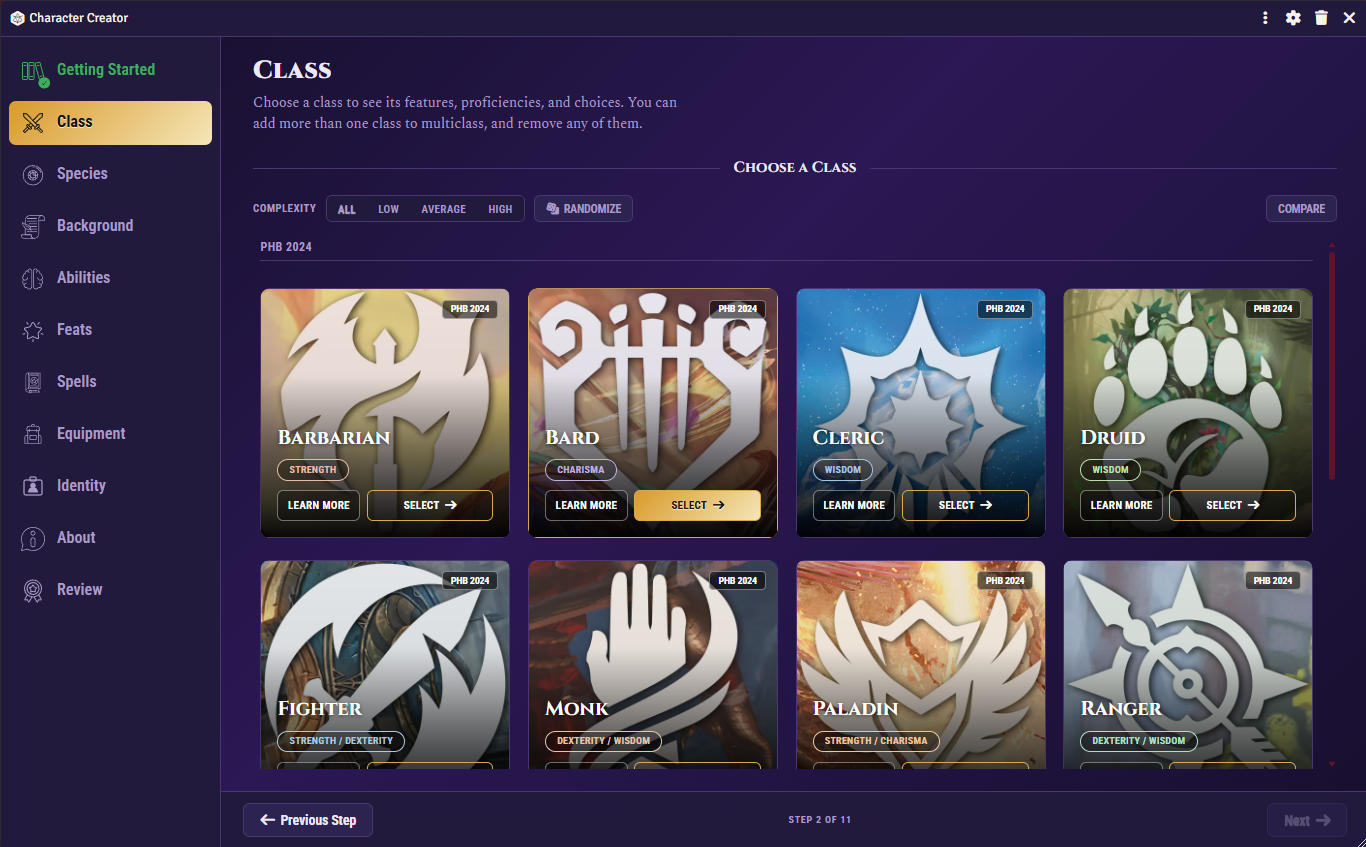
Your homebrew class will appear next to every official option on the character creation screen. That makes comparison against these classes the most useful balance check you can run.
"Draft levels 1–5 of the Juggernaut and compare each feature against Barbarian and Fighter at the same level."
Step 4: Test Interactions and Edge Cases Ask the AI to look for problems: multiclass dips, feat combinations, weapon masteries, and features that can be used repeatedly. This is where you catch combinations that would otherwise derail a session.
"What's the most abusive 3-level dip into the Juggernaut? Check interactions with Shield Master, Sentinel, and the Topple weapon mastery."
Step 5: Format, Share, and Playtest Have the AI produce a final write-up with rules text, feature tables, and flavor text. Bring it to your table for a one-shot. Afterward, give the AI your players' feedback so it can recommend specific adjustments.
"My players said the 7th-level reaction feels mandatory every turn. Suggest three alternatives that keep the theme but cost less in action economy."
What DMs and Players Build With an AI Homebrew Class Creator
🛡️ Filling a Missing Subclass for the 2024 Rules
Scenario: A DM running a redemption-arc campaign wants a fallen-paladin subclass. The current core book doesn't include one.
Traditional Approach: Searching forums for conversions of older content, then patching mismatched features together over several weeks.
Game Designer Assistant: Builds an original subclass that matches 2024 paladin conventions, with features at the correct levels and a clear theme of broken oaths.
- Avoids stitching together outdated conversions
- Every feature is checked against official paladin subclasses
- Lore hooks connect the subclass to the campaign's story
⚔️ Converting a Favorite Homebrew to the Revised Rules
Scenario: A player's long-running homebrew class was written for the 2014 rules, and the group has switched to the revised edition.
Traditional Approach: Rereading both rulebooks line by line and guessing which features now overlap with new weapon masteries or feats.
Game Designer Assistant: Reviews the old class, identifies features that are now redundant or overtuned, and proposes revised versions that keep the class's identity.
- Flags overlaps with new core mechanics
- Keeps the parts the player cares about most
- Produces a change log so the DM can see exactly what changed
📱 Fixing a Problem Feature Mid-Session on Mobile
Scenario: During a session, a homebrew capstone ends a boss fight in one round. The DM needs a fix before the next encounter.
Traditional Approach: Making a ruling on the spot, then rewriting the feature after the session while the table argues about it.
Game Designer Assistant: On a phone during a short break, the DM describes what happened and gets two or three balanced revisions with an explanation of each.
- Works the same on iOS, Android, and web
- Voice input for quick, hands-free description
- The fix keeps the feature's appeal and removes the one-round kill
🎨 Publishing a Complete Class for the Community
Scenario: A designer wants to release a polished homebrew class with art, a sample character, and a printable handout.
Traditional Approach: Juggling a design document, an art commission, a layout tool, and a separate character build over several weeks.
Game Designer Assistant: Handles design and documentation. Character Creator builds a showcase hero with a portrait, and PDF Generator produces the finished handout.
- One workflow from concept to shareable document
- The sample character demonstrates the class in play
- A clean write-up is ready for Homebrewery formatting
Frequently Asked Questions
Is there a free AI DnD homebrew class creator?
Yes. Game Designer Assistant is available on a free tier that includes core features with limited usage, which is enough to design and refine a subclass. Paid plans start at $20/month for heavier use, such as building several full 20-level classes or running repeated balance passes. Formatting tools like The Homebrewery handle presentation, while the AI handles the design and balance work that comes before it.
Can AI balance a homebrew D&D class?
AI can do much of the analytical work. Game Designer Assistant compares each feature to official features of the same level, checks action economy and resource recovery, and tests multiclass and feat interactions. It catches most balance problems before they reach your table. It doesn't replace real playtesting, because only your group can tell you whether the class is fun and fits your campaign's pace.
How is an AI class creator different from D&D Beyond's homebrew tools?
D&D Beyond's homebrew system enters finished content into the character sheet. It records features, actions, and spellcasting, but it doesn't evaluate them. An AI homebrew class creator works earlier in the process. It helps you develop the concept, design and balance features, and write clear rules text. Many designers use both: AI for design, then a builder or VTT for implementation.
Does the AI follow the 2024 D&D rules or the 2014 rules?
Either one. Tell Game Designer Assistant which ruleset you're using, and it designs to that edition's conventions, including subclass feature levels, weapon masteries, and revised feat structures. For exact wording on specific rules, paste the relevant text from your books into the chat. The AI can then compare your homebrew directly against it.
Can I turn my homebrew class into a printable handout?
Yes. Once your class is final, Game Designer Assistant produces a structured write-up with feature text and progression tables. PDF Generator can turn that into a formatted handout to share with players. If you prefer the classic fifth edition look, you can paste the write-up into The Homebrewery for styling.
Conclusion
Homebrew classes are one of the most creative parts of Dungeons & Dragons, and also one of the easiest to get wrong. With a large set of official options to compete against and no survey-driven playtest process behind them, most custom classes either overshadow the party or quietly fall out of use.
An AI DnD homebrew class creator addresses this directly. It sharpens your theme, maps every feature to the right level, compares your design against official classes, and finds broken combinations before your players do. Whether you're filling a gap in the 2024 rules, updating an older favorite, or publishing a 5e subclass for the community, you end up with a class built to last a full campaign.
Try Game Designer Assistant now to start your next class. Explore more at Jenova.
For Developers: Game Designer Assistant is available programmatically via the Jenova API. You can add AI-assisted homebrew and game-system design to your VTT, character builder, or TTRPG app with a single API call. Full documentation →