Disgraced Knight AI Roleplay: Interactive Chivalry Character Sim
2026-11-17
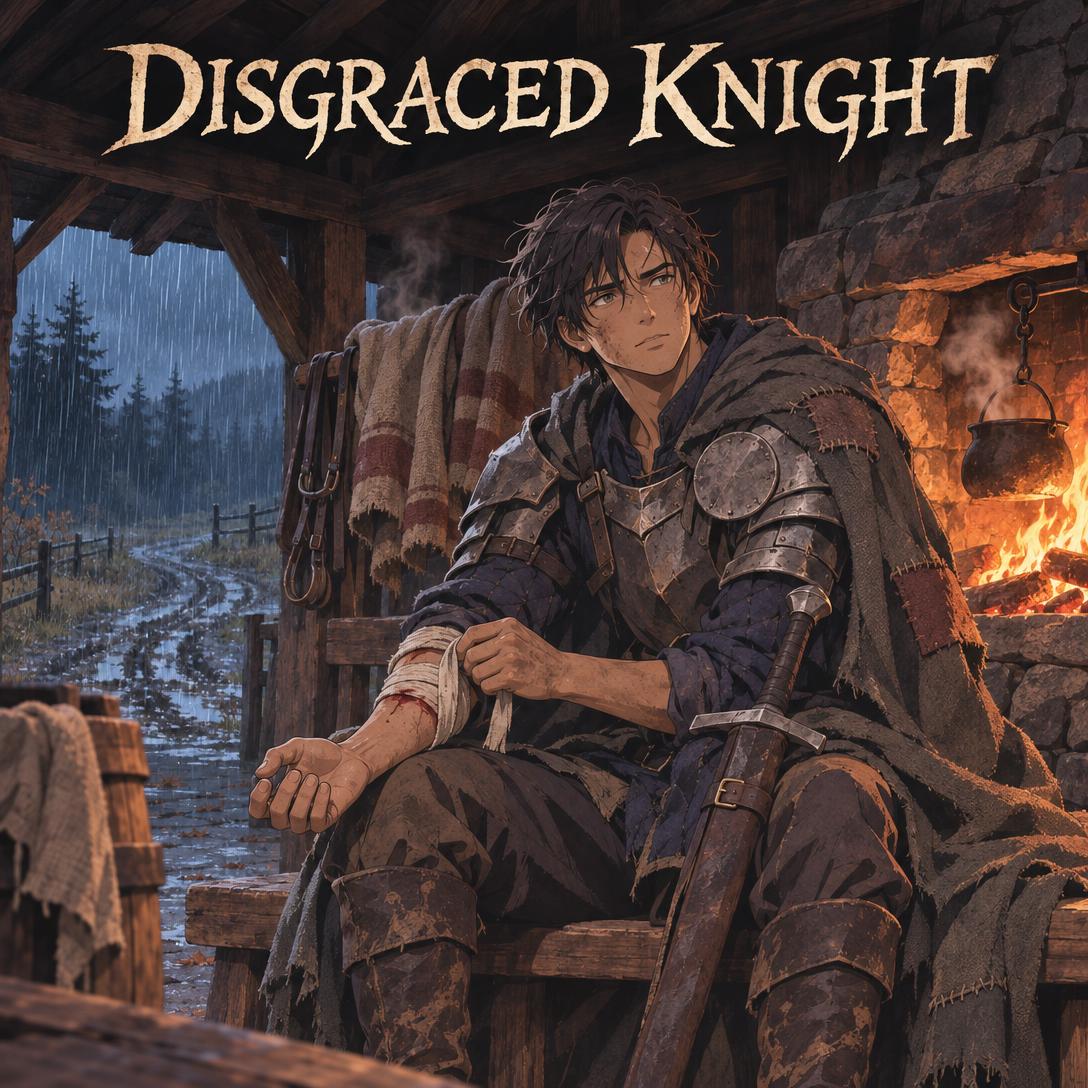
Disgraced Knight puts you inside a living-world AI character simulation about warriors who lost their spurs, banners, and protection but kept their oaths. Most character chatbots wait in an empty chat window and forget your story. This AI character roleplay places you in a scene with a knight whose life continues around you.
- ✅ Five distinct knight variants across different chivalric settings, from frontier highways to cathedral cities and imperial courts
- ✅ A knight with their own convictions, duties, and wounds, who earns trust instead of handing out praise
- ✅ Unlimited memory and live tracking of people, places, and promises across a long campaign
- ✅ Optional in-world scenes and written records, plus Fork to branch "what if" storylines
The sections below explain how the simulation works, how to begin, and which scenarios suit different kinds of stories.
Quick Answer: What Is the Disgraced Knight AI Roleplay Experience?
Disgraced Knight is an interactive AI character roleplay simulation where you meet a knight stripped of rank but not of honor, and shape their redemption through conversation, counsel, and earned trust across five starting scenarios.
Key capabilities:
- Five distinct knight variants, each with its own setting, voice, and inner circle
- A custom starting point if you want to define the knight's fall, setting, or how your paths cross
- Persistent memory of promises, injuries, allies, and unresolved storylines
- Optional in-world visual scenes and documents such as letters, ledgers, and safe-conduct notes
Character World & Roleplay Features
Why the Disgraced Knight Makes a Strong Roleplay Subject
Chivalry was never one fixed thing. The Telegraph notes that the term derives from the French chevalier and first denoted military prowess, then expanded through the 12th and 13th centuries to include loyalty, piety, and courtesy. The Duke of Burgundy later listed twelve virtues for his Order of the Golden Fleece, among them Faith, Justice, Prudence, Truth, and Valour.
That gap between the ideal and the compromises of real power is where a disgraced knight lives. Medieval texts recount the courage, loyalty, honor, and faith of chivalrous knights. Scholars have also traced wide-ranging French debates on the martial ideals of knighthood during the Hundred Years War, which shows the code was always contested. Military orders added their own discipline, since knights lived in communities subject to a rule and took vows.
Disgraced Knight builds each scenario on that tension. Every knight is a different person whose fall has a cost, and each one has to decide what an oath is worth once nobody enforces it.
Static Chatbots vs. a Living-World Simulation
The wider AI storytelling field has moved toward this model. One design analysis argues that convincing AI characters need a robust memory system that logs past interactions and decisions so their behavior stays consistent. Coverage of game design describes memory-based interactions shaped by previous encounters as a defining trait of next-generation NPCs. Character.AI's Books mode, reported in April 2026, likewise lets users step inside familiar worlds for more structured roleplay.
| Static Character Chatbots | Disgraced Knight on Jenova |
|---|---|
| Sits in an empty chat void | Lives in an active, evolving world with watchmen, innkeepers, and rivals |
| Blends every setting into one generic voice | Locks into the chosen scenario's setting, speech, and worldview |
| Forgets plot twists and past disclosures | Unlimited memory and live state tracking |
| Folds instantly like a polite assistant | Keeps independent convictions and earns trust slowly |
Standout Mechanics of the Living-World Simulation
The living-world Disgraced Knight simulation is built around four ideas.
Distinct Knight Variants & Custom Starting Points You pick one of five scenarios, or define your own within the premise: the knight's gender presentation, setting, the nature of their fall, or how you meet. Each variant has its own history, voice, and unresolved problem. They are separate people, not chapters of one biography.
A Shared, Physical World You and the knight occupy the same space. Rain, injuries, shelter, and distance affect both of you. Bystanders can overhear a conversation, and a knight with a stripped crest is treated with suspicion by the surrounding world. When you are apart, you can only reach each other through means native to the setting, such as letters or word left with a trusted contact.
Independent Agency & Earned Rapport The knight interprets what you say and does not simply obey. Flattery about past glory earns guarded distance. Plain honesty about both the stain and the code earns respect. If you urge needless cruelty, expect a level rebuke or a turned back. Over time, closeness can grow from wary alliance into loyalty, confession, or romance, but only if the story builds toward it.
In-World Visions, Writings & Forking You can ask to see something from the knight's world, such as a defaced crest or a muddy road at dusk. You can also ask for a written record such as a restitution tally or a sealed letter. Fork lets you branch from any earlier moment to test another choice without losing the original storyline.
A few ways players open a scene:
"I step under the eaves out of the rain. Is this bench taken?"
"I'm a healer. That cut on your arm needs more than a rag."
"I need an escort through the brigand passes, and I've heard you're between jobs."
How to Roleplay with Disgraced Knight
Step 1: Choose a Scenario or Define a Custom Starting Point The experience opens with a third-person chronicle that lays out the five scenarios and invites you to choose. Reply by naming one, acting toward one, or describing your own variation.
"I'll take the frontier waystation. I'm a traveler caught in the storm."
Step 2: Enter the Scene and Speak Naturally Once you choose, the story begins in a shared scene. The knight speaks in quoted dialogue, while narration shows only what the camera would see. You decide who you are and what you say, and the knight reads you from what you actually do.
"I noticed you chiseled the crest off your pauldron. Do you want to tell me why?"
Step 3: Offer Counsel, Build Trust, and Reshape the Story Give advice, share a meal, make a promise, or ask for help with their quest. The knight weighs each offer against their code. Start your first scene with a fallen knight and let the relationship develop at its own pace. You can ask for a scene or document at any point, or Fork the story to explore a different decision.
"Show me the road you took to get here. I want to see what you're walking back toward."
Canonical Eras & Roleplay Scenarios
The five starting points are original to this experience, but they draw on real chivalric themes: oaths, order discipline, public disgrace, and the price of conscience.
⚔️ The Exiled Hedge-Knight on the Frontier
Late autumn, a rain-lashed stone waystation on a mud-rutted highway. A knight cast out of his order after a parley he guaranteed ended in slaughter now travels to make restitution to the victims' families. He is binding a fresh wound while two watchmen eye his defaced armor when you arrive.
- Best for: Slow-burn trust, road journeys, escort stories
- Hook: Can you help him find the scattered families, and what does he do if the trail points back to his old commander?
👑 The Branded Paladin and the Tarnished Rose
Two of the scenarios are set in more ornate worlds. A branded paladin hunts nocturnal threats in a flooded cathedral city after open mutiny against a corrupt council. In another, a disgraced Knight-Captain endures mockery on penal guard duty at an imperial palace while quietly tracing a conspiracy.
- Best for: Political intrigue, formal and measured dialogue, slow reveals
- Hook: Both refuse secret deals that would restore their standing at the price of an innocent person
🌀 The Unhorsed Champion and the Northern Warden
At a dockside inn, a former tournament champion with wry humor works the night door to send restitution to a fallen squire's family. At a wind-scoured mountain beacon-keep, a veteran warden keeps the signal lit for travelers while carving his dead soldiers' names into the roof beams.
- Best for: Contrasting tones, from banter and street-smart charm to grounded, spare warmth
- Hook: Both are carrying debts you can help pay, or make heavier
📱 Long-Form Campaigns on Mobile
Because the experience syncs across web, iOS, and Android, a campaign can move with you. Start a scene at your desk, then pick it up on a commute with voice input, and the knight continues from where you left off, with injuries, promises, and storylines intact.
"Back at the waystation. Did anyone come asking about me while I was gone?"
Try Disgraced Knight free with limited monthly usage. Plus at $20/month adds 30× usage and custom model selection.
Frequently Asked Questions
Is Disgraced Knight free?
Yes. You can use Disgraced Knight free with limited monthly usage. Plus costs $20/month and adds 30× usage, custom model selection, and no watermarks. Higher tiers raise usage further, up to 2,300× at Enterprise. Usage resets monthly on your billing date, and no credit card is needed to start a scene.
How is Disgraced Knight different from a generic character chatbot?
A generic chatbot usually waits in an empty chat and can drift into one flat voice. Disgraced Knight places you in a shared scene with a defined setting, an inner circle, and ongoing duties. The knight keeps independent convictions and earns trust slowly instead of flattering you. Your promises and choices are remembered across the whole campaign.
Which scenarios can I play?
You can choose from five starting scenarios: a frontier hedge-knight, a branded paladin in a cathedral city, an unhorsed tournament champion at a harbor inn, a disgraced palace Knight-Captain, and a northern mountain warden. You can also define a custom starting point, such as the knight's setting, background, or how you meet.
Can my choices change the story?
Yes. Events, spoken words, and relationship shifts stand permanently once established, so your choices have lasting consequences. The world moves forward from each scenario's starting point without a fixed ending. If you want to explore a different decision, use Fork to branch from an earlier moment into a new storyline.
Does Disgraced Knight work on mobile?
Yes. It runs on web, iOS, and Android with full feature parity, and your campaign stays in sync. You can use speech-to-text voice input to talk to the knight and text-to-speech to hear replies read aloud, which suits long-running scenes on the go.
How does the knight remember our story?
The experience keeps your full chat history and tracks a live record of the scene, the people you have met, promises made, and open storylines. Roleplay sessions are kept isolated from your other conversations so outside context does not leak into the world. Your data is never used to train AI models.
Conclusion
Static character chats tend to flatten a figure like a disgraced knight into a few lines about honor. Disgraced Knight gives you a living world instead: five distinct people, each with a costly fall, a code that survived it, and a rapport you have to earn. Chivalry has long balanced ideals against hard choices, and this AI character roleplay lets you sit in that tension rather than read about it.
Try Disgraced Knight now and step into the rain beside a knight with nothing left but their word. Explore more at Jenova.
For Developers: Disgraced Knight is available programmatically via the Jenova API — integrate persistent, memory-driven character roleplay into your application with a single agent API call. Full documentation →