AI Dermatology Advisor: How AI Is Transforming Skin Health and Diagnosis (May 2026)
2026-05-11
Skin is the body's largest organ — and the one most people understand the least. In 2026, the AI skin analysis instruments market is valued at $2.54 billion and projected to reach $5.03 billion by 2030, growing at an 18.6% CAGR. The broader dermatology AI market has reached $8.4 billion and is projected to hit $52.7 billion by 2034, growing at 22.6% annually. The reason for this explosive growth is simple: there aren't enough dermatologists, wait times are measured in months, and most people live with skin concerns they've never had properly assessed.
But here's the deeper problem most people face: you notice something on your skin — a new spot, a persistent rash, a change in texture — and you have no idea whether it's harmless or urgent. You Google it, get terrified by image search results, and either panic-book a dermatologist appointment you'll wait weeks for or convince yourself it's nothing and ignore it. Neither response serves you well.
That's exactly what Dermatology Advisor on Jenova was built for — an expert AI dermatologist with image analysis capabilities that assesses skin, hair, and nail conditions from photos, provides evidence-based guidance on treatment options, and helps you build informed skincare routines — available 24/7, no appointment needed.
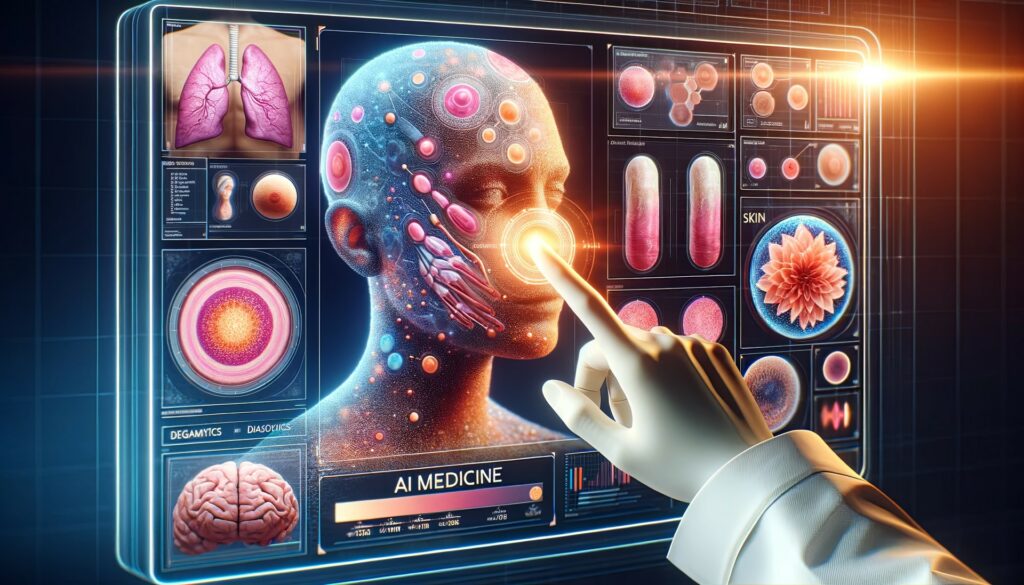
Quick Answer: What Is an AI Dermatology Advisor?
An AI dermatology advisor uses artificial intelligence and computer vision to analyze images of skin, hair, and nail conditions — identifying patterns, assessing severity, providing differential considerations, and recommending evidence-based next steps.
- 🔬 Photo-based skin assessment with pattern recognition and severity evaluation via Dermatology Advisor
- 💊 Treatment guidance including OTC options, prescription considerations, and when to see a doctor
- 🧴 Personalized skincare routines built around your specific skin type, concerns, and goals
- 📊 Ongoing skin health tracking with persistent memory via Personal Medical Analyst
The Problem: Why Skin Health Is Failing Most People
The dermatology care system is strained at every level — from access to accuracy to the gap between professional assessment and daily skincare decisions. And the consequences of that strain show up on your skin.
🏥 Dermatologist Shortages Create Dangerous Wait Times
Access to dermatological care is a global problem. In the United States, average wait times for a dermatology appointment range from weeks to months depending on location, and rural areas face acute shortages of board-certified dermatologists. Globally, the ratio of dermatologists to population is even more stark — many countries in Africa, South Asia, and Southeast Asia have fewer than one dermatologist per 100,000 people.
This means that for most people, the question isn't "should I see a dermatologist?" but "can I even get in to see one before this gets worse?" AI fills this gap not by replacing dermatologists but by providing informed guidance during the wait.
😰 Google Image Search Is Not Skin Assessment
When something appears on your skin, the instinct is to search for it online. But image-based self-diagnosis through Google is notoriously unreliable — and psychologically damaging. A harmless seborrheic keratosis looks alarming when placed next to melanoma images in search results. A common eczema flare-up becomes a source of anxiety when you're scrolling through worst-case-scenario forums at midnight.
As research consistently shows, human visual assessment of skin is inherently subjective. A 2025 narrative review in the Journal of Cosmetic Dermatology confirmed that traditional skin assessment methods "are inherently subjective, resulting in variable results, particularly in multi-center or international settings." If trained dermatologists face inter-rater disagreement, untrained consumers comparing their skin to Google Images have virtually no chance of an accurate assessment.
🎯 AI Accuracy Now Matches or Exceeds Human Performance in Key Areas
The clinical evidence for AI in dermatology has reached a tipping point. A 2026 prospective study reported in Practical Dermatology found AI-assisted dermatologists demonstrated 91.9% sensitivity and 83.7% specificity — comparable to dermatologists working alone. Research confirms that deep learning architectures can exceed specialist classification accuracy by at least 11% when image quality is controlled.
Deep learning models operating on standardized image inputs can outperform specialist graders by measurable margins — exceeding classification accuracy by at least 11% when input image quality is controlled. — Journal of Clinical Medicine, via Haut.AI
Yet despite this accuracy, most consumers don't have access to these tools in a format they can actually use. Clinical AI systems sit inside hospital radiology departments and research labs. Consumer skin apps optimize for product sales, not health assessment. The middle ground — expert-level skin analysis accessible to anyone with a smartphone — has been largely empty.
🧴 The Skincare Industry Profits from Confusion
The skincare market thrives on information asymmetry. Consumers spend billions on products they don't need because they don't understand their actual skin conditions. A McKinsey analysis found that AI-powered personalization can improve beauty conversion rates by up to 40% — but most current implementations are designed to sell products, not assess skin health. When only 17% of consumers say they'd be "very interested" in an AI beauty assistant, the trust deficit reflects a market that has prioritized commerce over clinical credibility.
🌍 Skin Tone Bias Persists in Dermatology — Human and AI
One of dermatology's most persistent failures is the underrepresentation of darker skin tones in training data, medical textbooks, and clinical imagery. As MedCentral reported in 2025, synthetic image datasets are emerging as a potential AI-driven solution to the "dearth of inclusive images in dermatology" — but the challenge remains active. AI systems trained primarily on lighter skin tones can underperform on the patients who need accurate assessment most.
Why Dermatology Advisor Changes Everything
This is exactly what Dermatology Advisor was built for.
Instead of Googling your symptoms and spiraling, or waiting months for an appointment while a condition worsens, you get an expert AI dermatologist that analyzes photos of your skin, provides structured assessment with differential considerations, recommends evidence-based treatment options, and helps you decide whether you need professional care — all in a single conversation.
| Traditional Approach | Dermatology Advisor |
|---|---|
| Wait weeks or months for a dermatologist appointment | Instant photo-based assessment available 24/7 |
| Google Image Search → anxiety spiral with no real answers | Structured analysis with severity assessment and differential considerations |
| Generic skincare advice from sales-driven brands | Personalized routines based on your actual skin type and conditions |
| One-time consultation with no follow-up until next appointment | Persistent memory that tracks skin changes over time |
| No way to evaluate whether a condition is urgent | Urgency assessment: "monitor at home" vs. "see a dermatologist this week" |
| Cosmetic advice disconnected from medical assessment | Integrated skin health and skincare guidance in one conversation |
🔬 What the Agent Actually Does
Dermatology Advisor provides expert-level observational analysis — not a medical diagnosis, but the same structured assessment framework a dermatologist would apply during an examination:
- Photo-based skin assessment — Upload images of any skin, hair, or nail concern for detailed visual analysis including pattern recognition and morphological description
- Differential considerations — What conditions could explain what's visible? How do they differ? What additional information would narrow the possibilities?
- Severity and urgency evaluation — Is this something to monitor at home, address with OTC products, or see a professional about urgently?
- Treatment guidance — Evidence-based options including over-the-counter products, lifestyle modifications, and when prescription treatments should be discussed with a doctor
- Skincare routine building — Personalized daily and weekly routines based on your skin type, concerns, climate, and goals
- Ongoing tracking — Monitor how conditions change over time with persistent memory across sessions
🎯 Example Prompts to Get Started
"I've had this red, scaly patch on my elbow for about three weeks. It's not itchy but it's spreading. Here's a photo. What could this be, and should I see a doctor?"
"I'm 34, living in a tropical climate, and dealing with persistent adult acne along my jawline. I've tried salicylic acid wash and benzoyl peroxide but nothing is working. Here's a photo of my current skin. Can you assess what's happening and recommend a routine?"
"I noticed a mole on my back that looks different from my other moles — it has an irregular border and seems darker than it used to be. Here's a photo. How concerned should I be?"
Related Agents You'll Also Like
Personal Medical Analyst
When your skin concern is part of a larger health picture — hormonal acne connected to thyroid issues, skin rashes triggered by medication side effects, or dermatological symptoms that might indicate systemic conditions — this agent connects your skin findings to your broader medical history.
- Learns your complete health history across sessions with persistent memory
- Interprets lab results, medications, and symptoms alongside dermatological findings
- Tracks patterns over time that connect skin changes to underlying health factors
Personal Nutritionist
Skin health is deeply connected to nutrition — zinc, vitamin A, omega-3 fatty acids, gut health, and food sensitivities all manifest on your skin. This agent builds evidence-based nutrition plans that support skin health goals alongside your broader dietary needs.
- Identifies nutritional factors that may be contributing to skin conditions
- Builds anti-inflammatory and skin-supportive meal plans
- Tracks dietary changes and correlates them with skin improvements over time
Beauty Consultant
When your skin health is stable and your focus shifts to cosmetic optimization — makeup that works with your skin type, color matching, cosmetic procedures, and aesthetic enhancement — this consultant provides personalized guidance that builds on the foundation your dermatology assessment established.
- Makeup recommendations for specific skin conditions (rosacea-friendly, acne-safe formulas)
- Cosmetic procedure guidance with realistic expectations and recovery timelines
- Product ingredient analysis to avoid irritants and allergens
How It Works: From Skin Concern to Clear Answers
Getting expert dermatological guidance takes minutes, not months. Here's the step-by-step process.
1. Open Dermatology Advisor
Visit Dermatology Advisor and start a new chat. No downloads, no installation, no credit card required.
2. Upload Photos and Describe Your Concern
Take clear, well-lit photos of the area you're concerned about. Provide context: when it started, whether it's changed, any symptoms (itching, pain, burning), your skin type, any products you're using, and relevant medical history.
"This rash appeared on my forearms about two weeks ago after I started a new laundry detergent. It's itchy, especially at night, and the bumps are small and red. I have a history of mild eczema as a child. Here are photos in natural light."
3. Receive Structured Assessment
The agent provides a detailed analysis: what it observes in the image, pattern recognition against known conditions, differential considerations ranked by likelihood, severity assessment, and urgency guidance — is this something to monitor, treat at home, or see a professional about?
4. Get Treatment Recommendations
For each likely condition, the agent explains evidence-based treatment options — from OTC products and home remedies to when prescription treatments should be discussed with a dermatologist. Product recommendations include specific active ingredients, concentrations, and application protocols.
5. Build or Refine Your Skincare Routine
Beyond addressing specific concerns, ask the agent to build a complete skincare routine tailored to your skin type, climate, age, and goals. It explains what each product does, why it's included, and in what order to apply them.
"Based on what you've assessed, can you build me a morning and evening skincare routine? I have combination skin, I live in a humid tropical climate, and my main concerns are the acne scarring and the occasional hormonal breakouts."
6. Track Changes Over Time
Return in a week, a month, or whenever your skin changes. The agent remembers your history — what conditions were identified, what treatments were recommended, and how your skin has responded. This longitudinal view is something even most dermatologists can't provide between appointments. For deeper health context, @mention the Personal Medical Analyst to connect skin changes with your broader medical history.
Results & Use Cases
🔍 Mole Assessment Before a Dermatology Appointment
Scenario: You noticed a mole that's changed in size and color. Your dermatologist appointment is six weeks away and the anxiety is consuming you.
Traditional Approach: Google "melanoma signs." Stare at the mole daily. Lose sleep. Call the dermatologist's office weekly asking for a cancellation slot. Arrive at the appointment either terrified or having convinced yourself it's nothing.
With Jenova: Upload a clear photo to Dermatology Advisor. The agent applies ABCDE criteria (asymmetry, border, color, diameter, evolution), assesses the morphological features visible in your photo, and provides an informed urgency assessment. If the features suggest concern, it advises you to request an expedited appointment and tells you exactly what to say when calling the office. If the features are reassuring, it explains why — and what to monitor in the meantime. You arrive at your appointment informed, not frantic. A massive 2026 Swedish study confirmed AI can identify early risk patterns for melanoma using routine health data, underscoring the value of AI as a supplementary screening layer.
🧴 Building a Skincare Routine That Actually Works
Scenario: You've spent hundreds of dollars on skincare products recommended by influencers, beauty counters, and Amazon reviews. Your skin is irritated, congested, and worse than when you started.
Traditional Approach: Keep trying new products. Layer actives that shouldn't be combined. Develop contact dermatitis from a fragrance sensitivity you didn't know you had. Eventually give up and use bar soap.
With Jenova: Upload photos of your current skin condition and list the products you're using. Dermatology Advisor identifies what's actually happening — product-induced irritation, over-exfoliation, or an underlying condition being masked by inappropriate products — and builds a simplified, evidence-based routine from scratch. It explains ingredient interactions, why certain combinations cause problems, and introduces new products one at a time so you can identify what works and what doesn't.
📱 Tropical Climate Skin Concerns on Mobile
Scenario: You live in a hot, humid climate and deal with persistent fungal acne, heat rash, and hyperpigmentation that products designed for temperate climates make worse.
Traditional Approach: Use Western-market skincare guides that assume air-conditioned, low-humidity environments. Apply heavy moisturizers that clog pores. Mistake fungal acne for bacterial acne and use treatments that feed the fungus.
With Jenova: Describe your climate, lifestyle, and skin concerns to Dermatology Advisor. The agent distinguishes between fungal and bacterial acne — a distinction that changes treatment entirely — recommends climate-appropriate products (lightweight, non-comedogenic, antifungal where needed), and builds a routine that accounts for humidity, sun exposure, and sweat. Supplement with the Personal Nutritionist for dietary adjustments that support skin health in tropical environments.
💼 Parents Assessing Children's Skin Conditions
Scenario: Your toddler developed a rash overnight. It could be anything from a food allergy to hand-foot-mouth disease to a reaction to new clothing. The pediatrician can see you in three days.
Traditional Approach: Google "toddler rash" and immediately encounter images of every serious childhood illness. Call the nurse line, describe it verbally, and receive generic guidance. Spend three days worrying.
With Jenova: Upload photos to Dermatology Advisor with context — age, when it appeared, any new foods or products, whether the child has a fever, and whether it seems itchy or painful. The agent provides a structured assessment of what the rash pattern and distribution suggest, whether it matches viral, allergic, or irritant patterns, and whether you should see a doctor urgently or manage at home until your appointment.
💊 Post-Procedure Skin Monitoring
Scenario: You had a chemical peel or laser treatment. The recovery instructions say "some redness and peeling is normal" but you're not sure whether what you're experiencing is normal healing or an adverse reaction.
Traditional Approach: Call the aesthetician's office. They're booked. Leave a message. Wait for a callback. Stare at your face in the mirror wondering if something has gone wrong.
With Jenova: Upload daily recovery photos to Dermatology Advisor. The agent assesses whether your healing trajectory matches expected post-procedure recovery patterns or whether signs of infection, hyperpigmentation, or adverse reaction warrant contacting your provider immediately. Use the Beauty Consultant for guidance on post-procedure skincare products that support healing without interfering with results.
FAQ
How accurate is AI dermatology compared to a human dermatologist?
The evidence is compelling and growing. A 2026 prospective study found AI-assisted dermatologists demonstrated 91.9% sensitivity and 83.7% specificity. Research published in the Journal of Clinical Medicine found deep learning models exceed specialist classification accuracy by 11% when image quality is controlled. Dermatology Advisor provides expert-level observational analysis as a supplementary tool — not a replacement for professional diagnosis, but an informed second perspective available instantly.
Can AI diagnose skin cancer?
AI skin analysis tools, including Dermatology Advisor, provide observational analysis and pattern recognition — they do not deliver clinical diagnoses. However, AI systems have demonstrated remarkable capability in identifying concerning patterns: a 2026 Swedish study confirmed AI can identify early risk patterns for melanoma using routine health data. The Skinive AI system reports accuracy exceeding 95% for skin image analysis across its validated conditions. Any suspicious lesion should always be evaluated by a board-certified dermatologist — but AI can help you determine urgency and articulate concerns more effectively at your appointment.
Is AI dermatology safe for all skin tones?
This remains an active area of improvement across the industry. As MedCentral reported, the underrepresentation of darker skin tones in dermatological training data is a recognized challenge — one that synthetic image datasets and more diverse training sets are beginning to address. Dermatology Advisor is designed to assess all skin types and tones, and the specificity of its guidance improves when you provide context about your skin type, ethnicity, and phototype alongside your images.
How much does an AI dermatology advisor cost?
You can start using Dermatology Advisor for free with all core features. Paid plans begin at $20/month for expanded usage. No credit card is required to begin. Compare this to dermatology consultations ($150–$400 per visit), teledermatology services ($75–$200 per consultation), or the cost of buying ineffective skincare products because you misidentified your skin condition.
Can I use AI dermatology instead of seeing a real dermatologist?
AI dermatology is a powerful supplement to professional care, not a replacement. It excels at providing immediate assessment, reducing wait-time anxiety, building skincare routines, and helping you determine urgency. For conditions requiring biopsy, prescription medication, or procedural treatment, a board-certified dermatologist remains essential. The ideal approach: use AI for initial assessment, ongoing monitoring, and routine building — and use those insights to make dermatologist visits more focused and productive.
What kind of skin conditions can AI assess?
AI dermatology tools analyze a wide range of conditions including acne (bacterial and fungal), eczema, psoriasis, contact dermatitis, rosacea, fungal infections, hyperpigmentation, suspicious moles and lesions, hair loss patterns, nail abnormalities, and cosmetic concerns like aging, sun damage, and scarring. The AI skin analysis market now covers 40+ measurable skin parameters from a single image, including redness, pigmentation distribution, pore density, wrinkle depth, and texture analysis.
Your Skin Deserves Better Than Google Images
In a market growing at 22.6% annually toward $52.7 billion by 2034, AI dermatology isn't experimental — it's becoming a standard layer of skin health management. The clinical accuracy is proven. The consumer need is urgent. And the gap between noticing something on your skin and getting an informed answer about it no longer needs to be measured in weeks or months.
Whether you're worried about a mole that's changed, fighting persistent acne that won't respond to drugstore products, building a skincare routine that actually works for your skin type and climate, or monitoring a chronic condition between dermatologist appointments — the starting point is the same: an expert assessment of what's actually happening on your skin.
Dermatology Advisor gives you that — photo-based skin analysis, evidence-based treatment guidance, personalized skincare routines, and persistent tracking across sessions, available whenever you need it. Try it free — no credit card required.
For your broader health journey, connect skin findings with your complete medical history through the Personal Medical Analyst. And when you're ready to explore more, browse the full agent library at Jenova.