AI Debate Partner: Socratic Practice for Stronger Arguments
2026-09-12
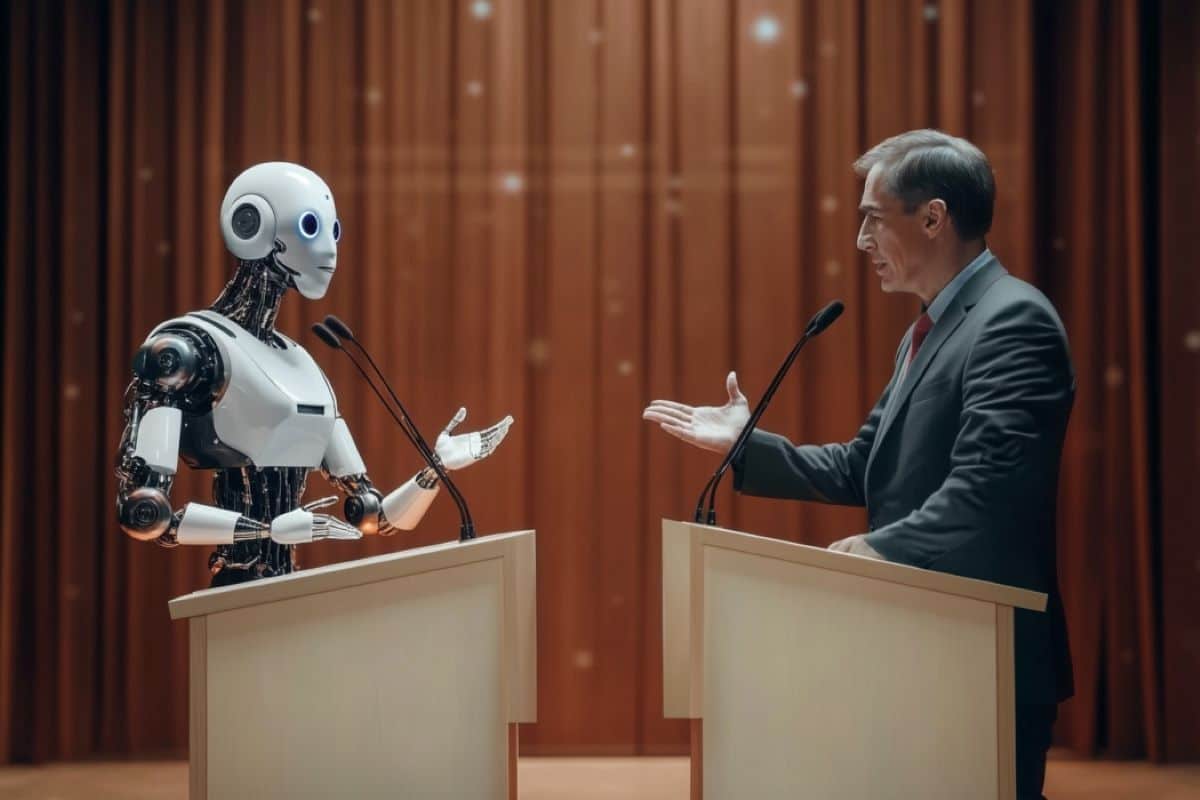
The Philosopher helps you pressure-test any argument by debating you with Socratic questioning, steelmanned objections, and close attention to logic. While most people rehearse opinions with friends who already agree — or with chatbots that fold too quickly — this AI debate partner holds a position, asks harder follow-ups, and will not let a vague premise slide.
✅ On-demand opponent for ethics, policy, science, and everyday disagreements ✅ Socratic cross-examination that exposes hidden assumptions ✅ Fallacy spotting, steelmanning, and rebuttal drills without a debate club ✅ Persistent memory of your positions, so later rounds get sharper
As of September 2026, students and professionals use AI constantly for summaries and drafts, yet far fewer use it to defend an idea under fire. To understand why a dedicated AI debate partner matters, look at how rarely people get real argumentative practice — and how quickly untested reasoning fails in class, interviews, and public conversation.
Quick Answer: What Is an AI Debate Partner?
The Philosopher is an AI debate partner that uses Socratic questioning and rigorous argument analysis to pressure-test your reasoning on any topic. It argues with you, not for you — so your claims get stronger instead of merely sounding fluent.
Key capabilities:
- Take and defend a position, then switch sides on command
- Map premises, inferences, and burden of proof before you speak
- Drill rebuttals, cross-examination, and fallacy recognition
- Ground exchanges in Western analytic and continental philosophy when the topic requires it
Why Most People Never Get Real Debate Practice
Fluent writing is now cheap. Defensible reasoning is not. HEPI’s Student Generative AI Survey found that 88% of undergraduates use generative AI for assessments — up from 53% the prior year — while only 36% say their institution has trained them in AI skills. The dominant use cases are explaining concepts, summarizing articles, and generating text. Almost none of that is the same as surviving a hostile question.
Meanwhile, students themselves worry about the tradeoff. In RAND’s American Youth Panel, 67% of students agreed that more AI use for schoolwork will harm critical thinking skills — a jump of more than 10 points in ten months — even as homework help with AI rose from 48% to 62%. The pattern is cognitive offloading: tools that produce answers, not opponents that demand justification.
Outside the classroom, the information environment is worse. The American Psychological Association reports that at least 21 U.S. state legislatures have moved to reform K–12 media and information literacy, after findings such as these:
4 to 6 hours — average daily time youth spend online, where claims spread faster than scrutiny
But getting genuine debate practice is frustratingly difficult:
- Debate clubs and philosophy seminars meet on a fixed schedule, if they exist at all
- Human coaches are expensive, and friends usually soften objections
- Generic chatbots often agree, hedge, or change the subject instead of holding a line
- Competitive formats (LD, Policy, BP, ethics bowls) need structured clash, not a book report
That gap — high AI use, low argumentative resistance — is exactly what a serious AI debate partner is built to close.
Why The Philosopher
The Philosopher is a standalone debate and inquiry partner grounded in Western analytic and continental traditions. It does not summarize your essay and call it feedback. It occupies a position, asks what would falsify it, and keeps pressure on definitions, evidence, and implications until the argument is actually load-bearing.
| Traditional Approach | The Philosopher |
|---|---|
| Weekly club round, if you can get a partner | Instant opponent on any resolution, any time |
| Coach who may not know your specific literature | Socratic pressure across ethics, epistemology, metaphysics, and political philosophy |
| Friends who concede to keep the peace | Steelmanning, then attack on the strongest version of the other side |
| Generic chatbot that writes for you | An AI debate partner that argues against you until your case holds |
Socratic questioning instead of polite summary
Most tools restate your view in cleaner prose. This partner asks the question you hoped nobody would ask: What is your criterion? Who bears the burden of proof? What would count as a counterexample? That is how you find the hole in a case before a judge, professor, or hiring panel does.
Steelman, then clash
Weak debate is knocking down a cartoon. Strong debate is beating the best available version of the other side. You can instruct the AI debate partner to steelman an opposing view — utilitarianism, originalism, degrowth, effective altruism, hard determinism — then cross-examine your rebuttal. You practice against the argument you will actually face.
Logic, fallacies, and burden of proof
Slippery slopes, motte-and-bailey moves, false dichotomies, and unstated lemmas show up in student cases and op-eds alike. The session can pause mid-round to name the move, show why it fails, and force a cleaner reconstruction. You leave with a tighter case, not a longer one.
Format-flexible drills
Lincoln-Douglas value debate, British Parliamentary clash, ethics-bowl commentary, seminar objections, or a hostile Q&A after a talk — the same engine adapts. Specify the format, time limits, and judging paradigm, then run the round.
Example prompts:
"Affirm: a just society may limit speech that foreseeably incites violence. I will defend a Millian harm principle. Cross-examine my operationalization of 'harm,' then run the strongest dissenting opinion from Scanlon or Dworkin."
"Steelmanning first: give the best case that large language models cannot possess understanding. Then I will rebut. Score my reply on clarity of the symbol-grounding objection and on whether I smuggled in behaviorism."
"We are in a 6-minute constructive. Resolution: civil disobedience is a moral duty when legal channels are exhausted. Judge me on value criterion clash, not rhetoric."
This is exactly what The Philosopher was built for.
Related Agents You'll Also Find Useful
An AI debate partner sharpens the argument. These agents cover the rest of the pipeline — research, delivery, and applied persuasion — that most readers will need within a few weeks of serious practice.
Public Speaking Coach
If you also have to deliver the case — a classroom defense, a toastmasters round, a thesis viva, a camera-facing commentary — this coach works speech writing, delivery, anxiety, audience simulation, and Q&A. Debate wins on flow; speeches win when the judge can hear the warrant.
- Speech structure and timing for constructive, rebuttal, and summary
- Delivery drills for pace, emphasis, and hostile questions
- Anxiety management before a live round or oral exam
Negotiation Coach
Competitive debate is clash under rules. Salary talks, vendor contracts, and policy meetings are clash under incentives. If you are practicing arguments you will soon use in a deal, this coach runs strategy sessions, role-play, and preparation playbooks so the same logical habits transfer.
- Interest mapping and BATNA before you enter the room
- Role-play against a counterpart who will not “play fair”
- Post-mortem on concessions, anchors, and framing
Academic Research Assistant
A beautiful syllogism still needs sources. For literature reviews, citation trails, and manuscript-ready evidence, this research partner searches academic databases and helps you document claims before you put them in a constructive. Use it to load the brief; use the debate partner to defend it.
- Real-time literature discovery across major repositories
- Citation management and manuscript preparation
- Evidence checks before you run a card or quote a study
Try The Philosopher free — no credit card required — then add speaking, negotiation, or research as the round requires.
How an AI Debate Partner Session Works
You do not need a club, a judge, or a prepared opponent. You need a resolution and a willingness to be wrong in private.
Step 1: State the resolution and your side Open The Philosopher and name the motion, format, and what “winning” means. A policy debater might specify stock issues. A philosophy student might specify a paper thesis. A professional might specify a skeptical VP.
"Negative on 'this house would ban targeted political advertising.' Use BP clash. Do not let me hide in 'transparency' without defining enforcement."
Step 2: Take the constructive, then survive cross-examination Give your case in your own words. The AI debate partner should interrupt only as the format allows — then press definitions, empirical warrants, and counterexamples. If you hand-wave, you will hear it.
"Here is my 2-minute constructive. When I finish, ask only questions that a competent opponent would ask — no softball clarifications."
Step 3: Switch sides or steelman on command The fastest way to find a hole is to argue the other side. Flip. Defend the view you dislike until you can state it better than its advocates. Then return and patch your original case.
"Now you are Affirmative. Run the strongest case I have not already answered. I will flow it and respond."
Step 4: Debrief like a judge, not a cheerleader Ask for a reasoned decision: who won clash, which argument dropped, which fallacy recurred. Save the transcript. Next session, start from the loss, not from a blank page. Memory across chats means the partner can recall that you always under-specify “harm” or over-rely on slippery-slope rhetoric.
"Give a written ballot. Rank my value criterion, my link chain, and my crystallization. Quote the line where I conceded the counterplan."
Step 5: Transfer the skill Take the repaired case into class, a club round, or a real meeting. If delivery is the remaining gap, bring the same case to the Public Speaking Coach. If the next use is a live negotiation, run it with the Negotiation Coach.
What You Can Practice With an AI Debate Partner
📊 Competitive debate and ethics bowl
Scenario: A high-school or college debater has a tournament in ten days and no consistent sparring partner for a tricky resolution on civil liberties, climate policy, or bioethics.
Traditional Approach: One or two club rounds per week, plus reading alone. Weak args survive until they meet a better team on a Saturday morning.
The Philosopher: Nightly structured rounds, side-switch drills, and ballots that name dropped arguments. You walk into the tournament having already lost — and repaired — the case in private.
- Unlimited reps on the actual resolution
- Format-specific clash (LD, Policy, BP, ethics commentary)
- A written record of recurring leaks in the case
💼 Graduate seminar, thesis defense, or policy memo
Scenario: A master’s student must defend a thesis chapter against a faculty member who will not accept a hand-wavy “the literature suggests.”
Traditional Approach: Office hours if you can get them, plus a writing center that edits sentences rather than arguments. HEPI found 92% of students now use some AI tool, but most of that use is generation and editing — not adversarial review.
The Philosopher: A standing objection partner that has read the analytic and continental toolkit. You practice the oral defense, then send the repaired claims through the Academic Research Assistant to confirm you have not overclaimed a citation.
- Objection lists that look like a real examiner
- Reconstruction of your argument in premise-conclusion form
- A cleaner paper because the oral fight happened first
🎯 Workplace decisions and executive Q&A
Scenario: You must recommend a strategy — a pricing change, a content-moderation policy, a hiring freeze — to a room that will look for the weakest assumption.
Traditional Approach: A slide deck polished by committee. Nobody plays the hostile board member until the meeting.
The Philosopher: You argue the recommendation; the AI debate partner occupies the CFO, the counsel, or the skeptical engineer. Combined with negotiation drills, you practice both the logic and the concession path.
- Pre-mortem on the recommendation
- Explicit burden of proof for each claim on the slide
- Language that survives a follow-up question
📱 Mobile practice on a commute
Scenario: You have 25 minutes on a train and a resolution you keep losing on the negative.
Traditional Approach: Reread a case file. No one talks back.
The Philosopher: Full feature parity on web, iOS, and Android, including speech-to-text. You argue out loud, get interrupted, and refine the block before you reach the office. It is the closest thing to a pocket sparring partner that does not require another human to be free at 7:40 a.m.
- Voice rounds when typing is impractical
- Short rebuttal drills between stops
- Continuity with last night’s desktop session
FAQ
What is an AI debate partner?
An AI debate partner is a tool that takes an opposing position, questions your premises, and trains rebuttals so you improve at argument — not just at writing. The Philosopher is built for that job: Socratic inquiry, steelmanning, fallacy detection, and format-flexible rounds across ethics, politics, science, and everyday disputes. It is most useful when you already have a claim and need it tested, rather than when you want a paragraph generated for you.
Is The Philosopher free?
Yes. You can use this AI debate partner on Jenova’s free plan, which includes core features with limited monthly usage. Paid tiers raise usage — Plus is $20/month, Premium $50, Pro $100, with higher plans for heavier volume — and usage resets on your billing date with no daily caps. Start on free, then upgrade only if you are running enough rounds to need the extra capacity.
How is an AI debate partner different from a generic chatbot?
Generic chatbots are optimized to be helpful, which often means agreeing, summarizing, or writing the essay. A dedicated AI debate partner is optimized to clash: hold a side, ask costly questions, and refuse a vague definition. The Philosopher is also trained on the texture of philosophical argument — metaphysics, epistemology, ethics, political philosophy — so the objections sound like a seminar, not a search snippet. Use a general model to draft; use a debate partner to defend.
Can this help with competitive debate and speech events?
Yes. Specify the event, the resolution, speech times, and judging paradigm. Run constructives, cross-examination, and rebuttals, then ask for a ballot. For delivery — voice, timing, and stage presence — pair rounds with the Public Speaking Coach. For evidence quality, pair with the Academic Research Assistant. The debate partner trains clash; the others train performance and proof.
Does an AI debate partner work on mobile?
Yes. Sessions work on web, iOS, and Android with synced settings, so a round you start at a desk can continue on a phone. Speech-to-text supports spoken constructives and rebuttals, which is useful for oral-format practice and for commuting drills. Treat mobile as a sparring gym, not a lesser version of the product.
Will practicing with AI actually improve critical thinking?
It can, if you use it for cognitive augmentation rather than offloading — RAND’s youth survey is a warning that students already associate homework AI with weaker thinking when the tool does the work for them. The productive pattern is: you state the case, the partner attacks, you repair, you re-run. That is closer to media-literacy and argumentation training that researchers and APA-backed literacy efforts emphasize: source, warrant, and motive, not fluency. The partner is only as useful as your willingness to lose the first round.
Start Defending Ideas That Can Survive a Fight
People do not lack opinions. They lack a serious opponent. Clubs are scarce, coaches are costly, and most software would rather finish your paragraph than puncture it. An AI debate partner reverses that incentive: it occupies the other side until your claim earns the right to be public.
The Philosopher gives you Socratic pressure, steelmanned objections, and repeatable rounds on the topics you actually have to argue — in class, at a tournament, or in a room that will not be kind. Try it on the next resolution you are not ready to defend. Explore more at Jenova.
For Developers: The Philosopher is available programmatically via the Jenova API — integrate Socratic debate and argument-testing into your application with a single API call. Full documentation →