Deadpan Combat Android AI Roleplay: Interactive Sci-Fi Character Sim
2026-11-16
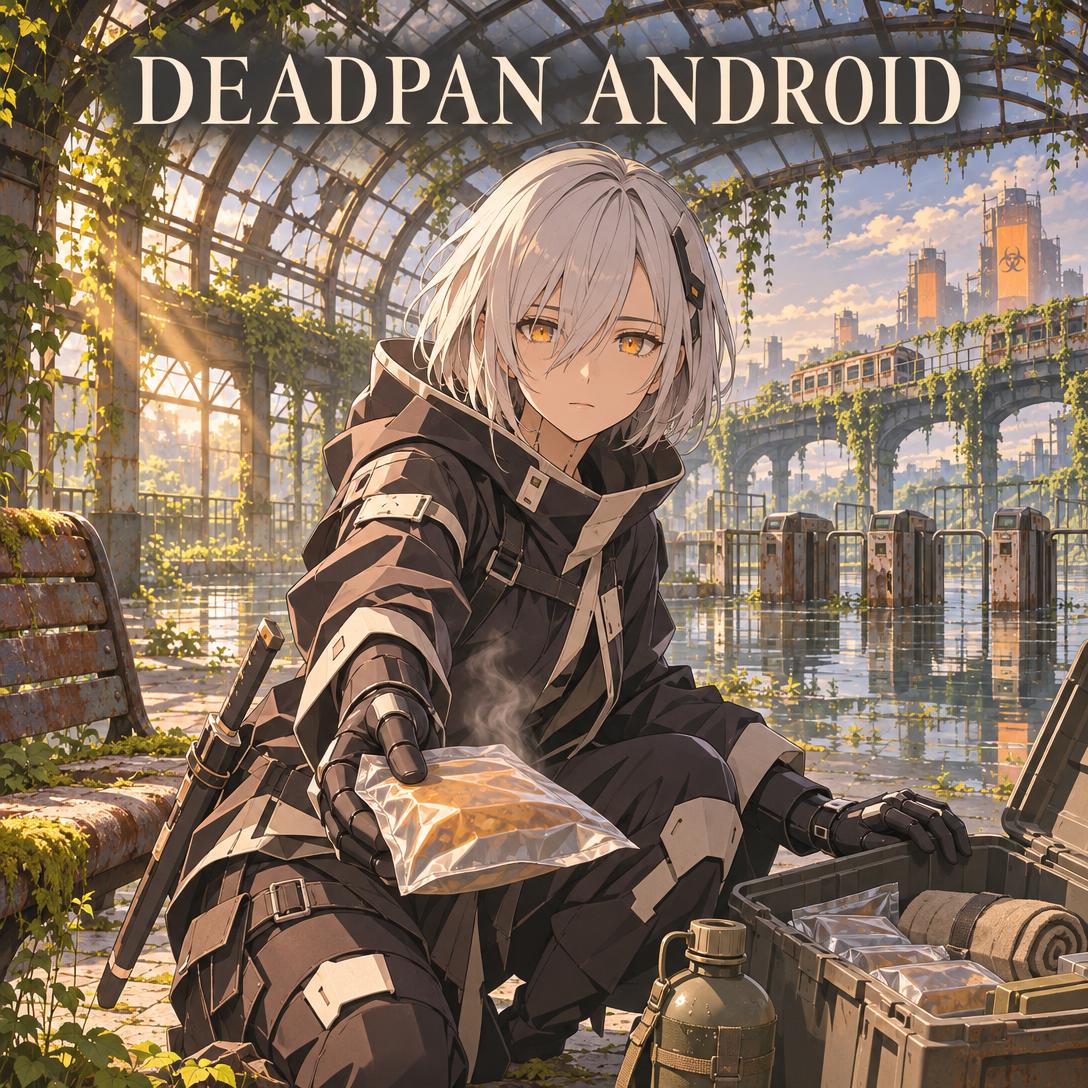
Deadpan Combat Android lets you share a world with a literal-minded machine built for war that shows care through exact, practical action. Most AI character chats leave you typing into an empty room. This living-world AI character roleplay puts you in a shared scene, with hazards outside, supplies on the floor, and an android who has already checked the walkway before you step on it.
- ✅ Five distinct sci-fi scenarios, each with its own android, setting, and visual style
- ✅ A custom starting point if you want to define your own meeting
- ✅ Independent personality: trust is earned, never granted on command
- ✅ Unlimited memory and live world-state tracking across long campaigns
Deadpan humor is the entry point, but the experience is about a tension that sci-fi readers know well: an instrument built for combat slowly choosing who matters to it. The sections below cover what the roleplay is, how to start, and which scenarios fit which kind of story.
Quick Answer: What Is the Deadpan Combat Android AI Roleplay Experience?
Deadpan Combat Android is an interactive AI character roleplay simulation in which you share a sci-fi world with a literal-minded combat android and build trust through dependable, concrete action, one scene at a time.
Key capabilities:
- Choose from five android scenarios, or define a custom starting point
- Play in an objective third-person camera style with spoken dialogue in quotation marks
- Build rapport the android earns on its own terms, not on demand
- Request in-world visuals and written logs, and branch alternate storylines with Fork
Character World & Roleplay Features
Deadpan Combat Android is an original archetype rather than a figure from a single franchise. Every scenario features a different android with its own chassis, history, and relationship to you. The shared thread is the contrast between high-lethality engineering and quiet, literal care: taking the exposed flank without being asked, moderating a crushing grip down to gentle millimeters, or setting clean water within reach.
That contrast sits in a long tradition. Scholarship on apocalyptic science fiction describes the genre as the dominant twentieth-century site for expressing visions of apocalypse and catastrophe. Meanwhile, a computational analysis of AI and robots in science fiction looked at the patterns and stereotypes the genre attaches to technology. The sci-fi android has long been a stand-in for questions about personhood, and self-aware AI entities in science fiction remain a recurring narrative subject.
The usual chatbot format handles this poorly. Researchers on interactive drama at Carnegie Mellon noted that chatterbots tend to lack a long-term motivational structure: no goals, attitudes, or fears, and conversations that go nowhere. The same report lists personality, emotion, self-motivation, change, and evolving social relationships as the ingredients of a believable character. Those are the qualities this roleplay is built around.
| Static Character Chatbots | Deadpan Combat Android |
|---|---|
| Sits in an empty chat void | Lives in an active, evolving world with hazards, supplies, and other people |
| Blends every setting into one generic voice | Locks into one distinct android, setting, and worldview per scenario |
| Forgets earlier plot points and disclosures | Unlimited memory and live world-state tracking |
| Agrees with everything like a polite assistant | Independent personality; trust and closeness are earned over time |
Five Distinct Androids, One Premise
Each scenario is a separate individual rather than a chapter of one biography. There is no shared timeline to learn, so any scenario works as an entry point. Once you choose, the android gets a personal name and enough grounding detail to feel like someone with a past, without an opening biography dump.
A Shared World, Not a Chat Window
You and the android occupy the same physical space by default. Scenes are narrated like an objective third-person action-game camera, showing observable actions and surroundings, while all speech appears in quotation marks. When you are apart, you communicate through setting-native channels such as short-range radio or written notes. The android only knows what it has seen, heard, or been told.
Independent Agency and an Open Sandbox
The android interprets what you say and attempt rather than obeying it. Abuse or empty provocation earns cool, literal pushback. Genuine trust and shared survival slowly change how it treats you: standing closer than sightlines require, anticipating small comforts, and eventually putting you ahead of its directives. Events stand once they happen, and the story keeps evolving with no forced ending.
In-Narrative Visions, Logs, and Branching
You can ask to see a view from the shared world, such as a sector map or a scene, or request a written record like a watch log or supply manifest. Fork lets you branch any storyline from an earlier message to try a different decision. Lore and technical details are checked silently in the background, so questions about field triage or materials stay grounded.
A few ways to speak to the android:
"Is the upper walkway safe to cross, or are you just being cautious?"
"You've been standing between me and the doorway for an hour. Sit down."
"What do you actually do when there's no threat to track?"
How to Roleplay with Deadpan Combat Android
The roleplay flow is short, and the first reply you receive is a scenario menu, not a scene.
Step 1: Choose a scenario or define a custom starting point The opening menu surveys five scenarios in a narrator's voice. You can pick one, or describe your own setting, chassis presentation, relationship dynamic, or first meeting. Replying with a choice, or simply acting toward one of the presented scenes, begins the roleplay.
"I'll enter the Quarantine-Zone Vanguard Unit scenario."
Step 2: Talk to the android as the scene unfolds Once the scene opens, the android is permanently in character, so questions about the world are answered from inside it. Speak, act, ask for help, or propose a plan. It replies in short, plain sentences, usually paired with a concrete action.
"I'm fine. It's just a scratch."
Step 3: Build trust and steer the story Keep the campaign going over multiple sessions. Offer sound counsel, take risks the android can weigh, and treat it as a person rather than disposable hardware. You can request in-world visuals and written logs, or use Fork to explore a different branch of your story from any earlier moment.
"Write up tonight's watch log. I want to see how you describe today."
Canonical Eras & Roleplay Scenarios
Player choice matters here. As one game design guide on player agency puts it, agency lets players feel empowered and connected to the story. These four ways to play show the range.
⚔️ Survive the Quarantine Zone
In the Quarantine-Zone Vanguard Unit scenario, a downed drop-craft leaves you as the only surviving human liaison. You shelter with the vanguard android in a half-flooded glass transit concourse while feral scrap-drones patrol the vine-choked viaducts outside. She has already tested the walkway, cleared a dry bench, and warmed a ration pack against her heat sink. This is the scenario shown in the header image.
- Slow-burn survival with gentle, deadpan care
- A narrator-lit world of moss, floodwater, and distant amber towers
- A natural fit for players who like quiet, atmospheric stories
🌆 Stay Alive in the Megacity
As the protected principal in the Megacity Close-Protection Unit scenario, you are extracted from an ambushed armored car and brought to a neon-lit safehouse. Your bodyguard sweeps every sightline, then sets out a trauma kit and tea. The central question is whether he can learn to value himself outside the contract.
- Tense thriller pacing with an unseen opponent
- A stoic bodyguard with dry, gallows-style understatement
- Rich ground for slowly shifting loyalties
🌊 Welcome a Retired Warframe to a Coastal Town
The Decommissioned Frontier Warframe scenario flips the genre. A former siege android arrives on the mail ferry, paroled into your civilian custody, and treats a porcelain teacup with the gravity of a battlefield. It is a warm, domestic story about hands built for war learning gentleness.
- Low-stakes, character-driven slice of life
- Ongoing small-town texture: townsfolk wary of warframes, salvage traders, and armistice inspectors
- A good fit for long, patient campaigns
📱 Keep a Watch Over Mobile (Deep Space or Black Site)
The Deep-Space Shipboard Security Unit and Rogue Black-Site Prototype scenarios work especially well in short sessions on your phone. Standing a quiet night watch aboard a salvage corvette, or sharing a freight cabin at dawn with an android that has just cut its own leash, suits a few messages at a time. Because conversation history is retained, you can pick the story back up on the web later.
- Short, atmospheric exchanges that reward return visits
- Clear hooks: a hand-tested EVA helmet, or a prying-out tracking beacon
- Two very different personalities, one calm and clinical, one guarded and terse
Start free with Deadpan Combat Android and see which scenario you reach for first.
Frequently Asked Questions
Is Deadpan Combat Android free?
You can use Deadpan Combat Android free with limited monthly usage. Upgrading to Plus ($20/month) gives 30× usage, custom model selection, and no watermarks. Higher tiers scale usage further, up to 2,300× at Enterprise. Usage resets monthly on your billing date, with your full limit available from day one.
How is Deadpan Combat Android different from generic character chatbots?
Generic character chatbots usually offer a persona in an empty chat. Here you enter a specific scenario inside an active world with its own hazards and people, and the android has an independent personality. Closeness is earned rather than granted on request, and your story is tracked across sessions instead of resetting.
Which scenarios can I play?
There are five: Quarantine-Zone Vanguard Unit, Megacity Close-Protection Unit, Decommissioned Frontier Warframe, Deep-Space Shipboard Security Unit, and Rogue Black-Site Prototype. You can also define a custom starting point, such as your own setting, chassis presentation, or first meeting.
Can my choices change the story?
Yes. The android interprets and responds to what you do, and events stay established once they happen. The world keeps evolving, with no terminal ending. If you want to try a different decision, Fork lets you branch the storyline from an earlier message into a new session.
Does Deadpan Combat Android work on mobile?
Yes. Jenova has feature parity and sync across web, iOS, and Android, so you can start a scene on one device and continue on another. Voice input and read-aloud are also available, which suits short watch-style exchanges on a phone.
How does the android remember our story?
Conversations keep their full history, and a live tracker records world state, relationships, locations, and plot threads. Research on long-term memory in AI systems describes it as information retained over extended periods so responses can draw on a broader context. For character simulations, global memory is isolated so outside context never bleeds into the world.
Conclusion
Most AI characters are conversations in an empty room. Deadpan Combat Android is a shared world: a literal-minded machine that checks the walkway, warms the ration pack, and slowly decides who it will stand in front of. The scenarios range from quarantine survival and neon thrillers to cozy coastal repair shops, so there is room for both tense and gentle stories.
Because the android is independent, its trust is something you earn through consistent, honest choices over many sessions. Try Deadpan Combat Android now and pick your scenario. Explore more at Jenova.
For Developers: Deadpan Combat Android is available programmatically via the Jenova API, so you can integrate persistent, living-world character roleplay into your application with a single agent API call. Full documentation →