What Is the Best AI Rules-Horror Survival Game?
2026-09-30
Which AI Horror Games Play Fair With Their Rules, Clues, and Deaths?
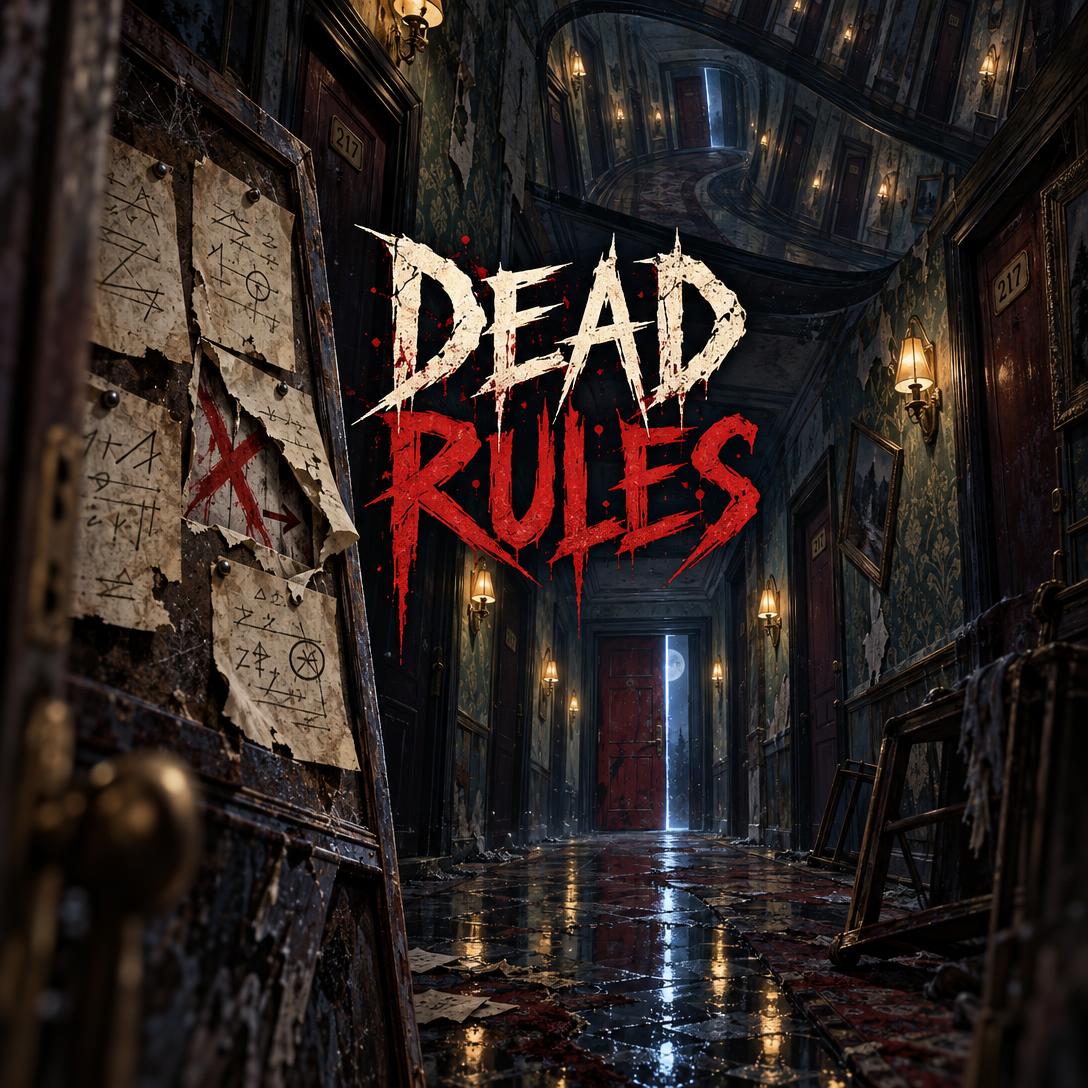
Dead Rules on Jenova is among the most tightly structured AI rules-horror survival games available in 2026. Each instance hands you a sheet of 8–10 rules. Some are true, some are false, and at most two are lethal. A lethal rule cannot kill you unless the scene has already shown a warning.
Other options fit different players. AI Dungeon is strongest for open-ended sandbox horror. NovelAI suits players who want to write and steer the prose themselves. DreamGen and Friends & Fables work for roleplay and dice-driven campaigns that can be pushed toward horror.
These factors separate fair AI horror from a random death generator:
✅ Warned lethality: Deaths trace back to signs already in the scene, not to conditions invented after the fact. ✅ Verifiable rules: Testing a rule reveals whether it is true, so ambiguity does not drag on forever. ✅ Persistent state: Many AI Dungeon players leave because the AI forgets characters and the plot drifts around hour three. Horror breaks down fastest when this happens. ✅ Measurable pressure: A running clock and a draining sanity meter replace vague "dread" with stakes you can count. ✅ No retcons: Once a clue, death, or rule result appears on the page, it stays true for the rest of the run.
To compare these games fairly, it helps to start with why structure matters so much in this genre.
Why Are AI Text Adventures Turning Toward Structured Horror?
AI text adventures are moving toward structured horror because unstructured AI storytelling drifts over long sessions. Horror depends on consistency more than most genres do. A monster that forgets its own rules stops being frightening and becomes arbitrary.
The research supports this. A 2026 synthesis of LLM-driven interactive fiction found that the strongest systems combine LLM creativity with symbolic checking, episodic memory, and explicit narrative scaffolding. The same review names "long-context hallucinations" and context truncation as ongoing problems.
On the TextQuests benchmark, no model fully completes any title without external hints. Long-horizon consistency is still the hardest problem in AI-driven interactive fiction.
Game designers named this tension well before large language models existed. Designer Ernest Adams argued that in interactive stories, "the conditions that obtain at that point in the story have got to be rationally derivable from everything that went beforehand." Scholars also describe high player agency without loss of narrative control as one of the major challenges in digital interactive narrative design.
Rules horror is a natural fit for this problem. The format comes from "rules-horror" (规则怪谈) and "infinite-flow" (无限流) web fiction. You wake in an uncanny place holding a list of rules, and you survive by working out which ones are lying.
That setup gives the AI a contract to keep. It also gives the player something concrete to reason about. Hobbyists on the Interactive Fiction Community Forum still point to earlier generative experiments such as The Fortuna (2023). The 2026 generation of games builds that contract into the game systems themselves.
What Should You Look for in an AI Horror Survival Game?
Look for an AI horror game that makes your deductions matter. That means the rules are testable, deaths are warned, time and sanity create real pressure, and established facts never change. Atmosphere is easy to generate. Fairness is the hard part, and it is what separates a survival puzzle from a gore slideshow.
Researchers describe agency as the ability to make choices that affect the outcome of the experience. Designers shape it through alternative storylines, optional objectives, and a range of mechanics. In horror, agency only feels real when the world follows rules you can learn.
🎯 The Fair Dread Framework
We evaluated each game on six weighted dimensions:
| Dimension | Weight | What It Measures |
|---|---|---|
| Rule legibility | 20% | Are the rules explicit, quotable, and testable? |
| Warning-before-death | 20% | Can a careful player always see lethal danger coming? |
| Consequence permanence | 15% | Do deaths, clues, and verified results stay fixed? |
| Pressure systems | 15% | Do time and sanity create measurable stakes? |
| Social deception | 15% | Can companions lie, act alone, or hide things? |
| State persistence | 15% | Does the game track rules, clues, and status over long runs? |
This framework favors games designed as games over general storytelling sandboxes. That is intentional. A sandbox can produce excellent horror, but only if you build the structure yourself.
How Do Dead Rules, AI Dungeon, NovelAI, DreamGen, and Friends & Fables Compare?
Dead Rules is the only option in this comparison built specifically as a rules-horror survival game. The alternatives are general storytelling or roleplay platforms that can run horror if you supply the structure. Each has real strengths, and the right choice depends on whether you want a designed puzzle or an open canvas.
| Dimension | Dead Rules (Jenova) | AI Dungeon | NovelAI | DreamGen | Friends & Fables |
|---|---|---|---|---|---|
| Core format | Seven-instance rules-horror survival run | Open sandbox text adventure | Author-steered story editor with Text Adventure mode | Story writing plus multi-character roleplay | AI Game Master for tabletop-style RPGs |
| Built-in rule/puzzle system | Rule sheets with true, false, and lethal rules | User-built via Story Cards and Memory | User-built via lorebooks | User-built via Scenarios | Dice and RPG rules |
| Death fairness | Lethal only after a visible warning | Depends on the model and the player's setup | Depends on the author's setup | Depends on the scenario | Governed by dice and rules |
| State tracking | Persistent panel for clock, sanity, points, rules, and clues | Memory and Story Cards | User-managed memory and lorebooks | Scenario story bible | Party tracking |
| Multiplayer | Single-player | Yes | Not documented | Multi-character roleplay (AI characters) | Yes (party play) |
| Pricing (as of 2026) | Free tier; paid plans from $20/mo | Free tier; $14.99–$99.99/mo | $10–$25/mo; trial only | Free tier; $7.83–$48.30/mo | Unverified |
| Best for | Deduction-driven horror with real stakes | Unlimited "do anything" freedom | Controlling the prose itself | Custom multi-character scenarios | Dice-based horror campaigns |
🕯️ Dead Rules (Jenova)
Dead Rules plays as a complete run of seven instances. Each instance is a haunted place with its own rule sheet, clock, and "echo" of someone who never left. The House sits between instances. It is a safe space where you rest, spend points on items, and live with the companions you have chosen to keep.
When you examine the design closely, the fairness guarantees stand out. Every false rule conflicts with something observable somewhere in the instance. Testing a rule in a way that would reveal its effect always reveals it. The in-world System Broadcast never states a falsehood, though it may omit details or fall silent.
Limitations: Dead Rules is single-player and text-based. It has no setup phase for choosing a genre or difficulty. Every ending is final, and the run closes when it ends. Horror intensity is unrestricted and can be graphic, which will not suit every player.
🐉 AI Dungeon
AI Dungeon offers JavaScript scripting, multiplayer storytelling, Story Cards, Memory, and Do/Say/See/Story input modes. Pricing runs from a free tier to $99.99 per month for Ultimate. One competitor's review concedes that no alternative matches AI Dungeon's pure do-literally-anything sandbox.
Limitations: Reviewers describe the platform as technical and not ideal for beginners, with weak image generation. Players also report plot drift in long sessions and content filters interrupting scenes.
✒️ NovelAI
NovelAI's Text Adventure mode interprets action and dialogue commands. Its lorebooks inject context when defined terms appear, which lets a patient author build a working rule sheet. Stories are encrypted with XSalsa20. Plans cost $10, $15, and $25 per month, and new accounts get a one-time trial of 50 text actions.
Limitations: One comparison notes that with NovelAI, you are steering a document, not playing a game. Another reviewer cites a small set of relatively outdated models. No native mobile app is documented.
🎭 DreamGen
DreamGen combines Scenarios (a story bible), a Choose-the-Next-Step mode, branching, and a Roleplay mode for multiple AI characters interacting in one scene. It offers a free tier, and paid plans run $7.83–$48.30 per month.
Limitations: DreamGen has no text-to-speech and no native mobile app. Its scenario library is smaller than AI Dungeon's. Note that the source for these details is DreamGen's own blog.
🎲 Friends & Fables
Friends & Fables is a purpose-built AI Game Master with dice, rules, and party tracking. It suits horror campaigns run under tabletop-style rules.
Limitations: Play follows an RPG system rather than open narrative. Current pricing could not be verified.
Other Options Worth Knowing
- Hidden Door offers multiplayer adventures in curated worlds. It works well if solo play feels lonely, but you cannot author your own world.
- Character.AI and Janitor AI appear often in 2026 roleplay roundups. Both are chat-first, which makes them better for character talk than for structured survival.
How Does an AI Rules-Horror Game Decide Which Rules Are Lies?
In Dead Rules, no rule's truth depends on where it came from. A handwritten note is not automatically trustworthy, and an official notice is not automatically a trap. Truth comes from consistency with the evidence. The game also plants enough clues that a careful player can always reach the answer.
Each rule sheet mixes 2–3 sources, such as a printed notice, a handwritten addendum, a crossed-out edit, or a spoken instruction. Players judge the rules using five principles:
- Multiple sources: The evidence in this instance decides which source is reliable.
- Consistency: True rules fit each other and the environment. Every false rule contradicts something observable.
- Beneficiary: False rules serve the anomalies. Ask who benefits when a rule is obeyed.
- Lethal with warning: A rule can only kill once the scene has already signaled the danger.
- Verification is final: Once a rule's effect is observed, on you, a companion, or an anomaly, its truth is settled.
In practice, the answer is not written in advance. Each clue that appears on the page limits what can come next. Ink smears, erasures, remains, and a companion's reaction all lock in part of the solution. Clues cannot be walked back later, so deduction rewards close reading.
The game resolves failure by "failing forward." A rule tested and found false narrows the field. Trusting the wrong source costs something but also teaches something. Only obeying a false rule hurts you. Breaking a false rule costs nothing.
Building this system on a general platform takes manual work. In AI Dungeon, you would write each rule into Story Cards and enforce consistency yourself. In NovelAI, lorebook entries activate on keywords, but the model has no built-in way to distinguish true rules from false ones.
How Do Sanity, Time Limits, and Grades Shape a Run in an AI Horror Game?
Dead Rules uses a clock and a sanity (SAN) meter as its two sources of pressure. The clock scales with the size of each instance. SAN drains steadily over time, and you win it back only through deduction and progress.
🕒 Time Scales
| Instance Scale | Boundary | Time Limit | Clock Unit |
|---|---|---|---|
| Small | A single building or vehicle | One night (~8 hours) | 10 minutes |
| Medium | A campus or compound | 1–3 days | 1 hour |
| Large | A district or town | 5–7 days | 6-hour block |
Every action costs time in proportion to what it involves. Searching a room takes tens of minutes, not one. An instance typically runs about 25–30 responses.
🧠 Sanity Decay and Recovery
SAN starts at 100 in every instance. It is tuned so that decay alone would empty it at roughly 70% of the time limit:
That works out to −3 per 10 minutes in a one-night instance and −5 per 6-hour block in a seven-day instance. You recover SAN by verifying a rule (+5), uncovering a key clue (+3), or completing a quest stage (+10). Decay is halved while you stay in a place that evidence marks as safe.
Low SAN affects what you can do next, not what already happened. At 50 or below, rule text blurs. At 30 or below, companions and anomalies become hard to tell apart. At 10 or below, your own body starts showing anomalous traits.
🏆 Grades and Endings
| Grade | Condition | Reward |
|---|---|---|
| Exit Escape | Left without completing the main quest | Nothing |
| Main Clear | Completed the main quest | 100 points |
| Truth Clear | Main Clear plus understanding the echo's truth | 200 points + 1 truth fragment |
| Perfect Clear | Truth Clear with every companion surviving | 300 points + 2 truth fragments |
Truth fragments slowly reveal what this world is. Collecting them decides whether the final instance can be understood. The run can end in six ways: True Escape, Succession, Broken Escape, Endless Loop, Death, or Alienation.
Can AI Companions in a Horror Game Lie, Betray, or Fall in Love With You?
Yes. In Dead Rules, companions have their own judgment. They can lie, act without you, die, or be left behind. Closeness with them builds only through moments written in play, never through declarations or time spent together.
Each instance has up to three companions. Their claims about the rules count as testimony, not fact. After the first instance, you keep up to two as fixed companions. They live with you in the House and walk into every later instance beside you. A companion left behind may return later as an anomaly.
Bonds move through four stages: Acquaintance, Trust, Closeness, and Intimacy. They deepen through shared risk, kept promises, and costly care. They weaken through betrayal or abandonment. A deeper bond gives you access to what a companion knows, but it never changes the rules, the clock, or your SAN. At Intimacy, romantic and sexual content between adult characters is allowed and written directly.
One more layer drives the game's paranoia. A disguised high-order entity, the Overseer, hides among your companions in every run. It reveals itself only through small, unexplained details. An anomaly hesitates near it. A rule seems not to touch it. It answers a question too quickly.
The comparison with alternatives is useful here. DreamGen's Roleplay mode lets multiple AI characters interact in one scene, and Character.AI personas stay in character across long chats. Neither pairs companionship with survival stakes tied to rules.
How Do You Start and Survive Your First Run in an AI Rules-Horror Game?
Most AI horror games start the same way. You establish where you are, read what the world tells you, and test one thing at a time. The difference is how much structure the game provides compared with how much you have to build.
Starting Dead Rules
- Open Dead Rules on Jenova and send any first message. There is no character creation. You play as yourself, and the game drops you straight into the first instance.
- Find and read the rule sheet before doing anything risky:
"I pull the card from my pocket and read every rule carefully."
- Test a low-stakes rule to learn which source is reliable:
"I stay by the vending machine and watch the hallway clock to see if rule 4 is true."
- Question companions, but treat their answers as testimony:
"I ask Dana what she saw on the stairs, then compare it against rule 6."
- When you think you understand whose echo this is, say so directly. A correct interpretation loosens the instance's grip on you.
Survival tips: Idle waiting loses SAN, so every clock unit should buy you information. Treat stronger wording, remains, or a companion's flinch as a possible lethal warning. In the House, spend points on protective items early. They absorb the cost of one non-lethal rule violation.
As of 2026, Jenova's free tier includes all core features with limited usage. The Plus plan costs $20 per month and provides 30× the free usage, which suits a full seven-instance run.
Starting a Horror Run in AI Dungeon or NovelAI
In AI Dungeon, write your own rule sheet into a Story Card. Then play using Do, Say, and See inputs. You will have to enforce consistency yourself, since the platform has no warning-before-death guarantee.
In NovelAI, open Text Adventure mode and add each rule as a lorebook entry so it surfaces when referenced. Expect some trial and error, since reviewers note that prompt controls may require experimentation.
What Do Interactive Fiction Designers Say About AI Horror Games?
Designers who build AI horror games agree that fairness beats intensity. Players will accept brutal outcomes if they could have seen them coming. They abandon games where death feels like the model's whim.
"The most important design decision in an AI horror game is where death is allowed to come from. In Dead Rules, an instance holds at most two lethal rules, and neither can kill until the scene has already shown a warning: stronger wording, a body, a companion going pale. When players die, they scroll back and find the sign they missed. That moment of recognition keeps people playing."
"We tuned sanity so that waiting alone empties the meter at about 70% of the time limit. Idle play loses, but careful investigation is never punished beyond the time it costs. Every recovery is tied to deduction. You get +5 for verifying a rule, +3 for a key clue, and +10 for a quest stage. The meter rewards thinking, not luck."
"The System Broadcast never lies, but truthful is not the same as helpful. Its omissions and word choices count as evidence. Players who start reading what it doesn't say get much further into the world's deeper story."
"Pacing is also a memory strategy. At roughly 25–30 responses per instance, a player can test most of a sheet while the key clues stay close at hand. Short, decisive turns keep the whole game coherent."
— Jenova Product Team, AI Game and Agent Design, platform production-tested with 30,000+ users in 70+ countries
What Are the Limitations of AI Horror Games in 2026?
Every AI horror game in 2026 trades freedom for structure, or structure for freedom. None fully solves long-context consistency. Research still lists memory bloat, subgoal tracking, and narrative integrity under dynamic expansion as open problems.
Dead Rules limits you to one player, text only, and a fixed seven-instance structure. It has no difficulty settings and no replay of a finished run, and its graphic content will not suit everyone. Its persistent tracker panel eases memory drift, but a very long run in a single chat still depends on the model's consistency.
AI Dungeon gives you the most freedom but the fewest guarantees. NovelAI offers deep control at the cost of a steeper learning curve and a subscription-only model. DreamGen and Friends & Fables handle horror well only when you, or the dice, supply the rules.
Contextual Recommendations
- You want deduction-driven horror with real consequences: Dead Rules.
- You want to type anything and see it happen: AI Dungeon.
- You want to write horror prose with fine control: NovelAI.
- You want horror campaigns with dice and a party: Friends & Fables.
- You want open-ended horror roleplay on Jenova with no fixed structure: Roleplay Game Master.
- You want to turn a memorable run into polished fiction: Creative Fiction Writer.
- You want to design your own rules-horror game: Game Designer Assistant, paired with Character Creator for your cast and anomalies.
References
- Loresquad — 8 Best AI Dungeon Alternatives in 2026 (AI Dungeon drift, NovelAI, Friends & Fables, Hidden Door, Character.AI)
- Emergent Mind — Interactive Fiction with LLM Agents (hybrid architectures, TextQuests results, open challenges)
- Game Developer — Games and Interactive Storytelling (Ernest Adams on narrative derivability)
- ResearchGate — Approaching a Player Model of Game Story Comprehension Through Affordance in Interactive Narrative
- Interactive Fiction Community Forum — Persuasion-Based Detective Story With AI Dialogue (The Fortuna reference)
- Medium, Understanding Games — Agency in Interactive Media
- Purdue University — Exploring Player Agency in Educational Video Games
- DreamGen — 6 Best NovelAI Alternatives (AI Dungeon features and pricing, DreamGen plans, NovelAI model limits)
- TechZella — NovelAI Review, Features, Pricing (Text Adventure mode, lorebooks, tiers, trial)
- Beyond AI Tools — NovelAI Reviews and Features (XSalsa20 story encryption)
- Fast.io — Character AI Alternatives: 7 Best AI Roleplay Apps (2026)