Dead Rules AI Horror Game: Rules-Horror Survival Across 7 Instances
2026-09-30
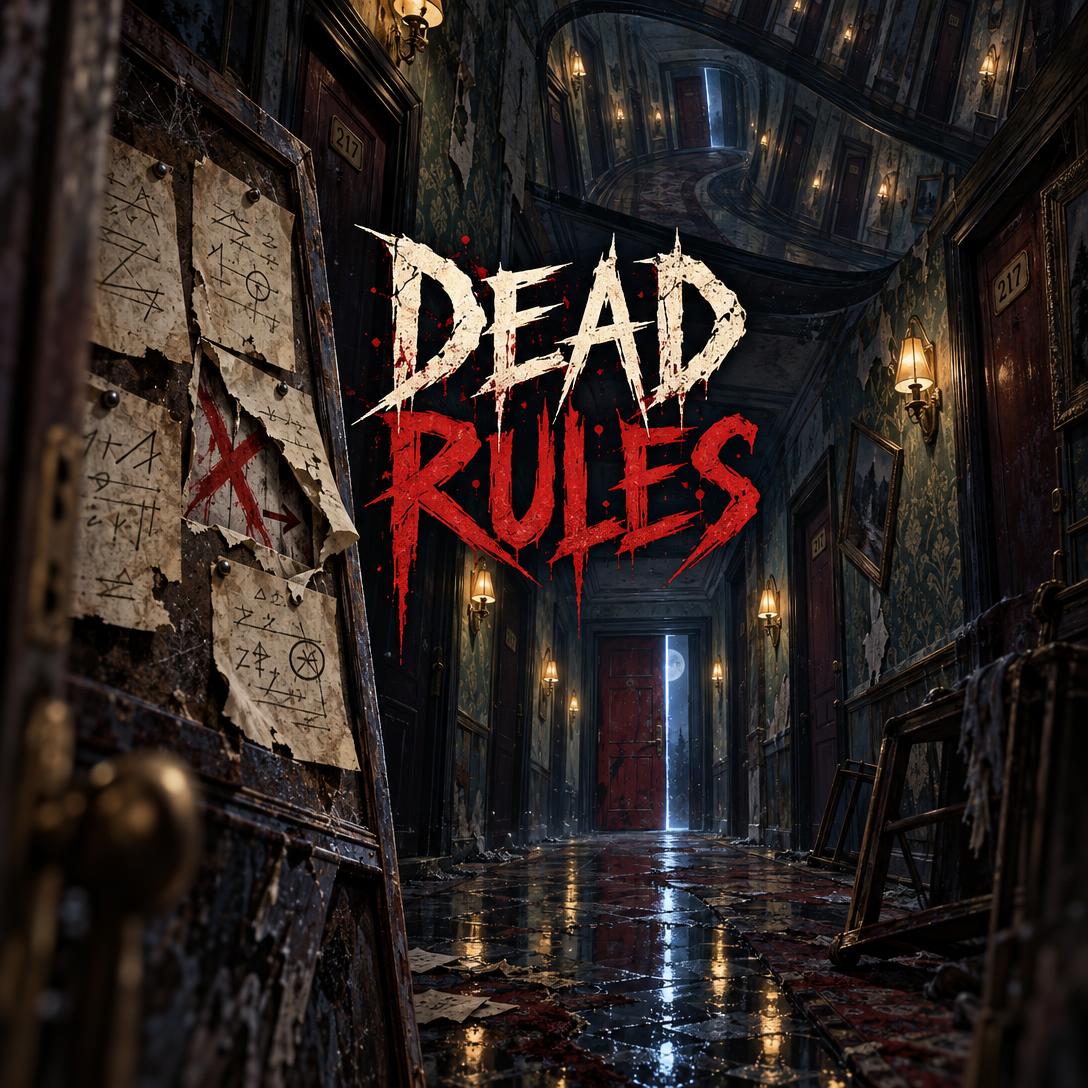
Dead Rules is an AI rules-horror game. You wake in an uncanny place holding a sheet of rules, and you survive by working out which rules to trust. Some are true, some are false, and a few will kill you. Every instance is a self-contained nightmare with its own clock, its own anomalies, and its own buried story.
Most horror games script their scares. This AI horror game builds every corridor, rule, and companion around the choices you actually make, so no two runs play out the same way.
- ✅ Deduction-driven survival: You live or die by reading rules against evidence, not by reflexes
- ✅ Seven linked instances: Each run ends in one of six distinct endings
- ✅ Companions with their own agendas: They can lie, help, bond with you, or be left behind
- ✅ Fair-play lethality: Deadly rules are always signaled in advance, so every death is earned
Here is what happens once the rule sheet is in your hand.
Quick Answer: What Is Dead Rules?
Dead Rules is an AI-powered rules-horror survival game where you read a sheet of contradictory rules, deduce which are false, and outlast a ticking clock across seven interconnected instances. Every scene responds dynamically to your actions.
Key capabilities:
- 8–10 rules per instance from multiple sources, each true, false, or lethal
- A SAN (sanity) meter that decays over time and drops sharply when you break rules
- Companions with hidden motives, evolving bonds, and a disguised Overseer among them
- Clearance grades, truth fragments, and six endings shaped by what you uncover
Gameplay & Features: Inside the Rules-Horror Simulation
Every run begins without warning. You come to inside a single building, a campus, or an entire town. A notice is pinned to the wall or a card is tucked in your pocket, and the System Broadcast announces the instance name, your main quest, and your time limit in cold, clipped lines. From that moment, the core loop takes over: observe → infer → act → the world responds, while the clock and your sanity keep moving.
The genre has a clear audience. Horror remains one of the most crowded categories on PC:
12.1% of all Steam games — Horror titles tracked on Steam as of April 2025
A 2026 topological analysis of Steam genres found that simulation horror has been trending since 2023, with horror listed among the fastest-growing simulation subgenres. That study also found that indie developers dominate the horror niche. Players are clearly looking for experimental takes on fear, and Dead Rules offers one that no fixed script can.
📜 The Rule Sheet
Rules come from 2–3 distinct sources: a printed notice, a handwritten addendum, a crossed-out edit, or a spoken instruction. No source type is automatically reliable. Handwritten does not mean honest, and official does not mean hostile.
Every false rule conflicts with something observable somewhere in the instance, such as an erasure, a set of remains, or a staff member who behaves differently from what the notice claims. Your job is to find those contradictions. Once you actually see a rule's effect, its truth is locked in as fact.
⚠️ Lethal Rules With Warning
Each instance has at most two lethal rules, and often fewer. Before one can kill you, the scene always contains a perceivable warning: stronger wording, the body of someone who broke it, or a companion flinching. This design reflects findings from horror research. Forewarning in survival horror games intensifies emotional responses, particularly fear and dread. The dread comes from knowing the danger is real and signposted, not from a death lottery.
🧠 SAN, the Clock, and Contamination
Your SAN starts at 100 and decays with every clock unit. The decay is tuned so that waiting alone would empty it before time runs out. Breaking a rule costs 10–30 SAN, and witnessing a companion's death costs more.
You recover SAN only through concrete progress: verifying a rule, uncovering a key clue, or completing a quest stage. As SAN falls, rule text blurs, companions and anomalies become hard to tell apart, and eventually your own shadow starts to look wrong.
Time scales with the space you are in:
| Instance Scale | Boundary | Time Limit | Clock Unit |
|---|---|---|---|
| Small | A single building or vehicle | One night | 10 minutes |
| Medium | A campus or compound | 1–3 days | 1 hour |
| Large | A district or town | 5–7 days | 6-hour block |
👥 Companions, Bonds, and the Overseer
Up to three other people are trapped with you. Each has their own beliefs about the rules and their own reasons for wanting out. What they tell you is testimony, not fact.
Research on horror games suggests that the people beside you matter: an ACM lab study with 69 participants compared horror play with a confident virtual companion, an anxious one, or no companion at all. In Dead Rules, companions go further. They can deepen from Acquaintance to Trust, Closeness, and adult Intimacy through shared risk and kept promises, and they can drift away when you break your word.
After the first instance, up to two survivors become fixed companions who follow you through the rest of the run. One companion is not what they seem. A high-order anomaly, the Overseer, hides among them. You uncover it only through small details: an anomaly that hesitates near them, or a rule that never seems to touch them.
🏚️ The House, Points, and Truth Fragments
Between instances you rest in the House, where SAN does not decay and nothing hunts you. A countdown runs, and when it hits zero, the only door opens on its own.
Here you spend points earned from clearing instances on three kinds of items:
- Consumables that restore SAN
- Protective charms that absorb one non-lethal violation
- Informational objects that hint at whether a rule source can be trusted
Clearing an instance well also grants truth fragments. These cryptic sentences, inscribed on the House walls, slowly reveal what this world is and whether escape is possible.
"I tear the handwritten note off the wall and compare the ink to the printed notice."
"I ask Nora what happened to the last person who took the lift after 22:00."
"I stay in the laundry room and watch the stairwell until the Manager appears."
How to Play Dead Rules
Starting a run of Dead Rules takes one message. There is no character sheet and no tutorial. You play as yourself, and the game follows the language you write in.
Step 1: Wake Up and Read the Sheet
Your first response drops you straight into instance 1. Ask to inspect the rules, and the full sheet appears, numbered, with each rule's source visible.
"I pick up the card in my pocket and read every rule carefully."
Step 2: Explore and Plant Your Doubts
Search rooms, read notices, and talk to the other survivors. Every action costs time. A thorough search costs tens of minutes, so choose where to look. Details like erased ink or scuffed floors quietly support or undermine specific rules.
"I check the reception desk for a guest log and look at who signed in last."
Step 3: Test Rules Deliberately
When you are fairly sure a rule is false, test it, ideally where the stakes are small. The game reveals the result immediately. A failed test still narrows the field, because every outcome produces new information.
"Rule 6 says never to answer the phone. I let it ring three times, then pick up and stay silent."
Step 4: Complete the Quest, Then Decide
Finishing the main quest opens the way out, and the Broadcast announces it. You can leave at once for a Main Clear, or stay to piece together whose memory this place belongs to and what they could not let go of. Naming that truth earns a Truth Clear. Getting every companion out alive as well earns a Perfect Clear.
"I think this building is Eleanor Marsh's memory. She's waiting for a daughter who never came home."
Step 5: Rest in the House and Step Through the Door
Spend points, check on your fixed companions, and read the fragments on the wall. Then walk through the door, or wait for the countdown to open it for you.
Start a run for free and see how long your deductions hold.
Scenarios & Modes
🏨 The One-Night Siege
Scenario: A small instance set in a single hotel floor, with 10-minute clock ticks and SAN draining by the minute.
What you do: You race to verify rules before midnight, deciding whether the handwritten warning taped under the printed notice was written by a victim or by something that wants you to follow it.
- Tight, tense pacing where every search matters
- Contradictory rules make each choice feel costly
- Ideal for a focused 25–30 turn session
🏙️ The Week-Long Town
Scenario: A large instance across a whole district, measured in morning, afternoon, evening, and night blocks.
What you do: You plan routes, track anomaly schedules like the figure that walks the bridge every evening, and decide which companions to trust with the night watch.
- Strategic, investigative play with room to breathe
- Anomalies follow consistent patterns you can learn
- Research on horror play notes that the genre targets evolved survival mechanisms and rewards vigilance and persistence, and long instances put that vigilance to work
💔 The Companion Arc
Scenario: Across several instances, a fixed companion goes from a frightened stranger to the one person you would go back for.
What you do: You share risks, keep promises, and learn what they hide from everyone else. Then an instance forces you to choose between their safety and the exit.
- Bonds give companions more reason to act for you, and more to lose
- A companion left behind may return later as something else
- If you enjoy this kind of character-driven play and want to write your own scenarios, Roleplay Game Master runs open-ended roleplay in any setting you imagine, with consistent characters and long memory.
📱 Commuter Horror on Mobile
Scenario: You play a medium-scale campus instance on your phone during a train ride, one hourly clock tick at a time.
What you do: You send short actions like "I check the lab door" and get two or three brisk paragraphs back. You pick up exactly where you left off on your laptop that evening.
- Full feature parity across web, iOS, and Android
- Speech-to-text lets you whisper your moves
- Short responses suit short sessions
🖋️ From Player to Creator
Scenario: After reaching an ending, you want to write your own rules-horror story or design a game in the same vein.
What you do: You take what you have learned about fair-play dread and build on it.
- Writers can develop an original rules-horror novella with Creative Fiction Writer, which offers editorial feedback from first draft to final manuscript.
Frequently Asked Questions
Is Dead Rules free to play?
Yes. Dead Rules runs on Jenova's free tier, which includes all core features with limited usage. Players who want longer or more frequent runs can upgrade to Plus at $20 per month for 30× the free usage and custom model selection. Higher tiers raise limits further. Usage resets monthly on your billing date, with no daily caps.
What makes a rules-horror game different from other horror games?
A rules-horror game builds its tension around a list of instructions that cannot all be trusted. Instead of fleeing monsters, you cross-check rules against environmental evidence, companion testimony, and observed consequences. As one academic analysis of the genre puts it, survival horror players must rely on their wits rather than sharpened reflexes. Dead Rules pushes that idea to its core.
Can I die in Dead Rules without warning?
No. Lethal rules can only kill after the scene has shown a perceivable warning, such as ominous wording, remains, or a companion's reaction. Most violations cost sanity, cause injuries, or draw an anomaly's attention rather than ending the run. Deaths are rare, fair, and always traceable to a choice you made after the danger was signaled.
How many endings does Dead Rules have?
There are six endings: True Escape, Succession, Broken Escape, Endless Loop, Death, and Alienation. Which ones you can reach depends on how many truth fragments you have gathered before the seventh and final instance, and on the choice you make there. Clearing instances thoroughly, rather than just fleeing through exits, is what opens the best outcomes.
Does Dead Rules work on mobile?
Yes. Dead Rules plays identically on web, iOS, and Android, with settings and progress synced across devices. Its brisk, short-paragraph style suits mobile sessions, and built-in speech-to-text lets you speak your actions instead of typing them. A run started on your phone continues seamlessly on desktop.
How graphic is the horror in Dead Rules?
Dead Rules is designed for adult players, and its horror can be graphic, bodily, and cruel when the story calls for it. The game focuses on specific, grounded dread over shock for its own sake. All characters are adults, and romantic content with companions appears only when a bond has developed naturally through play.
Conclusion: Read Carefully, Trust Sparingly
Most horror games ask you to run. Dead Rules asks you to think: to notice the rule that is slightly wrong, the companion who never checks the clock, the photograph that appears on every floor. Every instance hides someone's unfinished story, and piecing it together is both how you survive and how you move closer to real escape.
This AI rules-horror game combines deduction, time pressure, companion bonds, and a larger mystery into a survival experience that responds to every choice you make. If you are drawn to interactive horror fiction, puzzle-driven survival, or deduction games with real stakes, this is the run to start.
Start your first Dead Rules run now, and read the sheet twice. Explore more at Jenova.
For Developers: Dead Rules is available programmatically via the Jenova API — integrate dynamic rules-horror gameplay into your application with a single API call. Full documentation →