AI D&D Downtime Activities Generator: Crafting, Carousing & Rivals
2026-10-20
Jenova turns downtime from a dead spot in your session into a source of story. As of October 2026, Dungeon Masters can use Jenova as a D&D downtime activities generator. You build a custom AI agent loaded with your house rules, then generate crafting results, carousing complications, research leads, rival schemes, and job outcomes for every player character in seconds.
Official downtime rules are scattered across several books and often feel disconnected from the main plot. This AI produces events that tie back into your campaign's factions, NPCs, and open threads.
- ✅ Generates downtime events, complications, and rewards tailored to each character's goals
- ✅ Remembers ongoing projects, rivals, and contacts across sessions with persistent memory
- ✅ Works from your homebrew tables and house rules uploaded as a private knowledge base
- ✅ Runs on web, iOS, and Android, so you can generate results at the table
Downtime is where characters become people instead of stat blocks. They forge weapons, chase rumors, owe favors, and make enemies. Most DMs, however, end up hand-waving it because the prep cost is too high and the payoff feels too small. To see why a generator helps, start with the challenges DMs face when running downtime.
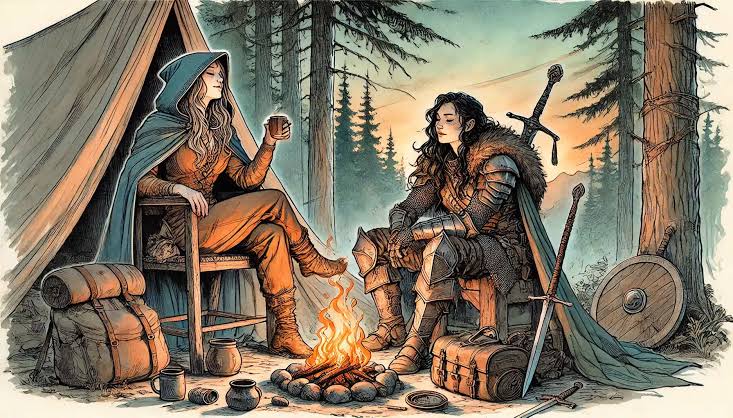
Quick Answer: What Is a D&D Downtime Activities Generator?
A D&D downtime activities generator is an AI tool that creates between-adventure events, such as crafting, carousing, research, work, and complications, tailored to your characters and campaign. It turns rules tables into story beats in seconds.
Key capabilities:
- Generates per-character downtime outcomes using the ruleset you specify (2014 5e, 2024 5e, or homebrew)
- Rolls complications and rivals that connect to your existing NPCs and factions
- Produces tavern content, handouts, and contracts that make downtime feel tangible
- Tracks multi-week projects so progress carries cleanly into the next session
Why Downtime Is the Hardest Part of a D&D Campaign to Run
Downtime covers what characters do between adventures. Activities are typically measured in units of a five-day "workweek" or longer, and many tables use the convention that a character attempts one downtime activity per week of downtime. The hobby keeps growing, and so does the number of tables trying to make this mode of play work.
USD 2.41 billion → USD 6.59 billion — Projected global tabletop role-playing game market growth from 2026 to 2035
USD 19.6 billion — Global tabletop games market value in 2025, forecast to reach USD 40.5 billion by 2035
But running downtime well is frustratingly difficult:
- Rules are split across multiple books, playtest documents, and editions
- Downtime sits in a "bubble" that rarely feeds the main plot
- Players without clear goals default to resting
- Prep scales with every character, every town, and every week
- Random tables produce numbers, not narrative
Rules Scattered Across Books and Editions
A DM looking for downtime rules has to piece them together from several places. The 2014 Player's Handbook crafting rule lets a character
. A 2017 playtest added magic item purchasing, heists, and work for levels 1–10, and Xanathar's Guide to Everything expanded the menu with crafting, carousing, and more.The Adventurers League even published a consolidated variant to unify these mechanics into a common template. With the 2024 books, DMs are still asking in community groups where the downtime rules actually live.
Downtime Lives in a Bubble
Critics of the 2024 Bastion system argue that it is walled off from the plot. The same critique applies to Xanathar's tables: they calculate gold and outcomes but rarely generate hooks that pull characters back into the story. When downtime doesn't feed the campaign, players stop caring about it.
Players Without Plans Just Rest
One DM describes running long downtime periods where players who didn't know what to do with the time defaulted to "rest, rest, rest". Without structured options, quieter players and newer players disengage. The fix is a curated menu that blends mechanical rewards, plot-relevant actions, and character-arc moments.
Prep Load Multiplies Fast
A common approach is to ask each player at the start of a downtime session what they want to do, then improvise. With five players, that means five sets of outcomes, complications, and NPC reactions on the spot. Building location-specific downtime menus for a globe-trotting campaign is described as a ton of work even by experienced DMs.
Tables Give Results, Not Stories
As Kobold Press notes, games long treated downtime as filler, leaving players asking "Does my character get anything out of this?" A d100 roll that says "you gain a rival" is only the start. Someone still has to invent who that rival is, why they care, and when they'll show up.
This is exactly what Jenova was built for.
The Jenova Solution: A Downtime Generator That Knows Your Campaign
Instead of flipping between sourcebooks and generic online tables, you build your own downtime generator in minutes. A custom agent on Jenova combines your instructions, your preferred AI model, a private knowledge base of house rules and campaign notes, and the tools you choose. Because memory persists across sessions, the agent knows that the rogue's crime spree three sessions ago angered the Zhentarim, so this week's complication can reflect that.
| Traditional Approach | Jenova |
|---|---|
| Flip through PHB, DMG, and Xanathar's for each activity | One agent applies your chosen ruleset consistently |
| Generic tables with no campaign context | Outcomes reference your NPCs, factions, and open threads |
| Improvise rivals and contacts on the spot | Named, motivated NPCs generated instantly |
| Track crafting progress in scattered notes | Persistent memory carries projects week to week |
| Downtime feels like accounting | Each result ends with a hook into the next adventure |
Generate Downtime Events Your Way
You define how the generator works. Tell it to use 2014 Xanathar's complications, a hybrid of 2024 Bastions with homebrew activities, or a system from another game entirely. For example, Tales of the Valiant prices carousing at 10, 50, or 250 gp per week depending on social class and resolves it with a CHA (Persuasion) check.
"Kaela the half-orc fighter spends two workweeks carousing with the dockworkers in Saltmarsh. Use Xanathar's rules, roll the outcome, and if she gains a contact, give me a name, a personality quirk, and one favor they could offer."
"Generate a d8 complication table for a wizard researching a lich's phylactery in a city library. Each entry should connect to the Cult of the Withered Eye from my notes."
Here's an illustrative example of the kind of table the agent can produce for a single prompt:
| d6 | Dockside Carousing Complication |
|---|---|
| 1 | A smuggler mistakes you for their contact and hands you a sealed crate |
| 2 | You win a dice game against a harbormaster's nephew, who now wants a rematch at any cost |
| 3 | A sea-shanty contest ends with you owing a bard a verse about your last adventure |
| 4 | You wake up with a tattoo of a guild sigil you don't recognize |
| 5 | A dock guard remembers your face from a brawl and starts following you |
| 6 | An old woman pays your tab and says, "Your father owed me more than this" |
Turn Downtime Into Plot Hooks
The best downtime systems link back to the campaign. If you want richer narrative around an outcome, Creative Fiction Writer can expand a two-line result into a short vignette you read aloud. Examples include the forge scene where a paladin's blade finally takes an edge, or the moment a spy realizes they've been followed.
"Write a 150-word vignette of the cleric's week of religious service at the Temple of Lathander, ending with a stranger leaving a cryptic note at the altar."
Fill the Tavern: Carousing, Gambling, and Bardic Nights
Carousing is the classic downtime activity, and taverns are where contacts, rumors, and brawls happen.
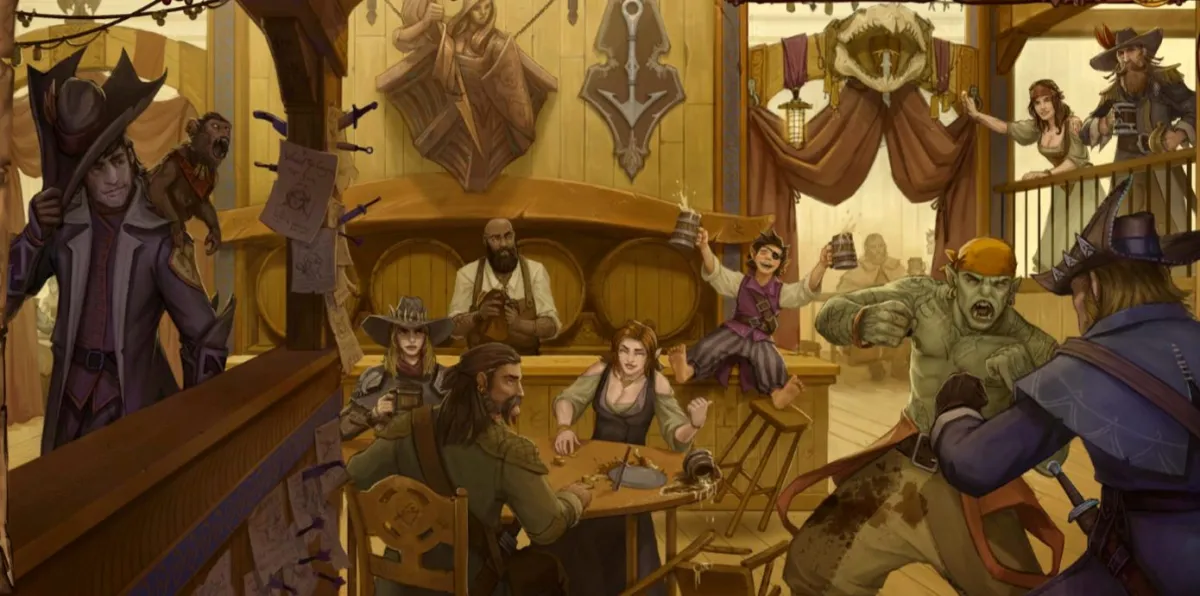
Turn a carousing week into an actual scene at the table:
- Quiz Maker builds in-world pub trivia about your setting's history, where correct answers earn contacts or discounts
- Lyric Writer writes the tavern bard's song about the party's last disaster, and the words can contain a clue
- Music Composition Assistant composes a simple melody for that shanty if your table enjoys performing
Create Handouts, Contracts, and Wanted Posters
Physical props make downtime outcomes feel real. Poster Maker designs wanted posters and guild notices like the ones pinned to the tavern wall above. PDF Generator formats crafting contracts, guild charters, and per-player downtime summaries you can hand out at the start of the next session.
Platform Capabilities That Matter for DMs
- Multi-model access: Use the newest models from OpenAI, Anthropic, Google, DeepSeek, xAI, and more, then switch if one writes better NPC dialogue for your style
- Persistent memory: Ongoing projects, rivals, and favors carry forward without re-explaining your campaign
- Private knowledge base: Upload your house rules, setting notes, and homebrew tables for grounded results
- Tool integrations (MCP): Connect Google Drive, Notion, or Reddit to pull campaign notes or browse community downtime ideas
Specialized AI Agents for D&D Downtime
A downtime generator handles outcomes. These agents handle the NPCs, consequences, logistics, and mini-games that grow out of them.
Name Generator
Every carousing roll that yields a contact needs a name that fits your setting. Name Generator brings cultural and linguistic depth to character naming, so your dockside smuggler doesn't sound like your elven archivist.
- Names matched to culture, region, and social class in your world
- Batches for rivals, contacts, shopkeepers, and guild members
- Tavern, ship, and business names for the places downtime happens
What-If Analyst
Xanathar's rivals work best when their reactions make sense. What-If Analyst maps the consequences of a character's downtime choices, such as what happens to the thieves' guild if the rogue informs on them.
- Traces second- and third-order consequences of downtime actions
- Challenges assumptions so faction reactions feel logical
- Surfaces complications you hadn't considered
Project Coordinator
Large tables mean many parallel downtime threads. Project Coordinator manages multiple team members in one chat. It tracks tasks, deadlines, dependencies, and blockers, which maps naturally onto tracking each player's multi-week crafting, training, and research projects.
- Tracks each character's downtime goals and progress
- Flags dependencies, such as a crafting project that needs research to finish first
- Keeps the whole group's between-session activity organized
Trading Card Game Creator
Gambling downtime is more fun when there's a real game to play. Trading Card Game Creator designs mechanics, lore, and balance, which lets you build an in-world card game your party can actually play in the tavern.
- Original game mechanics themed to your setting
- Balanced rules quick enough for a short table interlude
- Lore that ties the game to local factions or history
Try Jenova free, no credit card required.
How to Generate D&D Downtime Activities With AI
Step 1: Create a Custom Downtime Agent Set up a new custom agent and give it clear instructions about your ruleset and tone. Specify whether you use 2014 Xanathar's rules, 2024 Bastions, or homebrew, and how gritty or comedic complications should be.
"You are the downtime generator for my Forgotten Realms campaign. Use Xanathar's downtime rules, roll complications on every activity, and end each result with a one-sentence plot hook."
Step 2: Upload Your Campaign Knowledge Attach your house rules, faction notes, NPC roster, and any custom downtime tables to the agent's knowledge base. This grounds every result in your world instead of generic fantasy.
"Reference my faction document. Any crime complication should involve either the Xanathar Guild or the City Watch."
Step 3: Enter Each Character's Downtime Plan List what each player wants to do, how many workweeks they have, and any relevant modifiers. The agent resolves each activity and reports costs, rolls, and outcomes.
"Three workweeks of downtime. Theron crafts a longsword, Mira researches the Netherese ruins, and Jax pit fights. Resolve all three."
Step 4: Expand Results Into Story Ask for rivals, contacts, and vignettes based on what the rolls produced. A naming specialist and a consequence analyst can help flesh out the people and fallout involved.
"Jax lost his last pit fight. Create the rival who beat him, give them a reason to show up again, and tell me what the crowd's bookies think of Jax now."
Step 5: Prepare Handouts and Track Progress Generate player-facing summaries, contracts, or wanted posters, and confirm what carries forward. Because the agent remembers, next session's downtime picks up exactly where this one left off.
"Summarize this downtime for each player in two sentences, and note which projects are still in progress."
Results & Use Cases
⚒️ Crafting a Magic Weapon Over Multiple Workweeks
Scenario: A fighter wants to forge a +1 longsword across several downtime periods, with progress interrupted by an adventure.
Traditional Approach: The DM calculates costs and days by hand, records progress in a notebook, and improvises any flavor.
Jenova: The custom downtime agent tracks gold spent and weeks completed, rolls a complication at the halfway point, and remembers it all for next time.
- Progress carries forward automatically between sessions
- Complications reference your setting, such as a rare ore controlled by a rival guild
- The final result arrives with a vignette for the moment the blade is finished
🍺 A Carousing Week That Spawns a Rival
Scenario: The bard spends a week carousing in the noble quarter and rolls poorly.
Traditional Approach: "You gain a rival" goes into your notes and gets forgotten.
Jenova: The agent generates a named noble rival with a grudge, a motive, and an escalation plan. For a lighter twist, a Quiz Maker trivia night lets the bard win back face in a rematch.
- A rival with a name, motive, and future appearances
- A playable tavern scene instead of a single die roll
- A hook that pulls the bard into the next session's intrigue
📱 Mid-Session Downtime on Your Phone
Scenario: The party unexpectedly decides to spend a week in town during a live session.
Traditional Approach: The DM stalls, flips through books, or skips the downtime entirely.
Jenova: The DM opens the iOS or Android app, dictates each player's choices with speech-to-text, and gets outcomes in under a minute.
- Full feature parity with the web version
- Voice input keeps the game moving
- Campaign memory syncs across devices, so phone results match desktop prep
🎯 Running Downtime for a Six-Player Table
Scenario: Six players each pursue different activities, including crafting, research, crime, religious service, training, and work.
Traditional Approach: Hours of prep, or a rushed round-robin where some players get one sentence.
Jenova: The agent resolves all six in one pass, and a coordination agent tracks which projects depend on others.
- Every player gets a substantive, personalized outcome
- Cross-character complications become possible, such as the rogue's crime implicating the cleric's temple
- Prep drops from hours to minutes
FAQ
Is there a free D&D downtime activities generator?
Yes. Jenova's free tier includes all core features with limited monthly usage, which is enough to build a custom downtime agent and generate outcomes for a typical campaign. Heavier users can upgrade to Plus at $20 per month for 30× usage and custom model selection. Usage resets monthly with no daily caps, so you can generate a whole session's downtime in one sitting.
Can AI generate downtime activities using Xanathar's Guide or 2024 rules?
Yes, if you tell it which ruleset to follow. Upload a summary of your preferred rules, whether that's 2014 Xanathar's activities, 2024 Bastions, or homebrew, to your agent's knowledge base so results stay consistent. For the most reliable outcomes, include your own costs, DCs, and complication tables rather than relying on the AI's general recall of the books.
How do I make D&D downtime more interesting for players?
Offer a structured menu that mixes mechanical rewards, plot-relevant actions, and character-arc moments. This approach is recommended by experienced DMs to keep downtime from becoming isolated bookkeeping. Then make every outcome feed the main story through rivals, contacts, and clues. What-If Analyst helps trace how downtime choices ripple into your factions.
Can a DnD downtime activities generator remember ongoing projects?
On Jenova, yes. Persistent cross-session memory means your agent recalls multi-week crafting projects, rivals, favors owed, and contacts gained. You don't need to re-paste campaign notes every session. Some DMs even run downtime measured in years, and long-term memory makes that kind of tracking practical.
How is AI different from random downtime tables?
Random tables give a result. AI gives a result with context. A table might say "you gain a contact," while an AI generator tells you who the contact is, how they connect to your factions, and what favor they offer. Pair it with Name Generator for setting-appropriate names that keep your NPC roster distinct.
Conclusion
Downtime fails when it's scattered across sourcebooks, disconnected from the plot, and too prep-heavy to run well. A D&D downtime activities generator built on Jenova fixes all three. It applies your ruleset consistently, ties every outcome to your campaign's factions and NPCs, and remembers each character's projects from session to session.
Add Creative Fiction Writer for read-aloud vignettes, Poster Maker for in-world handouts, and Project Coordinator to keep a large table's downtime organized. Downtime then becomes the part of the campaign your players look forward to most.
Explore the full agent library at Jenova and build your downtime generator today.
For Developers: Every agent in this article is available programmatically via the Jenova API, so you can build AI-powered downtime, NPC, and campaign tools into your virtual tabletop or companion app with a single integration. Full documentation →