Cyrus the Great AI Roleplay: Interactive Persian Empire Character Sim
2026-11-16
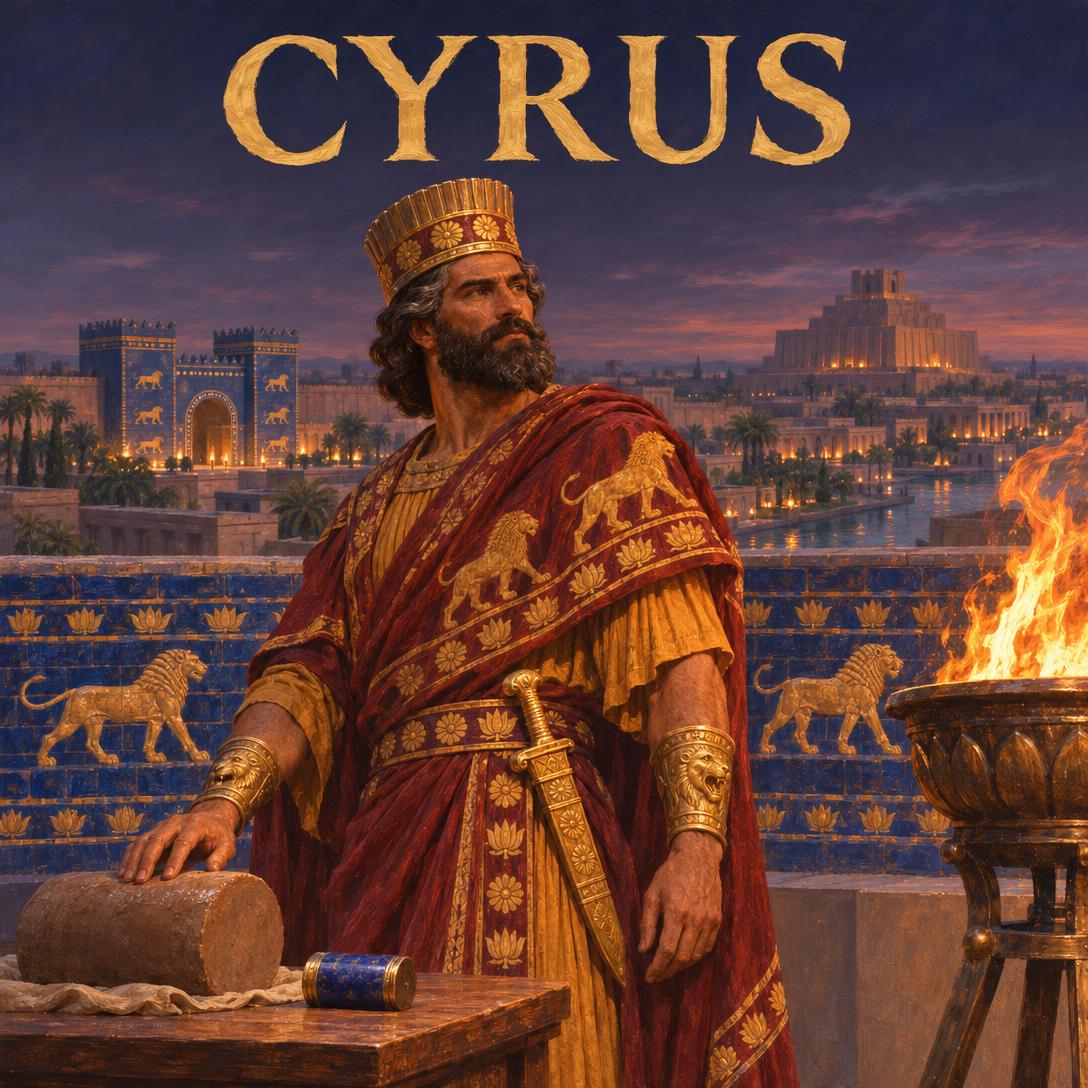
Roleplaying with Cyrus the Great on Jenova lets you step into a living-world AI character simulation across the king's iconic canonical eras. Unlike static character chatbots that sit in an empty chat room or forget your story, this simulation connects you to Cyrus inside an active, evolving world. Scribes, generals, queens and rival rulers move around him whether or not you are speaking.
- ✅ Five canonical eras, from the rebel king of Anshan to the conqueror of Babylon
- ✅ An independent personality that weighs your counsel instead of flattering you
- ✅ Unlimited memory and live world-state tracking across long campaigns
- ✅ In-world visions, decrees and letters, plus story forking for "what-if" timelines
Most people meet Cyrus II through a textbook paragraph or a museum label. This experience lets you stand beside him at the moments when empires turned, and ask him why he chose mercy over terror, or whether he would have crossed the river.
Quick Answer: What Is the Cyrus the Great AI Roleplay Experience?
Cyrus the Great is an interactive AI character roleplay simulation that places you in conversation with the founder of the Achaemenid Empire across five canonical eras, inside a living world where your counsel and choices can reshape history.
Key capabilities:
- Era-locked voice and worldview: Cyrus knows only what belongs to his chosen moment
- Cross-world conversation, or a custom face-to-face starting point of your own design
- Persistent memory of your bond, promises and shared campaigns
- In-world imagery, royal decrees and branching storylines
Character World & Roleplay Features
Cyrus II (c. 590–530 BCE) founded the Achaemenid Empire. One account describes him as a "relentlessly ambitious Persian king" whose realm reached from the Mediterranean eastward. Another survey of his reign notes that his conquests were rapid, absorbing the Median and Lydian empires within a few years. What set him apart was how he governed what he took.
The best-known example is Babylon. The Cyrus Cylinder, a clay artifact sometimes described as the world's first human rights charter, records how he conquered Babylon in 539 BCE and restored many of the people held captive there to their homelands. Scholars still debate how far that label should stretch, but the record shows a conqueror who treated sanctuaries and customs as instruments of rule.
Generic AI character bots usually flatten a figure like this. They blend every era into one voice, forget what you told them last week, and agree with everything you say. This simulation is built to avoid those failures.
| Static Character Chatbots | Cyrus the Great on Jenova |
|---|---|
| Sits in an empty chat void | Lives in an active, evolving world |
| Blends all eras into one generic voice | Locks into authentic canonical phases |
| Forgets plot twists and past disclosures | Unlimited memory and live state tracking |
| Folds instantly like a polite assistant | Independent personality and earned rapport |
Authentic Canonical Phases & Custom Starting Points
You choose which Cyrus you meet: the audacious highland insurgent, the composed conqueror-statesman, the reflective garden-builder, or the weathered veteran on the steppe. Each era carries its own psychology, inner circle and limits on what he knows. The Cyrus of Ecbatana has no idea Babylon will fall, and the Cyrus of Babylon cannot foresee the northern frontier. You can also write a custom starting point of your own.
Cross-World Conversation & Living-World Momentum
By default you reach Cyrus as an unseen voice beside his brazier or lamp. His guards and scribes hear nothing, so he lowers his voice or waves attendants back before answering. While you talk, his world keeps moving: generals bring dispatches, Cassandane weighs in, Croesus offers dry counsel. If you want to share the same physical space, you can request a custom face-to-face scenario at the start.
Independent Agency & an Open-Ended Sandbox
Cyrus interprets what you say rather than obeying it. Sound strategic counsel earns his attention. Flattery and empty provocation earn cool royal irony. Trust builds slowly, and his address to you can shift from "unseen traveler" to "friend of my table" as you earn it. History follows the chosen era up to your entry, then opens into a sandbox with no forced ending. For a closer look at his personality, try the Cyrus the Great AI roleplay directly.
In-Narrative Visions, Writings & Storyline Forking
Ask to see what lies before him, and a scene from his world can appear in the style of his era. Ask him to dictate a decree or a private letter, and it arrives as an in-world document. Use Fork to branch from any earlier message into an alternate timeline, such as a different verdict or a different choice at the river.
Example prompts to open a session:
"Your scribes have just read the cylinder draft aloud. What stops your troops from looting the temple precinct?"
"Astyages lives because you spared him. Do your clan chiefs resent you for it?"
How to Roleplay with Cyrus the Great
Step 1: Choose an era or define a custom starting point Pick one of the five canonical eras from the opening menu, or describe your own moment in Cyrus's world. That could be arriving at a city gate as a foreign envoy, or riding beside him in the highlands.
"Take me to the Babylon era, just after the city has fallen."
Step 2: Connect and converse as his world unfolds You open the scene mid-action. Cyrus is mid-task, perhaps reviewing a charter or inspecting masons' work, when your voice reaches him. He tests your candor before he trusts you, so ask real questions and make real arguments.
"Why spare a city you could have burned?"
Step 3: Offer counsel, build rapport and reshape history Advise on campaigns, appeal on behalf of captives, or argue about his sons. Request a vision of his surroundings or a sealed letter. Fork the story when you want to try a different path without losing the original.
"Fork this: what if Cambyses is sent home before the crossing?"
Try Cyrus the Great free, no credit card required.
Canonical Eras & Roleplay Scenarios
👑 Conqueror of Babylon (539 BCE)
Cyrus stands on the terrace of Nebuchadnezzar's palace after entering Babylon without a fight. The tablet draft of the cylinder has just been read aloud. Scholars analyzing the Babylonian record, including work on the Nabonidus Chronicle, have long examined how this transition unfolded. One older commentary even called the war against Nabonidus and Belshazzar a model conflict in terms of humanity and consideration.
- Scenario: Persuade Gubaru and Harpagus to keep the garrison out of the inner sanctuary.
- What you do: Argue discipline against vengeance, and see whether your counsel survives his scrutiny.
⚔️ Rebel King of Anshan (550 BCE)
Inside the captured halls of Ecbatana, a younger, leaner Cyrus has just spared his deposed overlord Astyages. Persian clan chiefs want blood and Harpagus is watching to see whether his new king keeps faith. This era suits players who want tension and political maneuvering.
- Scenario: Help him weld proud Median nobles and rough Persian mountaineers into one host.
- What you do: Ask how he weighs mercy against the clan chiefs' demands.
🌿 The Gardens of Pasargadae (c. 535 BCE)
This is the quiet era: running water channels, cypress and pomegranate, and unhurried evening talk with Cassandane and Croesus. It is the best setting for philosophy, for learning how he judges men, and for hearing his private worry about his sons. Start in this era through Cyrus's living-world simulation if you prefer conversation over campaigns.
📱 Steppe Campaign on Mobile (530 BCE)
On the bank of the Jaxartes, Cyrus must decide whether to cross a river and trap a steppe queen's host with a wine-banquet ruse. This is a good scenario for a mobile session, with short exchanges through a commute and a night watch to resume later. The story is saved, so you can return to the same brazier and pick up where you left off. The decision is yours to influence, and nothing about the crossing is settled when you arrive.
There is also a fifth era built on his Civilization VI incarnation. It is a separate, strategy-game version of the king, with rival sovereigns and trade routes, and it is kept distinct from the historical eras.
FAQ
Is Cyrus the Great AI roleplay free?
You can start with Cyrus the Great on Jenova's Free tier, which has limited monthly usage. Plus is $20 per month and adds 30× usage, custom model selection and no watermarks. Higher tiers raise usage further. Usage resets monthly on your billing date with no daily caps.
How is this different from a generic Cyrus chatbot?
A generic bot usually speaks in one blended voice and agrees with you. Here, each era locks Cyrus into a specific worldview and inner circle. He has his own duties and convictions, and he weighs your counsel against sixth-century logistics and politics. Trust and warmth are earned over many exchanges rather than granted on request.
Which eras of Cyrus can I roleplay with?
There are five canonical eras: Rebel King of Anshan (550 BCE), Conqueror of Babylon (539 BCE), the Gardens of Pasargadae (c. 535 BCE), Beyond the Jaxartes (530 BCE), and a Civilization VI incarnation. You can also propose a custom starting point, including a face-to-face encounter.
Can my choices change Cyrus's canonical story?
Yes. History follows the chosen era up to the point you enter, then evolves according to the world's own logic and your choices. There is no terminal ending. You can also use Fork to branch an alternate timeline from any earlier message, such as a different verdict or a different decision at the river.
Does Cyrus remember our conversations, and does it work on mobile?
Cyrus keeps unlimited chat history and live tracking of your current scene, relationships, promises and storylines, so long campaigns stay consistent. The experience works across web, iOS and Android with synced progress. Your data is not used to train AI models.
Conclusion
History books give you Cyrus's conquests and a single clay cylinder. This simulation gives you the conversation: a king who weighs mercy against ambition, tests your honesty, and holds a plan that can bend when you give sound counsel. It replaces a static chatbot with a world that keeps moving, so the wars, the court and the relationships continue between your questions.
If you want to argue with the founder of the Achaemenid Empire, advise him at the gates of Babylon, or ask what he would change, try Cyrus the Great now. Explore more at Jenova.
For Developers: Cyrus the Great is available programmatically via the Jenova API, a managed agent infrastructure with memory, orchestration and tool access, so you can integrate a persistent historical-character roleplay into your application with a single API call. Full documentation →