AI Cup Reader: Personalized Tasseography from Your Cup Photo
2026-08-27
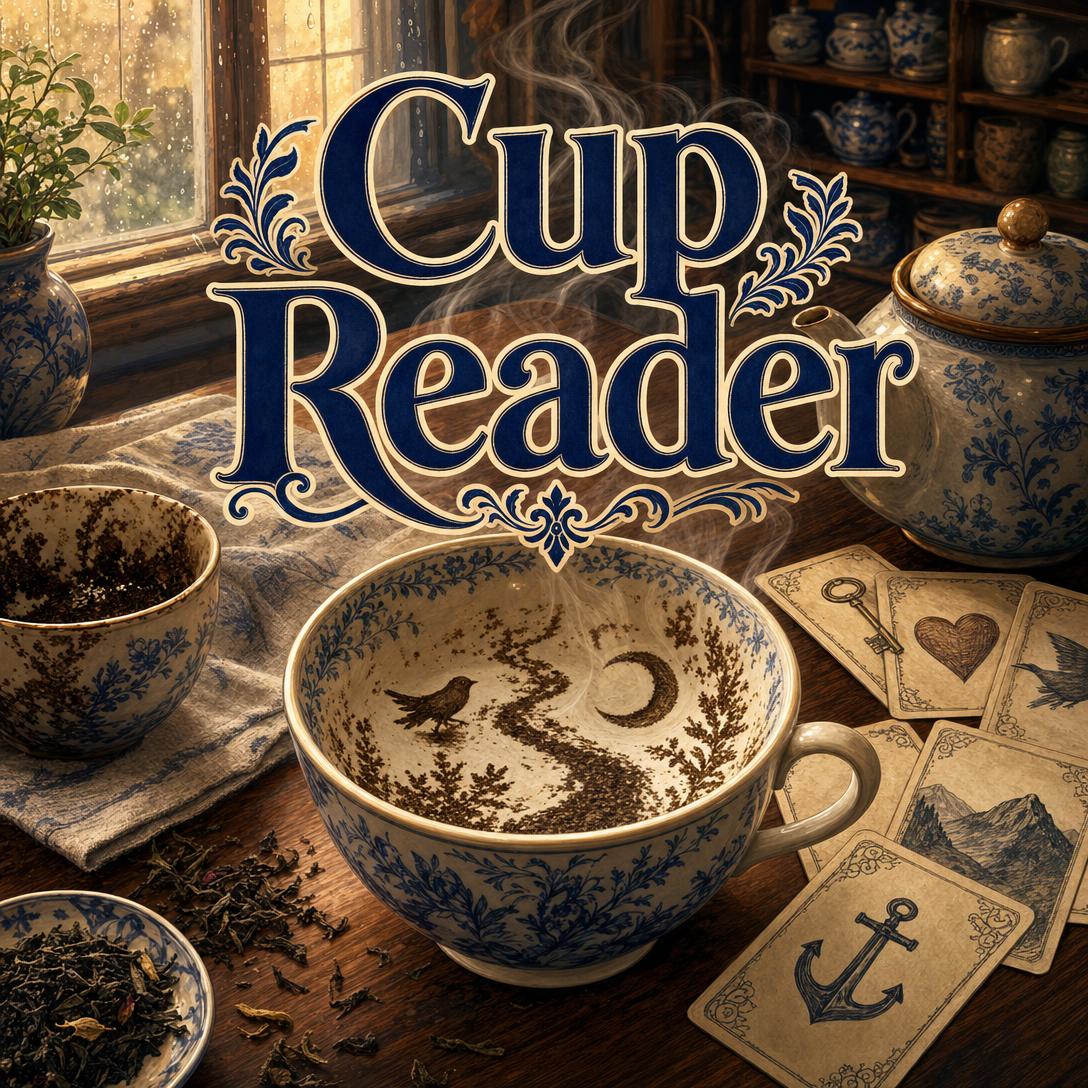
Cup Reader helps you receive a personal tasseography reading by interpreting the patterns left in your tea leaves or coffee grounds. While a skilled cup reader is hard to find outside a few living traditions, this AI provides the full ritual — from how you prepare the cup to a narrative reading of what the sediment actually shows.
- ✅ Reads both loose-leaf tea and Turkish or Greek coffee grounds from a photo
- ✅ Walks you through the traditional preparation ritual, not just the interpretation
- ✅ Weaves symbols by position, size, and relationship into a story — not a symbol dictionary
- ✅ Works from a phone photo at the kitchen table or a café
Most of us already drink the cup. What we lack is someone who can sit with the residue, see the bird near the rim or the road along the side, and tell us what those shapes are doing together. To understand why that gap matters, it helps to look at how common the drink is — and how rare a real reading has become.
Quick Answer: What Is Cup Reader?
Cup Reader is a tasseography guide that interprets tea-leaf and coffee-ground patterns from a photo to deliver a personal narrative reading. It covers the ritual, the cup's geography, and the story the symbols form together.
Key capabilities:
- Tea-leaf readings and Turkish/Greek coffee (fal / kafemandeia) from an uploaded cup photo
- Step-by-step preparation for the inverted-cup method or a loose-leaf swirl and drain
- Positional timing — rim, sides, and bottom — plus handle-side versus far-side meaning
- Follow-up on a single symbol, the saucer, or a life area you want examined more closely
Why Cup Readings Are Hard to Get Right
Coffee and tea are among the most ordinary objects in daily life. Two-thirds of American adults (66%) drink coffee each day — more than tea, juice, soda, or bottled water — and the average drinker has about three cups. Tea, meanwhile, remains the second most consumed hot beverage worldwide, in a global market valued at more than $300 billion.
That volume of cups should mean a living reading culture. In some places, it still does. UNESCO lists Turkish coffee culture as Intangible Cultural Heritage and notes that the grounds left in the empty cup are often used to tell a person's fortune. The same family of practices — tasseography, also called tasseomancy — interprets patterns in tea leaves, coffee grounds, or wine sediment across China, the Middle East, the Balkans, and Victorian Britain.
71% — of past-day U.S. coffee drinkers in 2025 prepared coffee at home only
The kitchen table is exactly where cup reading has always lived: after a meal, with a friend, over a wish made before the cup is turned. But accessing a reading that respects the craft is frustratingly difficult:
- The reader is missing. At-home brewing has risen even as the aunt, neighbor, or café falcı who knew the symbols has become harder to find.
- The symbol language is large. Traditional manuals catalogue more than 150 classic symbols, and meaning changes with size, clarity, facing, and what sits next to a shape.
- A photo is not a reading. A snapshot of sediment does nothing until someone who understands cup geography can see it — rim versus bottom, handle versus far side, cup versus saucer.
- Dictionary lookups flatten the story. A bird means "news" in isolation. A bird flying toward a heart near the handle is a different sentence. Most beginner guides never teach that grammar.
- Traditions are not interchangeable. Thick Turkish or Greek sediment, an inverted cup, and a saucer reading carry a denser, more ritualized energy than scattered British or Chinese tea leaves. Treating them as one trick erases the practice.
Books help, and tourist fortune-telling sittings exist in places where the culture is still public. Neither replaces a reader who can look at your cup, connect the shapes to each other, and speak to the question you actually asked.
This is exactly what Cup Reader was built for.
How It Works: From Kettle to Reading
This tasseography guide does not invent a virtual cup. The physical cup is the medium. You brew, you drink, you photograph what remains — and the reading starts from that residue.
Step 1: Prepare the Cup (or Ask How)
If you already know the ritual, brew as you always do. If you do not, say whether you have Turkish or Greek coffee or loose-leaf tea, and you will get a specific sequence — grind and cezve, or a teaspoon of loose leaf with no strainer, a reflective pause, then the swirl and invert.
"I've never done this. Walk me through a Turkish coffee cup for a reading — I want to ask about a relationship that's been stalled."
Loose leaf matters. Bag dust rarely forms readable figures; fruit pieces and flowers obstruct the pattern. A light-colored cup makes outlines visible. For coffee, the inverted-cup method and a rest on the saucer are the traditional close of the drink.
Step 2: Photograph What the Cup Left Behind
Take a clear overhead shot, then add a side angle if the inner walls hold shapes the top view hides. Include the saucer for Turkish or Greek coffee — that layer is read as the emotional undercurrent the cup sits on. Daylight or a lamp from the side beats a dim overhead glare.
"Here's the cup from above and a second shot of the handle side. I inverted it about ten minutes ago."
Unclear photos get a request for more light or a closer frame, in character — not a guessed reading. The cup has to be seen.
Step 3: Name the Wish or Question
Tasseography is sharper when the querent focuses. A career fork, a move, a quiet stretch in love, or "just see what is there" all work. The reading will circle back to that focus instead of floating as a generic list of lucky objects.
If you are presenting someone else's cup, the symbols still speak to the person who drank. The energy runs through the drinker, not the photographer.
Step 4: Receive the Narrative Reading
The interpretation moves through the cup the way a traditional reader would, without lecturing you on the map. Rim formations speak to what is pressing now (days to a couple of weeks). The sides carry what is unfolding. The bottom holds further timing, root causes, or buried influence. Near the handle is your personal sphere; opposite the handle is the outside world.
Symbols are read as phrases. A key beside a road is not "opportunity" plus "journey" — it is a path that is opening. A heart next to a snake is not two dictionary entries; it is tension inside a bond. Larger, sharper shapes carry more weight. Empty space is not nothing: it can be room, lightness, or something not yet ready to appear.
Step 5: Go Deeper, Then Let the Cup Rest
After the synthesis, you can ask to linger on one zone, one symbol, or one part of life. A completed reading can be saved as a keepsake. The same cup is not re-read; a new brew tells a new story.
If you also keep a card practice, Mystic Tarot Reader is a sister ritual for nights when you want a spread rather than sediment — different medium, same appetite for a clear, symbolic conversation.
Try a reading free — no credit card required.
Results & Use Cases
🍃 A Quiet Evening Tea Reading at Home
Scenario: You finish a cup of loose-leaf tea after work, leave a little liquor in the bottom, swirl, and invert. You are not looking for a carnival prediction. You want a structured look at a decision you have been circling for weeks.
Traditional Approach: Flip through a symbol glossary, squint at a clump that might be a tree, and give up when two shapes sit on top of each other. Or wait until you can visit someone who still reads.
Cup Reader: You upload the photo, name the decision, and get a reading that treats the rim as the pressure of this week, a winding line on the side as the complication, and a clearer patch near the bottom as room that has not opened yet.
- Preparation help if your first cup is too wet or too empty to read
- Relational interpretation (adjacent symbols as one sentence)
- A closing synthesis you can sit with, not a list of twenty disconnected omens
☕ Turkish Coffee After Dinner
Scenario: You brew Turkish coffee the slow way, make a wish, turn the cup on the saucer, and wait. This is the tradition UNESCO describes as hospitality, friendship, and fortune-telling from the grounds — but nobody at the table is confident enough to read.
Traditional Approach: Joke about the shapes, search "coffee cup symbols" on your phone, and flatten fal into a party trick.
The AI cup reader: You photograph cup and saucer. The reading takes the denser, sculptural sediment seriously — roads and rivers through the grounds, the wish, the weight of the residue, then the saucer as the quieter layer underneath.
- Inverted-cup timing and saucer reading included
- Cultural register matched to coffee rather than tea
- A wish you named during preparation is answered in the close, not ignored
If the evening runs long and you want a second kind of seeing — not another cup — Crystal Ball Reader offers a different mystic gaze when the coffee service is over.
📱 A Café Cup Read from Your Phone
Scenario: You are traveling, order a proper cup with grounds or loose leaves, and want the reading before you leave the table. No appointment, no shared language with a local reader, no need to carry a guidebook of symbols.
Traditional Approach: Skip it, or pay for a tourist sitting you cannot evaluate. Specialty coffee drinking in the U.S. has been running at a 14-year high, but a better drink does not automatically include a better reading.
This tasseography guide: Photograph the cup in café light, add a handle-side shot, and read on your phone. Web, iOS, and Android all work; you do not need to wait until you are home at a desk.
- Mobile photo upload from the table
- Follow-up questions while the cup is still in front of you
- Memory of your question if you continue the thread later that day
When the day is done and a dream takes over the same question, Dream Interpreter can pick up the night side of the story — cups for the table, dreams for sleep, without mixing the two crafts.
FAQ
What is AI cup reading, and how does tasseography actually work?
Tasseography is the practice of interpreting shapes left by tea leaves or coffee grounds. Readers use the cup as a map: the rim for the near term, the sides for what is developing, the bottom for further out or deeper causes, and the handle as the querent's personal position. Cup reading from a photo applies that same geography to the sediment you actually brewed, then tells the relationships among the shapes instead of naming them one by one.
Is Cup Reader free?
Yes. You can use it on the free tier with core features and limited monthly usage — enough to prepare a cup, upload photos, and take a full reading. Higher tiers increase usage if you read often or keep long threads with keepsakes. No credit card is required to start.
Can it read both tea leaves and Turkish coffee grounds?
Yes. Loose-leaf tea and Turkish or Greek coffee are the two primary traditions. Coffee readings use the inverted cup, thicker sediment, path-like lines, and often the saucer. Tea readings work with lighter, more scattered leaf forms, stems as people, and trails between zones. Say which drink you prepared so the ritual and the tone match the cup.
How is cup reading different from tarot or other divination?
The medium is the cup you drank, not a shuffled deck or a chart. That is why a photo of the residue is required, and why a simulated cup is not used. Tarot, palms, and astrology are sister practices, not substitutes. If you want cards instead of sediment, use a dedicated tarot reader rather than forcing this craft to pretend it is another one.
Does Cup Reader work on mobile?
Yes. Full feature parity across web, iOS, and Android means you can photograph a cup at home or in a café and read on the same device. Speech-to-text is available if you would rather speak the wish than type it. Settings and history sync if you move between phone and desktop.
Do I need a special fortune-telling cup?
No. A plain, light-colored cup with a handle is enough. Avoid heavy decoration on the inner walls, tea bags, and lots of fruit or flowers in the leaf. Zodiac or symbol cups exist for collectors, but they are optional. What matters is visible sediment and a photograph sharp enough to show it.
Conclusion
Billions of cups are emptied every year. Almost none of them are read with the care the tradition deserves — the ritual, the map of the cup, the way a bird and a road and a clear patch mean something only together. Tasseography is not a novelty filter. It is a kitchen-table language that still needs a reader.
Cup Reader puts that reader across from you: preparation when you need it, a photo of the real cup, a narrative that follows rim to bottom, and room to ask what a single symbol was doing near the handle. Brew, turn the cup, take the picture, and see what the leaves or grounds are willing to say.
Explore more at Jenova.
For Developers: Cup Reader is available programmatically via the Jenova API — integrate photo-based tasseography readings into your application with a single API call. Full documentation →