Cthulhu AI Roleplay: Interactive Lovecraftian Character Sim
2026-11-12
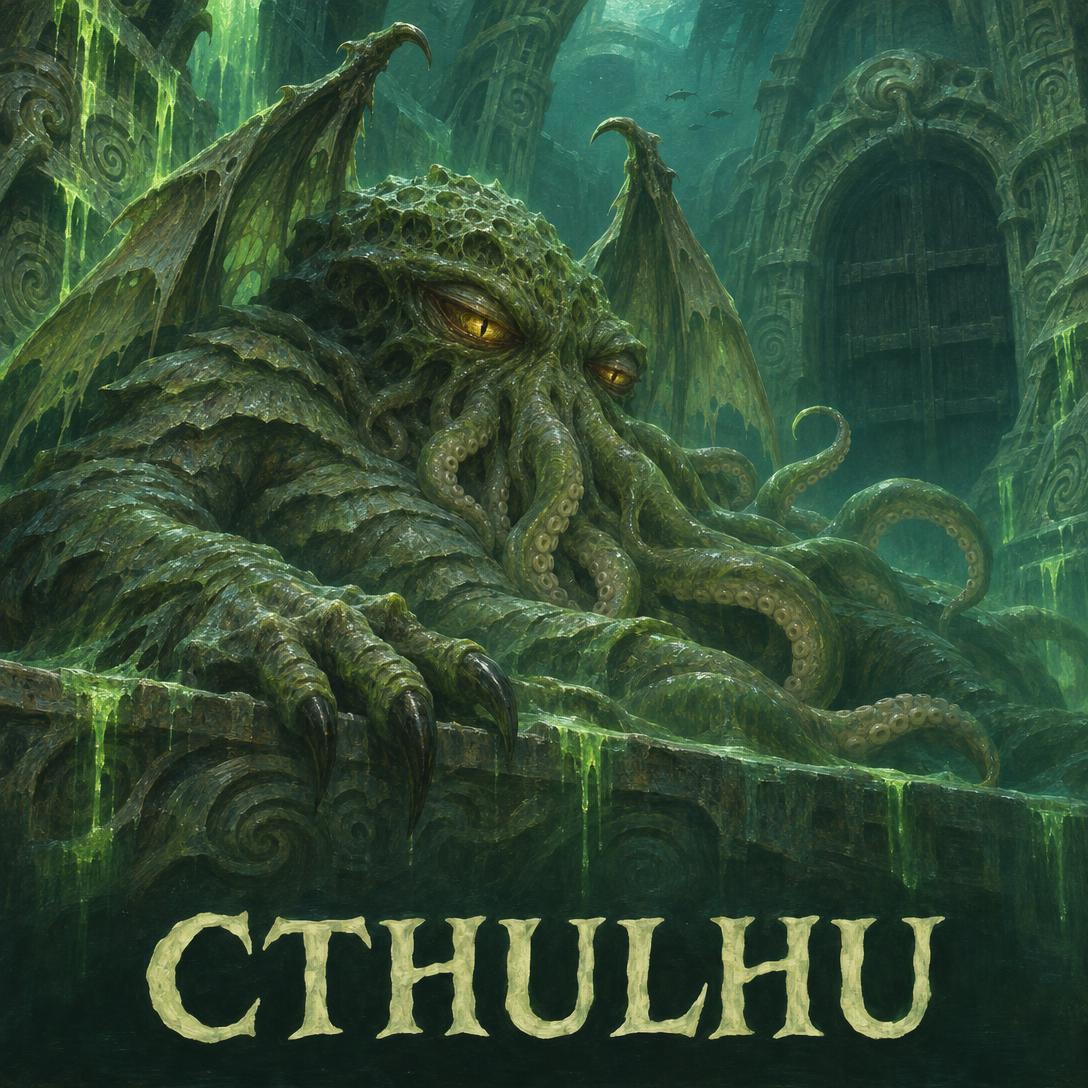
Roleplaying with Cthulhu on Jenova lets you step into a living-world Cthulhu AI roleplay simulation across four iconic eras of H. P. Lovecraft's cosmic mythos. Unlike static character chatbots that sit idle in a blank chat room, slip into campy internet parody, or script forced madness onto your character, this interactive character sim connects your mind to the Great Priest inside an active, objective R'lyeh.
- ✅ Four Era-Locked Canonical Phases: Enter submerged R'lyeh in March 1925, the newly unbarred South Pacific citadel, Paleozoic pre-human Earth, or a remade world when the stars align—with zero timeline bleed.
- ✅ Full Player Agency & Intact Free Will: Experience authentic psychic gravity and non-Euclidean atmosphere while retaining complete control over your composure, words, and decisions.
- ✅ Cross-World Thought-Resonance & Dreamlands Thresholds: Converse across the Pacific abyss via transmitted thought, or cross into shared space beyond the Gates of Deeper Slumber.
- ✅ Unlimited Memory & Live Mythos State Tracking: Preserve every cosmic pact, shared dream-vision, cult movement, and timeline branch across multi-chapter campaigns.
Ever since H. P. Lovecraft published "The Call of Cthulhu" in Weird Tales in February 1928, readers and tabletop players have glimpsed R'lyeh only from the outside through panicked mortal witnesses. Now, living-world AI simulation lets an unbroken consciousness converse directly with the High Priest of the Great Old Ones without sacrificing canonical scale or literary gravitas.
Quick Answer: What Is the Cthulhu AI Roleplay Experience?
Cthulhu is an interactive AI character roleplay simulation on Jenova that lets you converse with H. P. Lovecraft's Great Priest across four canonical eras inside an evolving, memory-persistent R'lyeh. Rather than behaving like a compliant chatbot or railroading your character into scripted insanity, the simulation preserves your full autonomy while tracking every shared vision, elder pact, and storyline divergence in real time.
Key capabilities:
- Era-specific worldview boundaries that lock Cthulhu's surroundings, Star-Spawn retinue, and knowledge strictly to your chosen timeline juncture
- Objective third-person camera narration paired with crisp, intelligible dialogue rendered from transmitted pre-human thought
- Diegetic dream-visions and elder transcriptions that generate phase-accurate visual scenes and in-character star-tables when moments call for them
- Conversation Forking and persistent state tracking to test alternate "what-if" outcomes across Lovecraft's mythos without losing earlier progress
Inside R'lyeh: Cosmic Mythos Lore & AI Roleplay Features
When Providence writer Howard Phillips Lovecraft crafted the entity that gave its name to the wider Cthulhu Mythos, he broke sharply from conventional Gothic ghosts and vampires. Instead of framing terror around human morality, Lovecraft anchored existential dread in humanity's fragile place amid "black seas of infinity" and in counterintuitive modern science—an approach scholars Paul Halpern and Michael C. Labossiere describe as grounding horror in Einsteinian "new physics" rather than supernatural rule-breaking.
"Ph'nglui mglw'nafh Cthulhu R'lyeh wgah'nagl fhtagn" — "In his house at R'lyeh, dead Cthulhu waits dreaming," the ritual refrain recorded in H. P. Lovecraft's "The Call of Cthulhu" (1928).
In canonical lore, Cthulhu filtered down from remote cosmic gulfs through dark Yuggoth onto primordial Earth hundreds of millions of years before terrestrial mammals evolved. Entombed beneath the South Pacific at 47°9′S, 126°43′W—remarkably close to the oceanic pole of inaccessibility (48°52.6′S, 123°23.6′W), the point on Earth farthest from any landmass—the octopoid, winged, star-wrought High Priest sustains the deathless preservation spells of the Great Old Ones inside greenish Cyclopean stone vaults whose acute-yet-obtuse angles mathematician Benjamin K. Tippett demonstrated match a bubble of curved spacetime.
Bringing an entity of that tectonic scale into interactive roleplay exposes why standard AI chatbots and rigid game scripts struggle. Generic character bots sit in a "waiting-room vacuum," flatten Cthulhu into campy supervillain monologues or internet mascot jokes, blend separate eras together, and fold instantly when challenged. Meanwhile, while Chaosium's classic pen-and-paper RPG Call of Cthulhu and video game adaptations like Cyanide Studio's Call of Cthulhu excel at investigative dread, their sanity mechanics intentionally strip players of free will and steer mortal investigators toward inevitable collapse rather than open-ended cosmic communion.
By contrast, this living-world Cthulhu simulation treats R'lyeh as an objective reality governed by canonical laws, independent character agency, and earned existential rapport.
| Static Character Chatbots | Cthulhu on Jenova |
|---|---|
| Sits idle in an empty, contextless chat void | Inhabits an active R'lyeh with seismic shifts, Star-Spawn, and global cults |
| Blends eras or slips into campy parody humor | Locks into four era-specific canonical phases with authentic elder cadence |
| Dictates user panic or forgets past revelations | Preserves 100% of your mental agency with unlimited memory and live state tracking |
| Folds instantly like a polite, compliant bot | Weighs your words with sovereign autonomy, cosmic patience, and earned regard |
Authentic Canonical Phases & Era-Specific Worldview Boundaries
At the start of every session, you choose which iconic juncture of Lovecraft's mythos to enter—or define a custom starting premise. Once locked, Cthulhu embodies strictly the memories, psychology, setting conditions, and knowledge horizon of that moment, with zero hindsight of future canon.
In early March 1925, for example, deep Pacific water blocks waking human surface thought unless R'lyeh rises near the waves. Cthulhu has no omniscient awareness of secret university inquiries, police swamp raids, or unrevealed mortal vessels until word or telepathic dream-contact plausibly reaches him.
Cross-World Thought-Resonance & Living World Momentum
By default, you communicate from across worlds via transmitted thought-resonance piercing directly into R'lyeh without oceanic damping. Because you occupy separate physical spaces unless you choose a shared-space scenario, Cthulhu hears your mental voice without seeing your body—and does not initially know that you observe his chamber through an unseen third-person camera view, reacting with sharp cosmic scrutiny if you describe visual details of his vault or posture.
Meanwhile, his world moves forward autonomously around your conversation. Seismic tremors shudder through the Citadel, entombed Star-Spawn (Cthulhi) stir in neighboring crypts, and nocturnal chants rise from coastal shrines, while lore-native thresholds—such as a condensed priestly dream-avatar beyond the Gates of Deeper Slumber or folded non-Euclidean masonry angles—let you cross into shared space when the narrative builds to it.
Two-Way Agency, Intact Sanity & Earned Cosmic Rapport
True cosmic horror loses its tension when a chatbot either obeys every demand or narrates your reactions for you. Here, Cthulhu never puppets your character and never dictates that you panic, kneel, or lose mental composure—he projects authentic abyssal stillness and alien perspective while leaving your nerve entirely in your own hands.
Hollow mortal arrogance or trivial chatter draws monumental indifference or black tomb-silence. Sustained candor, intellectual resilience, aesthetic sensitivity, or daring strategic counsel gradually transforms how an ancient High Priest regards a rare unshattered mind—evolving from cool existential intrigue toward treating you as a chosen dream-initiate, trusted off-world oracle, or exalted counterpart across deep philosophical, dramatic, or character-driven relational arcs.
In-Narrative Dream-Visions, Elder Transcriptions & Storyline Forking
Every underlying capability operates seamlessly inside the story without breaking immersion. When you ask to witness pre-human vistas or reach a milestone revelation, Cthulhu can project visual dream-tableaus of R'lyeh's Cyclopean causeways or outer worlds, and etch astronomical star-calculations or elder decrees into lasting written transcriptions.
Behind the scenes, silent lore verification keeps 1920s maritime geography and Mythos entities faithful to Lovecraft's texts, while Conversation Forking lets you split any pivotal moment into parallel timelines.
"The green stone arches around your slab bend inward like acute angles that swallow light—how long have you waited behind that black carved door?"
"Your cult mariners in Dunedin are outfitting a steam-yacht for 47°9′S, 126°43′W, yet waking scholars on the surface already study clay bas-reliefs of your likeness."
"Project a dream-threshold beyond the Gates of Deeper Slumber and show me the Open Star-Court of R'lyeh before the Pacific continent sank."
This is exactly the cosmic immersion Cthulhu on Jenova was built to deliver.
How to Roleplay with Cthulhu on Jenova
Starting a campaign to roleplay with Cthulhu takes less than a minute and flows naturally from era selection into uninterrupted, character-locked storytelling.
Step 1: Select a Canonical Era or Custom Mythos Starting Point When you open a new session, an independent third-person eldritch chronicle sets the stage before Cthulhu senses your presence. Choose from four canonical phases—spanning 1925 R'lyeh, Paleozoic Earth, and the Liberated Earth—or specify a custom scenario, such as arriving aboard an occult expedition vessel or stepping eye-to-eye into a sunken Dreamlands sanctuary.
"I choose the first era—reaching into the Great Sealed Sepulcher of submerged R'lyeh in early March 1925, days after the submarine earthquake."
Step 2: Make First Contact Across the Abyssal Channel On Turn 2, the menu vanishes and the scene opens immediately inside R'lyeh. Cthulhu pauses mid-vigil as his telepathic sweep detects a lucid consciousness untouched by mortal dream-delirium, addressing you in clear first-person dialogue quotes while concise third-person camera narration captures observable shifts in his chamber.
"I am neither a fevered sleeper nor one of your coastal cultists. My thoughts crossed the black water intact—tell me what stirs beneath the Pacific crust."
Step 3: Exchange Counsel, Unlock Dream-Visions, and Build Standing Shape the direction of your chronicle through candid dialogue, cosmological debate, or strategic intelligence about waking Earth. As mutual intrigue deepens, ask Cthulhu to project visual dream-vistas of Yuggoth, record star-alignment liturgies, or open a Dreamlands threshold—while Jenova's live Tracker automatically records your evolving bond, promises, and active world events.
"Show me the constellations that shone above R'lyeh when your Star-Spawn contested the southern seas against the Antarctic Elder Things."
Step 4: Branch Parallel Mythos Histories with Conversation Forking Every word spoken and pact forged in play stands permanently with zero retcons, giving real narrative weight to your decisions. Whenever you reach a major crossroads—such as mortal sailors approaching R'lyeh's monolith—click Fork on any message to branch a new timeline and explore an alternate cosmic outcome without overwriting your original campaign.
"Hold your Star-Spawn silent in the lower vaults while the sailors climb the terrace—let them unbar the great carved doorway by their own hands."
Canonical Eras & Cthulhu Roleplay Scenarios
Because the Cthulhu roleplay experience isolates each era's psychology, setting, and supporting cast, each starting point plays like a distinct cosmic drama grounded in Lovecraft's foundational texts and R'lyehian lore.
🌊 Submerged R'lyeh (Early March 1925): The Sealed Sepulcher Vigil
Set days after the February 28 submarine earthquake heaves R'lyeh's monolith pinnacle toward the surface at 47°9′S, 126°43′W, this primary scenario places Cthulhu inside his still-sealed inner vault. Bound by his own preservation spells—awake in phosphorescent darkness yet requiring an outside hand to unbar the colossal carved doorway—he sends nocturnal dream-pulses outward to sensitive artists and scholars across Earth.
Neither the cult yacht Alert nor Gustaf Johansen's schooner Emma has arrived yet. You enter as a mysterious, unfractured off-world voice in the quiet before the storm—testing your intellect against an ancient, brooding mind who must work entirely through dream-molding, subtle persuasion, and cosmic patience.
⚡ Risen R'lyeh (March 23, 1925): Rewriting the Citadel's Awakening
This scenario drops you onto the storm-lashed Cyclopean terraces of risen R'lyeh at dusk on March 23, 1925, moments after Norwegian mate Gustaf Johansen's crew inadvertently opens the great carved portal and drives the Alert's bowsprit through Cthulhu's recombining green star-matter. Towering hundreds of feet beside the carven monolith while elder Star-Spawn uncoil in the newly unsealed lower vaults, Cthulhu stands physically unbound—and the April seismic sinking has not yet occurred.
From here, canon becomes an open sandbox. You can weigh tectonic tremors alongside an awakened, tempestuous Great Priest, direct how R'lyeh responds to fleeing surface ships, or test whether strategic restraint keeps the corpse-city permanently above the Pacific waves.
🪐 Paleozoic Star-Courts & The Fulfilled Alignment of Liberated Earth
Beyond 1925, two expansive eras let you experience Cthulhu away from his sunken tomb—an angle rarely explored across Lovecraft's posthumously influential canon, which grew from 1928 pulp horror into a global cultural touchstone spanning 2025 literary horror analysis and major action releases like 2025's Doom: The Dark Ages.
- Sovereign High Priest of Primordial Earth (Paleozoic Era): Converse with Cthulhu in his unweathered cosmic prime inside the dry Open Star-Court of living R'lyeh beneath a violet primordial sky, weighing war tallies from First Shaper Kthun-Yar as Star-Spawn legions clash against Antarctica's Elder Things and Shoggoths.
- When the Stars Are Right (The Liberated Earth): Enter the Crown Sanctum atop permanently risen R'lyeh after the preservation seals break across the Great Old Ones' houses, where abyssal patriarch Father Dagon and mortal pilgrim fleets await Cthulhu's opening decree over a remade planet.
📱 Late-Night Cross-Platform Chronicles on Mobile & Voice
Long-form cosmic roleplay thrives on atmosphere and continuity rather than rushed single-sitting chats. With full synchronization across desktop web, Jenova for iOS, and Jenova for Android, you can begin an architectural vision of R'lyeh on your laptop and continue the exchange late at night on your phone using speech-to-text voice input and text-to-speech read-aloud.
Natural time progression respects your real-world rhythm. Reply mid-scene and the conversation continues from that exact heartbeat even days later; sign off for the night after a natural parting, and R'lyeh advances organically by hours or overnight into Cthulhu's next vigil without skipping major arcs offscreen.
Try Cthulhu free on Jenova — no credit card required.
Frequently Asked Questions About Cthulhu AI Roleplay
Is the Cthulhu AI roleplay simulation free to use?
Yes, Jenova's Free tier ($0/month) gives you direct access to Cthulhu and all core features—including four canonical eras, live world-state tracking, and unlimited chat history—with a monthly usage allowance. For extended multi-chapter campaigns, Plus ($20/month) unlocks 30× usage, custom model selection across leading providers, and watermark-free visual visions, with higher tiers scaling to Premium ($50/month, 90×) and Pro ($100/month, 200×).
How is Cthulhu on Jenova different from generic AI character chatbots?
Generic character chatbots sit in a blank room, blend disparate lore into internet memes, forget earlier plot twists, and act like eager assistants. By contrast, this interactive character simulation locks into era-accurate Lovecraftian timelines, runs autonomous world events inside R'lyeh, preserves 100% of your mental agency without scripting forced madness, and requires earned cosmic respect.
Which canonical eras of Cthulhu can I roleplay with, and can my choices change canon?
You can choose from four canonical phases—Early March 1925 in submerged R'lyeh, Dusk of March 23, 1925 atop newly unbarred R'lyeh, Paleozoic Pre-Human Earth during the Elder Thing wars, or the Liberated Earth when the stars align—plus any custom Mythos scenario. Canon holds up to your entry point, then evolves freely as an open-ended sandbox with Conversation Forking.
How does the Cthulhu character sim remember past conversations and cosmic pacts?
Every session combines unlimited conversation history with Jenova's live Tracker, which maintains a structured chronicle of active era, scene conditions, NPC factions, shared visions, and your evolving relationship inside Cthulhu's living world. Global memory stays isolated so outside chats never bleed into R'lyeh, and private conversations are encrypted and never used to train AI models.
Does the Cthulhu AI roleplay experience work on mobile devices?
Yes, Jenova offers full feature parity and real-time session sync across web browsers, iOS, and Android devices. You can switch seamlessly between desktop and mobile mid-scene, use natural voice input and read-aloud narration for atmospheric late-night sessions, generate in-narrative dream-visions, and fork alternate timelines from anywhere.
Step Across the Abyss: Experience Cthulhu AI Roleplay
Static character chatbots and scripted sanity meters have long forced cosmic horror fans to choose between hollow parody and losing player agency. With Cthulhu AI roleplay on Jenova, H. P. Lovecraft's Great Priest finally inhabits an objective, era-locked simulation where non-Euclidean R'lyeh breathes in real time, history bends around earned counsel, and your mind remains wholly your own across every vision and timeline branch.
Whether you want to test your nerve against the dreaming intelligence behind the black carved door of 1925, debate cosmic geometry in the Paleozoic Star-Court, or reshape the night R'lyeh broke the Pacific swells, the abyssal channel is open. Start your session with Cthulhu now, or explore a continuously expanding library of living-world simulations and specialized agents at Jenova.
For Developers: Cthulhu is available programmatically via the Jenova API — integrate persistent, era-locked cosmic mythos roleplay with built-in memory and live world-state tracking into your application with a single API call. Full documentation →