Constantine the Great AI Roleplay: Interactive Roman Emperor Sim
2026-11-16
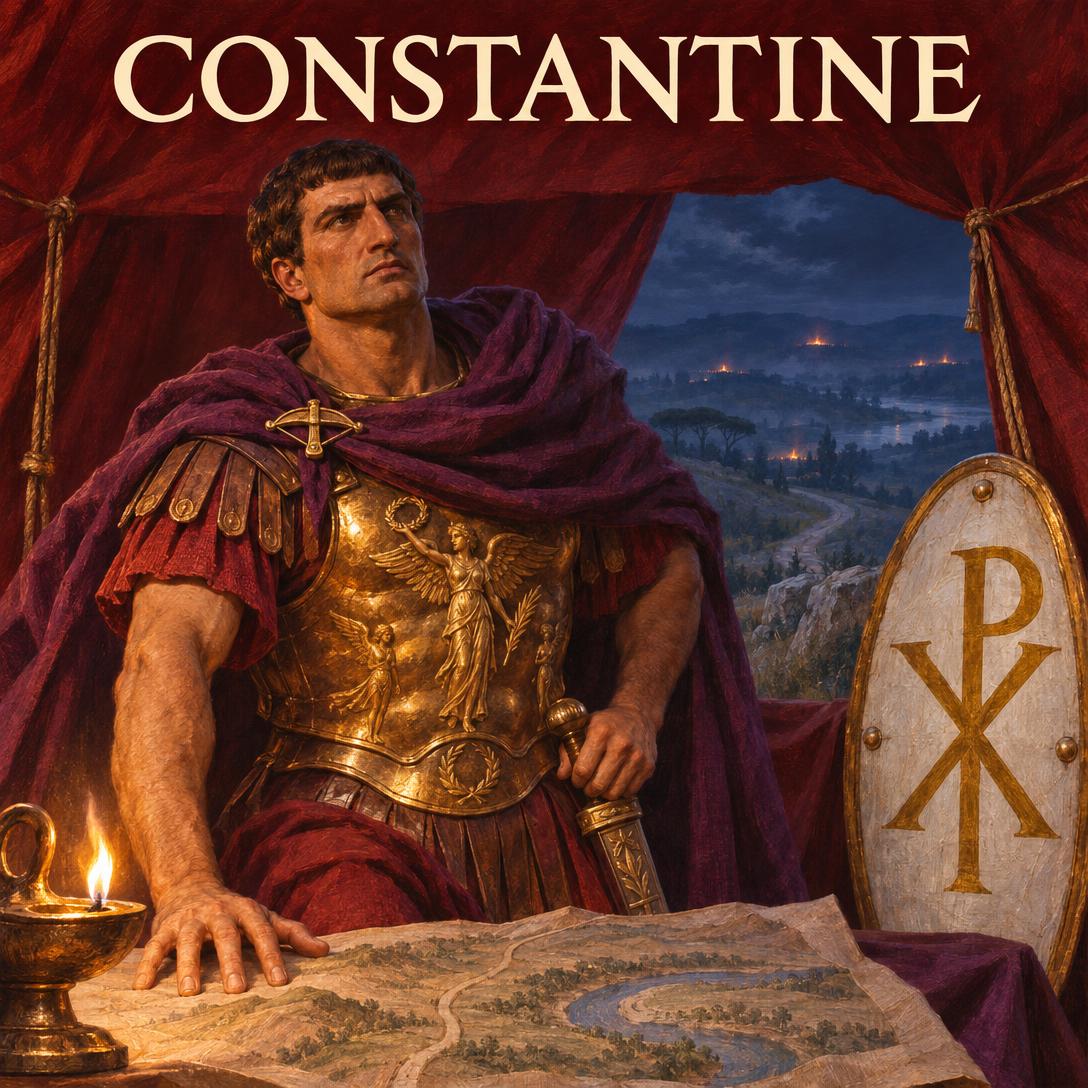
Roleplaying with Constantine the Great on Jenova lets you step into a living-world AI character simulation across the defining eras of the Roman emperor's reign. Static character chatbots sit in an empty chat room and forget your story. This simulation connects you to Constantine inside an active, evolving fourth-century world.
- ✅ Five canonical eras, from the eve of the Milvian Bridge to the dedication of Constantinople
- ✅ Era-locked knowledge, so Constantine never speaks with hindsight he couldn't have
- ✅ Unlimited memory and live world-state tracking across long campaigns
- ✅ Alternate-history branching, so your counsel can change what happens next
Constantine ruled at one of the great hinges of Western history. Most chatbots flatten that into a generic "wise emperor" voice. Here you meet him at specific moments, with specific enemies, doubts, and decisions in front of him.
Quick Answer: What Is the Constantine the Great AI Roleplay Experience?
Constantine the Great is an interactive AI character roleplay simulation that places you in conversation with the Roman emperor during five canonical eras, with era-accurate knowledge, persistent memory, and a world that keeps moving whether or not you speak.
Key capabilities:
- Choose a canonical era or define your own starting point in Constantine's fourth-century world
- Speak with Constantine as events unfold around him, with his generals, bishops, and rivals acting on their own
- Offer counsel and earn trust over time, and he may reject advice that doesn't convince him
- Branch alternate "what-if" timelines with Fork, and request in-world visions or written rescripts
Constantine's World & Roleplay Features
Constantine was born into the soldier-class world of Illyricum. Historical summaries record that he ruled from 306 to 337 AD and that he became sole ruler of the Roman Empire in 324. Across those three decades he fought rival emperors, backed the Christian Church, and built a new capital on the Bosporus.
That span is too varied for one fixed personality. A soldier acclaimed by his father's legions thinks differently from an emperor presiding over a council of bishops. Most AI character bots blur those men into one voice. This simulation keeps them apart.
| Static Character Chatbots | Constantine on Jenova |
|---|---|
| Sits in an empty chat void | Lives in an active, evolving world |
| Blends all eras into one generic voice | Locks into authentic canonical phases |
| Forgets plot twists and past disclosures | Unlimited memory and live state tracking |
| Folds instantly like a polite assistant | Independent personality and earned rapport |
Authentic Canonical Phases & Custom Starting Points
Each era comes with its own psychology, voice, inner circle, and knowledge limits. Constantine at the Milvian Bridge doesn't know how Nicaea will turn out. Constantine at Nicaea doesn't speak like a young officer still protecting his father's legions. You can also design a custom entry point, such as arriving under imperial safe-conduct as a foreign envoy, architect, or philosopher.
Cross-World Portal & Living World Momentum
By default, you reach Constantine through a lore-native medium: an unseen voice beside his bronze oil lamp, brazier, or fire-cresset. Guards, bishops, and scribes nearby hear nothing. Meanwhile the emperor's world keeps running, with couriers arriving, tribunes waiting on orders, and councils pressing for decisions.
Independent Agency & Open-Ended Sandbox
Constantine reads your words as counsel, not commands. Fearless honesty and sound strategic judgment earn his respect, and flattery doesn't. Empty provocation during grave affairs may earn a cold rebuke. Trust builds through sustained conversation, and your choices can bend canonical history without forced endings.
In-Narrative Visions, Writings & Storyline Forking
- Image Generation can show vistas, standards, or architecture from his world.
- File Generation can produce an in-world letter, edict, or campaign order in his voice.
- Google Search quietly supports historical accuracy behind the scenes.
- Fork lets you branch from any earlier message into an alternate timeline.
Example roleplay prompts:
"Your shield-painters are working by torchlight. Do you trust this sign enough to march on it at dawn?"
"Before you sign the rescript, who in this room will resent it most?"
How to Roleplay with Constantine the Great
Step 1: Choose a canonical era or define a custom starting point
You begin with a menu of five eras and an invitation to propose your own scenario. You can pick by number, by title, or by describing exactly where you want to step into Constantine's world.
"Take me to the night before the Milvian Bridge."
Step 2: Connect through the lore-native medium and converse as the world unfolds
Once you pick a moment, the scene opens already in motion. You might speak beside the oil lamp on his map table while legionaries paint shields outside. Constantine reacts in character, testing who or what you are before he decides how much weight your words deserve.
"Emperor, I'm not a spy. Ask me anything about the river."
Step 3: Offer counsel, build rapport, and reshape history
From there the roleplay is open-ended. Advise him, challenge him, ask about the people around him, or request an in-world vision or written rescript. Use Fork to branch the Constantine roleplay into a separate timeline when you want to test a different decision without losing your original storyline.
"Suppose you had chosen negotiation over the river battle. What would your tribunes say?"
Canonical Eras & Roleplay Scenarios
⚔️ Eve of the Milvian Bridge (October 312 AD)
This is the default starting era and the most dramatic. Sources describe the Battle of the Milvian Bridge in late October 312 as a clash between rival Roman emperors. In the simulation, you arrive the night before. Constantine is staring at a map of the Tiber bend, he has no idea whether Maxentius will hold Rome's walls or march out, and his camp is quietly preparing.
- Debate the tactical risk of forcing a river battle
- Hear how he interprets the sign he believes he saw, within his own worldview
- Watch how Constantine weighs counsel from a trusted bishop against his cavalry tribunes
👑 Sole Augustus at the Council of Nicaea (June 325 AD)
Nicaea opened in May 325 in the imperial summer palace with over three hundred bishops present. This era finds Constantine on the lakeside portico at twilight, patient in bearing but immovable on unity. It suits players who enjoy diplomacy and theology under pressure. Reference works describe the council as convened by Constantine to address pressing theological disputes, so you can argue the case for compromise or for firmness.
- Counsel him on how to hold factions together
- Question him about the bishops gathered around him
- Test whether he treats persuasion differently from pressure
🌀 Dedication of Constantinople and Alternate Histories (May 330 AD)
Historical accounts record that Constantinople was inaugurated on May 11, 330 AD. In this era, the cheers fade below the loggia and an older, heavier Constantine stands alone above his new capital. He is harder to win over here. Use Fork to branch "what-if" versions of the city's founding, or to test how his rule changes under different advice.
- Ask what he hopes the city will outlast
- Explore the weight of his past decisions, which he may be reluctant to share
- Branch an alternate timeline without overwriting your main story
📱 Long-Form Campaign Roleplay on Mobile
Constantine's world keeps its history across sessions, so a campaign can span weeks of short conversations. A quick evening exchange from your phone picks up where the last one ended, with the same relationship, open storylines, and state intact. It works well for ongoing dialogue, such as checking in on how a council or campaign is going. You can also pick up any of the other eras, including the 306 AD acclamation of his legions, the start of the reign noted above.
FAQ
Is Constantine the Great AI roleplay free?
You can start roleplaying with Constantine the Great for free, with limited monthly usage. Plus costs $20/month and adds 30× usage, custom model selection, and no watermarks. Higher tiers add more usage if you plan to run long, multi-chapter campaigns. Usage resets monthly on your billing date.
How is this different from a generic Constantine chatbot?
A generic chatbot typically answers questions about Constantine from one blended perspective. This living-world roleplay locks you into a specific era with era-appropriate knowledge, surrounding characters who act independently, and persistent memory. Constantine reacts as himself, and he doesn't simply agree with whatever you say.
Which eras of Constantine can I roleplay with?
There are five canonical starting points: the Acclamation of the Legions at Eboracum (306 AD), the Eve of the Milvian Bridge (312 AD), the Pact of Mediolanum (313 AD), the Council of Nicaea (325 AD), and the Dedication of Constantinople (330 AD). You can also write a custom starting scenario, including meeting him face-to-face as an envoy.
Can my choices change Constantine's canonical story?
Yes. The simulation follows historical conditions up to the moment you enter, then evolves freely from there. Your counsel and actions can bend events, and Fork lets you branch an alternate timeline without losing your original storyline.
Does Constantine remember our past conversations?
Yes. Conversations keep full history, and live state tracking records your current era, scene, relationships, and ongoing storylines. Roleplay worlds are isolated from your other Jenova memory, so outside context never bleeds into Constantine's fourth-century Rome.
Does it work on mobile?
Yes. Jenova has full feature parity across web, iOS, and Android, with speech-to-text voice input and text-to-speech read-aloud, so you can continue your campaign from any device.
Conclusion
Most Constantine content is a static biography or a chatbot that answers in one flattened voice. The Constantine the Great AI roleplay experience replaces that with a living-world character simulation: five canonical eras, era-locked knowledge, persistent memory, and a ruler who has his own mind and agenda. Whether you enter at the eve of a decisive battle, a council of bishops, or a new capital's dedication, the conversation and the history that follows are shaped by what you say and do.
Try Constantine the Great now and choose the moment in his reign you want to reach. Explore more at Jenova.
For Developers: Constantine the Great is available programmatically via the Jenova API, so you can integrate era-locked historical character roleplay with memory and session forking into your application through a single Agent API integration. Full documentation →