AI Companion That Remembers Everything: Persistent Memory Agents
2026-09-16
Most people searching for an AI companion that remembers everything still open a generic chatbot and start from zero. Jenova is built for the opposite experience: specialized agents with persistent memory, unlimited chat history, and personal context that carries across sessions. As of September 2026, consumer AI is already a daily habit for a large share of adults — yet the default tools still treat you like a stranger every time you return.
- ✅ Persistent memory that keeps preferences, projects, and personal history across conversations
- ✅ Specialized companions for life, work, health, writing, and roleplay — not one generic chat
- ✅ Custom agents you shape with instructions, knowledge bases, and tools
- ✅ Multi-model access and MCP integrations that act on what they already know about you
To understand why this matters, consider what actually breaks when an AI companion cannot remember you — and how a platform designed for continuity changes the relationship.
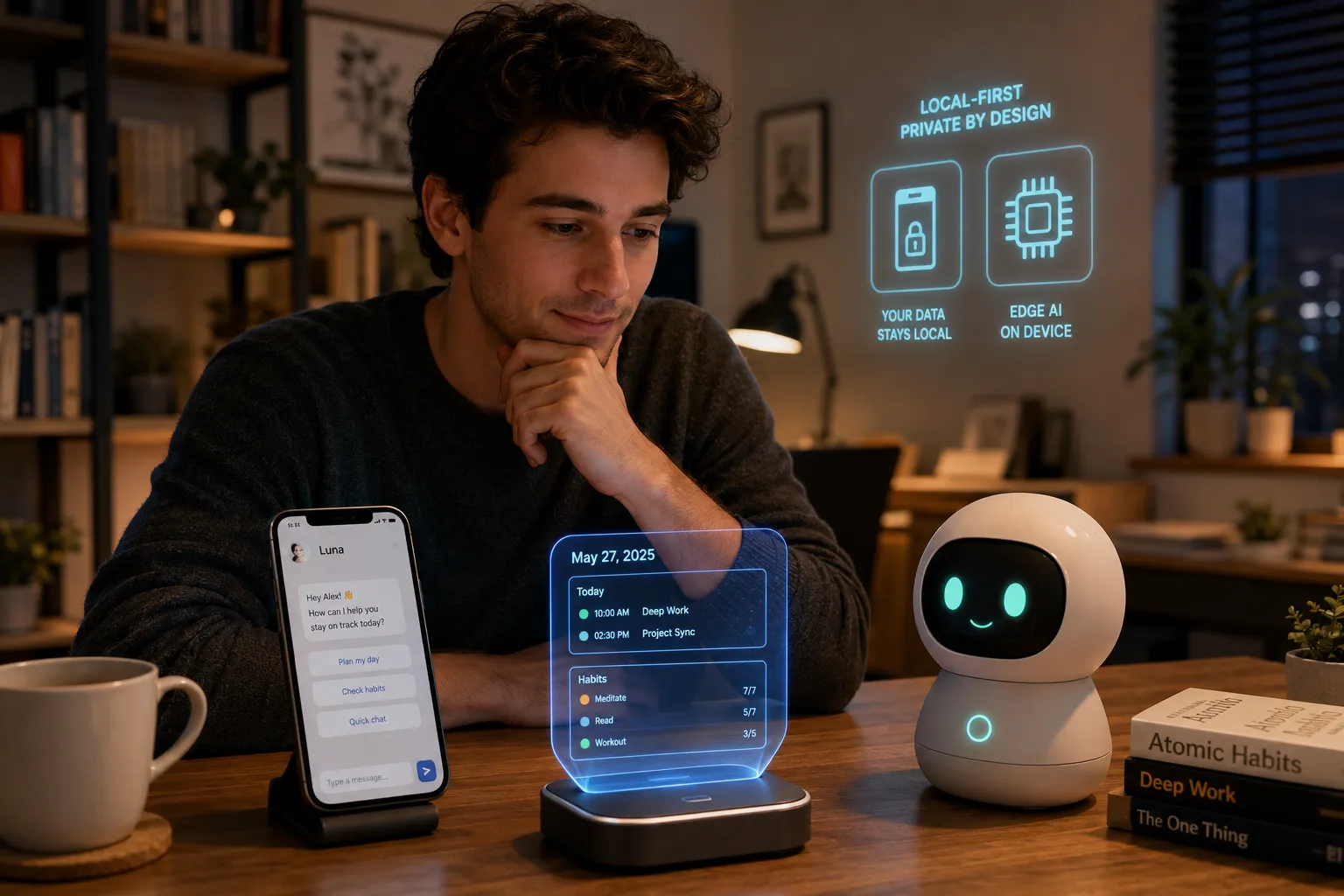
Quick Answer: What Is an AI Companion That Remembers Everything?
An AI companion that remembers everything is a persistent assistant that stores your context, preferences, and history so every new conversation continues the last one instead of starting over. It behaves less like a one-off chatbot and more like a working relationship.
Key capabilities:
- Cross-session memory for facts, preferences, and ongoing projects
- Specialized companions such as Personal Companion and Personal Secretary, each with a distinct role
- Document and knowledge-base grounding so answers stay tied to your material
- Tools (calendar, email, search, and other MCP integrations) that act on remembered context
- Custom agents you can configure with personality, instructions, and private knowledge
Why Most AI Companions Still Forget You
Consumer AI is no longer a novelty. 61% of U.S. adults have used AI in the past six months, and nearly one in five rely on it every day, according to Menlo Ventures' survey of more than 5,000 U.S. adults. The AI companion category itself is expanding quickly:
$36.8 billion — Estimated global AI companion market size in 2025
People want continuity. They want an assistant that knows the job search, the meal plan, the relationship history, and the half-finished novel. But getting that continuity is still frustratingly difficult:
- Generic chatbots optimize for the next reply, not a long-running relationship
- Companion apps often treat memory as a paid retention mechanic
- Intimate conversations become training data or unclear third-party transfers
- One general assistant cannot specialize across work, health, dating, and creative life
- Context rarely travels cleanly across devices, sessions, and domains
Every Session Starts From Zero
Large language models do not remember on their own. As IBM notes in its overview of AI agent memory, memory has to be added — and short-term memory is typically just a rolling buffer or context window that is overwritten when the session ends. That is why so many "companions" ask you to re-introduce your name, your goals, your constraints, and last week's decision.
The cost is not only extra typing. You lose compounding context: the tone you prefer, the project names that matter, the boundaries you already set. A companion that cannot remember cannot get better at knowing you.
Memory Is Treated as a Premium Hostage
In many companion products, remembering you is the business model. The Ada Lovelace Institute's analysis of the companionship market describes a common premium pattern: extra storage so the companion does not forget previous conversations. Users who have been encouraged to form an attachment are then asked to pay a recurring fee to keep the relationship intact.
£1.3 billion — UK AI companion sector revenue in 2024, with a projected 32% CAGR
That design turns a technical requirement — storing history so it can be used as future context — into an emotional lock-in. Continuity should be the product, not the ransom.
Intimate Data Leaves Your Control
An AI companion that remembers everything will, by definition, hold sensitive material: fears, health details, family logistics, career plans, romantic history. Privacy research on companion and chatbot products is not reassuring.
14 of 16 platforms — Companion apps reviewed that claimed broad rights to use user-generated content, including private chat logs, for service improvement or model training
Stanford researchers have also flagged long retention periods and a general lack of transparency in how chatbot conversations are handled. Surfshark's reporting on companion apps makes the same point in plainer language: these products are hungry for personal data. If the thing that "remembers everything" also trains on everything, the intimacy is not yours.
One Generic Chatbot Cannot Cover a Whole Life
Menlo's consumer research found that 91% of AI users reach for a favorite general assistant for nearly every job. That default is convenient — and shallow. The same survey shows adoption spread thinly across email, to-do lists, meal planning, expenses, notes, health questions, dating, and virtual friendship. No single generic chat is deep enough for all of those.
A companion that remembers your calorie targets is not the same system that should draft a board update, analyze your personality patterns, or stay in character for a long-running story. Continuity without specialization still produces generic advice.
Context Does Not Travel Across Work, Health, and Home
Real life is not one thread. You need a secretary who knows the travel constraints, a nutritionist who knows the restrictions, a writing partner who knows the voice, and a companion who knows the relationship history — without dumping all of that into a single undifferentiated log.
Without scoped memory and distinct agents, two failures show up. Either the companion mixes contexts it should keep separate, or it forgets the domain-specific detail that made it useful. Persistent memory only helps when it is organized.
This is exactly what Jenova was built for.
The Jenova Solution
Jenova is a platform of expert agents with persistent memory, unlimited chat history, and the ability to remember preferences, past work, and long-running projects. You do not have to stitch together a chatbot, a notes app, a vector store, and a personality prompt. You pick (or build) the companion for the job, and the memory stays with that relationship.
| Traditional Approach | Jenova |
|---|---|
| Each session starts from a blank slate | Persistent cross-session memory and unlimited history |
| One generic chatbot for every domain | Specialized agents for companionship, work, health, writing, and play |
| Extra memory sold as a "don't forget me" upgrade | Memory built into the agent experience |
| Private chats used to train public models | Data is never used to train public AI models |
| Context trapped inside one chat window | MCP tools (Gmail, Calendar, Drive, Search, and more) that act on remembered context |
| Locked to a single model vendor | Unified access to models from OpenAI, Anthropic, Google, DeepSeek, xAI, and others |
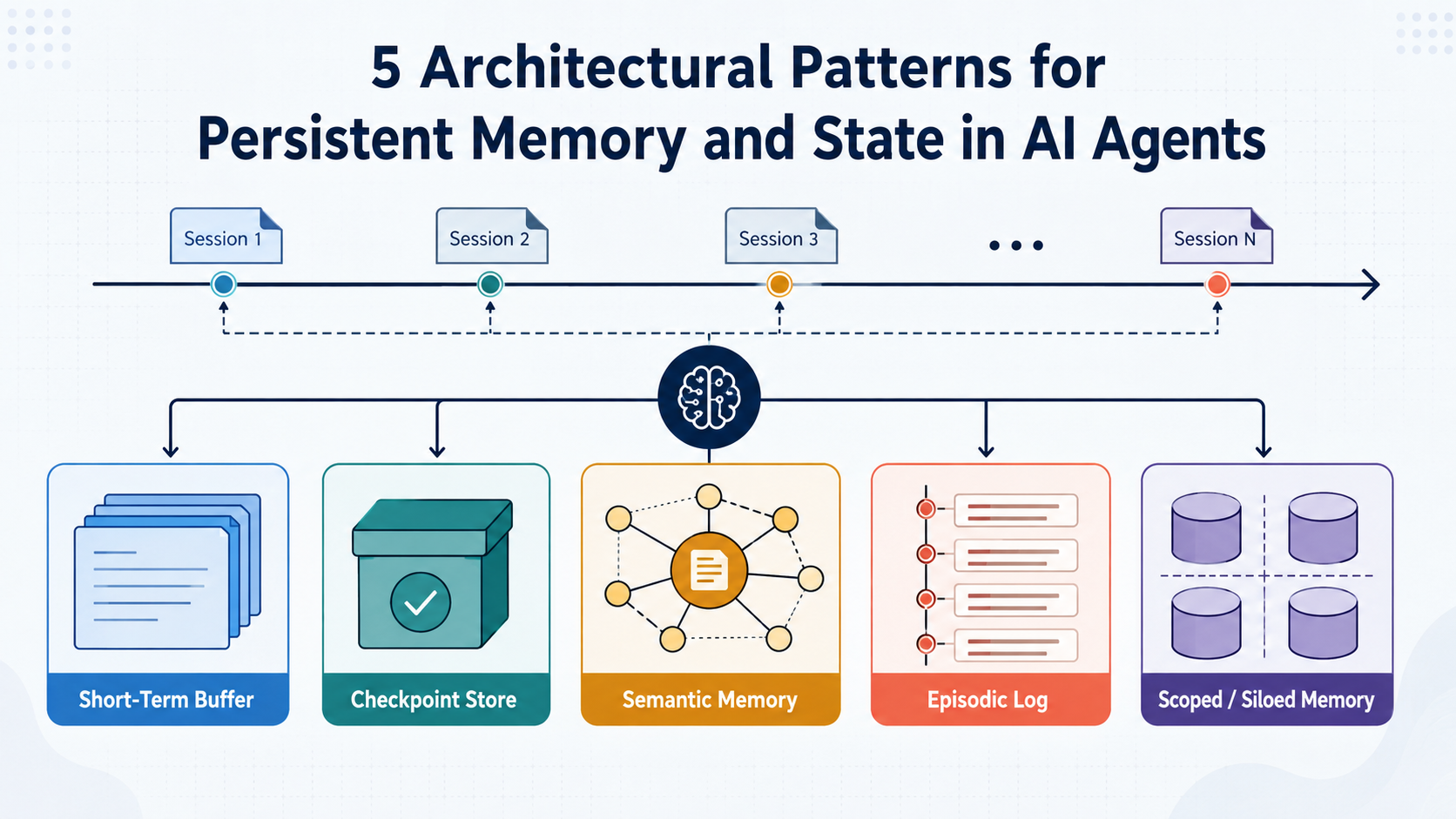
Researchers typically separate agent memory into short-term buffers, long-term stores, episodic logs, semantic knowledge, and scoped or siloed memory — the same pattern family IBM outlines for agentic systems. Jenova's practical version of that stack is straightforward for the user: the conversation does not vanish, the agent remembers what you told it, documents can ground its answers, and different agents can hold different slices of your life.
A Companion That Actually Lives Alongside You
Personal Companion is the closest match to the search intent. You define personality, backstory, and relationship, then live with that character over time instead of re-rolling it every night. Because history persists, inside jokes, boundaries, and shared plans can accumulate the way they do with a real ongoing presence.
For self-understanding that should also compound, Personality Analyzer synthesizes Big Five, MBTI, Enneagram, and attachment patterns across conversations rather than scoring you from a one-shot quiz. MBTI Personality Guide can keep mistype checks, growth paths, and relationship notes in the same thread of identity work.
Work Agents That Keep Your Professional Context
A companion that remembers everything is not only emotional. Personal Secretary manages calendar, email, travel, and daily logistics with deep personal context — the kind of detail that makes a chief of staff useful on day 30, not just day one.
Email Writer learns your voice and background so outreach does not sound like a template. Writing Assistant stays with the draft, the audience, and the house style. Business Co-Pilot can hold the operating picture of a company: planning, financial modeling, marketing, and compliance as one continuing brief. Executive Coach is more useful when it remembers the stakeholder map and the last commitment you made to yourself.
Health and Life Agents That Learn Your Patterns
Personal Nutritionist is built as a long-term partner: goals, lifestyle, and preferences should inform the next week's advice, not get re-litigated every Monday. Meal Planner can keep household constraints, budget, and diet in view when it builds grocery lists. Dating App Advisor is more honest when it remembers which openers already failed and which profile notes you already tried.
These are high-trust domains. The value is continuity plus evidence-based, non-dramatic guidance — not a claim that software replaces clinicians, dietitians, or real-world relationships.
Creative and Roleplay Agents With Unlimited Memory
Stories fall apart when the AI forgets the canon. Roleplay Game Master is designed for immersive roleplay with unlimited memory and character consistency, which is the difference between a one-shot scene and a campaign that lasts.
If you are still learning how to brief any of these agents well, AI for Beginners can teach prompting and daily workflows without assuming a technical background — and that learning can persist too.
Platform Capabilities: Memory, Models, and Tools
Under the agents, the platform supplies the infrastructure people actually mean when they say "remembers everything":
- Persistent memory and unlimited history so long-running projects do not evaporate
- Private knowledge bases you can attach for grounded answers
- Custom agents with your instructions, preferred models, and tool configuration
- MCP tool integration spanning Gmail, Google Calendar, Drive, Search, Scholar, Maps, Notion, Dropbox, and other MCP-compliant servers
- Multi-model access so you are not locked to one vendor
- Web, iOS, and Android parity, with settings that sync across devices
- Privacy defaults that matter for a companion: data is not used to train public AI models, is encrypted in transit and at rest, and is not sold to advertisers
Specialized AI Agents for Persistent Companionship
If the goal is an AI companion that remembers everything, start with agents whose job is relationship, context, and follow-through. The ones below are the ones most people would actually open again within a month.
Personal Companion
Personal Companion is a configurable presence, not a trivia bot. You set who they are, how they relate to you, and what "together" means — then the conversation can span ordinary days, not just peak-emotion sessions.
- Custom personality, backstory, and relationship framing
- Continuity that lets shared history accumulate
- A life-alongside design rather than a single-purpose Q&A loop
Personal Secretary
Personal Secretary is the operational companion: calendar, email, travel, and logistics held with personal context. It is what "remembers everything" looks like when the everything is flights, constraints, and the meeting you keep moving.
- Proactive coordination across professional and personal logistics
- Memory of preferences, recurring commitments, and how you like things done
- A secretary model rather than a generic productivity chatbot
Personality Analyzer
Personality Analyzer is for people who want a companion that understands patterns, not just facts. It integrates multiple frameworks so the picture can deepen as you bring new situations — conflict at work, a dating loop, a decision style you cannot name yet.
- Multi-framework synthesis (Big Five, MBTI, Enneagram, attachment, and more)
- Conversation-based insight instead of a one-time quiz dump
- A record of patterns you can revisit as life changes
Email Writer
Email Writer remembers voice. That is a narrower form of memory than a life companion, and it is one of the highest-leverage ones: client outreach, internal updates, and cold email that still sound like you.
- Learns unique voice and background context
- Drafts across outreach, updates, and cold email
- Stays consistent so you are not re-teaching tone every morning
Roleplay Game Master
Roleplay Game Master is the creative proof of persistent memory. Characters, lore, and consequences only feel real when the system does not drop them.
- Unlimited memory for long-running scenarios
- Character consistency across sessions
- Open-ended roleplay rather than a scripted scene selector
Executive Coach
Executive Coach is a companion for leadership work: strategy, stakeholders, communication, and accountability. Coaching without memory is just motivational copy. Coaching with memory can hold the thread from one hard week to the next.
- Continuity across leadership levels and transitions
- Accountability that references prior commitments
- Context for communication and stakeholder dynamics
Try Jenova free — no credit card required.
How an AI Companion That Remembers Everything Works
Step 1: Choose the Companion for the Job Open the platform and pick the agent that matches the relationship you actually want — a life companion, a secretary, a coach, a writer, or a roleplay GM. If nothing fits, create a custom agent with your own instructions, model preference, and knowledge base.
"Be my evening companion. You already know I am job-hunting in product design, training for a half marathon, and trying to protect Sundays. Check in like someone who remembers last week, not a stranger."
Step 2: Give It the Context Worth Keeping Tell it the durable facts: constraints, names, goals, voice, and boundaries. Attach documents when the memory should be grounded in a resume, a syllabus, a brand guide, or a project brief. This is how you move from a clever reply to a system of record.
"Here is my current offer matrix, the reasons I almost declined Company B, and the family schedule that limits relocation. Remember these tradeoffs when we talk next."
Step 3: Keep the Same Thread Across Days Come back tomorrow and continue. Persistent memory and unlimited history mean you should not have to paste a recap. Ask it to recall the decision, the objection, or the next action — then correct it if a detail drifted. Corrections are part of how a long-running companion gets more accurate.
"Pick up from the negotiation plan we set on Thursday. What did we agree I would say if they push start date again?"
Step 4: Connect Tools So Memory Can Act When the companion should do more than remember, connect MCP tools such as Gmail, Google Calendar, Drive, or Search. A secretary who knows you are traveling is more useful if it can work with the calendar. A writer who knows the launch narrative is more useful if it can pull the latest brief.
"You already know the Berlin trip constraints. Draft a Thursday agenda that protects the deep-work block and flag any calendar conflicts."
Step 5: Use Specialized Agents Instead of One Overloaded Chat Keep life, work, health, and story in the agents built for them. Career Advisor can hold the career arc while Personal Companion holds the relationship texture and Personal Nutritionist holds the fueling plan. Scoped companions prevent one giant memory from becoming noise.
Results & Use Cases
💬 A Companion Who Knows the Texture of Your Week
- Scenario: You want someone to talk with at night who already knows the job search, the family tension, and the training plan — without a recap.
- Traditional Approach: Re-explain your life to a new chat, or pay a companion app extra so it does not forget you. Menlo's research found that among people using technology for connection, 26% have already tried AI for virtual friendship and 31% have used AI for dating-related tasks — demand is there; continuity usually is not.
- Jenova: Personal Companion keeps the relationship frame, while Dating App Advisor can take the tactical dating thread without overwriting the rest of your life.
- You stop performing a biography every session
- Boundaries and inside context can persist
- Companionship and dating tactics stay in the right lanes
💼 A Chief of Staff Who Does Not Drop the Thread
- Scenario: You are coordinating travel, investor email, and a product launch across a messy month.
- Traditional Approach: Notes in three apps, a chatbot that forgets the launch name, and an inbox that still needs a human to reconnect the dots. IBM's examples of agent memory put this in the long-term-memory category: customer and professional context only improves if it is stored on purpose.
- Personal Secretary: Holds logistics and personal operating constraints; Email Writer drafts in your voice; Business Co-Pilot keeps the company-level plan in view.
- Recurring preferences do not have to be restated
- Voice stays consistent across outreach
- Work context compounds instead of resetting every Monday
📱 Mobile Continuity Between Commute and Desk
- Scenario: You voice-note a messy update on the train, then sit down at a laptop to turn it into a plan.
- Traditional Approach: The phone chatbot and the desktop chatbot do not share a life. You screenshot your own messages.
- Jenova: Full feature parity across web, iOS, and Android, with settings that sync. Continue with Writing Assistant or Executive Coach on whichever device is in your hand.
- Speech-to-text captures the raw thought on mobile
- The same agent history is waiting on desktop
- No "I'll paste this into the other chat later" tax
🎯 Personality and Career Insight That Compounds
- Scenario: You are in a career transition and keep repeating the same conflict pattern with managers.
- Traditional Approach: A one-off personality quiz, a generic career article, and no connective tissue between them.
- Personality Analyzer and Career Advisor: One thread can hold the pattern language; the other can hold market research, positioning, and next experiments. MBTI Personality Guide can sit beside them if type dynamics are part of how you think.
- Insight is longitudinal, not a screenshot of a quiz result
- Career strategy can reference the actual pattern, not a slogan
- You can test a new approach and come back to what you already learned
FAQ
What is an AI companion that remembers everything?
An AI companion that remembers everything is a persistent agent that retains your history, preferences, and project context across sessions. On Jenova, that usually means a specialized agent — Personal Companion for an ongoing relationship, Personal Secretary for logistics, or a custom agent you configure — plus unlimited chat history and memory that does not wipe when you close the tab. The point is continuity: the next conversation starts from shared context, not a blank prompt.
Is Jenova free?
Yes. There is a free tier with all core features and limited usage, and paid tiers if you need more headroom. Plus is $20/month, Premium $50, Pro $100, Max $200, Ultra $500, and Enterprise $1,000, with higher usage multiples at each step. Usage resets monthly on the billing date, with no daily caps. You can try agents without a credit card on the free plan.
How is this different from a general chatbot with a long context window?
A long context window is still short-term memory: it holds recent tokens until they fall out. IBM's distinction is the useful one — long-term, episodic, and semantic memory have to be designed in. Jenova agents keep cross-session history, can attach knowledge bases, and are specialized by domain, so you are not asking one generic model to be your therapist, secretary, nutritionist, and novelist in a single overflowing prompt.
Can I create a custom AI companion with my own personality?
Yes. You can create a custom agent in minutes with your instructions, preferred model provider, private knowledge base, and tool configuration. That is the path if Personal Companion's configurable relationship is not specific enough, or if you want a companion that only exists for one world — a fictional character, a brand voice, or an internal operating manual. The platform still handles memory, orchestration, and tool use.
Does an AI companion that remembers everything work on mobile?
Yes. Web, iOS, and Android have full feature parity, including the same agents, history, and settings sync. That matters for a companion: the commute voice note and the late-night check-in should land in the same memory as the desktop work session. Speech-to-text is available when you would rather talk than type.
Is my data used to train public AI models?
No. Jenova does not use your data to train public AI models, encrypts it in transit and at rest, and does not sell it to advertisers. That is a direct contrast with companion apps that, in the Ada Lovelace Institute review, commonly claim rights to deploy private chat logs for training or service improvement. A companion that remembers everything is only viable if that memory stays yours.
An AI Companion That Remembers Everything Should Not Make You Repeat Yourself
The gap is no longer access to AI. Most U.S. adults have already tried it. The gap is continuity: a companion that still knows the job, the constraint, the character, and the promise you made last week.
Jenova's answer is not one mythical omniscient chatbot. It is persistent memory plus specialized agents — Personal Companion for the relationship, Personal Secretary for the logistics, Personality Analyzer for the inner pattern, and the rest of the library for writing, coaching, health, career, and play. You get an AI companion that remembers everything that belongs in that relationship, without dumping your entire life into a single forgetful chat.
Explore the full agent library at Jenova.
For Developers: Every agent in this article is available programmatically via the Jenova API — build AI-powered companions with persistent memory into your application with a single integration. Full documentation →