AI Comic Character: Create Consistent Heroes and Villains with Professional-Quality Design in 2026
2026-02-24
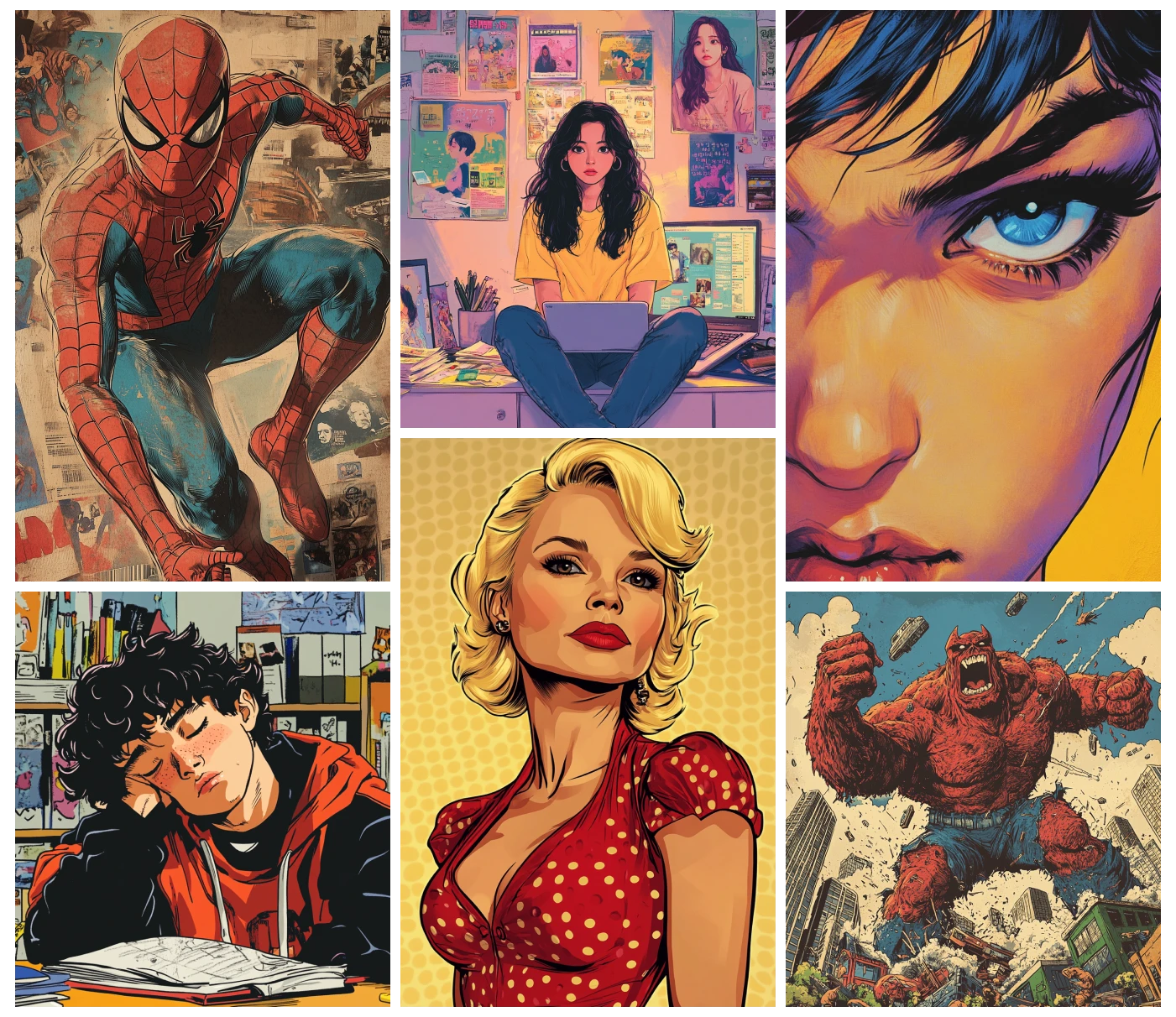
The AI-generated comic book market is experiencing explosive growth, expanding from $1.52 billion in 2025 to $2.01 billion in 2026—a remarkable 32.1% compound annual growth rate. Meanwhile, the broader global comic book market reached USD 17.69 billion in 2025 and is projected to grow to USD 26.75 billion by 2032.
An AI comic character generator transforms how creators develop visual identities for their stories. Powered by frontier AI models including GPT-5.2, Claude Opus 4.5, Gemini 3 Pro, and Grok 4.1, these tools solve the fundamental challenge that has historically blocked independent creators: maintaining perfect character consistency across dozens or hundreds of pages without professional artistic training.
What you'll learn:
- How AI comic character tools work and why they're transforming a $17+ billion industry
- The specific pain points these tools solve for independent creators
- Step-by-step workflows for creating consistent characters from concept to finished pages
- Which specialized agents handle different comic styles and formats
Quick Answer: What Is an AI Comic Character Generator?
An AI comic character generator is a specialized tool that creates complete character visual identities—including facial features, body proportions, costumes, accessories, and expressions—through guided workflows that maintain perfect consistency across entire comic projects.
Key capabilities that distinguish AI comic character tools:
- Identity embedding that captures facial structure, body proportions, and distinctive features from reference images
- Character reference sheet generation showing multiple angles and expressions
- Costume and accessory consistency maintained across all poses and scenes
- Expression libraries with emotional variations while preserving character identity
- Style adaptation allowing the same character to appear in different artistic treatments
The Comic Creator specializes in maintaining these elements across single issues to 200+ page graphic novel sagas—solving the biggest pain point in AI-assisted visual storytelling.
The Problem: Why Comic Character Design Remained So Difficult
Despite the booming comic market, aspiring creators face significant barriers in developing consistent character designs that maintain visual identity across entire projects.
🎭 The Character Consistency Nightmare
Perhaps the most challenging aspect of long-form comic creation is maintaining visual consistency. According to Artlist's analysis of character consistency in AI:
"A great character can hold a story together. Their face, voice, style, and personality can build the emotional connection that keeps audiences engaged from start to finish. However, in AI video generation, maintaining the same look and feel across scenes isn't automatic, and even small changes can break focus and weaken the story."
This "character drift" problem made early AI tools practically useless for:
- Comic strips and graphic novels (characters must be recognizable across pages)
- Children's books (young readers need consistent visual anchors)
- Brand mascots and marketing (identity must remain locked)
- Any narrative visual content requiring sequential consistency
💰 The Prohibitive Cost of Professional Design
Professional character design remains financially out of reach for most independent creators. According to Pixune Studios' 2026 pricing guide:
"Character design rates range widely from $300 to $1,000 for 2D character design and from $500 to $5,000 or more for complex 3D characters."
For comic page illustration, Vox Illustration reports:
"Most professional artists charge between $80 and $300 per page, with higher rates for full-color, painted, or complex styles."
For a standard 22-page comic issue, professional illustration costs range from $1,760 to $6,600 in black-and-white alone. Character design sheets—showing multiple angles, expressions, and costume details—add additional costs before a single story page is drawn.
⏱️ The Multi-Discipline Burden
Creating compelling comic characters requires simultaneous mastery across multiple disciplines:
Visual Skills Required:
- Anatomy with consistent proportions
- Facial structure that remains recognizable
- Costume design with functional details
- Expression range conveying personality
Storytelling Skills Required:
- Visual personality communication
- Costume choices reflecting character arc
- Accessory design supporting narrative
- Silhouette recognition for quick identification
According to Creative Bloq's analysis of digital art trends, making a living as an artist got harder in 2025, with many professionals leaving the industry due to job losses and reduced freelance work. The multi-skill burden has become even more challenging.
📐 The Reference Sheet Challenge
Professional comic studios solve consistency through detailed character model sheets—comprehensive reference documents showing characters from multiple angles with labeled features. Solo creators rarely have time to develop and maintain these resources, leading to gradual character drift across long projects.
The Jenova Solution: AI-Powered Comic Character Design
| Traditional Approach | AI Comic Character Generator |
|---|---|
| $300-$1,000 per character design sheet | Unlimited character generation |
| Days of iteration per character | Reference sheets in minutes |
| Manual consistency tracking | Automatic identity embedding |
| Limited expression variations | Full expression libraries |
| Style locked to single artist | Multiple style adaptations |
| Revision costs compound | Unlimited refinement |
How Jenova Addresses Each Pain Point
The Cost Barrier → Subscription Access
The Comic Creator provides access to professional character design methodology at a fraction of traditional costs. Create entire casts of characters, generate reference sheets, and iterate freely without per-character fees.
The Multi-Skill Burden → Specialized AI Agents
The Comic Creator handles visual execution while you focus on storytelling. For narrative development, the Creative Fiction Writer helps craft compelling character backstories, personality traits, and dialogue patterns before visual production begins.
The Character Consistency Problem → Identity Embedding System
Modern AI models create mathematical "fingerprints" of characters from just 1-3 reference images. This embedding captures:
- Facial structure and features
- Body proportions
- Distinctive characteristics (freckles, glasses, hairstyle)
- Clothing and accessories
The Reference Sheet Challenge → Automated Generation
Before creating story pages, the AI generates essential reference materials:
- Front view — Primary character presentation
- Back view — Costume details and silhouette
- Profile view — Facial structure clarity
- Expression sheet — Emotional range while maintaining identity
- Accessory details — Weapons, gadgets, and signature items
Specialized AI Agents for Comic Character Design
Comic Creator — Your Personal Comic Book Artist
Your personal comic book artist for crafting complete Western-style stories. Master sequential art, dynamic layouts, and bold visual styles—from single issues to epic graphic novel sagas.
Key Features:
- Dedicated reference sheets that lock character appearances across your entire project
- Multi-angle character generation (front, back, profile, three-quarter)
- Expression libraries maintaining identity across emotional states
- Costume versioning for character evolution throughout stories
- Support for 200+ page serialized projects with consistent characters
Best for: Superhero stories, graphic novels, Western indie comics, action sequences
Manga Creator — Personal Mangaka for Japanese-Style Characters
Personal mangaka for creating complete stories with visual storytelling, panel flow, and consistent art style—from one-shots to 200+ page serialized epics.
Key Features:
- Character sheet system maintaining consistency across entire series
- Five distinct manga styles (Shonen, Shoujo, Seinen, Slice-of-Life, Chibi)
- Expression range optimized for manga emotional beats
- Costume design following manga conventions
Best for: Japanese-style storytelling, serialized chapters, character-driven drama
Webtoon Creator — Mobile-First Character Design
Specialized for mobile-first vertical scroll format with characters designed for digital platforms:
- Full-color character designs matching webtoon aesthetic standards
- Episode consistency across 100+ installments
- Vertical scroll optimization for character reveals and emotional beats
- Platform-ready exports for LINE Webtoon, Tapas, and Lezhin
Best for: Vertical scroll comics, mobile-native series, platform-specific formatting
Marketing Visual Designer — Promotional Character Artwork
Marketing visuals specialist for creating promotional artwork, cover designs, and campaign imagery to support your comic projects:
- Character presentation optimized for promotional impact
- Cover-ready character poses and compositions
- Brand-consistent character adaptations
- Social media-optimized character artwork
How It Works: From Concept to Consistent Character
Step 1: Define Your Character Foundation
Begin by outlining your character's core identity. The more detail you provide, the more consistent your results.
"I'm creating a superhero character named Nightfall—a vigilante who can manipulate shadows. Marcus is 32, has a scarred face from a childhood accident, wears a tactical black suit with a hood, and carries retractable batons. His personality is brooding but driven by justice. He's 6'2" with an athletic build, short-cropped black hair, and intense gray eyes."
Key elements to include:
- Physical attributes (body shape, facial features, hairstyle)
- Clothing or costume details with specific colors
- Personality traits and default mood
- 2-3 "always" accessories (weapon, signature item)
- 2 "never" rules (example: "never change hair color; never remove the scar")
Step 2: Select Your Style Template
Choose from templates matched to major comic traditions:
| Template | Best For | Character Signature |
|---|---|---|
| Superhero/Action | Cape comics, action, adventure | Bold anatomy, dynamic poses, dramatic costumes |
| Indie/Alternative | Literary comics, slice of life | Expressive features, realistic proportions, casual clothing |
| Horror/Dark | Thriller, psychological, horror | Atmospheric design, unsettling details, shadow integration |
| Sci-Fi/Fantasy | Space opera, epic fantasy | Imaginative costumes, tech integration, otherworldly features |
| Noir/Crime | Detective stories, crime drama | Period-appropriate fashion, high contrast, urban aesthetic |
Step 3: Generate Character Reference Sheet
The Comic Creator generates comprehensive reference materials:
- Full-body front view — Primary character presentation with costume details
- Full-body back view — Rear costume elements, weapons, accessories
- Profile view — Facial structure, hair, distinctive features
- Close-up face views — Multiple expressions (neutral, angry, sad, determined)
- Action poses — Character in motion, demonstrating movement style
- Accessory details — Weapons, gadgets, signature items with labels
Step 4: Lock Character Identity
Using the platform's character consistency features, "lock" your character's appearance. This creates the identity embedding that ensures consistency across all future generations.
According to Artlist's workflow guide:
"Build a detailed character bible... Document every defining element of your character, from their core visual identity to behavior and personality."
Step 5: Apply Across Story Pages
With reference sheets established, generate story pages with your character maintaining perfect consistency. The Comic Creator loads relevant references with every page generation, ensuring visual identity across your entire project.
Step 6: Track Character Evolution
Track character changes throughout your story:
- Costume upgrades — Versioned reference sheets
- Injuries and scars — Progressive visual changes
- Aging — Long-term character development
- Emotional states — Temporary appearance changes
Results & Use Cases
🦸 The Superhero Creator
Scenario: Creating a protagonist for a new superhero comic series
Traditional Approach: $300-$1,000 for professional character design sheet, plus revision costs, plus weeks of iteration
With Comic Creator:
- Complete reference sheet in one session
- Multiple angle views and expressions
- Costume variations for different story arcs
- Unlimited refinement without additional costs
💼 Full Cast Development
Scenario: Developing a team of 5-8 characters for an ensemble comic
Traditional Approach: Weeks of design work, $1,500-$8,000 in illustration costs, coordination challenges
With AI comic character design:
- Each character maintains distinct identity
- Relationship dynamics visible in group shots
- Consistent scale and proportion across cast
- Style coherence throughout ensemble
📱 Brand Mascot Creation
Scenario: Developing a consistent character for marketing and content
According to Creative Bloq's trend analysis, audiences are increasingly attracted to things that carry the fingerprints of human artists—the gestures, quirks, and details that tell a story.
With the Marketing Visual Designer:
- Character appears consistently across all marketing materials
- Adaptable to different contexts while maintaining identity
- Social media-ready variations
- Campaign-specific costume adaptations
🎯 Villain and Antagonist Design
Scenario: Creating memorable antagonists that contrast with heroes
With AI comic character design:
- Visual design reflecting character motivation
- Costume choices communicating threat level
- Expression range from menacing to vulnerable
- Silhouette distinction from protagonist
2026 Market Context: Why AI Comic Character Tools Have Arrived
📈 A Booming Industry Hungry for New Voices
The comic book market has reached unprecedented scale. According to Fortune Business Insights:
"The global comic book market size was valued at USD 17.69 billion in 2025 and is projected to grow from USD 18.63 billion in 2026 to USD 26.75 billion by 2032."
Mordor Intelligence projects the market to reach USD 23.61 billion by 2030, growing at a 5.41% CAGR.
Key market dynamics:
- Digital formats driving growth across all regions
- Webcomics advancing at 11.2% CAGR — the fastest-growing format
- North America expected to grow at over 23% CAGR from 2026 to 2033
- Gen Z readers driving demand for fresh stories and new voices
🤖 The Character Consistency Breakthrough
According to Digital Synopsis's 2026 analysis:
"An effective AI character generator should allow for consistent visuals throughout character generations, customization of facial features and the overall aesthetic, ability to save, modify, and use characters, and industry-compliant visual output."
Key technological developments:
- Identity Embedding: Mathematical "fingerprints" from 1-3 reference images capturing facial structure, body proportions, and distinctive characteristics
- LoRA Fine-Tuning: Quick, lightweight training on specific characters—upload 5-10 images, train a custom model in under 10 minutes
- Character Reference Features: Point to existing images as reference, specify which aspects to maintain
- Multi-Subject Consistency: Handle multiple consistent characters simultaneously
🎨 Authenticity Over Perfection
According to Creative Bloq's digital art trends analysis:
"People want to see brushstrokes, rough edges and textures sampled from the real world—anything that shows what we're looking at was human-made."
The most successful character designs in 2026 combine:
- AI efficiency for generation and consistency
- Human creative direction for personality and story alignment
- Iterative refinement based on narrative needs
- Authentic imperfection that feels genuine rather than synthetic
Character Types and Design Approaches
Protagonist Design
Key considerations:
- Distinctive silhouette recognizable at any size
- Memorable feature (hair streak, scar, accessory)
- Expression range from determined to vulnerable
- Costume that reflects personality and role
Supporting Cast
Ensemble consistency challenges:
- Each character needs distinct visual identity
- Characters must remain distinguishable in group scenes
- Relationship dynamics reflected in visual design
- Consistent height/proportion relationships
Antagonist Design
Visual storytelling through character design:
- Contrasting elements to protagonist
- Evolution potential for redemption arcs
- Intimidation balanced with complexity
- Consistent threat presence across appearances
Background Characters
Efficiency without sacrificing quality:
- Simplified but consistent designs
- Recognizable recurring characters
- Crowd scenes with visual variety
- Supporting the main cast without distraction
Frequently Asked Questions
Can AI really maintain character consistency across multiple pages?
Yes—this has been the breakthrough development in AI comic character generation. The Comic Creator uses identity embedding technology. From 1-3 reference images, the AI creates a mathematical "fingerprint" capturing facial structure, body proportions, distinctive features, and costume details. This embedding is loaded with every subsequent generation, ensuring visual consistency across your entire project—even across 200+ pages.
How much does professional character design cost compared to AI tools?
According to Pixune Studios, professional 2D character design costs $300-$1,000 per character, with 3D characters reaching $500-$5,000+. Comic page illustration runs $80-$300 per page. AI comic character tools provide unlimited character generation through subscription access, eliminating per-character and per-page fees.
What comic styles can I create characters in?
The Comic Creator supports multiple visual style templates including Superhero/Action (bold, dynamic), Indie/Alternative (expressive, realistic), Horror/Dark (atmospheric, unsettling), Sci-Fi/Fantasy (imaginative, otherworldly), and Noir/Crime (high contrast, urban). For Japanese aesthetics, the Manga Creator offers Shonen, Shoujo, Seinen, Slice-of-Life, and Chibi styles.
Do I need any drawing skills to use AI character design tools?
No drawing skills are required. These tools are designed for writers, storytellers, and creators who have compelling character concepts but lack traditional artistic training. You direct the visual output through detailed text descriptions, reference images, and iterative refinement.
What AI models power character design?
Jenova provides unified access to frontier AI models including GPT-5.2, Claude Opus 4.5, Gemini 3 Pro, and Grok 4.1—all available through a single platform with no vendor lock-in.
Can I sell comics featuring AI-designed characters?
Jenova allows commercial use of generated content. However, publishing platforms may have their own policies regarding AI-generated content. For self-publishing on platforms like Amazon KDP, AI-generated content is generally permitted with proper disclosure.
Conclusion
The AI-generated comic book market's explosive growth—from $1.52 billion in 2025 to $2.01 billion in 2026—reflects a fundamental shift in who can create visual stories. Character consistency—once the insurmountable barrier to AI-assisted comic creation—has been solved through identity embedding, reference systems, and multi-subject tracking.
Professional character design that once cost $300-$1,000 per character is now accessible to anyone with a story to tell. The multi-discipline burden that defeated solo creators has been lifted by AI tools that handle visual execution while you focus on storytelling.
With Jenova's specialized agents—Comic Creator for Western styles, Manga Creator for Japanese aesthetics, and Webtoon Creator for mobile-first vertical formats—your characters will stay recognizable from page 1 to page 200.
Your heroes will maintain their distinctive features. Your villains will stay menacing. Your entire cast will hold their visual identities across your complete project.
The story you've been imagining? Your characters are ready to bring it to life.