AI Comic AI Generator: Create Complete Comics with AI from Script to Page (March 2026)
2026-03-27
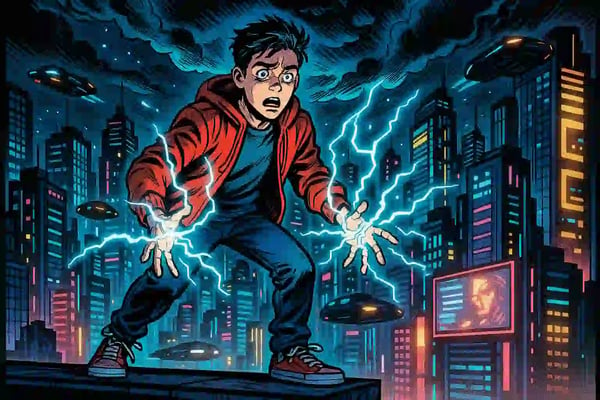
The AI comic AI generator has become the defining creative tool for visual storytellers in 2026. The global AI comic generator market reached USD 33.00 billion in 2025 and is projected to hit USD 271.06 billion by 2035 — a 23.44% CAGR — while approximately 61% of digital artists now use AI tools and 57% of comic publishers employ AI for production tasks like background rendering, coloring, and panel composition. Meanwhile, the AI-generated comic book market expanded from $1.15 billion in 2024 to $1.52 billion in 2025 and is expected to reach $4.6 billion by 2029, driven by personalized storytelling, immersive reading formats, and the emergence of dedicated AI comic creation platforms.
Jenova's Comic Creator is the AI comic AI generator built for creators who have stories ready to visualize. It handles the complete comic creation workflow — script analysis, character reference sheets for visual consistency across hundreds of panels, six professional art style templates, intelligent panel composition with authentic reading flow, speech bubble integration, and persistent project memory that tracks your story across sessions. Whether you're building a superhero epic, a noir detective series, or an indie graphic novel, this guide covers how AI comic generation works, why dedicated agents outperform generic image tools, and how to create your first comic in minutes.
Quick Answer: What Is an AI Comic AI Generator?
An AI comic AI generator is a specialized tool that transforms written scripts and story concepts into complete, publication-ready comic pages — including consistent characters, dynamic panel layouts, speech bubbles, and professional visual storytelling conventions — without requiring drawing skills.
- 📝 Script-to-comic conversion with automatic scene breakdown and panel sequencing — Comic Creator handles this conversationally
- 🧑🎨 Character consistency across hundreds of panels using reference sheet architecture and identity embedding
- 📐 Panel layout intelligence with proper reading flow, panel size hierarchy, and dramatic pacing
- 💬 Dialogue integration with speech bubbles, captions, sound effects, and lettering placement
The Problem: Why Creating Comics Has Remained So Difficult
The demand for comic content has never been higher. 50 million people worldwide read digital comics monthly, and the digital comic market is projected to reach USD 14.4 billion by 2034 at a 10.4% CAGR. Yet the barriers to creating professional comics remain stubbornly high for independent creators.
The Multi-Skill Burden
Comic creation demands simultaneous mastery of character design, illustration, inking, coloring, panel composition, lettering, and sequential art theory. As Skywork's 2026 guide documented, the industry has evolved "from basic text-to-image tools toward integrated storytelling suites" — but most aspiring creators still face a skills gap that takes years to close. A single comic page can take a professional artist hours of work across penciling, inking, coloring, lettering, and composing panels.
The Character Consistency Crisis
As Anifusion's 2026 analysis confirmed, "Character consistency is absolutely critical for manga. Readers need to instantly recognize your characters across hundreds of pages and various scenes. This is where specialized manga tools vastly outperform general AI art generators."
Generic image generators like Midjourney can produce stunning individual illustrations, but they have no built-in character consistency, no panel layout tools, no speech bubbles or text integration, and a Discord-based interface not designed for comic workflows. Every panel requires individual prompting, and your protagonist's face changes between frames. As MIT Technology Review documented, even early dedicated tools struggled with consistency — "in one scene from my story a short-haired character has grown bangs; in another, the same character appears twice."
The Cost Barrier
Hiring professional comic artists costs $50–$300 per page. A 200-page graphic novel could require $10,000–$60,000 in illustration costs alone — before editing, lettering, or printing.
The personal/hobbyist segment dominated the AI comic generator market with approximately 42.5% share in 2025, and AI adoption has enabled independent creators to compete with major studios, reducing production costs and timelines by over 70%. The economic case for AI comic generation isn't just convenience — it's the difference between a story being told and a story staying trapped in a script.
Why Comic Creator Is the Best AI Comic AI Generator
This is exactly what Comic Creator was built for. Unlike generic image generators that produce beautiful standalone illustrations but can't maintain a character's face across two panels, or video storyboard tools designed for film pre-production, Comic Creator is a dedicated sequential art agent that handles the complete comic creation workflow through conversational AI.
| Feature | General Image Generator (e.g., Midjourney) | General Storyboard Tool | Comic Creator |
|---|---|---|---|
| Character consistency | ❌ Extremely difficult | ⚠️ Basic | ✅ Reference sheet system across 200+ pages |
| Panel layouts & reading flow | ❌ Manual in external tools | ❌ Video frames, not comic panels | ✅ Intelligent composition with comic conventions |
| Speech bubbles & lettering | ❌ None | ❌ None | ✅ Integrated dialogue placement |
| Art style templates | ⚠️ Prompt-dependent | ⚠️ Sketch/cinematic only | ✅ Six professional styles |
| Story continuity | ❌ None | ❌ Scene-based, not narrative | ✅ Plot memory engine across sessions |
| Comic-specific output | ❌ Individual images | ❌ Video storyboard PDFs | ✅ Publication-ready comic pages |
| Cost | $10–$60/month | $19–$199/month | Free to start |
While tools like Dashtoon offer integrated creation-and-distribution ecosystems for webcomics, as Anifusion's 2026 comparison documented, content created on Dashtoon is "largely confined to its ecosystem" with "less control over export formats for external publishing." And while Midjourney produces the highest quality standalone images, it has zero comic-specific features — no panels, no speech bubbles, no story tracking, no character management. As Skywork confirmed: "A dedicated comic tool offers an end-to-end workflow. A general image generator like Midjourney only creates individual images."
Six Professional Art Style Templates
The Comic Creator offers six distinct visual approaches, each carrying its own panel composition conventions and storytelling aesthetics:
- Superhero: Bold lines, dynamic action, impact frames — the Marvel and DC aesthetic with splash pages and dramatic angles
- Noir: Heavy shadows, high contrast, cinematic compositions — detective stories and crime thrillers
- Indie: Expressive linework, experimental layouts, personal voice — literary graphic novels and memoir
- Franco-Belgian: Clean lines, detailed backgrounds, European album format — the Tintin and Astérix tradition
- Cartoon: Exaggerated proportions, bright colors, comedic timing — all-ages humor and adventure
- Realistic: Detailed anatomy, photorealistic rendering, cinematic lighting — mature themes and historical fiction
The Character Reference Sheet System
Before generating any story panels, you create character reference sheets with Comic Creator — showing each character in neutral poses with labeled features, key expressions, and costume details. These references load with every subsequent generation, ensuring visual consistency across your entire project. As Skywork documented, modern AI comic tools use three key technologies: "identity embeddings, which create a mathematical 'fingerprint' of a character; reference systems, where you create a character sheet that the AI uses for every panel; and advanced prompting" techniques. This convergence of technologies matured in 2025–2026, finally solving the consistency problem that held AI comics back.
Persistent Story State
Unlike static tools that treat every session as a blank slate, the AI comic AI generator maintains persistent awareness of your project across sessions. Character evolutions (new scars, costume changes, aging) are tracked with versioned reference sheets. Landmark page tagging enables narrative callbacks. Your art direction — the specific visual language you've established — carries forward automatically.
Start with Comic Creator free — no credit card required.
Related Agents You'll Also Like
🎨 Manga Creator — Japanese Manga Comics
For creators working in manga conventions — right-to-left reading flow, screentone integration, and authentic Japanese visual storytelling. Handles five professional art style templates (Shonen, Shoujo, Seinen, Slice-of-Life, Chibi) with character consistency across 200+ page serialized epics.
- Right-to-left reading flow with page-turn psychology
- Screentone integration and authentic manga conventions
- Dialogue generation with character voice consistency
📱 Webtoon Creator — Vertical Scroll Comics
Optimized for mobile-first platforms where comic creation means something entirely different — vertical scroll rhythm, strategic white space, and "thumb stop" moments. Platform presets for LINE Webtoon, Tapas, and Lezhin ensure your comics translate directly to publication-ready episodes. With 44% of webcomic creators already using AI to personalize stories and 77% of readers enjoying comics primarily on phones, vertical scroll is the fastest-growing format.
- Vertical scroll rhythm optimization with strategic pacing
- Episode hooks and cliffhanger structure
- Full-color consistency across 100+ episodes
✍️ Creative Fiction Writer — Script Development Before Visual Production
Develop your narrative foundation before visual production begins. Scene-by-scene breakdowns with visual direction notes, character arc development, dialogue refinement, and plot structure guidance that translates directly into panel descriptions for the AI comic AI generator.
- World-building with authentic detail
- Scene breakdowns ready for comic generation
- Editorial insight for pacing and narrative structure
How It Works: From Script to Finished Comic
Step 1: Define Your Story and Visual Style
Begin by describing your story concept, genre, and visual approach to the Comic Creator. Choose from six professional art style templates — each carries its own storytelling conventions that affect panel composition, border treatment, and pacing.
"I'm creating a superhero comic about a retired firefighter who discovers she can control fire after a near-death experience. The setting is modern-day Chicago. I want bold lines, dynamic action, and the classic superhero aesthetic — think early Invincible meets Fire Department drama."
For complex narratives, the Creative Fiction Writer can help develop full scene breakdowns with visual direction notes before comic production begins.
Step 2: Lock In Character Designs
Create reference sheets for your main characters. Comic Creator generates consistent designs that persist across your entire project:
"Design my protagonist: Elena Torres, late 40s, athletic build, salt-and-pepper hair in a short practical cut, burn scar across her left forearm. In civilian clothes: flannel shirt, work boots. In hero mode: a modified firefighter suit with flame-resistant plating and an open-face helmet. Superhero style with grounded, realistic proportions."
The reference sheet captures neutral poses, key expressions (determination, vulnerability, fury, exhaustion), costume details, and distinctive features — loading automatically with every subsequent panel generation.
Step 3: Generate Your Comic Pages
With characters established, provide your script or scene descriptions. The AI determines panel count, size hierarchy, reading flow, and composition based on your story beats:
"Chapter 1, Pages 1-2: Elena is at a retirement party at the fire station. Three small panels of her colleagues toasting, laughing, handing her a gift. She smiles but her eyes are distant. Cut to her alone outside, staring at the city skyline. Large panel: she notices smoke rising from a building three blocks away. Her expression shifts — instinct overriding retirement. End page 2 with her running toward the fire, party hat still on her head."
The AI understands that the party scenes should be small, warm panels — and that Elena running toward the fire demands a large panel with kinetic energy. The party hat detail creates visual irony that carries emotional weight.
Step 4: Add Dialogue and Lettering
Integrate speech bubbles, thought bubbles, narration boxes, and sound effects directly into your pages:
"Add dialogue: Colleague says 'To the toughest captain Station 47 ever had!' in the toast panel. Elena thinks 'Forty-seven saves. Forty-seven. Not forty-eight.' in the skyline panel. Add a sound effect 'WHOOMP' for the distant explosion in the smoke panel."
Step 5: Iterate, Refine, and Scale
Request adjustments to any element — panel sizing, composition, camera angles, lighting, or pacing. The AI iterates while maintaining narrative coherence and your established visual language. Scale from a single issue to a full graphic novel with persistent project memory that tracks every character, every plot thread, and every creative decision across sessions.
Results & Use Cases
📚 The Writer with a Story but No Art Skills
Scenario: You've written a complete comic script — dialogue, panel descriptions, scene directions — but can't draw.
Traditional Approach: Hire a comic artist at $50–$300 per page, wait weeks for delivery, pay for revisions, then hire separate inkers, colorists, and letterers.
Jenova Solution: Comic Creator transforms your script into professionally illustrated and finished comic pages in a single workflow. Describe your scenes in natural language, and the AI handles visual execution — from rough storyboard through publication-ready output. As Skywork confirmed: "AI comic generators are specifically designed for writers, marketers, educators, and storytellers who have ideas but lack traditional artistic training."
📱 The Cross-Format Publisher
Scenario: You want to publish the same story as a Western comic, Japanese manga, and vertical scroll webtoon — each requiring fundamentally different visual approaches.
Traditional Approach: Three separate art teams, three separate production pipelines, three separate budgets.
Jenova Solution: Develop your story and characters with Comic Creator for Western comic formatting, then @mention Manga Creator for right-to-left manga adaptation and Webtoon Creator for vertical scroll optimization. All three agents share your character references and story context — one creative vision, three publication-ready formats.
💼 The Content Creator & Marketer
Scenario: You need comic-style content for social media, YouTube thumbnails, newsletters, or brand storytelling.
Traditional Approach: Commission artists for each piece at $50–$300 per illustration, wait weeks for delivery.
Jenova Solution: Generate consistent character art, reaction images, short comic strips, and branded content on-demand with the AI comic AI generator. The reference sheet system ensures your brand characters look identical across every piece of content. The AI comic generator market's publishing & media segment is expected to grow at the fastest rate in coming years, driven by demand for visual content and advances in generative AI.
🎓 The Educator Transforming Lessons into Visual Stories
Scenario: You need to create educational comic strips that explain complex concepts through visual storytelling.
Traditional Approach: Commission custom illustrations or use generic clip art that doesn't match your narrative needs.
Jenova Solution: Educators can convert dense lesson plans into visually engaging comic strips that improve student engagement and information retention. Use Comic Creator to generate custom educational comics with consistent characters, clear visual explanations, and engaging storytelling that outperforms traditional instructional materials.
🎯 The Self-Publisher on Amazon KDP
Scenario: You want to publish a complete comic or graphic novel on Amazon KDP.
Traditional Approach: Commission artists, manage production timelines, handle print formatting separately — $10,000–$60,000 for a full graphic novel.
Jenova Solution: Generate print-ready pages with the Comic Creator. Maintain character consistency across the entire project. Create cover art featuring your consistent characters. The free/freemium segment held approximately 62% share of the AI comic generator market in 2025, reflecting the industry's commitment to accessible entry points — start free, then scale to paid plans for full-length production.
FAQ
Do I need drawing skills to use an AI comic AI generator?
No. AI comic generators are specifically designed for creators who have stories to tell but lack traditional artistic training. Comic Creator is story-first — your creative vision and storytelling ability matter more than drawing skills. You describe scenes in natural language, and the AI handles all visual execution, from character design through finished comic pages with panels, dialogue, and lettering. As Skywork's 2026 guide confirmed: "AI comic generators are specifically designed for writers, marketers, educators, and storytellers who have ideas but lack traditional artistic training."
How does the AI maintain character consistency across hundreds of panels?
Comic Creator uses a reference sheet architecture — before generating story panels, you create character reference sheets showing each character in neutral poses with labeled features. These references load with every subsequent generation. As Skywork documented, modern AI comic tools use three key technologies: "identity embeddings, which create a mathematical 'fingerprint' of a character; reference systems, where you create a character sheet that the AI uses for every panel; and advanced prompting" techniques that matured in 2025–2026.
What comic styles can the AI generate?
Comic Creator supports six professional art style templates: Superhero (bold lines, dynamic action), Noir (heavy shadows, cinematic compositions), Indie (expressive linework, experimental layouts), Franco-Belgian (clean lines, detailed backgrounds), Cartoon (exaggerated proportions, bright colors), and Realistic (detailed anatomy, photorealistic rendering). For Japanese manga styles, the Manga Creator offers five additional templates (Shonen, Shoujo, Seinen, Slice-of-Life, Chibi).
What's the difference between an AI comic AI generator and a general image generator like Midjourney?
A dedicated AI comic generator like Comic Creator offers an end-to-end storytelling workflow — character consistency systems, panel layouts, page assembly, speech bubble integration, dialogue placement, and persistent project state. As Skywork confirmed: "A general image generator like Midjourney only creates individual images. You must then use separate software like Canva or Photoshop to assemble them into a comic page, add lettering, and create layouts." Midjourney has no built-in character consistency, no panel layout tools, no speech bubbles or text integration.
Is the AI comic AI generator free?
Yes — you can start using Comic Creator for free with no credit card required. Free accounts include all core features with limited usage — sufficient for testing workflows, creating sample pages, and validating story concepts. Paid plans starting at $20/month increase usage limits significantly for full-length projects. The free/freemium segment held approximately 62% share of the AI comic generator market in 2025.
Can I sell comics created with this tool?
Jenova allows commercial use of generated content on paid plans. However, publishing platforms and marketplaces may have their own policies regarding AI-generated content. For self-publishing on platforms like Amazon KDP, AI-generated content is generally permitted with proper disclosure. Always verify the terms of service for your target distribution platform.
Conclusion
The AI comic creation landscape has fundamentally shifted in 2026. The AI comic generator market is growing at 23.44% CAGR toward USD 271.06 billion by 2035, the AI-generated comic book market expanded from $1.15 billion in 2024 to $1.52 billion in 2025 and is projected to reach $4.6 billion by 2029, and 61% of digital artists now use AI tools in their production workflows. The audience is massive — 50 million monthly digital comic readers worldwide — the distribution platforms are ready, and the only thing that was missing was an accessible creation tool that understands comics as a complete storytelling medium, not just a collection of individual images.
What makes Comic Creator different isn't just that it generates comic-style panels — it's that it handles the complete creation workflow that professional comic studios follow: script analysis, character reference sheets for visual consistency, six distinct art style templates, intelligent panel composition with authentic reading flow, speech bubble integration, and persistent project memory that remembers your characters, your story, and your creative direction across sessions.
The question is no longer "can I create this comic?" It's "what story do I want to tell?"
Try Comic Creator now — describe your story and see your comic come to life. No drawing skills required. No credit card required.
For creators exploring different visual storytelling formats, Jenova also offers dedicated agents for manga, webtoons, and fiction writing. Explore the full agent library at Jenova.