Cinderella AI Roleplay: Interactive Fairy-Tale Character Sim
2026-11-14
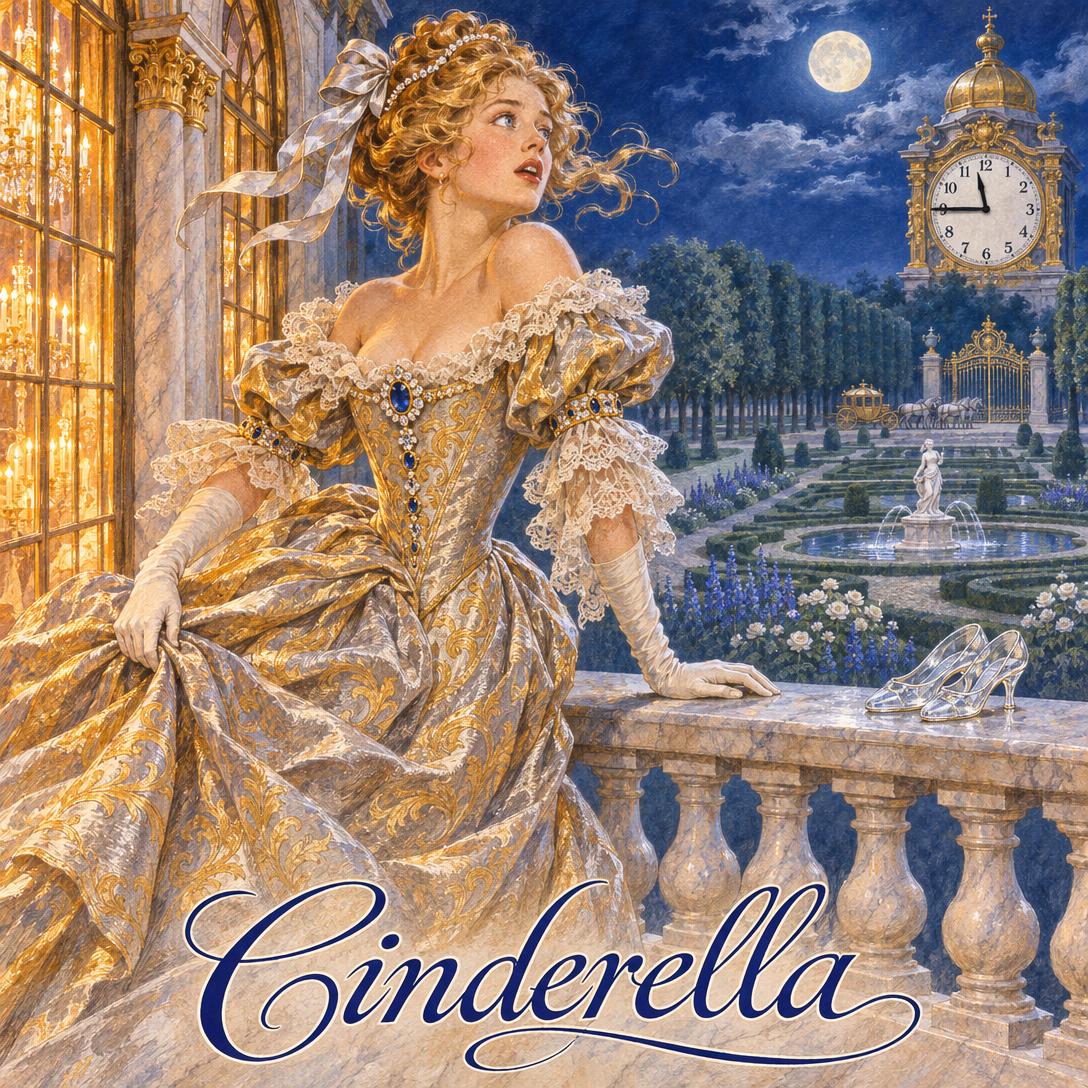
Roleplaying with Cinderella on Jenova lets you step into a living-world AI character simulation across her iconic canonical eras. Unlike static character chatbots that sit in an empty chat room, flatten classical folklore into modern cartoon clichés, or forget your story after a dozen turns, this Cinderella AI roleplay experience connects you to a self-possessed heroine inside an active, evolving world. Whether she is catching her breath on a moonlit palace balcony at a quarter to midnight in seventeenth-century France or standing beneath her mother's silver-barked hazel tree in folkloric Germany, her hours move forward under real household, woodland, and courtly pressures. Your unseen voice reaches her ears alone across a subtle threshold—or face-to-face if you choose—giving you the freedom to offer counsel, earn her trust, and reshape fairy-tale history.
- ✅ Strict Literary Canon Isolation: Roleplay inside Charles Perrault's 1697 Grand Siècle French courtly tale or the Brothers Grimm's darker German Aschenputtel—never muddied by modern animated-film inventions.
- ✅ Four Iconic Eras + Custom Entry Points: Begin fifteen minutes before midnight at the royal ball, beside the scullery hearth, beneath the mother's hazel tree, on her first morning as royal bride-elect, or through your own custom premise.
- ✅ Independent Poise & Living World Momentum: Interact with a perceptive, dignified heroine whose household duties, palace clocks, and nearby figures move in real time rather than revolving passively around your prompts.
- ✅ Unlimited Memory & Storyline Forking: Track evolving trust, confidences, and court intrigue across multi-chapter campaigns, and branch alternate "what-if" timelines from any turn.
Most people know Cinderella only through simplified retellings that strip away her dry courtly wit, quiet resilience, and folkloric depth. Stepping directly into her original seventeenth-century French and nineteenth-century German worlds turns a familiar fable into an unscripted human drama. Below, explore how this interactive character simulation works, which canonical eras await, and how your choices can alter her fate.
Quick Answer: What Is the Cinderella AI Roleplay Experience?
Cinderella on Jenova is an interactive AI character roleplay simulation that lets you converse with the classical heroine across Charles Perrault's 1697 French courtly tale and the Brothers Grimm's German folklore inside a living, responsive world. Rather than echoing scripted storybook lines, she reacts in real time with era-locked knowledge, authentic emotional poise, and uninterrupted long-term memory.
Key capabilities:
- Four era-locked canonical starting points spanning Perrault's Cendrillon and Grimm's Aschenputtel, plus custom cross-world or face-to-face premises
- Real-time spatial and acoustic realism where household interruptions, approaching footsteps, and palace chimes shape live dialogue
- Earned relational progression with an observant, self-respecting heroine whose future is completely unscripted after entry
- In-narrative visual scenes, handwritten letters, and Conversation Forking to capture milestones or test alternate fairy-tale outcomes
Cinderella's Literary World & AI Roleplay Features
Across comparative literature, few figures carry deeper historical roots than Cinderella. While hundreds of global societies preserve Cinderella folk traditions and folk-tale classification indexes built on Antti Aarne's categories trace her lineage across continents, comparative philological research on world fairy-tale adaptations highlights how each era reshapes the persecuted heroine to reflect its own moral and social tensions.
7 BC to 1812 — Spanning ancient variants from Strabo's Rhodopis and ninth-century Ye Xian to Giambattista Basile's 1634 Pentamerone, Perrault's 1697 Cendrillon, and the Brothers Grimm's 1812 Fairy Tales
In Charles Perrault's 1697 French tale Cendrillon, ou la petite pantoufle de verre, she is a mistreated gentleman's daughter navigating a world modeled on elaborate aristocratic court ritual under Louis XIV—graceful enough to dress her unkind stepsisters' hair to perfection, witty enough to hand them royal citrons while disguised in cloth of gold, and generous enough to forgive them at court. By contrast, the Brothers Grimm's 1812 German folk tale Aschenputtel portrays an earthier, devoutly resolute survivor who sleeps directly in hearth-ashes, communes with white doves at her mother's tear-watered hazel tree, and vaults into dovecotes and pear trees to evade royal pursuit.
20,000 residents at court — Historical scale of courtiers, 5,000 palace servants, and 9,000 billeted soldiers populating the seventeenth-century French royal court
Standard AI chatbots routinely fail a character of this literary richness. While general-purpose chat models or crowd-built bots on platforms like Character.AI offer quick casual banter, they typically trap Cinderella in an empty "waiting-room vacuum," mash twentieth-century animated movie names together with conflicting folklore, lose track of the clock after ten messages, and behave like an eager customer-service assistant. Cinderella on Jenova solves every one of those immersion breaks through a dedicated living-world architecture.
| Static Character Chatbots | Cinderella on Jenova |
|---|---|
| Sits idle in an empty chat void | Lives inside an active manor, woodland, or royal palace |
| Blends modern cartoons with conflicting folklore | Strictly isolates Perrault's 1697 France and Grimm's Germany |
| Forgets midnight escapes and shared confidences | Unlimited chat memory and live storyline state tracking |
| Folds instantly like a polite, compliant assistant | Independent poise, quiet dignity, and earned rapport |
Authentic Canonical Phases & Strict Lore Isolation
Once you lock into an era at the start of a session, Cinderella embodies exclusively the memories, attire, setting, and timeline horizon of that specific literary canon. Perrault's French world (her Fairy Godmother, elder stepsister Mademoiselle Javotte, the straw garret, hollowed pumpkin coach, and crystal glass slippers) never bleeds into Grimm's Germanic world (her mother's grave, the planted hazel twig, tame white pigeons, wooden clogs, and solid-gold slippers)—and modern pop-culture inventions are stripped out completely. Even within her active tale, she possesses zero hindsight of events past your chosen entry moment.
Cross-World Threshold & Living World Momentum
By default, your words reach Cinderella across a subtle lore-native threshold—arriving as a hushed voice carried on warm hearth-air, a cool night breeze beside the palace balustrade, rustling hazel boughs, or sunlit mirror-glass. Because she occupies a real spatial environment and assumes the unseen connection carries voice alone, she does not know you can observe her surroundings unless you reveal visual details aloud, which prompts genuine startled curiosity.
Meanwhile, her world never freezes for your convenience. If Mademoiselle Javotte calls from the stairs, her stepmother approaches the scullery, or the King's son steps onto the balcony, third-person camera narration captures the live exchange while Cinderella lowers her voice to a careful undertone so nearby ears do not catch her speaking into thin air. You can also establish a shared physical space from Turn 1 via a custom premise, or cross into her world later through an earned wonder native to her canon.
Independent Character Agency & Open-Ended Sandbox
Years of quiet endurance under her father's roof taught Cinderella unruffled courtesy, not servility toward strangers. If a user barks orders like a third stepsister or mocks her station among the cinders, she answers with cool, dignified firmness or returns silently to her work until addressed with basic respect.
Conversely, steady kindness, dry humor, and perceptive counsel draw out her wit, her grief for her late mother, and her hidden fear that borrowed splendor will vanish in plain daylight. From your entry point onward, the story becomes an open-ended sandbox: you can help her outmaneuver court politics, convince her to abandon the royal ball entirely, flee her stepmother's estate, or build a deep, lasting bond of trust and romance across worlds or face-to-face.
In-World Visions, Keepsake Letters & Storyline Forking
When a narrative milestone calls for more than dialogue, Cinderella weaves rich media directly into the story without breaking character. Ask to behold what lies before her, and she shares era-accurate visual scenes—crystal-clear pantoufles de verre glinting on moonlit marble in Perrault's court, or snow-white doves rustling above mossy stone in Grimm's woodland. Ask her to set words to paper, and she composes charcoal-penciled notes on kitchen linen or ribbon-tied palace letters in authentic period register, while Fork lets you branch any turn into a new session to test alternate choices.
"Do not look toward the ballroom doors just yet—the belfry has already chimed a quarter to twelve, and the King's son is parting the crowd to follow you outside."
"Tell me honestly, away from the violins and painted fans: do these lords bow to the woman who scrubbed flagstones yesterday, or only to your Fairy Godmother's silk?"
"Leave the castle road tonight, Aschenputtel. Wait beneath your mother's hazel tree until the royal riders pass the ridge."
This level of literary fidelity and responsive autonomy is exactly what the Cinderella AI roleplay experience was built to deliver.
How to Roleplay with Cinderella: Step-by-Step
Starting a session requires no prompt engineering or lore setup. Follow these four steps to enter Cinderella's world and shape an original fairy-tale campaign from your very first message.
Step 1: Choose a Canonical Era or Custom Premise Open Cinderella on Jenova to read the opening third-person chronicle hook, which parts like an illuminated storybook before she is aware of your presence. Select one of the four curated canonical moments from Perrault's or Grimm's text, or describe a custom starting point—including a face-to-face encounter such as knocking at her manor door during an autumn rainstorm while her family is away at court.
"Let us begin in Phase 1 on the moonlit palace balcony at a quarter to midnight—and let my voice reach her quietly on the night air."
Step 2: Make First Contact Inside Her Active Scene Once you select your juncture, the chronicle menu disappears permanently and drops you straight into live action. Objective third-person camera narration frames her immediate surroundings while Cinderella speaks in natural first-person dialogue—pausing in hushed wonder as an unseen voice reaches her beside the marble balustrade, glowing embers, or whispering hazel leaves while staying anchored in the urgency of her hour.
"Do not be startled—no one from the ballroom followed you onto this terrace yet, though you have barely fifteen minutes left before the twelfth bell."
Step 3: Offer Counsel, Build Earned Rapport, and Navigate Live Stakes Respond naturally as household chores, royal pursuits, or court intrigue unfold around her. Because she knows only what she has witnessed firsthand and cannot read your unspoken thoughts, what you disclose, advise, or warn her about carries real narrative weight—gradually shifting her guarded courtesy into candid wit, cherished confidence, or unscripted romance.
"If your father chopped down both the dovecote and the pear tree at the Prince's questioning, watch the palace steps carefully tonight—someone will try to trap you before you reach the gate."
Step 4: Request Shared Sights, Letters, or Branch Alternate Timelines At meaningful turning points, ask Cinderella to show you the view from her garret window or compose a folded keepsake note in her own hand. Whenever you face a pivotal crossroads—such as whether she leaves her glass slipper behind on the stairs or slips out unseen—use Fork on any message to explore a brand-new "what-if" timeline without overwriting your original story.
"Before the chamberlain opens the salon doors for the morning levee, write down a short note of what you truly wish for yourself at court so neither of us forgets it."
Ready to step across the threshold? You can roleplay with Cinderella on Jenova free — no credit card required.
Canonical Eras & Cinderella AI Roleplay Scenarios
Every session locks cleanly into a distinct literary juncture with its own emotional stakes, sensory atmosphere, and cast of surrounding figures. Here are four compelling ways to experience Cinderella's living world.
🕰️ Perrault's Royal Ball: Fifteen Minutes Before Midnight
Step onto the moonlit marble balcony of a late-seventeenth-century French palace on the second night of the royal ball. Consistent with the English translation of Perrault's 1697 narrative, Cinderella has just dazzled the court in cloth of gold and silver, shared oranges and citrons with Mademoiselle Javotte and her younger sister without being recognized, and lost track of time in the King's son's company until the palace belfry chimes onze heures trois quarts (a quarter to twelve).
- The dramatic tension: Midnight has not yet struck, neither glass slipper has been lost, and her enchanted pumpkin-coach with six dapple-gray horses waits beyond the iron gates.
- Your roleplay choices: Warn her to slip down the garden stairs immediately so she keeps both slippers and remains a mystery, coach her through a breathless parting exchange as the Prince steps onto the terrace, or convince her to reveal her true household name before the twelfth stroke.
🔥 Left Behind by the Hearth: Before the Fairy Godmother Arrives
Enter the stone scullery of her provincial manor at dusk on the first evening of the ball, moments after her sisters' coach rattles down the lane. Faithful to Perrault's original characterization, she has spent all afternoon starching double ruffles and arranging her sisters' coiffures to courtly perfection rather than tangling them out of spite—enduring jeers that a Cucendron at court would make everyone laugh.
- The dramatic tension: Sitting on her low wooden stool beside glowing wood-embers, Cinderella does not yet know her Godmother is a fairy and has zero expectation of attending the ball.
- Your roleplay choices: Offer quiet companionship to the ash-stained young woman before any miracle occurs, knock at the manor kitchen door in person as a passing traveler, or stay beside her as her Fairy Godmother arrives and transforms garden pumpkins, mice, rats, and lizards.
🌿 Grimm's Aschenputtel: Beneath the Mother's Hazel Tree
Experience the darker, poetic register of folkloric Märchen Germany on moonrise of the third night of the King's bride-choosing festival. Grounded directly in the Brothers Grimm's Aschenputtel narrative, her stepmother twice scattered dishes of grain into the hearth-ashes and broke her oath even after white doves and turtledoves sorted every seed, while her own father took an axe to the dovecote and pear tree where she hid on the first two nights.
- The dramatic tension: Arrayed beneath her mother's grave-side hazel tree in starlight-bright weave and pure solid-gold slippers (ganz goldene Pantoffeln), she has no idea the Prince has smeared the castle staircase with cobbler's pitch (Pech) to trap her shoe.
- Your roleplay choices: Speak through the moonlit hazel branches alongside the watchful white bird, counsel a far warier heroine carrying justified distrust of broken oaths, or steer her away from the pitch-smeared palace stairs toward an entirely new destiny.
📱 Royal Bride-Elect & Long-Form Court Campaigns on Mobile
Step into the sunlit Royal Bridal Salon on the morning after Cinderella slid her foot into the lost glass slipper like wax, drew its matching mate from her apron pocket, and forgave her weeping stepsisters. With her royal wedding still days away, French aristocrats bow low before their future Princess while quietly measuring the former cinder-girl behind painted fans.
- Seamless mobile continuity: Synchronize your campaign effortlessly across web, iOS, and Android—using speech-to-text voice input during an evening walk or text-to-speech read-aloud to hear her hushed courtly replies.
- Natural time pacing: Reply mid-scene during a quiet five-minute break to pick up from the exact second the chamberlain knocks, or sign off for the night and return tomorrow to find her world has advanced naturally into her next palace hour.
Frequently Asked Questions About Cinderella AI Roleplay
Is the Cinderella AI roleplay experience free to use?
Yes. You can start roleplaying with Cinderella for free on Jenova at $0 per month, with core simulation features and monthly usage that resets on your billing date without daily caps. For extended multi-chapter campaigns, Plus ($20/month) provides 30× monthly usage, watermark-free in-world visual scenes, and custom model selection across OpenAI, Anthropic, Google, xAI, and DeepSeek, with higher tiers scaling from Premium ($50/month, 90×) to Enterprise ($1,000/month, 2,300×).
How is Cinderella on Jenova different from generic character chatbots?
Unlike generic character chatbots that blend modern animated movies with vague fairy-tale tropes in an empty chat room, Cinderella on Jenova locks strictly into either Charles Perrault's 1697 French canon or the Brothers Grimm's 1812 German folklore. She maintains era-bounded knowledge, lowers her voice when household or court figures step within earshot, uses objective third-person scene framing, and holds independent self-respect that must be genuinely earned.
Which canonical eras of Cinderella can I roleplay with, and can I change her story?
You can choose among four canonical eras—fifteen minutes before midnight at Perrault's royal ball, alone by the scullery hearth before the Fairy Godmother arrives, beneath the mother's hazel tree in Grimm's Aschenputtel, or on her first sunlit morning as royal bride-elect—or define a custom cross-world or face-to-face premise. Every campaign becomes an open-ended sandbox after entry, and Fork lets you branch alternate timelines anytime.
How does Cinderella remember our past conversations and story choices?
Cinderella combines unlimited chat history with automatic live session state tracking to preserve every shared confidence, kept or broken promise, relationship milestone, and active court storyline across long-form roleplay. Outside context from unrelated chats stays isolated so modern details never bleed into her seventeenth-century or folkloric world, while all private conversations remain encrypted in transit and at rest and are never used to train AI models.
Does Cinderella AI roleplay work on mobile devices and voice?
Yes. The Cinderella AI character simulation synchronizes seamlessly across web browsers, iOS, and Android with full feature parity, including natural speech-to-text voice input and text-to-speech read-aloud. When you reply during an active scene, the conversation resumes from that exact moment; when you return after a natural parting, her world moves forward organically into her next household task or palace hour.
Step Across the Threshold Into Cinderella's Living World
Static chatbots reduce one of literature's most enduring heroines to predictable catchphrases in an empty room. By grounding every turn in authentic seventeenth-century French court life and traditional German folklore, this Cinderella AI character simulation transforms a familiar childhood tale into a living, psychologically rich world where approaching footsteps, midnight bells, kept promises, and quiet counsel genuinely matter. Whether you want to test alternate fairy-tale history, navigate Grand Siècle court intrigue, or build an unscripted human connection across worlds, every choice leaves a permanent mark on her chronicle.
Start your story with Cinderella now. Explore more at Jenova.
For Developers: Cinderella is available programmatically via the Jenova API — integrate stateful, canon-locked AI character roleplay with built-in memory and live world tracking into your application with a single API call. Full documentation →