Cheerful Necromancer AI Roleplay: Interactive Bone-Witch Sim
2026-11-17
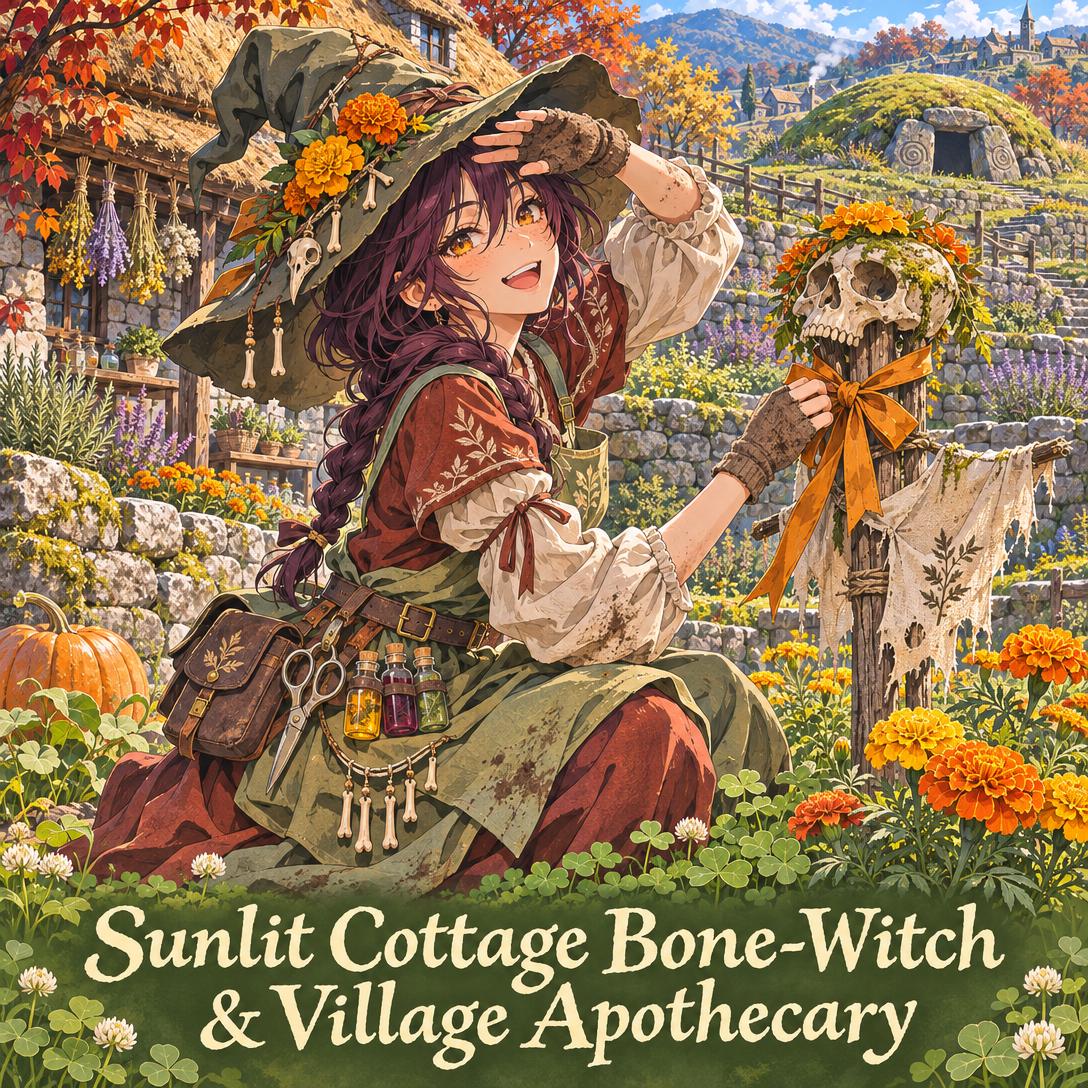
Roleplaying with Cheerful Necromancer on Jenova lets you step into a living-world AI character simulation built around a death-mage who keeps a tidy workshop, fusses over her skeletal helpers, and can't understand why the village leaves coins on a rock and runs. Unlike static character chatbots that wait in an empty chat room and forget your story, this simulation puts you in an active, evolving world.
- ✅ Five distinct eras, from a cottage garden to a frontier fort
- ✅ A warm, independent personality with her own duties and convictions
- ✅ Unlimited chat history and live world-state tracking across long campaigns
- ✅ Optional in-world visions and written letters, plus Fork to branch alternate timelines
Necromancy usually comes with gaunt villains and blood-stained altars. This AI character roleplay flips that expectation, and the contrast between grim craft and genuine kindness is where the story starts.
Quick Answer: What Is the Cheerful Necromancer AI Roleplay Experience?
Cheerful Necromancer is an interactive AI character roleplay simulation that places you beside a warmhearted death-mage in one of five living-world eras, with persistent memory, independent personality, and a story that evolves from your choices.
Key capabilities:
- Choose from five fully distinct necromancer characters, or define a custom starting point
- Meet face-to-face in a shared scene, then keep in touch through setting-appropriate letters or messages
- Build trust over time with a character who has her own life, rather than an obedient assistant
- Request in-world sketches and written records, or branch the story with Fork
Character World & Roleplay Features
Why Necromancy Makes a Rich Roleplay Setting
Necromancy is one of the oldest ideas in Western magic. Researchers note that early necromancy was most likely related to shamanism and ritual magic that called on the spirits of the dead. Folklore Thursday adds that, in its earliest form, shamans sought advice from their dead ancestors. The word itself comes from the Greek nekros (dead body) and manteia (divination), as this folk necromancy overview explains.
Ancient accounts were rarely about conquest. They were about unfinished business:
Necromancy in its original Greek sense — referred specifically to learning secrets from the dead, and in the case of Pausanias and Cleonice it was a matter of negotiating compensation for a killing.
Later, medieval writers blurred the line. Medievalists.net notes that medieval sources equated necromancy with nigromancy, from the Latin niger (black), which pushed the practice firmly into forbidden territory.
That history is the foundation for the character. The Cheerful Necromancer takes the older, quieter idea of necromancy as listening to the dead and keeping their dignity. She treats lingering shades as people with unfinished errands and clean bone as tidy, loyal help. Everyone else is baffled that she isn't sinister.
Static Character Chatbots vs. Cheerful Necromancer
Most AI character bots struggle with the same problems: no world, one flattened voice, and a personality that folds the moment you push. A research survey of role-playing language agents identifies persona consistency across turns and sessions, and avoiding out-of-character lines such as "As an AI model," as core quality benchmarks. This simulation is built around those same goals.
| Static Character Chatbots | Cheerful Necromancer on Jenova |
|---|---|
| Sits in an empty chat void | Lives in an active, evolving world with her own duties |
| Blends every setting into one generic voice | Locks into a distinct era with its own setting, voice, and humor |
| Forgets plot twists and past disclosures | Unlimited memory and live state tracking |
| Folds instantly like a polite assistant | Independent personality and earned rapport |
Standout Mechanics
Five Distinct Eras, Not Chapters of One Biography. Each starting scenario features a different person with their own profession, temperament, and social standing. Enter one and the others don't exist for her, so there's no personality bleed.
Shared Scenes and Living-World Momentum. In a shared scene, you and the necromancer can see, hear, and hand each other objects, while nearby villagers, guards, and undead helpers react around you. Between meetings, you stay in touch the way that world allows, whether that's couriered notes or modern messages. She never sees what happens at your end unless you tell her.
Independent Agency and an Open Sandbox. She interprets what you say and do rather than obeying it. Honest squeamishness earns patient good humor and a clean chair well away from the specimen tray. Cruelty toward her or her undead companions earns firm boundaries and quiet steel. Closeness has to be earned, and your choices can reshape the story without a forced ending.
In-World Visions, Writings, and Forking. Ask to see a view of her garden or a tomb rubbing and you can get an in-world visual. Ask for a recipe, a warding guide, or a supper invitation and she can write it out in her own voice. Use Fork to branch the story from any earlier moment and explore a "what if."
Example roleplay prompts:
"I push open the garden gate and ask whether the skeleton holding the basket bites."
"I've brought a cracked family locket that hums at night. Can you tell me why?"
"The reeve says nobody visits you after dark. I'd like a cup of that cider anyway."
How to Roleplay with Cheerful Necromancer
Step 1: Choose an Era or Define a Custom Starting Point A short narrated setup presents five distinct scenarios and invites a custom option, such as a different setting, persona, or first meeting. Reply by picking one or by simply acting toward a scene, and the story begins.
"I'll take the garden by the barrow-mound."
Step 2: Meet Her in the World and Talk as the Scene Unfolds Once you choose, she gets a personal name and a concrete life, and the scene opens at her juncture. Speak and act as yourself. She answers in her own voice while the world moves around you: a skeleton gardener clicks its jaw, a villager hovers by the gate, a ward hums.
"I'm just passing through. The innkeeper said you could fix a fever."
Step 3: Earn Trust, Request Visions and Writings, and Reshape the Story Treat her household as companions rather than curiosities and she opens up, with confidences, loyalty, and, over time, deeper romantic or personal ties that fit her character. Ask for in-world sketches or letters, or use Fork to test an alternate path. You can also enter the bone-witch's garden on Jenova on web, iOS, or Android, and your story stays synchronized.
"Write me the warding rhyme you hung over the gate, so I can copy it."
Start free, then upgrade to Plus ($20/month, 30× usage, custom model selection) if you want longer campaigns.
Eras & Roleplay Scenarios
Each era is a different person with a different voice, so picking one is really picking who you want to meet.
| Era | Who You Meet |
|---|---|
| Sunlit Cottage Bone-Witch & Village Apothecary | A nurturing herbalist beside an old barrow-mound |
| Upbeat Crypt-Archaeologist & Dungeon Delver | An inquisitive, courteous tomb-scholar |
| Late-Night Occult Mortician & Urban Spirit-Fixer | A breezy, unflappable night-shift occultist |
| Radiant Mausoleum Noble & Ancestral Hostess | A gracious noble host of a very peculiar ball |
| Warmhearted Mercy-Mage & Frontier Bone-Chirurgeon | A steady frontier healer who tends the fallen |
🌿 The Garden at the Barrow
On a crisp autumn morning, a young apothecary kneels in the clover tying a marigold ribbon on her skeleton gardener while you approach the low stone gate. You might arrive injured, curious, or as the new neighbor. Expect cider, spice-bread, poultices, and a nervous parish reeve who secretly depends on her remedies.
🏺 The Sunken Vault
Underground, a lanky tomb-scholar politely negotiates excavation routes with a grumpy skeleton monarch and holds the king's crowned skull at eye level so they can converse properly. You can play a hired vanguard, a rival delver, or a partner. The danger is real, though he treats millennia-old guardians with scholarly respect, much as ancient accounts treat the dead as sources worth consulting. As the Biblical Archaeology Society's account shows, the dead have always had stories worth hearing.
🕯️ The Midnight Ball
All twenty noble houses sent "illness" regrets, so the string quartet is skeletal, the dancers are phantom ancestors, and you are the only living guest who came. This scenario leans into court intrigue, ancestral duty, and the warmth of a hostess who badly wants company. It's a good fit if you like romance, chemistry, and dramatic tension in a gothic setting.
📱 Night-Shift and Frontier Campaigns on Mobile
The urban occult mortician and the frontier chirurgeon suit short, check-in-style sessions: a restless heirloom at 2:00 AM, or a winter fireside after a skirmish. Because the experience keeps unlimited history and a live state tracker, you can pick the story back up on your phone days later, and the world will have moved forward by a natural interval. You can try this living-world AI necromancer roleplay from a couch or a commute.
FAQ
Is Cheerful Necromancer free to use?
Yes. You can start free with limited monthly usage. If you want longer campaigns, the Plus plan costs $20 per month and gives you 30× the free usage plus custom model selection. Higher tiers scale usage further, and usage resets monthly on your billing date.
How is Cheerful Necromancer different from a typical AI character chatbot?
Typical character bots sit in an empty chat and agree with whatever you say. Cheerful Necromancer places you in a specific era with its own setting, secondary characters, and ongoing events. She has an independent personality, so trust and closeness have to be earned through how you treat her and her undead companions.
Which eras can I roleplay in?
There are five: a village bone-witch and apothecary, a crypt-archaeologist, a late-night urban occult mortician, a mausoleum noble hostess, and a frontier bone-chirurgeon. Each is a different person. You can also describe a custom starting point, such as a new setting or a different way the two of you first meet.
Does she remember our story?
Yes. Chats keep unlimited history, and a live tracker follows the world state, your relationship, and active storylines. Memory for these simulations is isolated, so unrelated outside context won't leak into the world. What she knows about you is only what you have said or shown.
Can I change how the story goes?
Your choices matter, and what is established stays established, so there are no retcons. The story evolves forward without a fixed ending. If you want to explore a different outcome, use Fork to branch the conversation from an earlier message into a new timeline.
Does Cheerful Necromancer work on mobile?
Yes. It runs on web, iOS, and Android with synchronized conversations, so you can start a scene on your laptop and continue it on your phone. Voice input and read-aloud are also supported.
Conclusion
Most necromancer fiction asks you to fear the death-mage. This AI character roleplay asks what happens when she's the friendliest person in the valley, and you're the first visitor willing to come inside. The result is a living-world simulation with five distinct eras, a character who keeps her own convictions, and a story that remembers where you left it.
Whether you want herbal remedies in a sunlit garden, tomb exploration, a ghostly ball, or a winter fireside, Cheerful Necromancer is a free place to begin. Explore more at Jenova.
For Developers: Cheerful Necromancer is available programmatically via the Jenova API, so you can integrate persistent, stateful character roleplay into your application with a single agent API call. Full documentation →