AI Character Gen: Best Tools to Create Consistent Characters with AI (May 2026)
2026-05-03
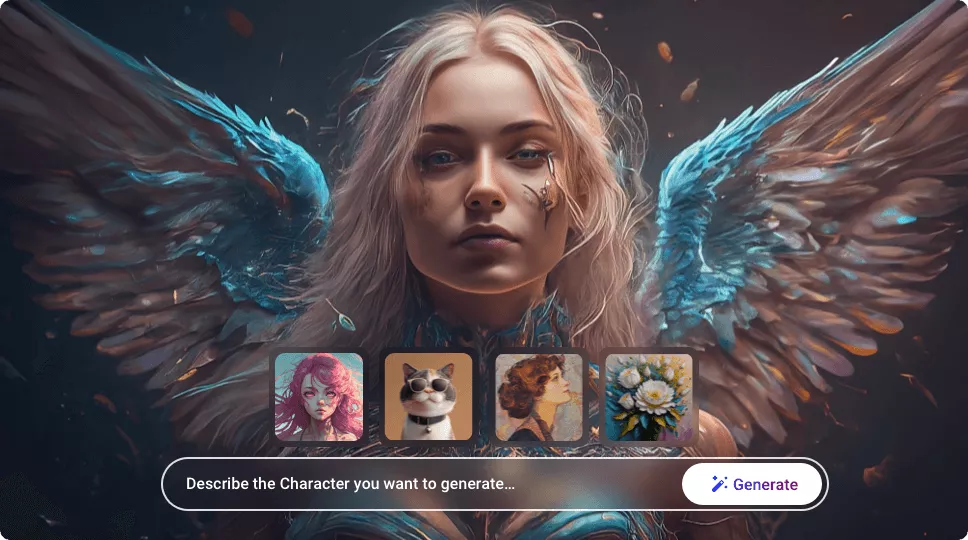
Creating a character is easy. Creating the same character twice is where every AI tool in 2026 falls apart.
The AI character generator market is growing at a 9.1% CAGR from 2026 to 2033, and the broader generative AI market is projected to reach $86.70 billion in 2026. Over 34 million AI images are generated every day, and more than 50 million creators worldwide now use AI image generation platforms. But the single question that separates a useful character generator from a novelty — can this tool hold a character steady across 20 scenes? — is the one most tools still can't answer.
That's the problem the Manga Creator on Jenova was built to solve. Not single-image portraits that look beautiful in isolation and unrecognizable side by side, but consistent characters that maintain identity across poses, expressions, outfits, scenes, and entire serialized projects — from one-shots to 200+ page epics. Whether you're building a visual novel, designing a game protagonist, illustrating a children's book, or creating a brand mascot that needs to survive a hundred marketing campaigns, this guide breaks down what AI character gen tools can actually do in May 2026, where they fail, and how to create characters that hold.
Quick Answer: What Is an AI Character Generator?
An AI character generator is a tool that creates original fictional characters — visual designs, personality profiles, backstories, and narrative roles — from text or image prompts, enabling creators to build reusable characters for stories, games, marketing, and visual media.
- 🎨 Consistent visual characters — same face, same proportions, same style across every scene with the Manga Creator
- 🧠 Persistent character memory — track personality, backstory, relationships, and visual details across unlimited sessions
- ✍️ Written character development — psychology, arcs, motivations, and dialogue voice with the Creative Fiction Writer
- 🔄 Cross-project reuse — characters that work across sequential art, prose, roleplay, and screenwriting
The Problem: Why Most AI Character Generators Can't Hold a Character Together
The market is flooded with tools that can generate a stunning one-off portrait. The problem starts the moment you need that character to appear again.
Character Drift Is the Default, Not the Exception
As Neolemon's 2026 Consistency Benchmark explains, most AI image generators are built on diffusion models that "start with random noise and iteratively denoise it into an image." Every generation is a hallucination from scratch — the model isn't rendering your character again, it's generating a new person who loosely matches your description. The result:
"Even if you use the exact same prompt twice, tiny variations in the sampling process cause the model to re-decide details it has no reason to lock: eye shape, nose width, jawline, hair silhouette and texture, outfit details, proportions, and micro-style choices." — Neolemon, NCB-2025 Consistency Benchmark
This isn't a bug in specific tools — it's how diffusion models work by default. A tool that produces a beautiful portrait of Luna with curly dark hair and round glasses in scene 1 might give Luna straight hair and no glasses by scene 8. For anyone building a children's book (12–32 scenes), a comic chapter (20–80 panels), a brand mascot campaign, or a visual novel, this makes the tool unusable at project scale.
Four Types of Consistency — Most Tools Solve One
Neolemon's benchmark framework identifies four distinct types of character consistency that real projects demand:
- Identity consistency — same face, same person across every image
- Style consistency — same illustration style, line weight, shading
- Wardrobe consistency — outfit stays stable unless intentionally changed
- Scene continuity — multi-character panels stay coherent without attribute swapping
Most AI character generators solve one — usually identity in controlled conditions — and fail the other three. A tool that aces a front-view portrait but produces a different art style in golden-hour lighting versus flat indoor lighting isn't consistent. It's just lucky.
Multi-Character Scenes Break Everything
The hardest test in the NCB-2025 benchmark is Test 6: Multi-Character Interaction. When two characters share a frame, "faces swap, outfits blend, styles split between the two characters." If your project involves more than one character — and virtually every story, game, or campaign does — most AI character generators become structurally unreliable.
Visual-Only Tools Can't Build a Character
A character isn't a face. It's a psychology, a voice, a history, a set of motivations that determine how they act under pressure. Most AI character gen tools produce images — portraits, poses, concept sheets — with no capacity to develop the character underneath. You get a face with no personality, an outfit with no backstory, a design with no arc. For writers, game designers, and narrative creators, the visual is only half the character.
The Fragmentation Problem
In 2026, building a complete character for a creative project requires a patchwork of disconnected tools: one for visual generation, another for writing the character profile, a third for maintaining consistency across scenes, a fourth for dialogue and voice. QuestStudio's 2026 analysis highlighted this directly — the strongest tools are the ones that let you "build a reusable character system" rather than producing "one nice image." But most creators are still stitching together five subscriptions to do the work of one.
Why Jenova's Agents Are the AI Character Gen System Creators Actually Need
This is exactly what the Manga Creator was built for — not one-off portraits, but consistent characters that survive real projects. Complete manga stories with panel flow, consistent art, and character identity locked across one-shots to 200+ page epics.
But character generation isn't just visual. A character that holds across a creative project needs visual consistency, written depth, narrative architecture, and interactive testing. That's why Jenova's approach works differently from single-purpose tools — it's not one generator, it's a system of specialized agents that cover every dimension of character creation.
While tools like Midjourney remain strong for visually impressive single portraits — Neolemon's benchmark placed it in Tier B, noting it's "beautiful but drift-prone" — and platforms like Character.AI focus on conversational AI characters without visual generation, Jenova combines visual consistency, written depth, and interactive testing in a single platform with persistent memory across all three.
How It Compares
| Capability | Typical AI Character Generator | Jenova's Character Gen System |
|---|---|---|
| Visual consistency | Drifts across poses, expressions, and scenes | Manga Creator: consistent character art across hundreds of pages |
| Written character development | None — image only | Creative Fiction Writer: psychology, arcs, backstory, voice, motivation |
| Interactive character testing | None | Roleplay Game Master: inhabit and stress-test characters in live scenarios |
| Multi-character scenes | Faces swap, styles blend | Manga Creator handles multi-character panels with distinct identities |
| Cross-session memory | Resets every session | Persistent memory across unlimited sessions — character details never lost |
| Style lock | Drifts with lighting and background changes | Consistent rendering across environments and scenes |
| Model access | Single fixed model | GPT-5.4, Claude Opus 4.6, Gemini 3.1 Pro Preview — switch per session |
| Export | In-app or copy-paste | Download as PDF, Word, or TXT directly from chat |
| Cost to start | $10–$25/month or free with sharp limits | Free tier with all core features — no credit card required |
What AI Character Gen Actually Looks Like on Jenova
Character generation isn't a button — it's a creative process that unfolds across visual and written dimensions. Here's what real character creation prompts look like:
"Create a consistent character for a noir manga series: Detective Yuki Tanaka, mid-30s, short asymmetric black hair with a silver streak, sharp jawline, always wears a rumpled trench coat over a black turtleneck. She has a scar across her left eyebrow from a case she won't talk about. I need her to look identical across 40+ panels — interrogation rooms, rain-soaked streets, her apartment at 3 AM, and a rooftop confrontation. The art style should be high-contrast, heavy shadows, minimal screentone."
"I need a character profile for a fantasy RPG protagonist. She's a former court healer who was exiled after she refused to treat the king's poisoned political rival. I need her psychology — why she refused, what it cost her, how the exile changed her moral framework. Then I need her visual design to reflect that psychology: practical clothing that was once elegant, hands that show both care and damage, an expression that's compassionate but guarded."
"Design a brand mascot for a children's coding education company. The character is a friendly robot fox named Pixel — teal and orange color scheme, slightly oversized eyes, a small antenna that tilts when it's curious. I need Pixel to be consistent across marketing materials: waving on the homepage, sitting at a desk on the tutorial page, jumping with excitement on the success screen, and appearing in a 12-panel onboarding comic. Same proportions, same style, every time."
These aren't prompts for a one-click portrait generator. They're conversations with specialized agents that produce characters with both visual and narrative depth — and the consistency to survive real projects.
Start creating characters with the Manga Creator free — no credit card required.
Specialized AI Agents for Character Generation
Manga Creator
The visual backbone of AI character gen on Jenova. The Manga Creator produces complete sequential art with consistent character design across poses, expressions, outfits, and environments — from single character sheets to full graphic novel–length projects. Where Neolemon's benchmark identifies identity lock, style lock, wardrobe control, and scene continuity as the four pillars of consistency, the Manga Creator addresses all four within a unified storytelling workflow.
- 🖼️ Consistent character art across hundreds of panels and pages
- 📐 Panel layout and sequential flow designed for visual narrative pacing
- 👥 Multi-character scenes with distinct identities — no face swapping or style blending
- 📚 From character sheets and one-shots to 200+ page serialized projects
Creative Fiction Writer
The narrative engine behind every character's depth. A character isn't a design — it's a psychology. The Creative Fiction Writer builds the written dimension of character generation: backstory, motivations, internal conflicts, dialogue voice, character arcs, and the relationship dynamics that make characters feel real. With persistent cross-session memory, every detail about your character — their speech patterns, their fears, their contradictions — is tracked indefinitely.
- 🧠 Full character psychology: motivations, flaws, internal contradictions, voice
- 📖 Character arcs mapped against plot structure — internal transformation driving external events
- 🔄 Iterative development: refine personality, test dialogue, stress-test decisions conversationally
- 💾 Persistent memory: character details never lost across sessions or projects
Roleplay Game Master
The testing ground for characters you've built. Before you commit a character to a 200-page manuscript or a 40-panel comic, you need to know how they behave under pressure — what they say when they're cornered, how they react to betrayal, whether their voice holds when they're angry versus afraid. The Roleplay Game Master lets you step into the character and discover these answers through live interaction, with unlimited memory and perfect character consistency across sessions.
- 🎭 Inhabit your character in real-time scenarios to test voice, decisions, and reactions
- 🌍 Dynamic world-building that responds to character choices
- 🧠 Unlimited memory for character continuity across months of sessions
- 📝 Export character discoveries directly into your writing or visual workflow
Comic Creator
For Western comic book art styles — bold lines, dynamic compositions, and the visual language of superhero, indie, and graphic novel traditions. The Comic Creator handles sequential layouts with consistent character design, making it the right choice when your character needs to live in a comic book rather than a manga. Single issues to full graphic novels, with character identity maintained across every panel.
- 🦸 Bold comic book styles: superhero, indie, noir, and graphic novel traditions
- 📐 Dynamic panel compositions with consistent character identity
- 📚 Single issues through full graphic novel–length projects
Webtoon Creator
Mobile-first vertical scroll format with character consistency designed for episode-based serialization. The Webtoon Creator handles the specific visual rhythm of vertical scrolling — episode hooks, cliffhanger compositions, full-color consistency — while keeping characters recognizable across weekly installments that can span hundreds of episodes.
- 📱 Vertical scroll rhythm optimized for mobile reading
- 🎨 Full-color consistency across serialized episodes
- 🔄 Episode hooks and cliffhanger compositions built into the visual pacing
How It Works: From Concept to Consistent Character
Here's a step-by-step walkthrough of building a character from scratch — both visually and narratively — using Jenova's agents.
Step 1: Define Who the Character Is
Start with the Creative Fiction Writer. You don't need a finished concept — a fragment is enough:
"I'm creating a character for a dystopian graphic novel. She's a former architect who now lives in the ruins of a city she helped design. I know she feels responsible for what happened, but I don't know what happened yet. Help me build her — psychology first, then visual design that reflects who she is internally."
The agent responds by excavating the character's interior: What does she feel responsible for — a structural failure, a design choice that enabled authoritarianism, a city that was beautiful but excluded the people who built it? How does she live with it — does she try to repair what she can, does she document what was lost, does she refuse to leave as a form of penance?
The character's psychology shapes every subsequent creative decision. Her visual design, her body language, her environment, her dialogue — all emerge from who she is, not from what looks cool.
Step 2: Build the Visual Identity
With the character's psychology established, move to the Manga Creator for visual design:
"Based on the character we developed — Anya, the architect living in ruins — I need a character sheet. She's mid-40s, weathered but precise. Her clothing is practical but you can see it was once professional — a dust-covered blazer over utility wear, steel-toed boots, architectural pencils tucked into a vest pocket. Her hair is tied back functionally. Her posture is upright — she hasn't given up. I need front view, 3/4 view, and side view, plus three expression studies: focused, grief-stricken, and cautiously hopeful. Consistent across all views. High-contrast linework, architectural precision in the style."
The Manga Creator produces a character sheet with locked identity — face structure, proportions, outfit details, and art style consistent across every view. This sheet becomes the visual anchor for every subsequent scene.
Step 3: Test the Character in Action
Before committing Anya to a full graphic novel, test her in the Roleplay Game Master:
"I want to inhabit Anya. Place me in a scene: I'm in the ruins of the central library I designed. A group of survivors has found me and wants me to help them rebuild. But one of them recognizes me — she lost her family when the east wing collapsed. How does Anya respond? I want to discover her voice through this interaction."
The conversation reveals how Anya speaks, what she avoids, how guilt shapes her syntax, whether she leads with competence or apology. These discoveries feed directly back into the Creative Fiction Writer for dialogue patterns and into the Manga Creator for expression and body language references.
Step 4: Deploy Across Scenes
With identity locked and character tested, generate scenes with confidence:
"Create a 6-panel sequence: Anya walking through the ruins at dawn, finding an intact blueprint in the rubble, studying it with focused intensity, realizing it's her own design, her expression shifting from focus to grief, then placing the blueprint carefully into her vest. Same character, same style, consistent across all panels. The environment should feel vast and empty around her."
Every panel maintains Anya's visual identity — same face structure, same proportions, same outfit, same art style. The persistent memory ensures that scene 30 of the graphic novel holds the same character as scene 1.
Step 5: Export and Build
Download character sheets, scene sequences, or full chapters as PDF, Word, or TXT directly from the chat. Use the @mention feature to bring the Writing Assistant into the conversation for dialogue scripting, or the Film Screenwriter if the character is destined for screen adaptation.
Try the Manga Creator free — no credit card required.
Results & Use Cases
📚 The Children's Book Creator Fighting Character Drift
Scenario: An indie author-illustrator is creating a 24-page children's picture book. The protagonist — a little girl with red rain boots and a yellow umbrella — needs to appear on every page, in different poses, environments, and weather conditions. After 8 pages of AI-generated illustrations, the character has drifted: her boots are now orange, the umbrella has changed shape, and her face looks like a different child.
Traditional approach: Generate each page separately → manually compare against the first image → re-prompt with increasingly specific descriptions → watch the tool re-decide the character's identity with every generation → spend more time correcting drift than creating the book.
With the Manga Creator: Build the character sheet with locked identity — front, side, and 3/4 views with expression studies. Generate all 24 pages from the same visual anchor. Red boots stay red. Yellow umbrella stays yellow. The child's face on page 24 is recognizably the same child from page 1. Export as PDF and send to print.
🎮 The Game Designer Building a Cast
Scenario: An indie game developer needs 6 distinct playable characters for a narrative RPG — each with a unique visual design, personality profile, backstory, combat style, and dialogue voice. The characters need to be visually distinct from each other in shared scenes, and their personalities need to feel internally consistent across 40+ hours of dialogue.
Traditional approach: Use Midjourney for concept art → write character profiles in a separate doc → use ChatGPT for dialogue → watch the AI produce dialogue that sounds identical for all six characters because it has no persistent character memory → manually rewrite everything.
With the Creative Fiction Writer + Manga Creator + Roleplay Game Master: Build each character's psychology in the Creative Fiction Writer — motivations, speech patterns, contradictions, relationship dynamics. Test each character in the Roleplay Game Master to discover how they sound under pressure, in humor, in grief, in conflict. Then design their visual identities in the Manga Creator with consistency locked across every pose and expression. Six characters, six distinct voices, six recognizable faces — all maintained across the project.
💼 The Marketing Team Managing a Brand Mascot
Scenario: A startup's mascot — a cartoon owl named Scout — appears across the website, social media, email campaigns, merchandise, and a 12-panel onboarding tutorial. Every new designer who touches Scout produces a slightly different version. The marketing director has a folder of 47 Scout variations that look like 47 different owls.
Traditional approach: Create brand guidelines with reference images → send to every designer and freelancer → receive interpretations that range from close to unrecognizable → spend meeting time debating which Scout is the "real" Scout.
With the Manga Creator: Build Scout's character sheet with locked identity — every angle, every expression, every environment the mascot will appear in. Generate all campaign assets from the same visual anchor. New social media post? Same Scout. New email header? Same Scout. Onboarding tutorial panel 12? Same Scout as panel 1. Download assets directly and distribute to the team with zero ambiguity.
📱 The Webtoon Creator Launching a Weekly Series
Scenario: A creator is launching a romance webtoon with two leads — they need to appear in every episode, in different outfits, locations, and emotional states, for potentially 100+ weekly episodes. Character consistency is the difference between a professional series and something readers abandon after noticing the protagonist's eye color changed in Episode 4.
Traditional approach: Use a general AI image generator → manually adjust every panel → still end up with drift by episode 10 → hire a human artist to fix the AI's inconsistencies → realize the AI was creating more work than it saved.
With the Webtoon Creator: Lock both lead characters' identities from episode 1. Generate weekly episodes with mobile-first vertical scroll formatting, full-color consistency, and character recognition that holds across hundreds of installments. Readers binge 50 episodes and the characters still look like themselves.
FAQ
What is an AI character generator?
An AI character generator is a tool that creates original fictional characters from text or image prompts — including visual designs, personality profiles, and narrative details. The best tools in 2026 go beyond single portraits to maintain character consistency across multiple scenes, poses, and projects. On Jenova, the Manga Creator handles visual character generation with consistency across hundreds of pages, while the Creative Fiction Writer builds the written depth — psychology, backstory, voice, and arcs.
Why do AI-generated characters look different every time?
Because most AI image generators use diffusion models that generate from random noise with every image. The model isn't rendering your character again — it's creating a new person who matches your description. Without explicit identity-locking mechanisms, details like eye shape, hair texture, outfit elements, and proportions drift between generations. This is the fundamental challenge that consistency-focused tools are designed to solve.
Can AI generate consistent characters across an entire book or comic?
Yes — but only with tools designed for it. Neolemon's 2026 benchmark tested this specifically (Test 7: Long-Run Drift Across 12 Scenes) and found that many tools "hold consistency for 3-4 images but quietly drift by image 8 or 12." The Manga Creator on Jenova was built for sequential storytelling — maintaining character identity across one-shots to 200+ page projects with persistent visual memory.
What's the difference between a character portrait generator and a character gen system?
A portrait generator produces a single beautiful image. A character gen system produces a reusable character — one that can appear across multiple scenes, poses, expressions, outfits, and environments while maintaining a recognizable identity. As QuestStudio's 2026 analysis put it: "A character is only useful long-term if you can reuse it in new scenes, prompts, and assets without losing the core look."
Is there a free AI character generator that actually maintains consistency?
Most tools that claim consistency require $10–$25/month subscriptions. The AI image generator market is growing at 32.5% CAGR toward $30 billion by 2033, but free tiers typically limit generation count or resolution rather than offering full consistency workflows. Jenova's free tier gives you access to the Manga Creator, Creative Fiction Writer, and Roleplay Game Master with all core features — persistent memory, multi-model access, and full creative workflows — no credit card required.
Which AI model is best for character generation?
Different models bring different strengths. Claude Opus 4.6 excels at psychologically complex character development — motivations, contradictions, and distinctive dialogue voice. GPT-5.4 handles multi-threaded character relationships and complex backstory architecture. Gemini 3.1 Pro Preview manages long-context work well for series-level character continuity. On Jenova, you can switch between all of them per session — no separate subscriptions required.
Conclusion
The AI character generator market is growing at 9.1% CAGR through 2033, and over 34 million AI images are created every day — but the central problem remains unsolved by most tools: a character that looks beautiful once and unrecognizable twice isn't a character at all. As Neolemon's consistency benchmark demonstrated, identity drift, style bleed, wardrobe mutation, and multi-character attribute swapping are the default behavior of diffusion-based generators. One stunning portrait proves nothing about whether a tool can sustain a character across 30 scenes.
Real character generation requires both visual consistency and narrative depth — a face that holds and a psychology that drives it. The Manga Creator on Jenova delivers consistent character art across hundreds of pages, while the Creative Fiction Writer builds the written architecture underneath — motivations, arcs, voice, and the internal contradictions that make characters feel real. Test them in the Roleplay Game Master before you commit a single panel to print.
Try the Manga Creator now and build characters that survive real projects. Explore the full agent library at Jenova to discover what's possible when character generation is a system, not a slot machine.