AI Character Consistency Checker: Catch Face & Outfit Drift
2026-09-08
A character consistency checker is the missing quality gate in most AI illustration pipelines. Jenova gives artists, comic teams, and storybook creators a practical way to lock a face, outfit, and art style — then catch drift before a page, panel, or campaign goes live. In September 2026, a single striking portrait is easy. Keeping that same person recognizable across poses, lighting, wardrobes, and scenes is still the hard part.
✅ Compare new frames against a locked character sheet, not a vague prompt ✅ Catch face, outfit, and style drift before a book or comic ships ✅ Pair visual review with prompt, illustration, and sequential-art agents ✅ Run the same workflow on web, iOS, and Android
To understand why this matters, let's examine the challenges facing AI illustrators and narrative teams today.
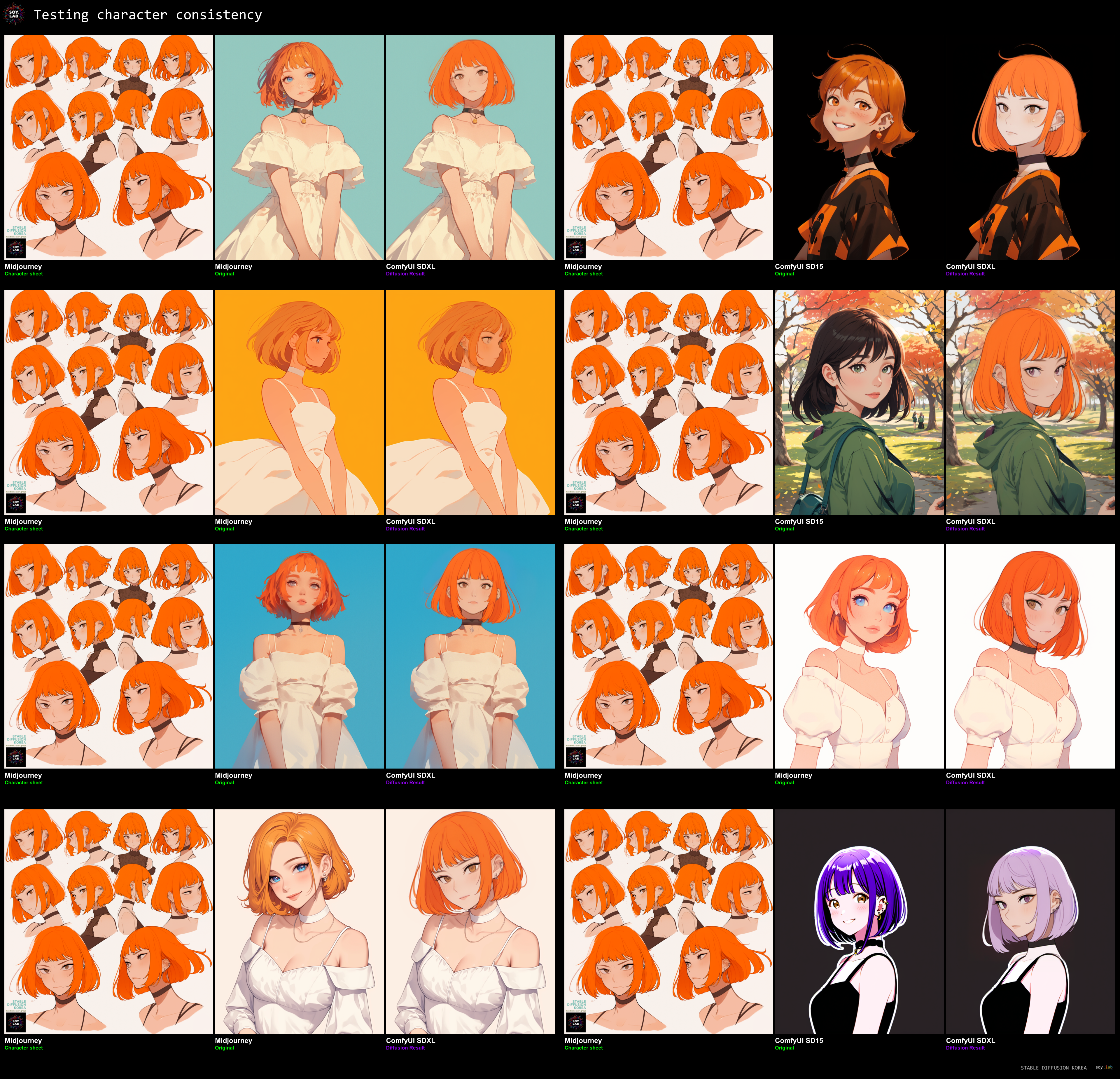
Quick Answer: What Is a Character Consistency Checker?
A character consistency checker is a review workflow that compares new AI images against a locked reference so faces, outfits, and style stay on-model across scenes. It is less a single button and more a repeatable test: same identity, same design language, different shots.
Key capabilities:
- Face locking — eye shape, hair color, skin tone, and proportions stay recognizable
- Outfit locking — clothing and accessories change only when the story requires it
- Style locking — line weight, palette, and rendering do not reset mid-project
- Prompt control — a Prompt Generator can freeze the character description so every new shot starts from the same spec
Why AI Characters Still Drift Across Images
Generating one beautiful frame is no longer the bottleneck. The bottleneck is identity. Independent tests of AI children's book tools scored 1,680 illustrations — 140 images per tool across 12 generators — and weighted face consistency at 50% of the total score, with outfit and style filling the rest. That weighting matches what readers actually notice: if the protagonist's eyes, hair, or jawline shift, the book feels like a different child on every page.
Visual narrative research makes the same point from the academic side. VinaBench treats faithful, self-consistent image sequences as an open challenge, because models still lack the story constraints that human illustrators keep in a character bible. Video-side work such as AnimationBench finds the same gap over time: models can follow a prompt, yet long-range IP preservation — staying on-model in appearance and behavior — remains weak.
But accessing this level of control with raw image models is frustratingly difficult:
- Faces morph when the camera, lighting, or pose changes
- Outfits silently rewrite themselves between pages
- Secondary characters swap hair, clothes, or features with the lead
- Art style resets halfway through a book or comic
- Teams "check" consistency by scrolling, not by scoring against a sheet
Face Identity Slips as Soon as the Shot Changes
A front-facing portrait is not a character. The moment you ask for a three-quarter view, a smile, rain, or a new background, many models invent a cousin instead of the same person. Benchmarks that score children's book generators treat this as the primary failure, because face consistency carries half the rubric. Readers forgive a new coat. They do not forgive a new face.
Outfit Drift Is the Most Common Production Failure
In that same 12-tool study, outfit drift appeared in 9 of 12 tools — a red striped shirt becoming a blue dress, then a uniform that was never specified. This happens when each page is re-prompted from text instead of constrained by a locked character image. A character consistency checker exists to catch exactly that rewrite before it reaches print or a store listing.
Multi-Character Scenes Start Feature-Swapping
Add a parent, sibling, teacher, or rival, and many pipelines begin mixing identities by page five: the child inherits the adult's hair color, or two faces collapse into a composite. The ToonyStory methodology called this multi-character drift and found only a minority of book tools held those scenes together. Comics, webtoons, and game concept sheets hit the same wall as soon as two named people share a frame.
Style Resets Break the Book, Not Just the Character
A project that opens in soft watercolor and later snaps into flat cartoon linework is not "creative variation." It is a mid-book style reset — another failure mode documented when style is set per prompt instead of locked at the project level. Academic visual-narrative work frames this as a cohesion problem: images can match the local sentence and still fail the sequence.
This is exactly what Jenova was built for.
The Jenova Solution
Jenova does not ask you to stitch Midjourney sheets, ComfyUI graphs, a vector database, and a spreadsheet of "almost the same face." You lock a character spec, generate controlled variants, and review them the way a production art team would: face, outfit, then style. Specialized agents handle the adjacent work — prompts, sequential pages, marketing frames, and photo cleanup — without forcing you to rebuild the pipeline.
| Traditional Approach | Jenova |
|---|---|
| Eyeball a folder of generations and hope the face matches | Run a character consistency checker pass against a locked sheet |
| Re-prompt every page from memory | Freeze identity language with a dedicated prompt agent |
| Outfit and hairstyle rewrite themselves by page 8 | Sequential-art agents built for spread-by-spread consistency |
| Separate tools for books, comics, concept art, and ads | One workspace for illustration, narrative, and campaign frames |
| Desktop-only ComfyUI graphs | Full feature parity on web, iOS, and Android |
Illustration and Prompt Control
Start with a sheet, not a vibe. The Graphic Designer treats character design as a visual project — turnarounds, expressions, color notes, and marketing-ready frames — instead of a lucky txt2img hit. Pair it with the Prompt Generator so hair color, eye shape, wardrobe, and rendering style are written once and reused. When a frame is close but not clean, the Photo Editor can retouch lighting and edges without inventing a new person.
"Build a character sheet for a 12-year-old girl: short orange bob, round blue eyes, thin black choker, white puff-sleeve dress. Front, 3/4, profile, and two expressions. Keep face geometry identical in every panel."
Sequential Storytelling
Once the sheet passes a checker pass, move into pages. The Children's Book Creator is built for spread-by-spread illustrated stories with consistent art — the exact production problem those 140-image-per-tool tests were scoring. Manga Creator keeps panel flow and art style stable from one-shots to long serials. Comic Creator and Webtoon Creator extend the same discipline into Western sequential art and vertical-scroll color episodes.
"Use the locked sheet. Page 4: same girl at a kindergarten desk, red backpack, no change to face, hair, or dress silhouette. Watercolor storybook style matching pages 1–3."
Games, Fashion, and Campaign Art
Character consistency is not only a book problem. The Game Designer Assistant can turn an approved portrait into concept art, documentation, and systems notes without quietly redesigning the hero. Fashion Mockup Studio keeps a model identity stable while garments, lighting, and sets change — useful when the "character" is a campaign muse rather than a storybook child. Marketing Visual Designer then reuses that locked look across ads, social, and landing-page frames so the person in the carousel is still the person on the product page.
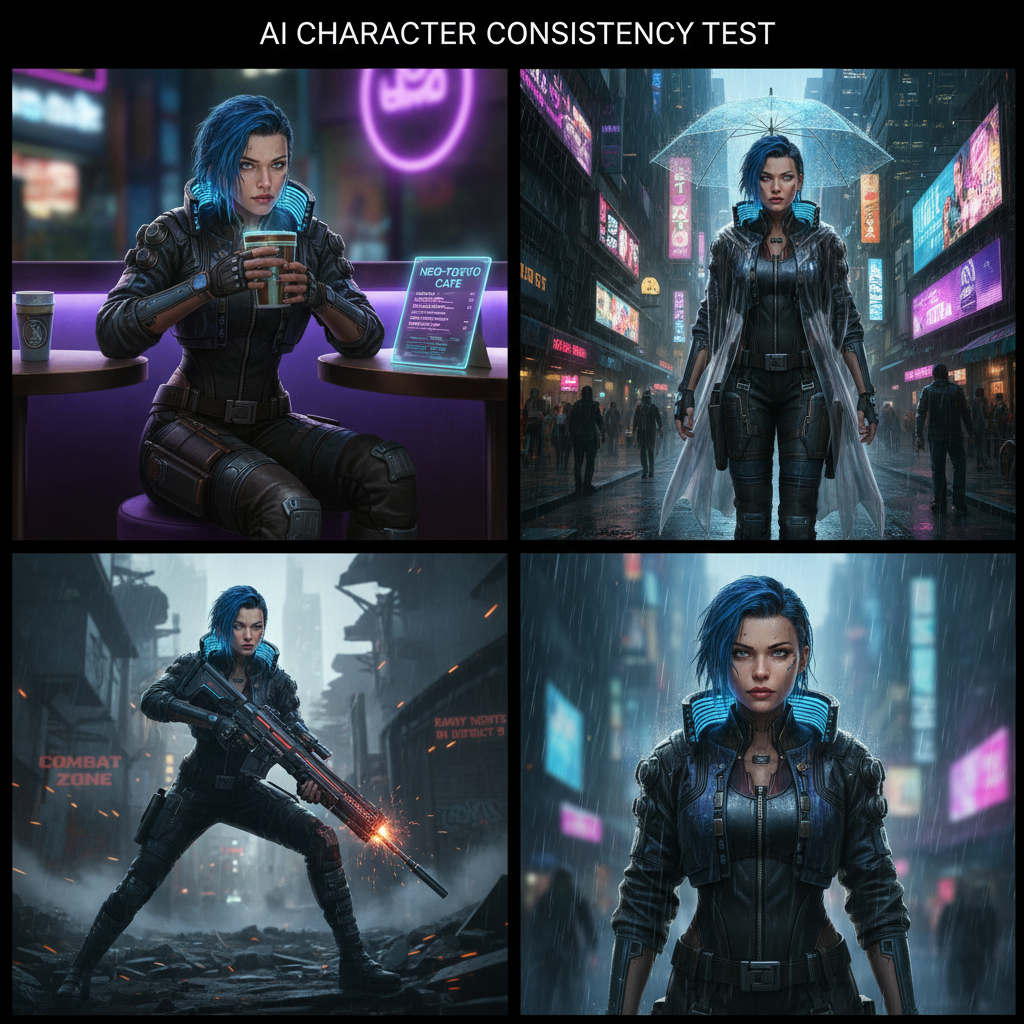
A passing checker result looks like the cyberpunk set above: cafe, rain, combat, and portrait. Hair color, facial structure, jacket hardware, and armor silhouette hold while environment, weather, and action change. That is the standard — not a single pretty thumbnail.
Specialized AI Agents for Character Consistency
A character consistency checker is only useful if the rest of the pipeline can act on the result. These agents cover the jobs teams actually run in the 30 days after they lock a design.
Graphic Designer
The Graphic Designer is the right place to build the reference the checker will score against: expression sheets, costume colorways, poster frames, and brand-safe crops. It is a design partner, not a one-shot image toy, which matters when you need the same face on a square thumbnail and a wide banner.
- Character sheets, turnarounds, and expression grids
- Illustration, infographic, and print layouts that reuse the same identity
- Social and marketing crops without redesigning the person
Children's Book Creator
If your checker is failing on page 8, you do not need another random generator. You need a studio that treats consistency as the product. The Children's Book Creator is built for illustrated stories spread by spread — board books through chapter books — with consistent art and read-aloud text.
- Locked character art across a full 10–20 page narrative
- Page-turn pacing that does not require a new face every spread
- A production path that matches how parents actually evaluate storybooks
The commercial stakes are not theoretical. Coverage of that children's-book benchmark notes the U.S. children's book segment at an estimated $1.85 billion in annual revenue (Association of American Publishers, StatShot Annual 2024). A face that changes every page is not a style choice. It is a product defect.
Manga Creator
Manga Creator is the sequential-art counterpart: visual storytelling, panel flow, and a consistent art style from short one-shots to long serialized runs. Use it after the checker pass so chapter 4 still stars the same lead who appeared in chapter 1.
- On-model faces across hundreds of panels
- Panel rhythm and page turns that serve the story, not a new redesign
- Style continuity for serialized publishing
Prompt Generator
Most drift starts as language drift. The Prompt Generator writes reusable prompts for image (and other) models so identity tokens — hair, eyes, wardrobe, rendering — do not mutate between sessions. Industry workflows for consistent characters increasingly rely on reusable reference images at generation time, not a new paragraph every shot. This agent makes that spec explicit.
- Locked positive and negative prompt blocks for one character
- Variants for pose and setting that do not rewrite the face
- Collaborative refinement when a checker pass finds a specific failure (eyes, choker, sleeve length)
Creative Fiction Writer
Visual consistency collapses when the prose keeps changing the character. Creative Fiction Writer holds the written bible — age, wardrobe rules, scars, and what must never change — so illustrators are not inventing a new person from a fuzzy paragraph.
- Character bibles that match the visual sheet
- Scene descriptions that specify allowed outfit changes
- Editorial checks before you spend another generation batch
Try Jenova free — no credit card required.
How It Works
Step 1: Lock a Reference Sheet Upload or generate a character sheet with multiple angles and at least two expressions. Front, three-quarter, and profile beat a single hero portrait. Production artists already treat a character reference sheet as the reliable way to keep AI characters consistent. Do not skip the boring views. Those are what the checker will score.
"Create a production character sheet: blue undercut, pale skin, sharp brows, black leather jacket with cyan neck LEDs, armored pants, combat boots. Neutral face plus slight scowl. No extra jewelry."
Step 2: Freeze the Prompt, Then Change Only the Shot Hand the sheet notes to the Prompt Generator and write one identity block. New prompts should change camera, location, or action — not hair, age, or silhouette. Reusable reference workflows outperform "describe her again" prompting for the same reason LoRA training does: the model is constrained, not hoped at.
"Same character sheet. Wide shot, rainy night market, transparent raincoat over the locked jacket. Do not change hair, face, or armor silhouette."
Step 3: Run the Character Consistency Checker Pass Generate a small grid: cafe, street, action, portrait — or classroom, playground, bedtime, cover. Score three things the way published rubrics do: face, outfit, style. Fail the batch if hair color, eye shape, or signature accessories move.
already know the rule: one design, many shots, same prompt backbone. The checker is that rule, applied on purpose.Step 4: Produce the Real Pages Only After the Sheet Passes Move the locked character into Children's Book Creator, Manga Creator, Comic Creator, or Webtoon Creator. If a later page fails, do not "fix it in the prompt soup." Return to the sheet, tighten the identity block, and re-check. Two-frame video tutorials use the same discipline: approved portrait, controlled keyframes, narrow brief.
Step 5: Reuse the Locked Look in Adjacent Work Once the character clears the checker, push stills into posters, mockups, and store images without a redesign. Graphic Designer and Marketing Visual Designer keep the face stable across crops. Fashion Mockup Studio is the right next step when wardrobe is the variable and identity is not.
Results & Use Cases
📊 Personalized Children's Picture Book
- Scenario: A parent or indie author needs a 20-page "first day of school" book starring one child, with a second adult character on several spreads.
- Traditional Approach: Generate each page independently. By the middle of the book the shirt color, haircut, and even the child's age have drifted — the failure pattern documented when tools re-prompt every page instead of locking the character image.
- Jenova: Lock a sheet, checker-score face and outfit, then produce spreads in the Children's Book Creator.
- Same eye shape and hair from cover to last page
- Adult characters do not donate features to the child
- Style stays in one storybook rendering from start to finish
💼 Cyberpunk Character Bible for a Game Pitch
- Scenario: An indie studio needs one operative recognizable in a neon cafe, a rainy street, a combat beat, and a portrait still for the pitch deck.
- Traditional Approach: Four Midjourney or ComfyUI sessions, four "almost" heroines, a weekend of inpainting.
- Graphic Designer plus a checker grid: one silhouette, four environments.
- Face geometry and jacket hardware hold under new lighting
- Game Designer Assistant can document abilities without redesigning the lead
- Pitch stills match the in-world shots
🎯 Serialized Manga or Webtoon Lead
- Scenario: A creator is publishing weekly and cannot have the heroine's bangs, eyes, or signature choker reinvent themselves every episode.
- Traditional Approach: Memory, screenshots, and arguments in the group chat about whether that is "still her."
- Manga Creator or Webtoon Creator after a passed checker pass.
- On-model face across episodes
- Outfit changes only when the script calls for them
- Vertical or print layouts that still read as one series
📱 Mobile Review Between Generation Batches
- Scenario: You generate a new expression sheet on a laptop, then need to approve or reject it on a phone while commuting.
- Traditional Approach: Download a zip, pinch-zoom a folder, miss a hair-color shift.
- Jenova on iOS or Android: open the sheet, compare the new grid, send the fail notes back into Prompt Generator.
- Full feature parity across devices
- Checker pass happens where you actually have ten minutes
- No "I'll look later" pile of inconsistent frames
FAQ
What is a character consistency checker?
A character consistency checker is a structured review that scores new AI images against a locked reference for face, outfit, and style. It answers a production question, not an aesthetic one: is this still the same character? Tools that skip this step tend to fail the way published book tests describe — outfit rewrites, merged faces, and mid-project style resets.
How do I check character consistency in AI images?
Build a multi-angle sheet, freeze the identity prompt, generate a small scene grid, and score face first, then clothing, then rendering. Independent rubrics put face at 50%, outfit at 30%, and style at 20%. On Jenova, that loop typically runs through Prompt Generator, Graphic Designer, and a sequential-art agent such as Children's Book Creator or Manga Creator.
Is Jenova free?
Yes. Jenova offers a free tier with core features and limited monthly usage, plus paid tiers if you need more volume. You can run a character consistency checker workflow — sheet, variants, and review — without a credit card. Usage resets monthly on your billing date, with no daily caps.
How is this different from Midjourney or ComfyUI character sheets?
Midjourney and ComfyUI can produce excellent stills, and many artists already build
there. The gap is the rest of the job: locking language, reviewing drift, and continuing into books, comics, and campaign crops without a new stack. Jenova specializes in that end-to-end path — checker pass plus specialized agents — rather than a single diffusion graph.Does a character consistency checker work on mobile?
Yes. Jenova runs with full feature parity on web, iOS, and Android, including speech-to-text if you would rather dictate shot lists than type them. That matters when the "checker" step is a five-minute review of a new grid, not a two-hour desktop session.
Can it handle more than one character?
Yes, but you should lock and score each identity separately before you combine them. Multi-character scenes are where feature-swapping shows up by page 5 in weaker pipelines. Give each person a sheet, pass the checker, then request the two-shot.
Conclusion
AI image models are good at first frames and still weak at identity. A character consistency checker closes that gap by treating face, outfit, and style as testable constraints instead of lucky side effects. Jenova puts that review next to the agents you need after it: Graphic Designer for the sheet, Prompt Generator for the lock, Children's Book Creator and Manga Creator for the pages that have to stay on-model.
If you are still scrolling a folder of "almost her," stop generating and start scoring. Lock the sheet, run the checker, then produce the book, comic, or pitch with a character readers will actually recognize.
For Developers: Every agent in this article is available programmatically via the Jenova API — build character-consistent illustration and sequential-art features into your application with a single integration. Full documentation →