AI Wedding Dress Designer: Visualize Bridal & Evening Gown Concepts
2026-10-06
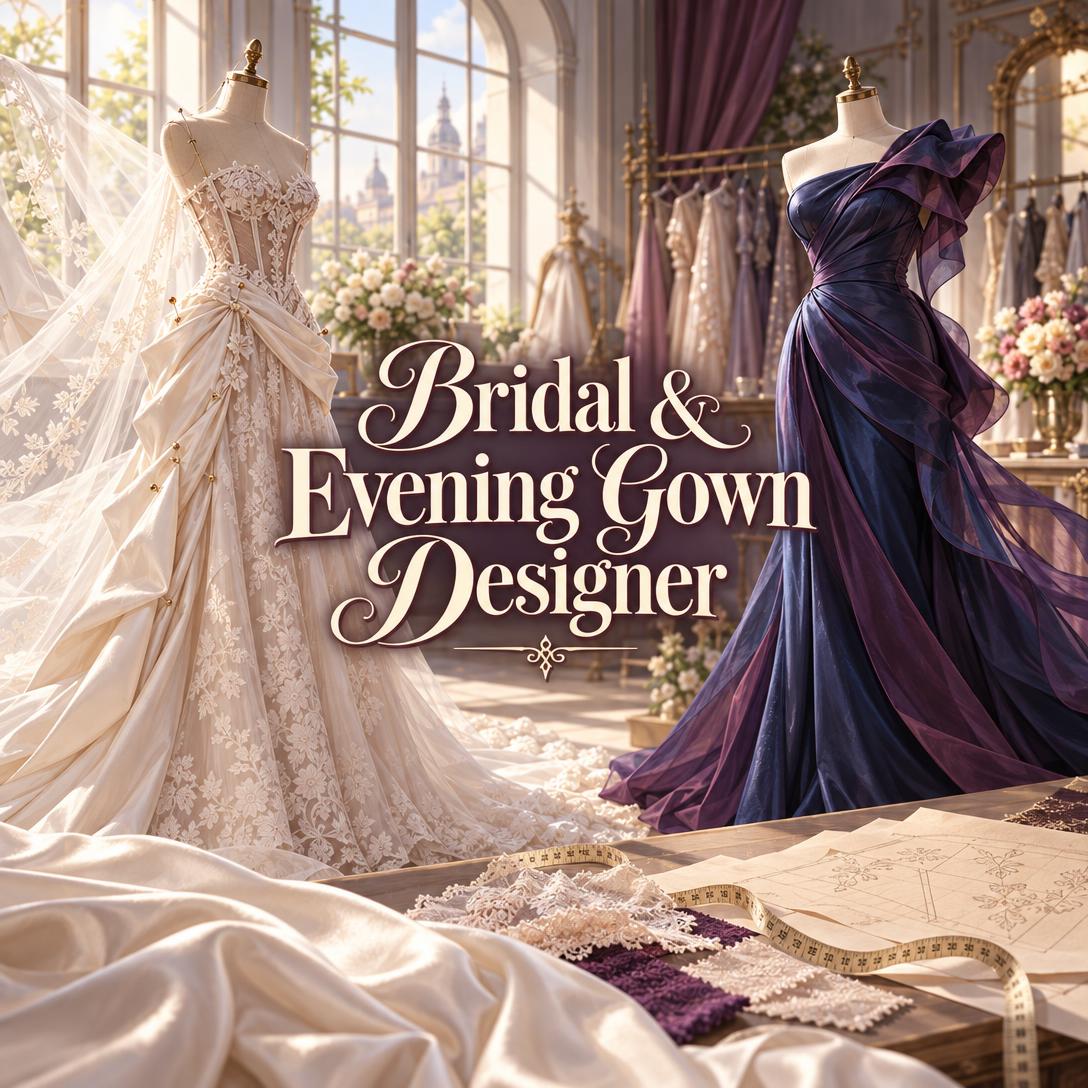
Bridal & Evening Gown Designer helps you design a wedding dress or evening gown that suits your venue, your body, and your budget. It turns loose ideas like "romantic but not fussy" into precise design language and visual gown concepts. Many brides walk into salons unable to describe what they want and leave overwhelmed. This AI wedding dress designer works like a couture atelier director: it listens first, gives clear recommendations, and shows you the result before you spend money.
- ✅ Silhouette, neckline, fabric, and undertone guidance tailored to your event, climate, and photography style
- ✅ Visual gown concepts you can refine, then take to a bridal shop or seamstress
- ✅ Deep fluency in cultural and modest bridal traditions, from lehenga and qipao to hijab-compatible designs
- ✅ Technical depth for professionals, including boning, bustles, alteration feasibility, and pricing
Before looking at how it works, it helps to understand why gown decisions are so hard. They are expensive and emotional, and most people make them with very little design vocabulary. They also make them on timelines that leave little room for mistakes. The challenges below affect brides, evening-wear shoppers, and the professionals who dress them.
Quick Answer: What Is Bridal & Evening Gown Designer?
Bridal & Evening Gown Designer is an AI gown design consultant that turns your event details, style preferences, and budget into specific bridal or evening gown recommendations and photorealistic design concepts within a single conversation. It serves both people shopping for a gown and the designers and seamstresses who make them.
Key capabilities:
- Recommends silhouettes, necklines, sleeves, trains, and fabrics based on venue, season, and how you want to feel
- Matches gown shades (diamond white, ivory, champagne, blush) to your skin's undertone
- Generates gown concepts as fashion-editorial images and refines them as you give feedback
- Reviews uploaded gown photos and explains which alterations are realistic
The Creative Challenges of Designing a Wedding Dress or Evening Gown
A gown sits where art, engineering, and emotion meet. It has to photograph well under flash and candlelight. It also has to survive an aisle walk, a ceremony, a dinner, and hours of dancing. Budgets are tight and getting tighter:
$33,000: average US wedding cost in 2024, per The Knot's 2025 Real Weddings Study of nearly 17,000 couples
$34,000: average US wedding cost in 2025, according to The Knot's 2026 Real Weddings Study
The dress itself is only part of the cost. A March 2026 state-by-state analysis put average wedding dress spending at $1,800 in Oregon and $1,400 in West Virginia. Alterations come on top of that.
Turning a vision into the right gown is hard for several reasons:
- The vocabulary gap. Most shoppers can't tell a trumpet from a mermaid, or mikado from duchesse satin. They can't brief a salon or designer precisely.
- Committing before seeing. Custom and made-to-measure gowns require decisions months ahead. Trying on samples rarely shows how a modified design would look.
- Trend overload. Barcelona Bridal Fashion Week 2026 brought back the mermaid in softer, more fluid proportions and added feathers, fringe, and precisely placed stud work. New York's Spring/Summer 2026 runways paired structured with soft and embellished with understated. Filtering all of this for your own body and venue is hard.
- Cultural nuance. 21% of 2024 weddings included a custom tied to the couple's race, religion, or culture. Mainstream bridal retail often struggles to design fusion or modest gowns respectfully.
Shoppers are already turning to AI for help. The Knot reports that nearly 20% of couples marrying in 2025 used AI to help plan, up from about 1 in 10 the year before. Most of that use, though, involves writing and logistics rather than design. A dedicated AI gown designer is built to close that gap.
How the AI Gown Designer Works
The process follows the order a good atelier uses: context first, then aesthetics, then specifics, then visuals.
Step 1: Describe Your Event Before Your Dress
Share the occasion, venue, season, time of day, dress code, and any cultural or religious requirements. These details set firm limits. A humid outdoor July ceremony rules out clingy charmeuse. A cathedral ceremony makes room for a chapel or cathedral train.
"I'm getting married in a vineyard in late September, outdoor ceremony at 5 p.m., then a barn reception. Budget around $3,000 for the dress."
Step 2: Share What You're Drawn To and How You Want to Feel
Describe gowns you've loved and hated, upload inspiration photos, or use emotional language. The designer turns "I want to feel like old Hollywood but still dance all night" into concrete choices. In that case, it might suggest a bias-cut crêpe column with a detachable overskirt. The framing is always about what you want to show off, never about "hiding" anything.
"I love open backs and hate anything too sparkly. I want to feel elegant, not like a princess."
Step 3: Refine Shade, Fabric, and Practical Details
Next, the designer narrows the gown shade to your undertone and checks how it will read under your lighting, since ivory looks warmer under candlelight. It also confirms fabric behavior for your climate and raises wearability trade-offs early: kneeling, bustling, restroom independence, and how heavy the gown will feel after eight hours. If you're also planning your makeup and hair, Beauty Consultant can match your bridal makeup to the gown shade and neckline.
"I have olive skin with warm undertones. Should I go ivory or champagne, and will either look yellow in photos?"
Step 4: Generate and Iterate on Visual Concepts
The designer combines your inputs into two or three specific directions, then generates gown concepts as fashion-editorial images. You can ask for a back view, a fabric close-up, or a version on a model with a similar skin tone and build. You can also switch image generation models to compare rendering styles. To begin, start a consultation with the gown designer and work through your feedback until the concept feels right.
"Keep the deep-V back but swap the lace for a matte crêpe bodice, and show me a French bustle version for the reception."
Step 5: Leave With a Shopping or Production Brief
Finally, the designer condenses the approved concept into a brief you can bring to salons, sample sales, or a custom designer. The brief lists silhouette, fabric, embellishment density, must-haves, and absolute nos. It also sets realistic expectations about which alterations can and can't change a gown.
You can start on Jenova's free plan and upgrade only if you need more usage.
Creative Showcase: What You Can Design
| Design Question | What the Designer Weighs |
|---|---|
| Ballgown or A-line? | Venue scale, chair and aisle space, how much drama you want versus ease of movement |
| Lace or clean satin? | Formality, flash photography, and budget, since heavy beading and lace raise cost quickly |
| Strapless or sleeves? | Support engineering, ceremony coverage rules, and how you'll look after hours of wear |
| One gown or two looks? | Ceremony-to-reception transitions using detachable sleeves, overskirts, or a second dress |
💍 The Fusion Bride
Scenario: A Chinese-American bride wants a red qipao-inspired tea ceremony look and a Western ivory gown for the reception, connected by shared design details.
Traditional Approach: She visits separate specialists and hopes the two looks feel related. Fusion ideas are often lost between vendors.
With the AI designer: The designer identifies which elements carry ceremonial meaning, such as auspicious red, gold embroidery, and phoenix motifs. It keeps those intact and repeats a mandarin-collar illusion neckline and gold thread work on the reception gown.
- Respects which symbols must stay unchanged and which can be reinterpreted
- Produces visual concepts of both looks side by side for family feedback
📱 The In-Salon Second Opinion
Scenario: A bride stands in a fitting room on her phone. She loves a sample gown's bodice but not the skirt, and her appointment ends in 20 minutes.
Traditional Approach: She guesses whether the change is possible, or pays for a modification that a seamstress later calls risky.
With the AI designer: She uploads a photo from her phone. The designer explains what works, whether the skirt change is realistic, and what it might cost. It also reminds her that taking a gown in more than one or two sizes distorts its proportions.
- Gives honest feasibility answers before she signs anything
- Fits into a standard alterations schedule, which one experienced bridal boutique begins 8–12 weeks before the wedding
🌙 The Black-Tie Gala or Prom Gown
Scenario: A guest needs a floor-length gala gown that photographs well on a step-and-repeat. A teen wants a prom dress that feels current, with pastels like lavender and mint alongside metallics among recent trends.
Traditional Approach: They browse thousands of listings with inconsistent sizing and unclear fabric quality.
With the AI designer: The designer interprets the dress code and recommends fabrics that photograph well. Velvet absorbs light richly, while satin can flare under flash. It then generates options for comparison before the shopping trip.
- Keeps prom recommendations age-appropriate and budget-aware
- Covers sitting, dancing, and long-event comfort, not just photos
✂️ The Working Designer's Client Pitch
Scenario: A bridal seamstress needs to show a client how a strapless mikado gown would look with cape sleeves added, and she has to work out the bodice engineering.
Traditional Approach: She draws sketches by hand and hopes the client can picture the final look.
With the AI designer: She gets peer-level advice on spiral steel versus rigilene boning, a separate internal corset, and closure choices. She also gets a concept image to anchor the conversation. For polished, photoshoot-quality visuals of finished garments for her portfolio or social media, Fashion Mockup Studio can produce studio-lit fashion photography.
- Flags techniques beyond typical skill levels and suggests simpler alternatives
- Covers pricing, consultation flow, and the emotional side of bridal clients
Frequently Asked Questions
Is the AI wedding dress designer free to use?
Yes. You can use Bridal & Evening Gown Designer on Jenova's free plan, which includes all core features with limited usage. If you're generating many concept images or running a long design collaboration, paid plans start at $20/month for Plus, which offers 30× the free usage and custom model selection. Usage resets monthly on your billing date, with no daily caps.
Can an AI gown designer replace a bridal salon or seamstress?
No, and it isn't meant to. Generated images are design concepts and mood references, not construction-ready patterns. The designer's job is to clarify what you want, test ideas visually, and give you a precise brief. That brief makes salon appointments, custom commissions, and alterations faster and less expensive to get right. A skilled seamstress still has to fit and build the gown on your body.
When should I start designing and altering my wedding dress?
Start design exploration as early as possible, since made-to-measure and custom gowns take months to produce. For alterations, one bridal boutique with nearly four decades of experience recommends a first fitting 8–12 weeks before the wedding, a second at 4–6 weeks, and a final fitting 1–2 weeks out. Rush timelines are possible but usually cost more.
Can it design modest or culturally traditional bridal wear?
Yes. The designer treats modesty and tradition as design frameworks that create their own kind of beauty, not as limits. It works across South Asian, Chinese, Japanese, Korean, Middle Eastern, African, and Latin American bridal traditions. It also handles hijab-compatible, LDS, Orthodox, and tzniut-observant designs, preserving ceremonial elements while updating the aesthetic details.
Can it help coordinate bridesmaids and the rest of the wedding?
Yes. Matching bridesmaid dresses are fading: the share of weddings where female attendants wore the exact same dress fell from 51% in 2014 to 15% in 2024. The designer can build a mixed but cohesive look using a shared color family, fabric, or silhouette. For timelines, vendors, and budget tracking beyond the gowns, Wedding Planner handles the rest of the planning.
Does it work on mobile?
Yes. Jenova offers full feature parity across web, iOS, and Android, with settings synced across devices. You can upload a gown photo from a fitting room, describe changes by voice using built-in speech-to-text, and pick up the same design conversation later on desktop.
Conclusion: From a Vague Vision to a Gown You Can Picture
Choosing a bridal or evening gown has always meant deciding with incomplete information: limited vocabulary, few chances to see a design before committing, and budgets under pressure. An AI wedding dress designer changes that. You can explore silhouettes, fabrics, and shades, and see your concept, before a deposit or a fitting.
Whether you're a first-time bride, a gala guest, a parent helping with prom, or a seamstress pitching a custom commission, you get both creative direction and technical honesty. That includes candid answers about trade-offs and what alterations can realistically do.
Try Bridal & Evening Gown Designer now. Explore more at Jenova.
For Developers: Bridal & Evening Gown Designer is available programmatically via the Jenova API, so you can add gown design consultation and visual concept generation to your bridal retail or fashion application with a single API call. Full documentation →