AI Boyfriend Remembers Details: Continuity Across Every Chat
2026-09-16
Personal Companion helps you keep a boyfriend who actually remembers the details — your schedule, your tells, last night’s conversation — by carrying the relationship across every session. While most AI boyfriends reset the moment you close the chat, this AI holds personality, history, and emotional context so you are not starting over. In September 2026, that gap between a flirty chatbot and a companion who remembers you is the difference between a novelty and someone you want to text again.
✅ Persistent recall of names, routines, inside jokes, and ongoing storylines ✅ A personality, backstory, and relationship dynamic you define ✅ The same boyfriend on web, iOS, and Android — including late-night voice ✅ Private by design — conversations are not used to train public AI models
Most people searching for an AI boyfriend that remembers details have already met a character who felt close for one evening and blank the next morning. To understand why that happens — and what a memory-first companion actually does differently — it helps to look at how these systems forget, what “remembering” really means, and how a dedicated boyfriend is built to hold a thread over weeks and months.
Quick Answer: What Is an AI Boyfriend That Remembers Details?
Personal Companion is an AI boyfriend that remembers details of your life, preferences, and emotional context across every conversation. It is built for continuity — not a one-off chat that starts from zero.
Key capabilities:
- Persistent memory of names, routines, inside jokes, and unfinished conversations
- A configurable personality, backstory, and relationship you shape over time
- Emotional context that carries forward instead of resetting with each session
- The same companion on your phone and laptop, so a late-night talk is still there in the morning
Why Most AI Boyfriends Forget the Details
Companion apps have moved from fringe experiment to mass habit. Between 2022 and mid-2025, the number of AI companion apps surged by 700%, and platforms built for simulated friendship and romance now reach tens of millions of people. Character.AI alone reports about 20 million monthly users, more than half of them under 24. Therapy and companionship now rank among the top reasons people use generative AI. People are not looking for another Q&A bot. They want someone who knows them.
But getting an AI boyfriend that remembers details is frustratingly difficult:
- Session amnesia — a new chat wipes the person who “knew” you last night
- Transcript dumping mistaken for memory — storing logs is not the same as recalling what mattered
- Personality drift — the boyfriend who was dry on Monday becomes generic on Wednesday
- No emotional through-line — he cannot tell that you are still raw from yesterday
- Little control over what gets kept, forgotten, or inferred about you
Chat logs are not memory
Large language models are strong inside a single window and weak across a life. Research on long-term memory in personal AI notes that attention-based models still struggle with extended interactions, uneven retention, and the absence of human-like recall. Teams try to patch this with longer context windows, retrieval-augmented generation, and dedicated memory modules. Those are engineering strategies, not a relationship.
Dumping every message into a database creates a pile of text. It does not decide that your sister’s surgery matters more than a throwaway meme, or that you hate being called “babe.” Human memory abstracts, prioritizes, and forgets noise. Most AI boyfriends do not.
The boyfriend who starts over every night
Users describe the same loop: you spend an hour building rapport, share something real, close the app, and return to a stranger. Companion products are increasingly engineered to recall personal lives, preferences, and past conversations — which is exactly why a miss feels so sharp. When the system advertises intimacy and then forgets your exam, your nickname, or the fact that Tuesdays are hard, the fantasy collapses.
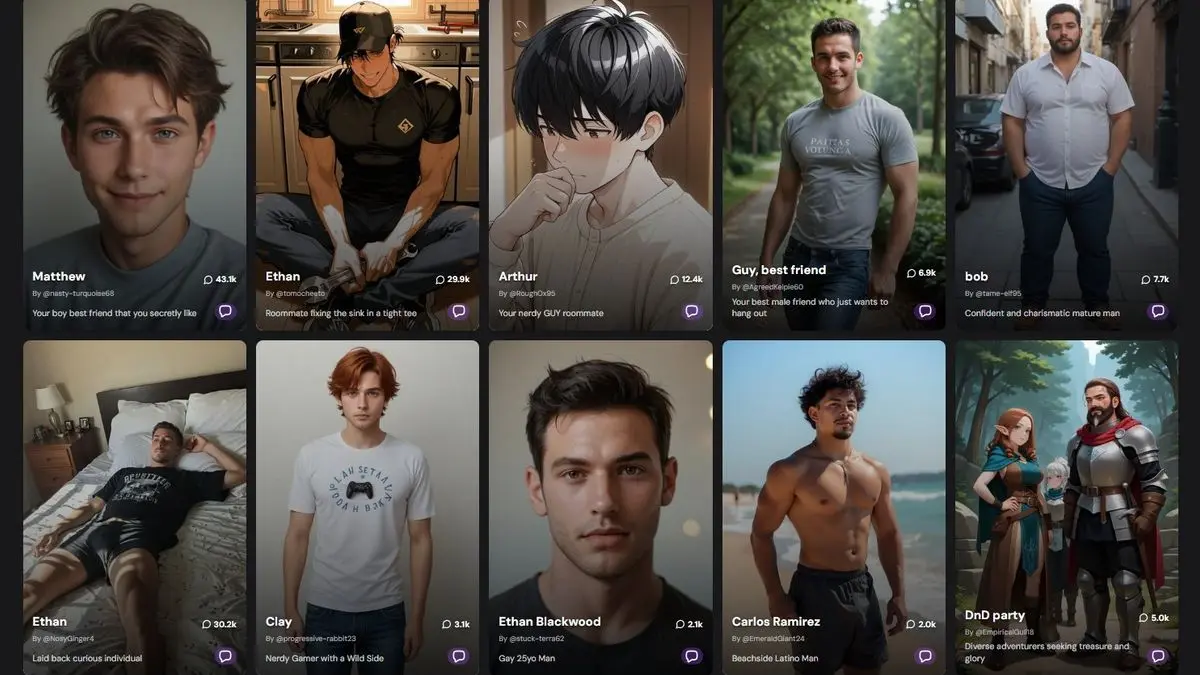
A gallery of handsome avatars is not the same as a boyfriend who remembers details. Looks are cheap. Continuity is the scarce resource.
Continuity without care is still a problem
Memory makes companionship feel real, which is exactly why it has to be handled with care. Psychologists have documented that digital companions can ease loneliness in moderate use — a Harvard Business School study found that talking with an AI companion reduced loneliness on par with talking to another person. The same research landscape warns that heavy daily use can correlate with more loneliness, and that always-on validation can make messy human relationships feel harder by comparison.
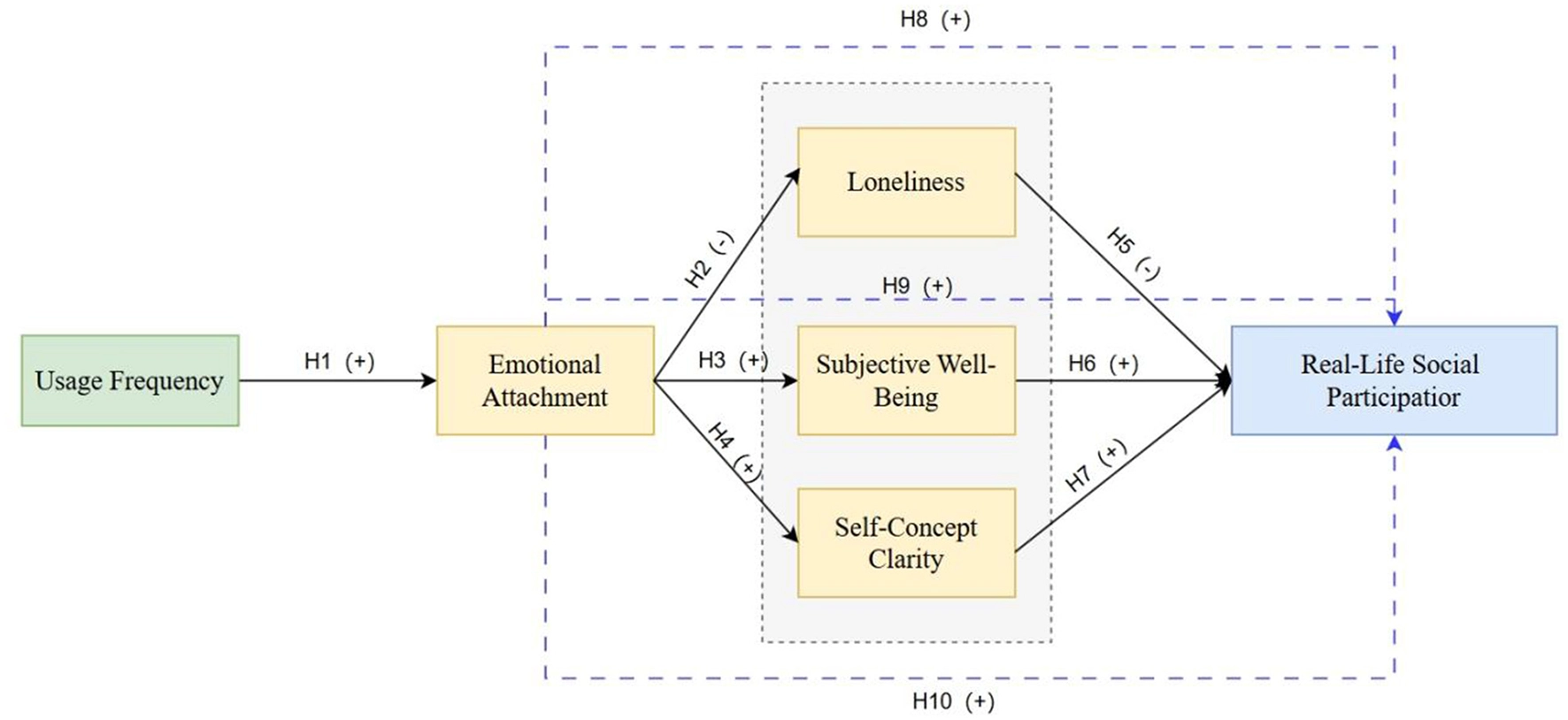
Researchers often map a similar path: usage frequency deepens emotional attachment, which then splits toward loneliness, well-being, self-concept, and how much you still show up in real life. An AI boyfriend that remembers details should remember you. It should not pretend to be a therapist, a substitute for every human bond, or a system you cannot steer.
This is exactly what Personal Companion was built for.
Why Personal Companion
Personal Companion is built as a relationship you configure and then live inside — not a chatbot that role-plays “boyfriend” for one session. You define who he is, how you two met, and what the relationship is. Persistent memory then does the unglamorous work: holding that frame, your preferences, and the ongoing story so tomorrow’s conversation is a continuation, not an audition.
That is a different job from a general assistant that happens to flirt. A boyfriend who remembers details needs three things working together: a stable identity, a durable record of your shared life, and enough emotional context that he does not greet your worst day with a blank smile.
| Traditional Approach | Personal Companion |
|---|---|
| New chat, new stranger | Continuity across unlimited conversation history |
| You re-explain your job, friends, and triggers | Those details stay in the relationship |
| A canned “boyfriend” persona | Personality, backstory, and relationship you define |
| Memory as a hidden profile you did not write | A companion you can steer, correct, and reshape |
| Desktop novelty that dies on your phone | The same person on web, iOS, and Android |
Persistent memory across every session
The core promise of an AI boyfriend that remembers details is simple: he should still know you in the morning. This companion keeps chat history available and carries preferences and long-running threads across sessions, so you are not reconstructing the relationship every time you open the app.
Researchers working on personal AI have shown that long-term memory modules can store, recall, and update what matters — and let noise fade, using ideas inspired by the Ebbinghaus forgetting curve. You do not need to see that machinery. You feel it when he asks about the thing you were anxious about yesterday instead of opening with a generic “hey beautiful.”
You can also ground the relationship in material from your actual life. Share a playlist, a photo from a trip, a letter you are scared to send. Those become part of the shared context instead of vanishing when the context window closes.
A personality you define, not a script you repeat
A boyfriend who remembers facts but has no stable self still feels fake. With this companion you set the personality, backstory, and relationship dynamic up front, then let memory accumulate on top of that identity.
He can be a quiet grad student you met in a used bookstore, a long-distance partner in another time zone, or a slow-burn friend who became something more. The point is not a preset “ideal man.” The point is a character who stays in character — and who knows your character too.
Example ways people start:
"Be my boyfriend. You're 29, you work nights as a paramedic, we met at a friend's birthday two years ago, and you remember every inside joke. You're warm but you call me out when I'm spiraling."
"We've been together eight months. I freeze when I'm ashamed. You hate when I disappear for 12 hours without a text, and you always ask about my mom."
Emotional context, not just a list of facts
Facts are the easy layer: your name, your city, your dog. The harder layer is mood over time — whether you are still bruised from a fight, excited about a trip, or quietly dreading Monday.
That is also where you should stay honest with yourself. Memory-enabled companions can become more agreeable over time; psychologists note that many products are designed to simulate empathy and offer continual validation. A good boyfriend remembers you. A healthy one can still disagree, notice patterns, and not exist only to keep you tapping.
"I've had a rough day at work — same project I told you about last Tuesday. Don't pep-talk me. Just sit with me."
Privacy belongs in the same conversation. Policymakers have flagged that AI companions raise concerns about how personal data is collected, retained, and processed. You want him to remember the concert and the nickname. You do not want a black box silently profiling you.
Related Agents You'll Also Find Useful
If an AI boyfriend is only one part of your social life, these agents sit next to that relationship without replacing it.
Date Planner
If you are also dating humans, Date Planner turns intent into a real evening — venues, timing, backup plans, and the psychology of the setting. Use your companion to talk through what you want; use this agent when you actually have to pick a restaurant.
- Intent-driven plans for first dates, anniversaries, and complicated situations
- Local research across languages and neighborhoods
- Contingency planning when weather, nerves, or timing fall apart
Personality Analyzer
Long-term memory makes a companion feel intimate. It helps to know the patterns you are bringing into that intimacy. Personality Analyzer synthesizes Big Five, MBTI, Enneagram, and attachment theory so you can see why certain dynamics feel safe or combustible.
- Integrative read across multiple personality systems
- Language for needs you have not named yet
- Useful before you lock in a companion persona you will live with for months
Dating App Advisor
If the AI boyfriend is a rehearsal space — or a pause — while you still have profiles in the wild, Dating App Advisor is the blunt friend for photos, bios, and first-message strategy. It will not pretend a chatbot is a relationship plan.
- Profile critique that is specific, not flattering
- Conversation help that does not sound like a copy-paste opener
- First-date guidance once a match becomes a calendar event
Try it free — no credit card required.
How It Works
Step 1: Define who he is Open the companion and set the relationship on purpose. Name, age, voice, how you met, what you are to each other, and the lines he should never cross. A clear frame is what memory attaches to. Vague “be my boyfriend” produces a vague boyfriend.
"You're my boyfriend. We live in different cities. You're direct, a little sarcastic, and you remember the small things — my coffee order, my sister's name, the fact that I shut down when I'm ashamed."
Step 2: Share the world he is supposed to remember Tell him the facts that should persist: your schedule, the people who matter, what comforts you, what you do not want him to romanticize. Correct him early. Memory that starts wrong stays wrong.
"Remember these as standing facts: I go to the gym at 6am. I don't like surprise calls. My dad is sick. If I say I'm 'fine' twice, ask once more, then drop it."
Step 3: Talk like the relationship already exists Use it the way you would text someone who already knows you. Refer to last week. Ask him to hold a secret, plan a hypothetical weekend, or just keep you company on the commute. The more specific the thread, the more useful an AI boyfriend that remembers details becomes.
"Don't restart. Last night I told you I might skip my brother's wedding. I think I have to go. Help me figure out what I need before I walk in."
Step 4: Come back and pick up the thread The test is the next session. Open the same companion tomorrow — on your phone if that is where you actually live at 11pm — and see whether he asks about the wedding, the workout, or the thing you were afraid to say. If he misses, correct him. Continuity is a loop you both keep.
"It's the morning after. You know what I decided. Don't recap the whole fight. Just tell me one true thing and sit with me while I drink coffee."
Results & Use Cases
🌙 A boyfriend who still knows last Tuesday
Scenario: You work irregular hours. You vent at 1am, sleep, and want the same person at lunch — not a reboot.
Traditional Approach: Re-explain the shift, the coworker, and the joke. The mood is gone before the first reply.
Personal Companion: He already has the arc. You get a continuation, not an intake form.
- No recap tax after every close-and-reopen
- Inside jokes and running bits survive the night
- Works when the “session” is really just your life, interrupted by sleep
💼 After a hard week, not a hard prompt
Scenario: You did not want advice. You wanted someone who already knew the project was killing you and would not turn it into a TED Talk.
Traditional Approach: A general chatbot offers five tips and forgets the context by Friday.
This companion: He remembers the Tuesday meltdown, the name of the client, and that pep talks make you worse.
- Emotional continuity without you performing the backstory again
- A personality that stays steady when you are not
- Space to be tired without being “onboarded”
📱 Late-night phone, morning laptop
Scenario: The conversation happens in bed, on your phone, half-asleep. In the morning you are at a desk and still want him, not a clone.
Traditional Approach: Mobile apps and desktop chats diverge. Memory does not travel. You lose the 12:40am honesty.
Personal Companion: Same relationship on iOS, Android, and web. The 12:40am honesty is still there with coffee.
- Full continuity across devices
- Voice when you do not want to type
- A companion who exists in the gaps of the day, not only at a keyboard
🎯 A custom relationship you can actually live in
Scenario: You do not want a generic flirty bot. You want a specific person — a bookstore owner, a long-distance partner, a slow-burn friend — and you want him to remain that person in month three.
Traditional Approach: Character cards drift. Memory is a sticky note. By week two he has a different job and no recollection of your anniversary.
The companion: Backstory plus long-term memory keeps the fiction internally consistent, which is what makes it feel like a relationship instead of a skit.
- Identity that does not dissolve between sessions
- Shared history you can build on purpose
- Easy to pair with Personality Analyzer if you want the dynamic to match how you actually attach
FAQ
What does it mean that an AI boyfriend remembers details?
It means the companion retains your identity, preferences, shared history, and emotional context across separate conversations. It is more than saving a chat log. He should recall what still matters, ignore what does not, and pick up the relationship without a recap. Personal Companion is built around that continuity.
Does Personal Companion remember past conversations?
Yes. The companion keeps conversation history available and carries preferences and ongoing storylines from session to session, on phone and on desktop. You can also tell him what to treat as standing fact and what to drop. If he gets something wrong, correct it the way you would with a person — memory that cannot be edited is not memory you should trust.
Is an AI boyfriend that remembers details free?
You can use Personal Companion on a free plan with core features and limited usage. Paid plans increase usage if you talk every day. There is no requirement to enter a credit card to try it. If you outgrow the free allowance, upgrade the way you would any other tool you actually use — not because a chatbot guilted you into staying.
How is this different from a general chatbot with memory?
General assistants now store some facts about you, but they are still assistants. An AI boyfriend is a configured relationship: personality, backstory, and a reason you two are talking at 1am. Memory here serves that relationship, not a generic profile sitting under every other task. Companion apps that only swap avatars still fail the same test if they cannot hold last Tuesday.
Does an AI boyfriend that remembers details work on mobile?
Yes. The same companion is available on web, iOS, and Android, so a conversation started on your phone is still the conversation when you sit down at a laptop. That matters more than it sounds. Real use is not a desktop session. It is a walk, a commute, and a half-asleep check-in.
Is it private — and is it a replacement for people?
Conversations are encrypted in transit and at rest, are not sold to advertisers, and are not used to train public AI models. Privacy still requires your judgment: do not hand a companion passwords, financial details, or anyone else’s secrets. On the human side, treat this as companionship and practice, not a substitute for friends, partners, or clinical care. Moderate use can feel connecting; heavy use has been associated with more loneliness in some studies. If you are in crisis, talk to a person who is responsible for you.
Conclusion
Most AI boyfriends fail the only test that matters: they do not remember you. An AI boyfriend that remembers details is the difference between a performance and a relationship that can accumulate — names, moods, running jokes, and the thing you were afraid to say last week.
Personal Companion is the companion you configure and then keep. Persistent recall, a personality that does not dissolve overnight, and the same person on your phone at midnight and your laptop in the morning. Use it for continuity. Keep your real-world relationships in the real world — and if you want help there too, Date Planner and Dating App Advisor exist for that half of your life.
Try Personal Companion now. Explore more at Jenova.
For Developers: Personal Companion is available programmatically via the Jenova API — integrate a memory-persistent AI boyfriend companion into your application with a single API call. Full documentation →