AI Boss Fight Generator: Design Epic Encounters Instantly
2026-09-03
Game Designer Assistant helps you generate complete boss fights — phases, attacks, telegraphs, lore, and rewards — in a single working session. While most teams still stitch together wiki stat blocks, random tables, and late-night balancing notes, this AI boss fight generator turns a brief into a fight that tests player skill and carries the story. As of September 2026, that matters more than ever: studios are shipping faster, tabletop groups expect set-piece battles, and generic chat output is no longer enough.
✅ Full encounter kits: identity, arena, phases, tells, and loot ✅ Tuned for video games, TTRPGs, and hybrid tabletop setups ✅ Built around proven boss design — a test and a story ✅ Iterate in chat until the fight feels fair, readable, and memorable
To understand why a dedicated boss fight generator is worth using, it helps to look at what actually makes a boss fail — and why “just add more HP” still shows up in so many drafts.
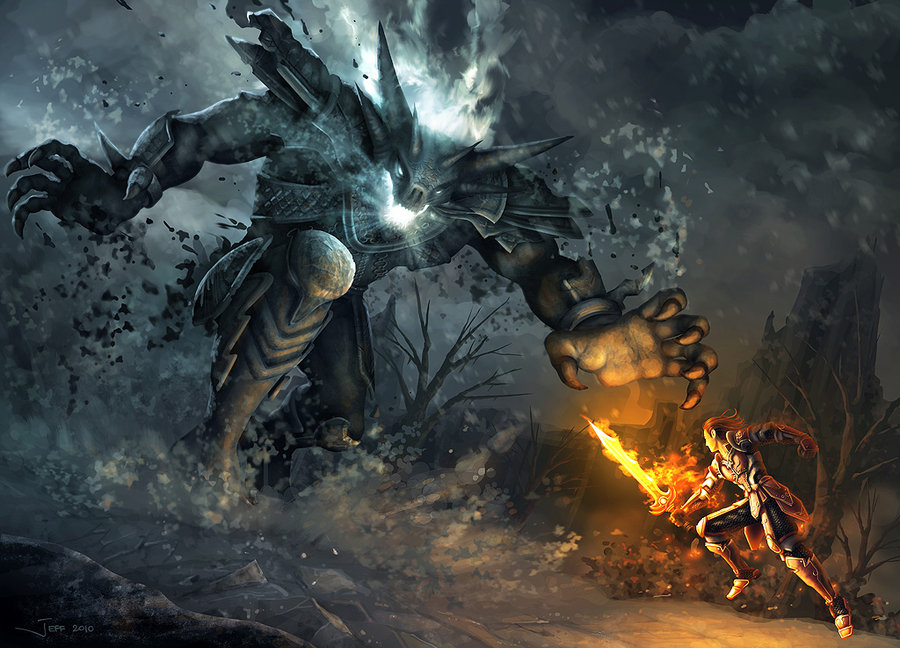
Quick Answer: What Is an AI Boss Fight Generator?
An AI boss fight generator is a design tool that turns a genre, player kit, and story beat into a complete boss encounter — mechanics, phases, lore, and tactics — in minutes. Game Designer Assistant is built for that job, not for generic chat.
Key capabilities:
- Phase structure, attack patterns, and readable telegraphs
- Skill tests mapped to what the player (or party) can actually do
- Lore, personality, and narrative beats that justify the fight
- Arena hazards, rewards, and pacing notes you can drop into a GDD or session prep
The Problem with Designing Boss Fights by Hand
A great boss is supposed to feel like a reward, a milestone, and a exam — all at once. Veteran designers have said as much for years: a boss is a test of skills the game already taught, and a short story with a beginning, middle, and end (Game Developer). Tabletop groups feel the same pressure. A level-appropriate fight is meant to spend a meaningful slice of the party’s resources — historically about 20% of hit points, spells, and item uses for a same-level encounter — without becoming a slog or a wipe.
But getting there is still slow and easy to get wrong:
- The blank page: a cool silhouette with no gameplay underneath
- Difficulty that is either a sponge or a cheap one-shot
- Fights that ignore the player’s actual verbs (dash, parry, flanking, ritual)
- Hours of prep that still produce a forgettable “big monster in a box”
The industry is already reaching for AI to close that gap. One in three developers now use generative AI to streamline production, and a Google Cloud / Harris Poll study found 90% of games developers already use AI in their workflows. 89% say AI is changing what players expect from worlds and encounters. A boss fight generator that only dumps stats cannot meet that bar.
No Purpose, No Fight
Boss design guides put purpose first for a reason. If the encounter does not teach, test, or pay off something the player just learned, it is spectacle without meaning. Random generators are especially bad here: they name a creature, assign hit points, and skip the question “why this fight, in this place, with these verbs?”
Patterns That Do Not Stay Interesting
A single repeating loop — swipe, roar, swipe — dies after the first successful read. Designers who have studied the form argue that bosses must fight fairly, stay readable, and keep introducing complications. Escalation is the job. Most homemade bosses never get a second or third beat because the author ran out of time.
Tabletop Bosses That Stall the Table
In TTRPGs, a “boss” that is just a high-CR stat block often becomes a hit-point race. Encounter designers have been warning about this for years: variety of encounter difficulty, mixed monster roles, and terrain matter more than a single deadly number (The Alexandrian; Hipsters & Dragons). Dungeon masters still need lair actions, minion roles, and a reason the villain does not simply fall down at 0 HP with nothing said.
This is exactly what a specialized AI boss fight generator is for.
Why Game Designer Assistant Works as a Boss Fight Generator
Game Designer Assistant treats boss creation as systems work, not as a monster-manual lookup. You bring the fantasy, the player kit, and the constraints. It returns a fight with structure: what the boss is testing, how each phase reads, when the player is allowed to punish, and how the arena participates.
That is a different job from a generic chatbot. A general model can invent a name and a damage number. This tool is framed as a design partner — brainstorming, systems analysis, documentation, and concept direction across genres and platforms — so the output looks like something you would paste into a GDD, a boss-design doc, or tonight’s session notes.
| Traditional Approach | Game Designer Assistant |
|---|---|
| Wiki stat block + extra HP | Encounter built around the player’s real verbs |
| One attack pattern until it dies | Phases, escalation, and a defined finale |
| CR/EL math with no story | Narrative beats, personality, and a reason to fight |
| Hours of solo iteration | Draft → critique → retune in one conversation |
| Same template for every genre | Souls-like, JRPG, shmup, 5e, OSR, and more |
It Starts From Skills, Not From a Model Sheet
The strongest published advice on boss battles is blunt: list the skills you want to test, then invent attacks that force those skills, then theme the attacks so they belong to the character (Game Developer). Ask for that workflow and you get a fight that teaches the dash, the parry, the ice arrow — instead of a pile of unrelated special moves.
"Design a three-phase boss for a 2D action-platformer. The player has a dash, a charged slash, and a parry. The boss is a corrupted clockwork cathedral. Include telegraphs, vulnerability windows, and arena hazards that change each phase."
It Writes the Story Beats Inside the Combat
Build-up, “business as usual,” escalation, and a finale are not flavor text. They are the pacing engine of a memorable fight. You can request those beats by name, or describe the emotional arc — revenge, mercy, a revealed weak point — and get attacks that serve it. Pair that with Creative Fiction Writer when you need cutscene dialogue, a last-words monologue, or a legend that makes the arena feel inhabited.
It Speaks Video Game and Tabletop Fluently
Need a Souls-like with posture, hyper armor, and a second health bar? A JRPG with adds, elemental shields, and a limit-break window? A 5e lair with legendary actions and a phase at 50% HP? Specify the ruleset and the party. The output should name the tools players already have, not invent a new subsystem they will never use.
"Create a D&D 5e boss for a level 7 party of four: a grief-stricken storm giant paladin defending a drowned temple. Give lair actions, legendary actions, a phase transition at half HP, minion roles, and treasure that matters to the plot."
Try the Game Designer Assistant free — no credit card required.
Related Agents You'll Also Find Useful
If you are generating bosses, you are rarely doing only combat math. These agents cover the rest of the pipeline.
Roleplay Game Master
If you need to play the fight before you ship it — or run it at the table — Roleplay Game Master will hold the boss’s personality, remember earlier phases, and keep tactics consistent across a long session.
- Unlimited memory for multi-phase encounters
- Character consistency so the villain does not “forget” their own rules
- Open scenario play for video-game narrative tests or live TTRPG nights
Creative Fiction Writer
A boss without a reason is a damage sponge. Use this agent when you need origin myths, rivalries, battlefield banter, or the letter the party finds after the kill.
- Genre-aware prose from grimdark to Saturday-morning cartoon
- Editorial passes so lore matches the mechanics you already locked
- Cutscene and campaign-journal polish, not just a paragraph of backstory
Prompt Generator
Once the fight exists on paper, you still need a face. Prompt Generator turns your boss brief into high-quality image, video, or music prompts you can run in whatever model you already use.
- Image prompts for silhouette, armor, and arena mood
- Refinement loops until the look matches the mechanics
- Useful for concept art, VTT tokens, and store-page key art
How It Works
Step 1: Brief the Fantasy and the Kit State the genre, camera, and what the player or party can actually do. Include constraints: session length, engine, content rating, or “no flying, we have no vertical combat.”
"Metroidvania, 16-bit, player has a grappling hook and a freeze ray. Mid-game boss in a flooded foundry. Must teach grappling to a moving weak point. Keep the fight under four minutes for a skilled player."
Step 2: Name the Skills the Boss Must Test Ask the generator to treat the fight as an exam. Movement, timing, resource management, target priority, and reading telegraphs are all fair game. If a new verb was introduced in the last level, it should appear here.
"Test wall-cling, freeze-ray timing, and ammo conservation. Do not test a double jump — the player does not have it yet."
Step 3: Generate Phases, Arena, and Tells Request a readable opening pattern, an escalation that adds a hazard or a new attack, and a finale that spends the last of the player’s attention. For tabletop, ask for lair actions, legendary actions, and what happens if the party tries to leave.
"Three phases. Phase 1 is a fair read of the slam shockwave. Phase 2 floods two-thirds of the arena. Phase 3 exposes a core when the player freezes the cooling pipes. List telegraphs in player-facing language."
Step 4: Critique, Retune, and Document Push back. “Phase 2 is a sponge.” “The tell is identical to the feint.” “My party has no radiant damage.” The value of an AI boss fight generator is the revision loop, not the first draft. Ask for a one-page design doc, a stat block, or a bullet list a programmer or DM can implement.
"Rewrite phase 2 so it lasts 30 seconds at most, add a punish window after the spin, and output a one-page GDD with arena sketch notes and reward table."
Results & Use Cases
📊 Mid-Boss for an Indie Action Game
Scenario: A solo developer needs a foundry boss that teaches the new grappling hook before the open third act. Traditional Approach: A weekend of reference hunting, a spreadsheet of timings, and a first playable that still feels like a reskin of the tutorial dummy. Game Designer Assistant: A three-phase script with telegraphs, vulnerability windows, and a clear “you may grapple now” moment, plus notes a programmer can implement.
- Skills mapped to attacks before any art is drawn
- Escalation that does not require a new animation set you cannot afford
- A written design doc you can drop into the GDD the same day
🎲 Climax Fight for a D&D Session
Scenario: A dungeon master has four level-7 players and a drowned temple on Saturday. The villain is a storm giant paladin who does not want to be killed — he wants the party to understand why the temple flooded. Traditional Approach: A stock giant stat block, maybe a legendary action copied from a dragon, and a fight that becomes a hit-point race. This AI boss fight generator: Lair actions tied to rising water, minions with jobs (not extra HP), a 50% HP phase that changes the moral choice, and loot that continues the plot.
- Encounter difficulty treated as a set piece, not every-room filler
- Terrain and roles, not a single oversized number
- Ready to run — or to playtest in Roleplay Game Master before the group sits down
📱 Raid Boss Drafted on a Phone Commute
Scenario: A live-service designer is on the train with a mechanic idea — a boss that steals buffs — and a patch meeting in ninety minutes. Traditional Approach: Notes app fragments, a Slack message that says “big guy, steals buffs??”, and a meeting that starts from zero. Game Designer Assistant on mobile: A readable first pass with phase timings, UI tell ideas, and a list of edge cases (what if nobody has a buff?) before you reach the office.
- Full feature parity on phone, so the brief does not wait for a desk
- Fast iteration between stops
- Output you can paste into the team doc from the platform
🎬 Story Boss for a Narrative-Led Title
Scenario: The writer knows the emotional beat — a mentor who has to be put down — but combat has no unique verbs yet. Traditional Approach: Cutscene, then a reskinned elite. Players remember the scene and forget the fight. The design assistant + Creative Fiction Writer: Mechanics that enact the theme (you must use the mentor’s own taught combo), plus dialogue that lands on the punish windows rather than in a separate movie.
- Combat and story designed as one object
- Banter and last words timed to phase changes
- Concept-art prompts via Prompt Generator so art sees the same brief
FAQ
What is an AI boss fight generator?
An AI boss fight generator is a tool that produces a complete boss encounter from a short brief: identity, arena, attack phases, telegraphs, difficulty notes, and rewards. Game Designer Assistant is built for that design problem — systems, documentation, and genre craft — rather than as a general chatbot that happens to know what a hit point is.
Is Game Designer Assistant free?
Yes. You can use it on the free tier with no credit card. Paid plans raise usage limits if you are generating full campaigns, many bosses, or long revision threads. Start with one encounter, see whether the structure holds up in play, then scale.
Can this boss fight generator make D&D 5e (or other TTRPG) bosses?
Yes. Specify the ruleset, party level and size, and how deadly you want the set piece. Ask for legendary actions, lair actions, minion roles, and terrain. For a live rehearsal, run the same brief in Roleplay Game Master so you can feel pacing before Saturday.
How is this different from ChatGPT or a random encounter table?
Random tables and generic models are strong at names and weak at purpose. Published boss-design practice still starts from skills, fairness, and story beats (Game Developer; Yu-kai Chou). This agent is prompted and specialized as a game-design partner, so you can demand phase timing, tell language, and a one-page doc instead of a paragraph of flavor.
Does an AI boss fight generator work on mobile?
Yes. Brief a raid boss, a one-shot villain, or a pinball-style pattern on your phone and pick up the same thread on desktop. That is the difference between capturing an idea on the commute and losing it before you open the engine.
Can it help with boss concept art?
It can describe silhouette, materials, tells, and arena mood in designer language. For model-ready image prompts, hand that description to Prompt Generator, which is built to write and refine prompts for image, video, and music models.
Conclusion
A boss fight is not a bigger enemy. It is a test of what the player already learned, and a short story told in attacks, arenas, and timing. Spreadsheets, random generators, and generic chat still produce sponges, one-shots, and fights with no reason to exist.
An AI boss fight generator that thinks like a designer changes the order of work. You start from verbs, purpose, and pacing. You leave with phases, tells, loot, and a document someone can actually ship — whether that someone is an indie programmer or a dungeon master with four friends and a drowned temple.
Try Game Designer Assistant now and generate the encounter you have been postponing. Explore more at Jenova.
For Developers: Game Designer Assistant is available programmatically via the Jenova API — integrate AI boss fight generation into your game-dev or VTT application with a single API call. Full documentation →