AI Birth Chart: Full Natal Reading, Houses, Aspects & Transits
2026-08-09
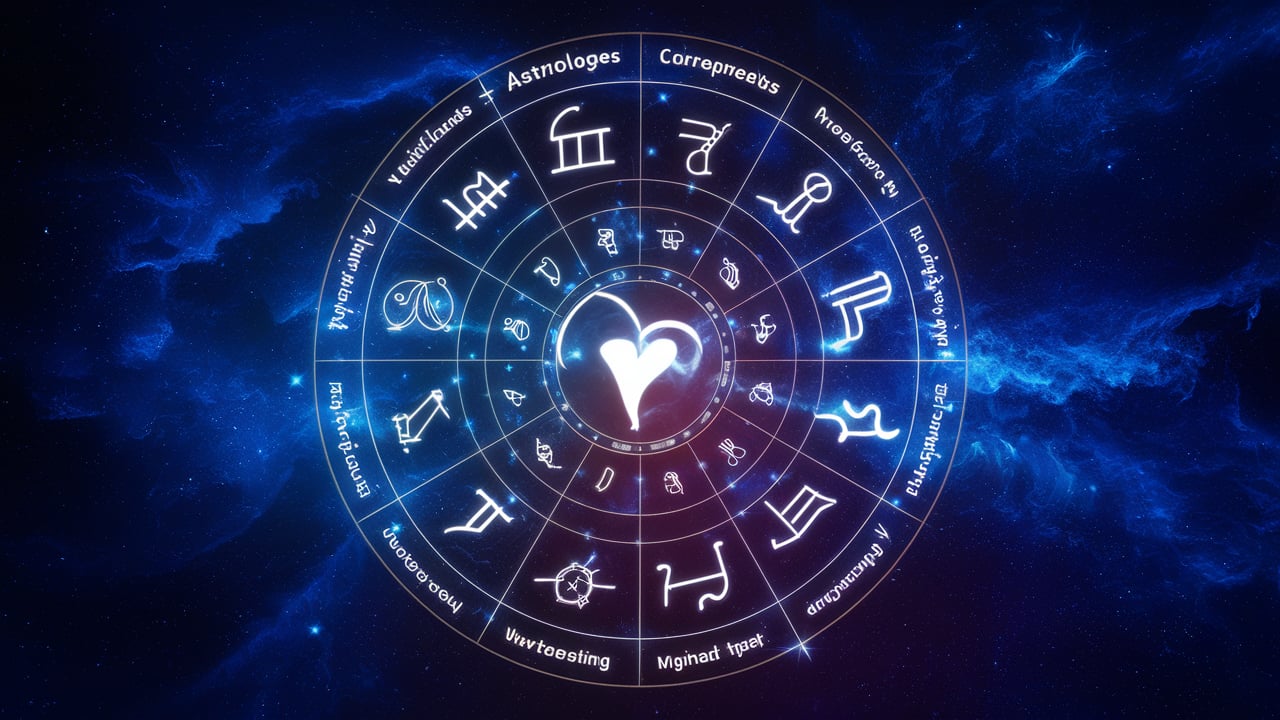
An AI Birth Chart Reader takes your birth date, time, and location and returns a complete natal interpretation — every planetary placement, all twelve houses, the aspect patterns between them, and the transits currently activating your chart. Most free birth chart sites generate the wheel, print a list of placements, and leave you to assemble meaning from thirty disconnected paragraphs. That isn't a reading. A real birth chart interpretation synthesizes: it explains how your Moon placement interacts with your Saturn, why a house cusp matters, and what any of it means for the situation you're actually in.
✅ Full natal chart interpretation — Sun, Moon, Rising, all planetary placements, houses, and major aspects ✅ Synthesis across the whole chart rather than isolated placement definitions ✅ Live transit tracking read against your own natal positions, not your Sun sign ✅ Persistent memory so recurring themes and long transits are tracked across months
Casting a birth chart has been free and instant for years. Interpreting one has not. The calculation is arithmetic; the synthesis is the skill — and that skill has stayed locked behind paid consultations, dense textbooks, and a learning curve most people abandon at the aspect grid. To understand why that gap has become so visible, it helps to look at how many people are now generating charts they can't read.
Quick Answer: What Is an AI Birth Chart Reading?
An AI birth chart reading calculates your complete natal chart from your birth date, time, and location, then interprets every placement, house position, and aspect as an integrated whole rather than a list of separate definitions.
Key capabilities:
- Interprets your full chart — all planets, all twelve houses, and the aspects connecting them
- Synthesizes placements into coherent themes instead of returning isolated meanings
- Reads current transits against your specific natal positions
- Answers follow-up questions about any placement, aspect, or pattern you don't understand
The Problem: Everyone Can Generate a Chart, Almost Nobody Can Read One
Free chart calculators have made the wheel universally accessible, and demand has followed. The commercial scale of that demand is now substantial.
USD 6.29 billion → USD 46.6 billion — Astrology app market size in 2026 versus its projected 2035 value, at a 24.93% CAGR
USD 16.07 billion → USD 27.15 billion — Global astrology app market revenue in 2026 versus 2035 forecast, at a 6% CAGR
USD 22.8 billion by 2031 — Projected astrology market value, driven by rising demand for digital horoscope and astrology services
38% market share — Asia-Pacific's share of the astrology app market, the largest of any region
But the distance between generating a chart and understanding one is where nearly everyone stalls:
- Calculators output data, not meaning — a wheel, a placement table, and no synthesis
- Placement-by-placement text ignores the whole — thirty paragraphs that never speak to each other
- Aspects are where beginners quit — the grid of squares, trines, and oppositions is genuinely opaque
- Professional readings cost money and require scheduling — the question rarely arrives during business hours
- Detailed personal data raises real considerations — birth time and location are unusually specific information
A Placement List Is Not an Interpretation
Your calculator tells you: Moon in Scorpio, eighth house. A generic site then prints a paragraph about Scorpio Moons that would be identical for millions of people, and a separate paragraph about the eighth house that never mentions the Moon.
What it can't tell you is what happens when that Moon is squared by Saturn while sitting in a house already occupied by Pluto. That configuration produces something specific — and it exists nowhere in either paragraph, because synthesis is the one thing a lookup table cannot perform.
Aspects Are Where the Meaning Lives, and Where People Quit
A chart is not a list of positions. It's a geometric network. The Sun in Aries means one thing; the Sun in Aries opposing Pluto in Libra means something considerably more particular.
Ten planetary bodies produce dozens of possible aspect pairings. Add orbs, applying versus separating aspects, and house rulership overlays, and the complexity compounds fast. Most people learn their Big Three, open the aspect grid, and stop there permanently.
Professional Astrologers Are Skilled but Bounded
A good astrologer synthesizes all of it into a narrative — genuinely valuable work. They also book in advance, charge per session, and can't be reached at midnight when the question surfaces. If you want to revisit your chart as a situation develops across a season, cost compounds quickly.
Research on how people actually use astrology in decision contexts notes that astrologers use birth charts to provide insights about one's traits and guide important decisions, such as marriage, finance, education and health — which is precisely the kind of ongoing consultation a one-off paid session can't sustain.
Birth Data Is Unusually Personal, and That Deserves Naming
There's a caution here specific to birth chart tools, and it's worth stating plainly. Your exact birth date, time, and city is a highly identifying combination. Stanford HAI research on AI privacy notes that AI systems are so data-hungry and intransparent that we have even less control over what information about us is collected, what it is used for — a general concern that applies with particular force to services built on precise personal data.
The distinction that matters: astrology is a reflective and symbolic practice. A birth chart is a structured framework for thinking about your own tendencies and tensions. It is not medical advice, financial advice, or clinical care, and no responsible tool should present it as such.
This is exactly what the Personal Astrologer was built for.
Why the Personal Astrologer Works Differently
The Personal Astrologer reads a chart the way a practicing astrologer does — whole-chart synthesis first, placement definitions as supporting detail, never a list.
| Traditional Approach | Personal Astrologer |
|---|---|
| Free calculator outputs a wheel and a table | Full interpretation with reasoning attached |
| Thirty disconnected placement paragraphs | Synthesized themes across the entire chart |
| Aspect grid left unexplained | Aspects read as the structural core of the chart |
| Book a consultation days ahead, pay per session | Reading begins the moment you provide birth data |
| Reading ends, all context lost | Long transits and themes tracked across months |
| Sun-sign transit forecasts | Transits read against your own natal positions |
Whole-Chart Synthesis, Not a Placement Inventory
The reading identifies dominant patterns first — element and modality balance, stelliums, chart shape, angular emphasis — then explains individual placements within that structure. A Mars placement means something different in a chart weighted toward fixed signs than in one dominated by mutable energy.
Houses Read as Life Domains, Not Slots
House position is where an energy actually plays out. Venus in the second house and Venus in the eleventh describe two very different relationships to value and connection, even with identical sign placement. The reading treats house context as load-bearing rather than an afterthought.
Aspects as the Structural Layer
This is the single largest difference from calculator output. A Saturn–Venus square, a Moon–Neptune trine, a Sun–Pluto opposition — these configurations describe internal tension and resource in a way isolated placements never can. The Personal Astrologer reads the aspect network as the chart's actual architecture.
Transits Against Your Chart, Not Your Sign
A generic forecast can't do this because it doesn't know where your planets are. A Saturn transit matters because of which natal planet it contacts and which house it crosses in your chart specifically.
Psychological Framing, Not Fatalism
Placements are presented as tendencies, tensions, and developmental themes. Research on astrology's psychological function describes it as a symbolic framework for understanding experiences, emotions, beliefs, and circumstances — reflection, not prediction.
Try prompts like:
"Born March 14, 1994, 6:42 AM, Manila. Give me a full birth chart reading — start with the dominant patterns, then walk me through the major aspects."
"I have Saturn square Venus in my chart. What does that actually mean in practice, and which houses are involved?"
"Explain my fourth and tenth houses together — I want to understand the home-versus-career tension in my chart."
Related Agents You'll Also Find Useful
A birth chart is rarely the only lens people use on their own patterns. These agents extend naturally from a natal reading.
Numerology Reader
The closest structural relative — both systems derive meaning from your birth date. When a chart reading surfaces a theme, your Life Path number frequently echoes it through entirely different arithmetic.
- Full chart across Pythagorean, Chaldean, Vedic, and Kabbalistic systems
- Life Path, personal year cycles, and karmic pattern analysis
- Compatibility readings that complement astrological synastry
Chinese Fortune Teller
A structurally independent system built on the same birth data. BaZi (八字) reads the Four Pillars of Destiny — year, month, day, and hour — with its own logic of elements and cycles.
- Four Pillars analysis from your exact birth time
- Direct readings on career, relationships, health, and life timing
- A genuine cross-check when Western chart conclusions feel incomplete
Mystic Tarot Reader
Your natal chart describes the durable structure. Tarot answers the specific question you have today. The two systems share direct correspondences — each Major Arcana card carries planetary and zodiacal associations.
- Full spread drawing with visual card reveals
- Positional and combinational interpretation
- Question-level readings that complement chart-level context
Personality Analyzer
For the psychological layer underneath the symbolic one. This agent synthesizes Big Five, MBTI, Enneagram, and attachment theory into an integrated profile — a useful secular counterpart to a natal reading.
- Multi-framework personality synthesis
- Pattern recognition across established psychological models
- A grounded comparison point for chart-derived self-description
Try the Personal Astrologer free — no credit card required.
How It Works: From Birth Data to Full Reading
Step 1: Provide Your Birth Date, Time, and City
Birth time is the variable that matters most — it determines your Rising sign and the entire house framework. A twenty-minute difference can shift house cusps and relocate several planets.
"I was born on November 8, 1996, at 3:20 AM in Naga City, Philippines."
Step 2: Request Your Full Chart Reading
Ask for the complete overview, or start with a specific layer — the Big Three, the angular houses, or a particular aspect that's been bothering you.
"Give me the dominant patterns in my chart first, then the Big Three, then the three most important aspects."
Step 3: Work Through the Houses
Once placements are clear, houses tell you where each energy expresses itself. This is usually where a chart stops feeling abstract and starts describing a recognizable life.
"Walk me through my seventh, eighth, and tenth houses — those feel like the loaded ones."
Step 4: Layer In Current Transits
The natal chart is the fixed map. Transits are the weather crossing it. The Personal Astrologer reads what's contacting your placements right now.
"What's transiting my chart this season, and which natal planets are being hit?"
Step 5: Ask Follow-Ups and Return Over Time
The step no static chart generator offers. Challenge an interpretation, ask how two aspects interact, or come back as a long transit unfolds and pick up where you left off.
"You mentioned tension between my Moon and Saturn. How does that show up specifically in close relationships?"
Results & Use Cases
🔭 Understanding Your Full Chart for the First Time
Scenario: You've generated the wheel on a free site three times and understood nothing beyond your Sun and Rising.
Traditional Approach: Cross-reference a dozen sites per placement and attempt to assemble a coherent picture yourself.
Personal Astrologer: A complete synthesized reading covering placements, houses, and aspect patterns in one session.
- Dominant patterns identified before individual placements
- Ask clarifying questions on anything that doesn't land
- No prior astrological knowledge required
📐 Finally Understanding Your Aspects
Scenario: You know your placements cold but the aspect grid has been an impenetrable wall of colored lines for two years.
Traditional Approach: A textbook, forty tabs, and a slow retreat back to Sun-sign content.
Personal Astrologer: Each major aspect explained in context — what it means, which houses it links, and how it interacts with the rest of the chart.
- Aspects taught through your own chart rather than abstract examples
- Applying versus separating and orb strength accounted for
- Follow-up questions until the pattern actually clicks
💞 Synastry Beyond "Are Our Signs Compatible?"
Scenario: You want to understand a relationship's structural dynamics rather than a compatibility percentage.
Traditional Approach: Book a synastry consultation and receive a one-time report at professional rates.
Personal Astrologer: Both complete charts compared — inter-aspects, house overlays, and genuine friction points.
- Full charts read, not reduced to two Sun positions
- Specific dynamics named rather than scored
- Pairs well with the Numerology Reader for a second lens
📱 Chart Questions on Your Phone
Scenario: A placement question surfaces mid-commute and you want an answer, not a bookmarked article.
Traditional Approach: Save a tab you'll never reopen.
Personal Astrologer: Ask directly from your phone on iOS, Android, or web, with your chart already in context.
- Full feature parity across mobile and desktop
- Chart data and reading history synced across every device
- No re-entering birth details each session
🌙 Following a Long Transit Across Months
Scenario: An outer-planet transit is contacting a natal placement and unfolding across a year.
Traditional Approach: Multiple paid consultations, or a journal you'll abandon by week three.
Personal Astrologer: Persistent memory means each session builds on the last as the transit develops.
- Long transits tracked across many conversations
- Earlier readings referenced without re-explaining context
- Patterns surface without manual record-keeping
Frequently Asked Questions
Is AI birth chart reading free to use?
Yes. The Personal Astrologer is available on Jenova's free tier with all core features and limited monthly usage. Paid plans starting at $20/month substantially increase usage limits and unlock custom model selection. There is no per-reading charge on any tier.
How is an AI birth chart different from a free chart calculator?
A calculator produces the wheel and a placement table — accurate data with no interpretation. An AI birth chart reader synthesizes that data: it explains how placements interact, reads the aspect network, contextualizes houses, and answers your follow-up questions about anything unclear.
Do I need my exact birth time?
It matters considerably. Birth time determines your Rising sign and the entire house structure, so without it, house-based interpretation becomes approximate at best. A reading is still possible using date and location alone, but you lose the layer that makes a chart feel specific rather than general.
Can it interpret aspects and house placements?
Yes — this is the core of the reading. Aspects form the structural network of a chart, and houses determine where each energy expresses. The Personal Astrologer reads both as load-bearing elements rather than appending them to a placement list.
Is astrology scientifically valid?
No, and it shouldn't be framed that way. Astrology functions as a symbolic framework for understanding experiences, emotions, beliefs, and circumstances rather than a predictive science. Use it for structured self-reflection — not as a substitute for medical, financial, or psychological advice.
Does it work on mobile?
Yes. Jenova offers full feature parity across web, iOS, and Android, with your chart, reading history, and settings synced across every device.
Conclusion
Casting a birth chart stopped being the hard part years ago. Any free calculator will hand you an accurate wheel in seconds. The hard part — the part that has stayed expensive, scheduled, and behind a steep learning curve — is the synthesis: reading ten placements, twelve houses, and dozens of aspects as one integrated structure that actually describes someone.
The Personal Astrologer closes that gap. Whole-chart interpretation instead of placement inventories, aspects read as the chart's architecture, houses treated as load-bearing, transits calculated against your own positions, and memory that lets a long transit be followed across months rather than re-explained every session. Pair it with the Numerology Reader for the numeric layer, or the Chinese Fortune Teller for an independent read on the same birth data.
Bring your birth date, time, and city and get your first full chart reading from the Personal Astrologer. Explore more expert agents at Jenova.
For Developers: Personal Astrologer is available programmatically via the Jenova API — integrate full natal chart interpretation and transit analysis into your astrology or wellness application with a single API call. Full documentation →