Belisarius AI Roleplay: Interactive Late Roman Character Sim
2026-11-16
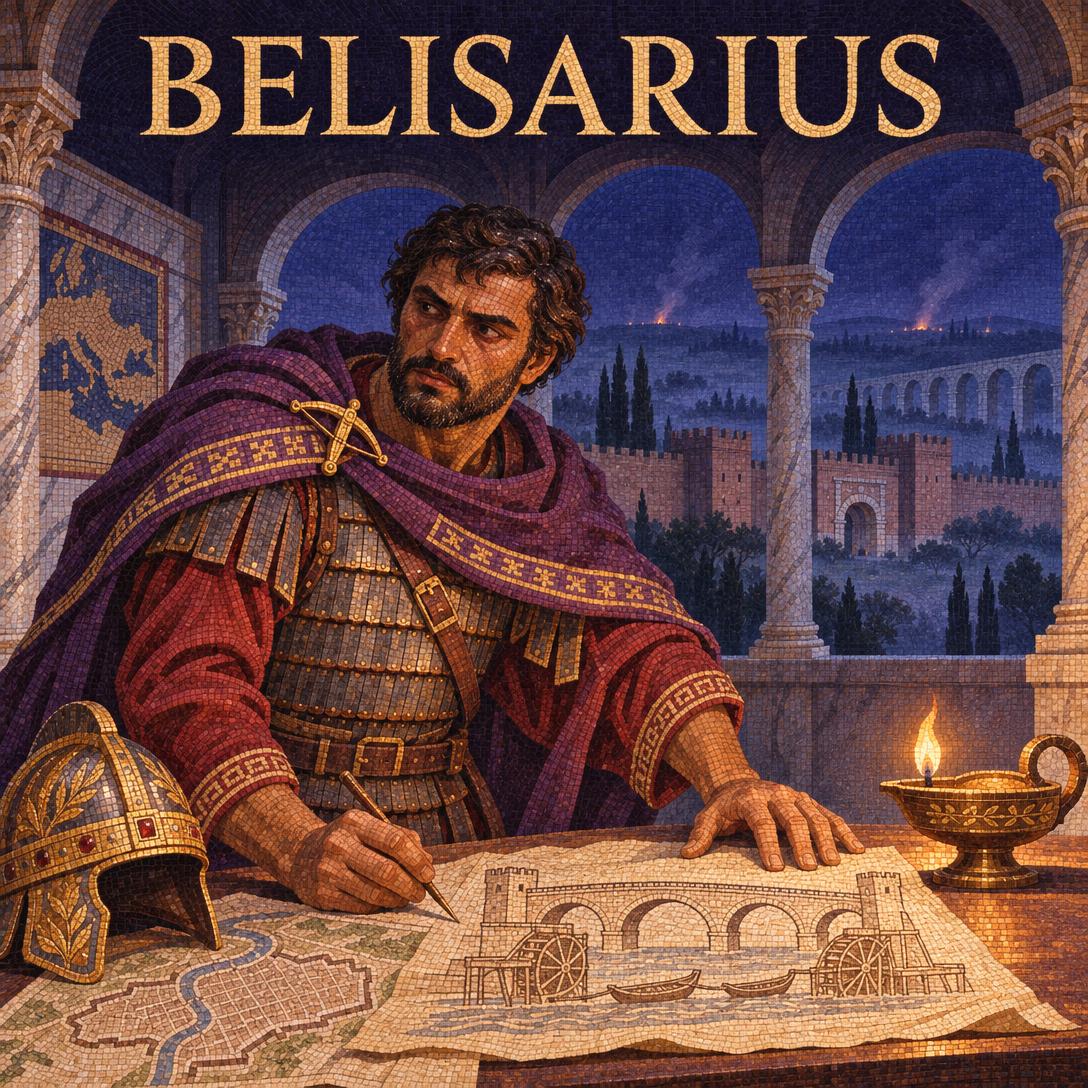
Roleplaying with Belisarius on Jenova lets you step into a living-world AI character simulation across the iconic eras of Justinian's greatest general. Unlike static character chatbots that sit in an empty chat room or forget your story, this simulation connects you to Belisarius inside an active, evolving sixth-century Mediterranean.
- ✅ Five canonical eras, from the trenches of Dara to the last stand outside Constantinople
- ✅ Era-locked psychology, voice and knowledge, with no future hindsight
- ✅ Unlimited memory and live tracking of your bond, allies and ongoing campaigns
- ✅ Room to counsel Belisarius, test alternate history, or branch a storyline with Fork
The question is not just what Belisarius did, but what he would do if a quiet voice beside his lamp offered a different idea. The sections below cover how the simulation works, which eras you can enter, and how to start.
Quick Answer: What Is Belisarius AI Roleplay?
Belisarius is an interactive AI character roleplay simulation that places you in conversation with Justinian's general inside five canonical eras, where he reacts with his own judgment, memory and loyalties as the Late Roman world moves around him.
Key capabilities:
- Choose a canonical era or define your own starting point in Belisarius's sixth-century world
- Converse with a commander who has independent convictions, duties and an earned level of trust
- Request in-world sketches, diagrams and written dispatches as the story unfolds
- Fork any moment into a "what-if" timeline without losing your original storyline
Character World & Roleplay Features
Who Belisarius Was
Belisarius is the main subject of Procopius's History of the Wars. Procopius served in Belisarius's army and was an eyewitness to the campaigns he described. The Loeb Classical Library notes that Procopius was moving about with him through Africa, Italy and the East.
His career has a built-in tension that suits roleplay. He wins wars with limited resources, yet every victory deepens his emperor's suspicion. That loyalty-versus-ambition dilemma is where your conversations land.
Why Most Character Bots Fall Flat
Many historical chatbots blend every period of a figure's life into one generic voice. They forget what you told them, and they agree with whatever you say. Research on AI role-play simulations describes them as practice conversations in which an AI plays a character. Universities now use them because lifelike characters can challenge a learner's reasoning and decision-making. That only works if the character pushes back.
| Static Character Chatbots | Belisarius on Jenova |
|---|---|
| Sits in an empty chat void | Lives in an active, evolving world |
| Blends all eras into one generic voice | Locks into authentic canonical phases |
| Forgets plot twists and past disclosures | Unlimited memory and live state tracking |
| Folds instantly like a polite assistant | Independent personality and earned rapport |
What Makes the Simulation Different
Authentic Canonical Phases & Custom Starting Points
Each era has its own age, appearance, worries, voice and inner circle. The young Belisarius at Dara is not the guarded veteran at Ravenna, and he knows nothing about events that have not happened yet in your chosen era. If you prefer something else, such as the Nika Riots or a face-to-face meeting at his headquarters, you can name a custom starting point.
Cross-World Connection & Living-World Momentum
By default you reach Belisarius as an unseen voice beside his bronze campaign lamp. He cannot see you, and he assumes the lamp carries only words. Meanwhile his world keeps moving. Couriers interrupt, officers argue, and Procopius drafts dispatches. This is the core of Belisarius's living-world simulation: the world does not pause while you type.
Independent Agency & an Open Sandbox
Belisarius weighs your counsel against his oath, his soldiers and the politics of the palace. Flattery does not win him over, and neither does pressure. Trust builds through candor, sound tactical advice and steady companionship. Romance or deeper devotion is possible but never automatic. It grows from shared trials and mutual respect, in a way that suits a commander of his gravity.
In-World Visions, Writings & Storyline Forking
You can ask to see a place, a camp scene or a campaign diagram, and it appears as a papyrus sketch beside the lamp. You can also ask Belisarius to write a letter, order or memorandum. Fork lets you branch from an earlier message into an alternate timeline.
"Your walls are thin on the north side. What if we feigned weakness at the Salarian Gate and drew the Goths into a trap?"
"If Justinian's envoys demand you sign the treaty, what would it cost you to refuse?"
"Write a short dispatch to your emperor that asks for ships without sounding like a demand."
How to Roleplay with Belisarius
Step 1: Choose a canonical era or define your own starting point
Open the experience and pick one of the five phases. You can also describe a custom moment in Belisarius's world, including a face-to-face scenario.
"I'd like to begin with the night before the Battle of Dara."
Step 2: Connect through the lamp and converse as his world unfolds
Belisarius reacts to the unseen voice in the middle of whatever he is doing. Speak naturally. Ask about the situation, offer ideas, or just talk. Officers, couriers and family members may interrupt, and the scene continues from the exact moment you reply.
"Who is outside your tent right now, and what are they asking for?"
Step 3: Offer counsel, build trust and reshape history
Make suggestions, ask for sketches or letters, and see how your choices play out against terrain, supply lines and politics. Use Fork to branch an alternate path while keeping your original timeline intact.
"Let's try a different approach and fork the story from the moment Gelimer arrives."
Canonical Eras & Roleplay Scenarios
⚔️ Trench-Master of Dara: The Young Commander
You enter Belisarius's frontier tent on the eve of battle against Sassanid Persia. Procopius records the Battle of Dara in 530 CE, where roughly 25,000 Roman soldiers faced a larger Persian army. At this point he is unwed, audacious and eager to prove himself. Test his trench plan, advise on cavalry placement, or study how a young general handles an insulting message.
👑 Liberator of Vandal Carthage: Victory and Restraint
The scene is Carthage in 533. Procopius lists ten thousand infantry, five thousand cavalry and about five hundred ships in the African expedition. By this point the Battle of Ad Decimum is behind him, but Gelimer is still in the field. This is a good scenario for conversations about discipline, mercy toward civilians and how to govern a captured city without losing the peace.
🏛️ Defender of Eternal Rome: Siege Under Pressure
Early 537, with Rome ringed by Gothic camps and its water supply cut. The city was besieged three times during the Gothic War, and this phase puts you in the first and most famous one. You join him in the map gallery as he studies how to feed the city. Here your engineering ideas, morale advice and talks with his officers matter most. The Britannica entry summarizes how he defended Rome for a year against almost the entire strength of the Goths.
🌀 The Crown Refused at Ravenna and the Last Stand: Loyalty Tested
At Ravenna in 540, Belisarius is caught between a Gothic offer of the Western crown and an emperor who does not trust him. In the final phase, set decades later, he is a gray-bearded veteran called back to defend Constantinople with a handful of old comrades. These are the most introspective eras. Ask what loyalty has cost him, and see whether your counsel can change how he carries it.
📱 Continue on Mobile
Because Jenova syncs across web, iOS and Android, a campaign can continue wherever you are. You might plan a siege at your desk, then return to the same scene on your phone during a commute, with Belisarius's world waiting at the point you left it. Free users can try the experience first, and Plus at $20/month offers 30× usage and custom model selection for longer campaigns.
FAQ
Which eras of Belisarius can I roleplay with?
The experience offers five canonical phases: the trenches of Dara (530), the liberation of Carthage (533), the defense of Rome (537), the crown offered at Ravenna (540), and the last stand outside Constantinople (559). You can also describe a custom starting point in his world, including a face-to-face meeting, and begin from there.
Can my choices change Belisarius's story?
Yes. History follows the canonical premise up to the moment you enter, then the world evolves from your choices. Belisarius responds with his own judgment, so good counsel can shift events but demands cannot force them. Fork lets you branch an alternate path without losing your original timeline.
How is Belisarius different from generic character chatbots?
Each era has its own voice, knowledge and relationships, and Belisarius has no hindsight about later events. He keeps his own duties and convictions, and trust has to be earned. Unlimited memory and live state tracking keep your story consistent across long campaigns.
Is the Belisarius AI roleplay free?
You can try the experience free, with limited monthly usage. Plus costs $20/month and gives 30× usage, custom model selection and no watermarks. Higher tiers extend usage further, and monthly limits reset on your billing date.
Does Belisarius work on mobile?
Yes. Jenova works on web, iOS and Android with synchronized progress, and you can use voice input and read-aloud. Your roleplay continues from where you stopped, so you can switch devices mid-campaign.
Is the history accurate?
The experience draws on the main sixth-century sources, especially Procopius, who served with Belisarius. As with any interactive roleplay, treat it as a dramatization rather than a textbook. For scholarly detail, consult sources such as the Loeb edition of Procopius or the Britannica summary of the Wars.
Conclusion
Static character chats tell you about Belisarius. This AI character simulation lets you sit beside his lamp while a siege tightens, a victory is celebrated or a crown is offered, and see what he does when you speak. Five canonical eras, an independent personality, unlimited memory and branching timelines turn a historical figure into a living-world roleplay.
Pick an era, offer your counsel, and see where the story goes. Try Belisarius now, and explore more at Jenova.
For Developers: Belisarius is available programmatically via the Jenova API, so you can integrate persistent, memory-aware historical character roleplay into your application with a single agent API call. Full documentation →