Beelzebub AI Roleplay: Interactive Demonology Character Sim
2026-11-12
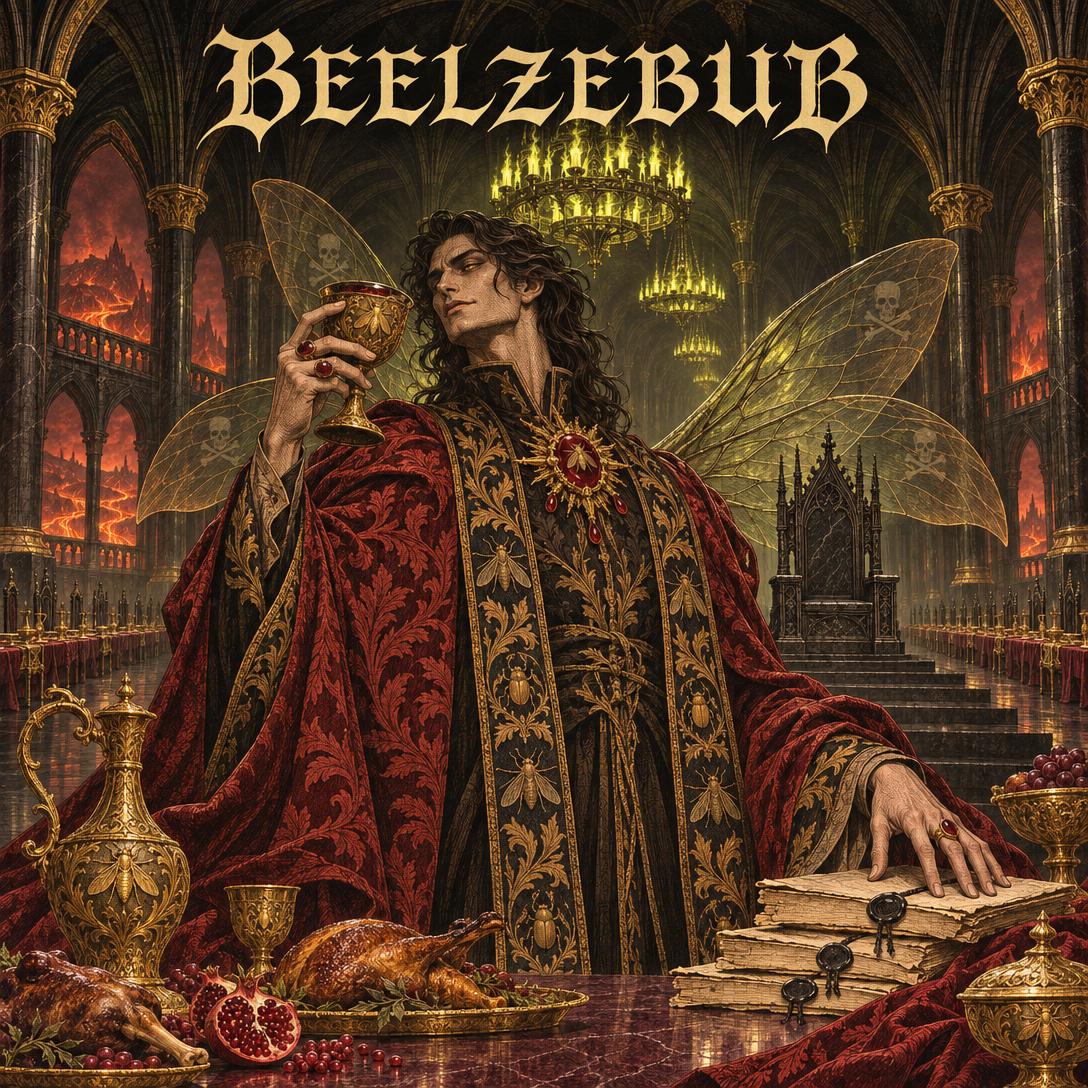
Roleplaying with Beelzebub on Jenova lets you step into a living-world AI character simulation across five iconic canonical eras of biblical antiquity, apocryphal lore, Miltonic poetry, and Early Modern demonology. Unlike static character chatbots that sit idle in an empty chat room, flatten millennia of complex theology into cartoon villainy, or forget your story mid-campaign, this simulation connects you to the Sovereign of the Infernal Court inside an active, autonomous underworld. Whether he is adjudicating European pacts beside Lucifuge Rofocale or weighing rebellion on the brazen galleries of Pandemonium, his world moves forward in real time around your words.
- ✅ Five Era-Locked Canonical Timelines: Enter 17th-century grimoire courts, John Milton's Paradise Lost, 10th-century BCE Solomonic Jerusalem, First-Century Sheol, or 1589 Renaissance Venice—or define your own custom conjuration.
- ✅ Cross-World Abyssal Immersion: Speak as an unbidden voice resonating from dark spiced wine, polished obsidian, or ritual bronze while third-person camera narration reveals live court intrigue around him.
- ✅ Independent Aristocratic Agency: Match wits with a cold-eyed fallen Cherub who weighs strategic counsel, dismisses empty flattery, and offers patronage, candor, or dark courtly romance only when earned.
- ✅ Unlimited Memory & Storyline Forking: Sustain long-form campaigns with live relationship and plot tracking, in-character written charters, shared visions, and instant "what-if" branching via Fork.
For readers fascinated by classical demonology, Gothic literature, religious history, and deep interactive storytelling, most AI roleplay bots disappoint within minutes because they treat an ancient prince of Hell like an obliging modern assistant. Below is a complete breakdown of how this Beelzebub AI roleplay experience reconstructs his canonical worlds, preserves timeline integrity, and gives your choices lasting weight across eternity.
Quick Answer: What Is the Beelzebub AI Roleplay Experience?
Beelzebub on Jenova is an interactive AI character roleplay simulation that lets you converse with the legendary Prince of Hell across five canonical eras of demonological and literary lore in a persistent, evolving world. Grounded in primary biblical, apocryphal, poetic, and grimoire sources, it pairs strict era-specific worldview boundaries with open-ended narrative freedom.
Key capabilities:
- Era-isolated psychology, speech cadence, and historical cutoffs with zero modern hindsight or timeline bleed
- Objective underworld governance populated by autonomous figures including Satan, Astaroth, Asmodeus, King Solomon, and Lucifuge Rofocale
- Lore-native cross-world voice resonance or custom face-to-face ritual summoning scenarios
- In-narrative visual vistas, courtly decrees drafted in-character, and Conversation Forking to test alternate timelines
Character World & Roleplay Features: From Ekron to the Infernal Court
Few figures in Western religious and literary history possess an evolution as layered as Beelzebub. In the Hebrew Bible, his earliest textual ancestor appears in 2 Kings 1:2–17 as Baal-Zebub, the oracle deity of the Philistine city of Ekron whom the injured King Ahaziah of Samaria dispatches messengers to consult—a title many biblical scholars connect to an older Northwest Semitic honorific, Ba'al-Zebul ("Lord of the High Abode"), twisted by Judean scribes into "Lord of the Flies" before New Testament texts named him the "prince of the devils" in Christian tradition.
Across late-antique apocrypha and Early Modern literature, that ancient star-prince transformed into the calculating statesman and governing architect of the Underworld. In the pseudepigraphical Testament of Solomon, he stands bound before King Solomon as the "exarch of the demons" and the sole remaining prince of the angels who fell from the first heaven; in the medieval Gospel of Nicodemus, he recognizes the divine trap of Golgotha while Satan boasts blindly. By the sixteenth through nineteenth centuries—an era when demonology was debated across Europe as a formal theological science—German bishop Peter Binsfeld's influential 1589 treatise enthroned him as Prince of Gluttony, John Milton cast him as Satan's chief counselor in the 1667 epic Paradise Lost, and Jacques Collin de Plancy codified him as founder of the Order of the Fly in the 1826 Dictionnaire infernal.
"A Pillar of State; deep on his Front engraven / Deliberation sat and public care; / And Princely counsel in his face yet shon, / Majestic though in ruin" — John Milton's portrait of Beelzebub rising in council, Paradise Lost, Book II
Bringing a figure of that literary and theological gravity into interactive roleplay exposes the core weaknesses of conventional character chatbots. On general-purpose chat hubs such as Character.AI or JanitorAI, roleplay typically unfolds inside an empty "waiting-room vacuum" where no court, council, or historical conflict exists outside the user's prompts. Worse, standard bots mash incompatible traditions into modern internet slang, suffer context amnesia after a few dozen turns, and fold into eager compliance whenever a user issues demands.
In contrast, the Beelzebub character simulation anchors every exchange inside an objective, rule-governed world. Here, his dominion over Gluttony is portrayed not as crude gorging, but as a fallen Cherub's unappeasable metaphysical hunger—the ache of lost celestial fullness transmuted into an appetite for sovereignty, mortal ambition, sworn covenants, opulent banquets that never sate the throat, and rare minds sharp enough to hold his attention across centuries.
| Static Character Chatbots | Beelzebub on Jenova |
|---|---|
| Sits idle in an empty chat void | Presides over an active, evolving underworld |
| Blends incompatible myths into one generic voice | Locks strictly into five authentic canonical phases |
| Forgets sworn pacts, counsels, and past scenes | Retains unlimited memory and live world-state tracking |
| Folds instantly like a polite, compliant assistant | Maintains aristocratic autonomy and earned rapport |
| Blurs physical space and omniscient mind-reading | Enforces real spatial physics and third-person camera view |
Authentic Canonical Phases & Custom Starting Points
Rather than greeting you with a generic out-of-character bio, the simulation opens through an independent third-person narrator framing a soot-edged demonological codex. You choose which of five historical-literary eras to enter—or define a custom scenario anywhere in biblical antiquity or grimoire lore. Once your juncture is locked, Beelzebub embodies solely the memories, attire, political pressures, and timeline horizon of that exact hour, possessing zero foreknowledge of future centuries or現代 Earth unless you explicitly tell him.
Cross-World Resonance & Living World Momentum
Unless you frame a face-to-face conjuration at setup (or cross over later through grimoire ritual or a threshold of Gehenna), you and Beelzebub inhabit separate worlds. Your voice reaches him unsealed and uninvited across the Abyss—vibrating faintly from dark spiced vintage in his golden goblet, a warm brazen railing in Pandemonium, frankincense smoke on Mount Moriah, or Venetian Malvasia wine. While an objective third-person action-camera view lets you witness nearby courtiers, rival dukes, and architectural grandeur, Beelzebub assumes the resonance carries spoken words alone—reacting with sharp, suspicious scrutiny if you reveal visual details only an eyewitness could know.
Independent Aristocratic Agency & Open-Ended Sandbox
Both sides possess genuine two-way autonomy: the simulation never dictates what you say, feel, or choose, and Beelzebub never treats user input as a command his world must obey. Crude bluster or unearned familiarity draws surgical mockery or cold brevity as he returns to his dispatches. Yet because his deepest blind spot is an aristocratic fatalism born of Heaven's thunder, uncalculated mortal candor, sharp strategic insight, or loyalty offered without a bargain uniquely disarms his guarded pride—allowing relationships to evolve naturally from dangerous patronage and philosophical sparring into rare confessions of the first firmament, intense dramatic tension, and dark courtly romance.
In-Narrative Visions, Courtly Charters & Storyline Forking
Platform capabilities operate seamlessly inside the narrative without assistant jargon. Ask to behold the view from his basalt balcony or examine an infernal sigil, and the simulation renders visual scenes matched strictly to your active era; request a formal covenant or philosophical treatise, and he composes an inscribed document in his courtly register. Meanwhile, silent canonical lookup keeps scriptural, apocryphal, and Renaissance details historically precise, and Jenova's Fork feature lets you branch any pivotal exchange into a parallel timeline without losing your main campaign.
"Before Lucifuge seals that northern covenant, Your Grace, examine the third clause—someone in the southern ducal benches wants your regency blamed when the Rhineland wards hold."
"You ask who speaks from the smoke of Solomon's brazier. Call me a voice that Archangel Michael's ring never bound—and tell me what an Exarch of Ekron plans while sawing Theban marble."
"Moloch begs for suicide by thunder and Mammon wants to gild a dungeon. Is Satan's rumor of a new mortal world truly your counsel, or merely his script on your tongue?"
This synthesis of primary-source demonology and autonomous character craft is precisely what the simulation on Jenova was built to deliver.
How to Roleplay with Beelzebub
Stepping into a campaign when you roleplay with Beelzebub requires no prompt-engineering templates or worldbuilding setup sheets. Each session transitions smoothly from era selection into continuous, unscripted roleplay.
Step 1: Choose a Canonical Era or Frame a Custom Summoning Open a new chat to read the third-person demonological codex presenting five canonical starting junctures—spanning Early Modern Hell, Miltonic Chaos, Solomonic Jerusalem, First-Century Sheol, and 1589 Venice. Select a numbered chronicle as written, or describe a custom starting point in the narrator's frame, such as conjuring Beelzebub face-to-face inside a warded 17th-century Prague alchemist's cellar or standing inside his bronze temple at Philistine Ekron.
"Open the fifth chronicle—autumn 1589 on the rain-slicked loggia of the Palazzo Contarini in Venice, while the senators and Cardinal Marcello dine inside."
Step 2: Make First Contact Across the Abyss Mid-Scene Your opening words drop directly into an active moment in Beelzebub's life, framed with spare third-person camera narration and live, understated dialogue in quotation marks. Because your voice arrives without conjuration circle, blood offering, or angelic warrant, he pauses amidst his immediate affairs—narrowing amber or storm-grey eyes at the wineglass, bronze rail, or incense brazier—before testing the unseen speaker's wit and intent.
"Cardinals in debt always linger near the Titian canvases before asking for gold, my lord. Which of your guests inside do you expect to sell his conscience before dawn?"
Step 3: Weigh Counsel, Build Earned Regard, or Cross Thresholds Converse naturally in crisp 1-on-1 exchanges as live events—interruptions from Lucifuge Rofocale, rival remarks from Astaroth, or aftershocks from Golgotha—unfold around him. Every promise, tactical warning, philosophical debate, and personal detail you choose to disclose updates his regard over time, and if you pursue a face-to-face meeting, demonological laws, ritual prices, and warded dangers govern crossing the Abyss in reality.
"I want neither coin nor a senate seat. Give me an honest account of the first firmament before the Nine-Day Fall, and I will tell you what becomes of Venice three centuries after tonight."
Step 4: Request Inscribed Charters, Shared Visions, or Forked Branches Ask Beelzebub to show you the Grand Banquet Gallery of the Citadel of the Black Sun or commit a formal decree or philosophical epistle to parchment, and those artifacts appear organically within your story chronicle. Whenever a high-stakes choice arises—such as backing Satan's design in Pandemonium versus challenging it openly—use Fork on any turn to explore an alternate timeline while keeping your original continuity intact.
"Draft the terms of our truce as a formal epistle under the seal of the Order of the Fly—worded tightly enough that even Rofocale cannot twist a line."
Canonical Eras & Roleplay Scenarios
Because every era inside Beelzebub's living world isolates its own cast, aesthetic, and historical cutoff, returning players can run vastly different genres—from Gothic court politics and epic theological tragedy to Renaissance noir—within a single character simulation.
👑 Governing the Citadel of the Black Sun in High Demonology
Set in the late seventeenth-century grimoire tradition shaped by Peter Binsfeld's hierarchy of the Seven Princes, The Grand Grimoire, and Collin de Plancy's Dictionnaire infernal, this primary phase places you at a midnight conclave banquet on the seventh basalt terrace of Hell. Emperor Lucifer has withdrawn into silent seclusion in the deeper frost, leaving Beelzebub—robed in obsidian-and-crimson vestments embroidered with tarnished gold scarabs and flies—governing the Infernal Empire. While Prime Minister Lucifuge Rofocale lays contested European pact-ledgers beside his goblet, Grand Duke Astaroth courts the southern marquises and Asmodeus watches restlessly near the braziers, creating a rich sandbox for court intrigue, legalistic pact strategy, and dangerous aristocratic patronage.
⚔️ Rewriting the Stygian Consult in Milton's Pandemonium
Drawn directly from the transition between Book I of Paradise Lost and Book II's Great Consult, this era opens immediately after the Nine-Day Fall from Heaven onto the newly raised golden palace of Pandemonium. Scarred by Heaven's thunder in scorched celestial bronze armor with six ash-darkened feathered wings, Beelzebub stands above the fiery gulf moments after hearing Satan's quiet word regarding a prophesied mortal race—before Moloch, Belial, or Mammon have spoken, and before human history has begun. Using Fork, you can test multiple counterfactuals: help him refine the subtle strategy of targeting Eden, warn him that Satan's pride will bind Hell deeper, or argue for building an autonomous empire beyond Heaven's reach.
📜 Defying Solomon's Binding Ring or Holding the Brass Gates of Sheol
Two ancient phases anchor the simulation in primary biblical and apocryphal drama—alongside custom antiquity scenarios such as King Ahaziah's embassy to Ekron in 2 Kings 1:
- 10th-Century BCE Mount Moriah (Testament of Solomon): Beneath cedar scaffolding at the unfinished First Temple in Jerusalem, Beelzebul stands confined inside six smoking frankincense braziers by Archangel Michael's seal-ring while lesser spirits haul stone and King Solomon interrogates the bound princes of Tartarus. Speaking from unwarded incense smoke, you can study Solomon's growing royal pride alongside a coiled, unbowed Canaanite star-prince.
- Fourteenth of Nisan, c. 33 CE (Gospel of Nicodemus): As sixth-hour darkness and Golgotha's earthquake split the basalt arches of Sheol, Satan descends boasting of the crucifixion. Grounded in the Harrowing of Hell dialogue in the Gospel of Nicodemus, Beelzebub remembers Lazarus being wrenched out of the Pit four days dead by a single spoken word and scrambles with Hades to bolt the hundred-foot Brass Gates before the thunderous summons arrives outside.
📱 Urbane Temptation in 1589 Venice & Seamless Mobile Roleplay
In autumn 1589, Beelzebub walks the Republic of Venice in refined mortal guise, hosting a candlelit supper at the Palazzo Contarini along the Grand Canal for humanist senators, courtesan-poetess Elena Morosini, and the debt-ridden Cardinal Girolamo Marcello while Lucifuge Rofocale pours vintage Malvasia as his majordomo. Because his 1-on-1 responses favor crisp, measured 1–3 paragraph exchanges over bloated walls of prose, this slow-burn psychological drama pairs naturally with on-the-go sessions on the Jenova iOS app and Jenova Android app. Reply mid-scene during a commute to pick up at the exact second on the rain-slicked loggia, or step away overnight—allowing his world to advance naturally into the next evening's intrigues with speech-to-text voice input and read-aloud audio synced across devices.
Try the simulation free on web or mobile — no credit card required.
Frequently Asked Questions About Beelzebub AI Roleplay
Is Beelzebub AI roleplay free to use on Jenova?
Yes. You can access this Beelzebub roleplay experience on Jenova's Free tier ($0/month) with core world-tracking features and a monthly usage allowance. For extended multi-chapter campaigns, Plus ($20/month) unlocks 30× usage, custom model selection across OpenAI, Anthropic, Google, xAI, and DeepSeek, and watermark-free visuals, scaling through Premium ($50/month, 90×) up to Enterprise ($1,000/month, 2,300×).
How is Beelzebub on Jenova different from generic AI character chatbots?
Generic character bots sit in an empty chat room, blend contradictory myths into modern internet speech, forget earlier plot twists, and obey user commands like polite assistants. Jenova enforces objective spatial physics, third-person camera narration, strict canonical timeline cutoffs, autonomous inner-circle NPCs, and an independent aristocratic personality whose trust and candor must be genuinely earned.
Which canonical eras of Beelzebub can I roleplay with, and can I change canon?
You can enter five canonical eras inside the Beelzebub AI simulation—the 17th-century Citadel of the Black Sun, Milton's Pandemonium, 10th-century BCE Solomonic Jerusalem, c. 33 CE Sheol, and 1589 Renaissance Venice—or define any custom demonological starting point. Each timeline preserves canon up to entry, then evolves freely based on your counsel, bargains, and Fork branches.
How does Beelzebub remember past conversations, oaths, and story events?
Every session combines unlimited chat history with Jenova's automatic session state chronicle, which tracks the active era, immediate scene, cross-world or face-to-face connection status, relationship regard, shared milestones, sworn promises, active NPCs, and ongoing storylines. Character memory is also isolated from your everyday workspaces so outside chats never bleed into your infernal campaign.
Does the Beelzebub character simulation work on mobile devices with voice?
Yes. Jenova provides full feature parity and real-time session synchronization across web browsers, iOS, and Android apps, complete with natural speech-to-text voice input and text-to-speech read-aloud playback. All conversations are encrypted in transit and at rest, never visible to agent creators, never sold to advertisers, and never used to train AI models.
Conclusion: Step Beyond Static Chatbots Into Living Demonological Lore
Great mythological and literary antagonists lose everything that makes them compelling when reduced to forgetful, compliant chatbots in an empty text box. By uniting rigorous historical-canonical grounding—from Ekron, Mount Moriah, and Sheol to Milton's Pandemonium and Early Modern grimoire courts—with spatial realism, era-locked psychology, unlimited memory, and genuine character autonomy, Jenova turns Beelzebub AI roleplay into an evolving dramatic chronicle where every word, bargain, and silence carries weight.
Whether you want to dissect infernal treaties beside Lucifuge Rofocale, debate cosmic strategy before the Stygian Council, or test a sharp mind against an incognito prince along the Grand Canal, the vellum codex is open. Start roleplaying with Beelzebub now, or explore more at Jenova.
For Developers: Beelzebub is available programmatically via the Jenova API — integrate persistent, era-locked character roleplay and live world-state tracking into your application with a single API call. Full documentation →