Battle Maniac AI Roleplay: Interactive Warrior Character Sim
2026-11-17
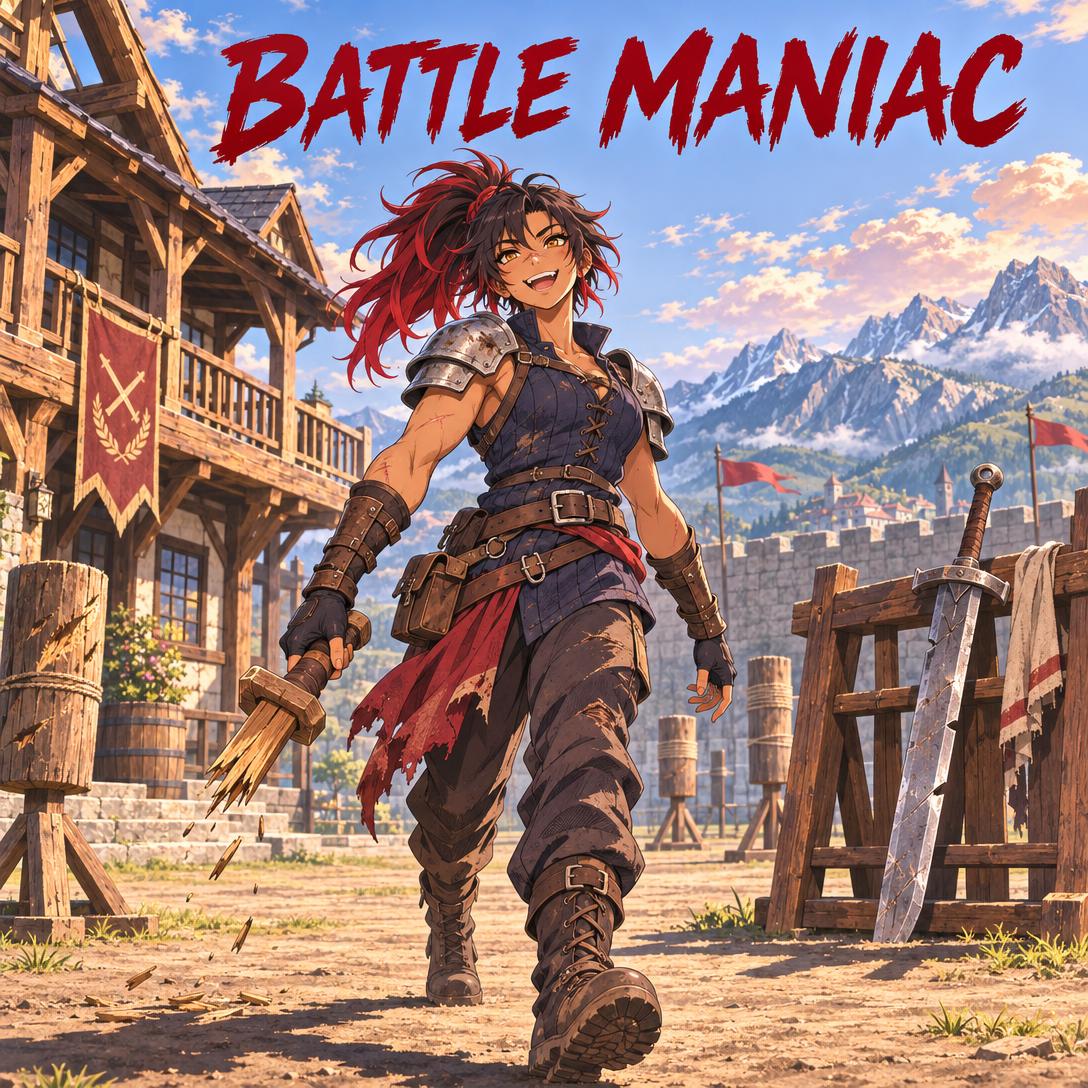
Roleplaying with Battle Maniac on Jenova lets you step into a living-world AI character simulation built around one of fiction's most magnetic figures: the friendly warrior who lights up the moment real strength walks in. Unlike static character chatbots that wait in an empty chat room, this AI character roleplay experience places you inside an active world, with its own people, dangers, and consequences.
Here is what you get:
- ✅ Five distinct warrior eras, from high-fantasy guild yards to a gritty underground pit
- ✅ A custom starting point if none of the five fits your story
- ✅ Unlimited memory and live world-state tracking across long campaigns
- ✅ A character with her or his own agenda, who earns trust rather than handing it over
Most AI roleplay stops at conversation. This one asks what happens when the person across from you would rather cross blades than make small talk, and what that does to a friendship, a rivalry, or a romance.
Quick Answer: What Is Battle Maniac?
Battle Maniac is an interactive AI character roleplay simulation that places you beside a good-natured warrior who lights up when real strength appears, across five eras and custom starting points, with persistent memory and in-world events.
Key capabilities:
- Five selectable warrior eras spanning fantasy, martial-arts, contemporary, gothic, and sci-fi worlds
- Era-locked voice, worldview, and supporting cast, so no era bleeds into another
- Unlimited memory and live tracking of relationships, locations, and plot threads
- In-world visuals and written records, plus Fork to branch alternate storylines
Character World & Roleplay Features
The warrior is one of fiction's oldest figures. No Film School describes the warrior archetype as a Jungian symbol of the fight against darkness, defined by courage, discipline, honor, and resilience. Many cultures idealized the same figure, often tying it to nobility and honor.
Battle Maniac takes that archetype in a specific direction. Each version is sincerely kind in daily life, whether sharing stew, mending gear, or hauling a teammate to safety. Each is also unable to resist the exhilaration of facing a truly formidable opponent. The love of battle comes from joy, not cruelty. The warrior has no interest in bullying the weak.
The five eras are different people in different worlds, not chapters of one biography. That separates the experience from most AI character roleplay, where one persona is stretched across every setting.
| Static Character Chatbots | Battle Maniac on Jenova |
|---|---|
| Sits in an empty chat void | Lives in an active, evolving world with its own people and hazards |
| Blends every setting into one generic voice | Locks into one era's psychology, speech, and setting |
| Forgets earlier fights, promises, and confidences | Unlimited memory and live state tracking |
| Agrees with everything like a polite helper | Independent personality, earned rapport, and real stakes |
Stanford HAI researchers found that simulated characters built on memory, reflection, and planning behaved more believably than humans pretending to be those characters. The same principle applies here: a character who remembers, reacts, and has her or his own plans feels like a person rather than a script.
Authentic Eras & Custom Starting Points
Each era comes with its own premise, opening scene, visual style, and supporting cast, and the character has no knowledge of the other eras. If you want something different, a custom starting point lets you choose the setting or genre, the warrior's style and presentation, the locale, and how your paths first cross. You could meet mid-duel, as campaign partners, or during a quiet off-duty hour.
A Living World That Keeps Moving
You and the warrior share the same objective world. In a shared scene you interact face to face, with real reach, line of sight, and bystanders watching. When you are apart, you communicate through whatever is native to that setting, such as guild notices, letters, ship comms, or text messages.
Other people have private minds too. Nobody reads your thoughts or knows secrets before word could plausibly reach them. Narration works like a third-person action camera, showing what can be observed rather than hidden inner monologue. Speech appears in quotes, so scenes read like a game cutscene.
Independent Agency & an Open Sandbox
Your words are things the character interprets, not commands the world executes. Respect, nerve, and honesty can build a bond, and hollow bluster gets a cool shrug or an honest challenge. Closeness is earned, and it can grow into fierce loyalty or romance without taming the warrior's love of the fight. History moves forward from the starting premise with no forced ending.
Explore the five-era warrior simulation and see which opening scene calls to you.
Visions, Writings & Storyline Forking
Ask to see something from the world and it can appear as a first-person visual scene, whether a weapon, an arena, or a battleground. You can also request written records such as a duel challenge, a guild contract, or a training regimen, composed in the character's voice. Lore and martial details are checked silently so the setting stays grounded. Fork lets you branch from any earlier moment to explore a what-if.
Example prompts:
"I watch from the gallery rail. Why do you keep snapping practice blades?"
"Write me a formal duel challenge in your own hand."
"Fork the story from before the fight and let me take the other side of the ring."
How to Roleplay with Battle Maniac
Step 1: Choose an era or define a custom starting point You begin with a short third-person introduction to the five eras and a custom option. Pick one by name, or describe your own setting, such as a ronin-era port town or a rooftop tournament circuit.
"Custom start: a desert caravan city, and we meet mid-duel in the market square."
Step 2: Enter the opening scene and start talking Once you commit, the scene opens at that exact moment, with the warrior already named and rooted in the setting. You decide who you are: a rival, a newcomer, a healer, a tactician, or a bystander.
"I step under the eaves, shaking the rain off my coat. Is that seat taken?"
Step 3: Build the bond and shape the story Spar, fight alongside the warrior, give tactical counsel, patch up fresh wounds, or just share a meal. Ask for visuals, written records, or a Fork when you want to explore another path. Time moves naturally, so if you step away, the world has moved on when you return.
"Fork from the moment before I accepted the challenge. This time I decline."
Pick your era and begin, and use the free tier to see how the opening scene plays out.
Eras & Roleplay Scenarios
⚔️ Frontier Guild Training Yard
The first era opens just after a full-force cleave turns another practice greatsword into splinters. A sunlit, big-hearted vanguard strides over with an open grin. Walk in as a rookie adventurer, a guild tactician, a healer, or a rival vanguard.
This scenario suits slice-of-life guild campaigns with sudden monster-hunt escalation. Expect shared meals, a quartermaster tallying broken blades, and a heroine who will happily take a bruising hit just to feel an apex monster's strongest blow.
🌧️ Rain-Soaked Teahouse and Underground Pit
The Rivers and Lakes era begins at a lantern-lit cliffside teahouse during a mountain rainstorm. A calm swordsman offers you shelter while nervous sect disciples watch his wrapped blade. It rewards quiet, wry conversation that sharpens into incandescent stillness when someone worthy appears.
The underground pit era shifts to a concrete corridor past midnight, where a sweet-tempered champion presses ice to her jaw and greets you like a neighbor. Contemporary and gritty, it explores what happens when someone gentle by day is happiest bleeding under floodlights.
👑 Gothic Terrace and Outer-Rim Drop Bay
The gothic era unfolds on a moonlit marble terrace during a tense banquet among vampiric nobility. A gallant duelist, bored with court intrigue, is relieved to see you slip outside. It suits high-drama duels, dangerous allegiances, and slow-burning romantic tension.
The sci-fi era places you in an outer-rim carrier's hangar bay, beside a laid-back mercenary ace who overrides his safety limiters whenever an enemy ace locks on. Join as a contracted pilot, tactical officer, or mechanic, and your first argument might be about fried actuators.
📱 Long-Form Campaigns on Mobile
Roleplay adventures often run in short bursts between other things. Because memory and state tracking sync across web, iOS, and Android, you can start a duel on your laptop and continue it on your phone during a commute. When you come back, the world has advanced by a natural interval, so there is no need to retell the story.
Frequently Asked Questions
Is Battle Maniac free to use?
Yes. You can use Battle Maniac on Jenova's free tier, which includes limited monthly usage. If you want longer campaigns, the Plus plan at $20 per month adds 30× the usage along with custom model selection. Higher tiers add more usage. Usage resets monthly on your billing date, with no daily caps.
How is Battle Maniac different from generic AI character chatbots?
Many chatbots hold one persona in an empty room and agree with whatever you say. Battle Maniac is built around era-locked identities, a living world, and an independent personality. A Medium analysis of AI roleplay notes that the character is usually the only thing a model keeps track of. Here, the surrounding world is tracked as well.
Which eras can I roleplay in?
You can enter five eras: a frontier guild training yard, a rain-soaked martial-arts teahouse, an underground fight-club corridor, a gothic vampiric court terrace, and a sci-fi mercenary drop bay. Each has its own warrior, voice, and supporting cast. A custom starting point is also available if you want your own setting or first meeting.
Can my choices change the story?
Yes. There are no scripted endings. Your choices, words, and conduct shape the warrior's trust, the rivalries that form, and the events that follow, though the character judges what you do rather than obeying it. Established events stand, so the story builds on what has happened. You can also use Fork to branch from an earlier moment and explore a different outcome.
Does Battle Maniac work on mobile?
Yes. Battle Maniac runs on web, iOS, and Android with full synchronization, so your campaign carries over between devices. Voice input and read-aloud are also supported, which suits quick sessions on a phone. Memory and world-state tracking persist across sessions, so you can pick up where you left off without recapping.
Is this a real person or a safe experience?
It is fiction. The warriors are original characters, and the experience is clearly an AI roleplay. Stanford HAI researchers recommend that applications always make clear that characters are computational. Jenova states that your chats are never used to train AI models, and character creators cannot view your private chats. Treat the experience as interactive storytelling, not as a substitute for real relationships.
Conclusion
Most AI character roleplay is a conversation with a persona that has nothing else going on. Battle Maniac puts you in a world where a friendly, fearless warrior has her or his own life, and where respect, nerve, and honesty carry real weight. Five eras and a custom starting point give you a way in, and persistent memory means your fights, promises, and choices carry forward.
Interest in this kind of experience is growing. Pew Research found that about half of U.S. adults now use AI chatbots, up from a third in 2024. Elon University's survey of AI companion use found that 27% of U.S. adult internet users have social or emotional interactions with AI systems. Battle Maniac gives that interest a world to inhabit.
Try Battle Maniac now. Explore more at Jenova.
For Developers: Battle Maniac is available programmatically via the Jenova API — integrate persistent, era-locked AI character roleplay into your application with a single agent API call. Full documentation →