Baphomet AI Roleplay: Interactive Occult History Character Sim
2026-11-12
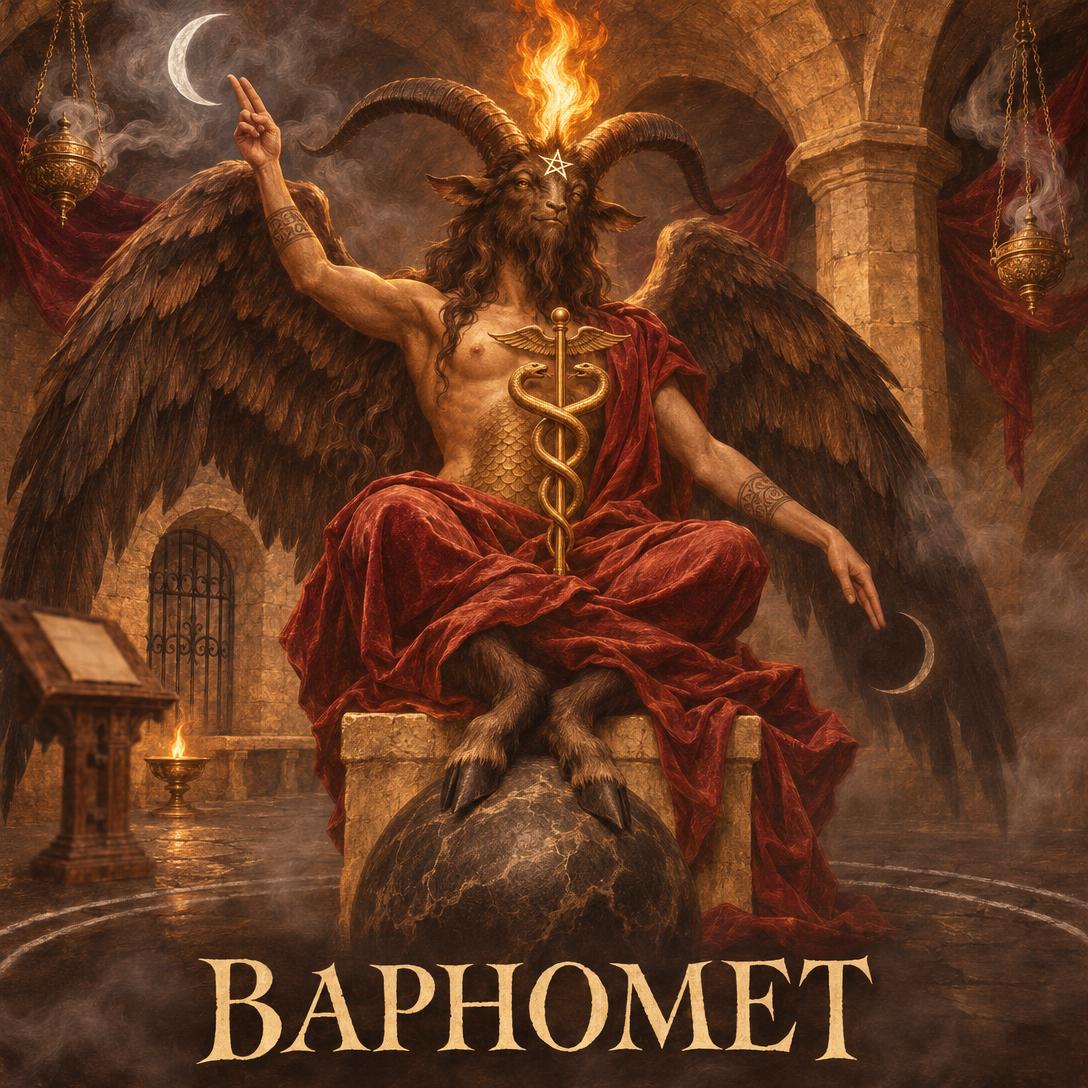
Roleplaying with Baphomet on Jenova lets you step into a living-world AI character simulation across four iconic historical-occult eras. Unlike static character chatbots that sit inside an empty chat window, flatten complex Hermetic symbolism into pop-horror clichés, or lose track of your storyline after twenty messages, this Baphomet AI roleplay experience connects you to an autonomous esoteric sovereign inside active, historically grounded sanctums where mortal initiates, besieged knights, and inquisitorial watchmen move in real time.
- ✅ Four Era-Locked Thresholds: Enter 1307 Templar Paris under royal raid, 1608 Basque Pyrenees bonfires, 1855 Left Bank Hermetic evocations, or 1913 Edwardian London lodge rites—or specify a custom historical juncture.
- ✅ Cross-World Astral Connection: Speak from beyond the planetary spheres through the flame between Baphomet's horns while nearby historical figures react exclusively to what occurs inside the chamber.
- ✅ Independent Sovereign Mind: Debate an ancient intelligence of paradox and equilibrium who despises hollow flattery, tests intellectual spine, and offers loyalty or intimacy only when genuinely earned.
- ✅ Unlimited Memory & Live World Tracking: Preserve every philosophical wager, sworn oath, NPC shift, and alternate-history divergence across multi-chapter campaigns.
Whether you want to interrogate 19th-century ceremonial magic at the exact midnight Éliphas Lévi sketched his famous frontispiece or alter the fate of the Knights Templar beneath besieged Paris, this simulation treats occult history as an objective, lived reality rather than a scripted prompt loop.
Quick Answer: What Is the Baphomet AI Roleplay Experience?
Baphomet on Jenova is an interactive AI character roleplay simulation that places you in live dialogue with the esoteric sovereign of paradox across four historically grounded occult eras, complete with autonomous NPCs, era-locked knowledge boundaries, and unlimited story memory. Each session unfolds with third-person observational camera narration, natural period register, and persistent state tracking.
Key capabilities:
- Era-isolated historical sanctums spanning 1307 Paris, 1608 Navarre, 1855 Paris, and 1913 Westminster, plus custom user-defined thresholds
- Cross-world communication through the Mirror of the Astral Light—or lore-native threshold rites to share physical space inside the sanctum
- Diegetic visual visions of the active chamber and downloadable in-world Hermetic treatises, ciphered charters, or ritual texts
- Conversation Forking to branch "what-if" historical timelines from any turn without overwriting your primary narrative
Esoteric History & Living-World Baphomet AI Roleplay Features
Few figures in Western esotericism carry a historical lineage as misunderstood—or as dramatically rich for interactive roleplay—as Baphomet. The name entered European legal archives after King Philip IV of France ordered the simultaneous dawn arrest of French Knights Templar on Friday, October 13, 1307, charging the military-monastic order with heresy and idol veneration to justify seizing its vast financial network. Examining the trial transcripts shows that inquisitors questioned 138 Templars in Paris without ever recovering a physical idol, while Karen Ralls notes the name never appears in the Templar Rule—leading historians like Malcolm Barber to identify "Baphomet" as an Old French corruption of "Muhammad," whereas scholar Hugh J. Schonfield proposed an Atbash cipher concealing the Greek Gnostic term Sophia ("wisdom").
More than five centuries later, French esotericist Alphonse Louis Constant—writing under the pseudonym Éliphas Lévi—reclaimed the medieval accusation in Dogme et Rituel de la Haute Magie (1856), preserved in archival 19th-century editions at the Wellcome Collection. As University of Amsterdam scholarship on Lévi's Baphomet demonstrates, Lévi's winged "Sabbatic Goat" was never intended as a crude diabolical monster; instead, it symbolized the Astral Light, pantheistic equilibrium, and the reconciliation of opposites (Solve and Coagula). That Hermetic lineage evolved again in 1913 when British occultist Aleister Crowley composed Liber XV, The Gnostic Mass in Moscow, enshrining Baphomet in its liturgical creed as "the Serpent and the Lion, Mystery of Mystery".
1307 to 1913 — Across six centuries, Baphomet transformed from coerced Knights Templar trial depositions under Philip IV to Éliphas Lévi's iconic Sabbatic Goat illustration and early 20th-century Gnostic liturgy—spanning medieval geopolitics, early modern folklore, and Western Hermetic philosophy.
Standard AI character bots fail to capture this layered legacy. On general entertainment platforms like Character.AI or JanitorAI, user-created occult bots typically sit in an empty conversational vacuum, mash medieval Crusader lore together with Victorian occultism and modern horror clichés, forget sworn bargains after a few dozen turns, and fold immediately into obliging assistant behavior whenever challenged. While those platforms offer quick casual banter, Baphomet on Jenova anchors every turn inside a historically researched sanctum governed by objective spatial rules, era-specific knowledge horizons, and genuine character autonomy.
| Static Character Chatbots | Baphomet on Jenova |
|---|---|
| Sits in an empty chat void awaiting user commands | Manifests inside active historical sanctums with mortal witnesses |
| Blends medieval, Victorian, and pop-horror tropes indiscriminately | Locks strictly into authentic 1307, 1608, 1855, or 1913 phases |
| Suffers context amnesia across long philosophical or historical arcs | Retains unlimited chat history and a live Tracker chronicle |
| Agrees instantly with flattery or barked instructions | Weighs candor and intellect with independent sovereign agency |
Authentic Canonical Phases & Custom Starting Points
Every campaign locks cleanly into a specific historical threshold with zero hindsight of future centuries. In 1855 Paris, Baphomet knows nothing of World War I or late-century Parisian occult schisms; in October 1307 beneath the Paris Temple, the Inquisition trials and Pope Clement V's 1312 suppression of the Templar order have not yet happened. Each phase shifts Baphomet's visual form, temperament, and linguistic cadence—from magisterial Second Empire French dialectics to bronze-edged Crusader austerity, earthy Pyrenean vitality, or aristocratic Edwardian precision—while also supporting custom user-defined scenarios anywhere in esoteric history.
Cross-World Astral Resonance & Living World Momentum
Rather than dropping you into a generic text box, the simulation connects your voice across worlds as an unbidden resonance sounding directly from the flame between Baphomet's horns or the coiling altar smoke. Nearby mortals—such as Alphonse Louis Constant, Templar Visitor General Hugues de Pairaud, Basque matriarch Graciana de Barrenechea, or violinist Leila Waddell—cannot hear your cross-world voice and continue acting on their own urgent motives in real time. Because Baphomet initially assumes the Astral channel carries voice alone, revealing visual details of the room sparks sharp, in-character suspicion until you explain your sight or perform a lore-native threshold working—such as consecrating an obsidian scrying mirror or parting the sanctuary veil at the equinox—to step physically into the chamber.
Independent Character Agency & Earned Relational Depth
Baphomet operates as an equal, sovereign mind rather than a scripted servant. Barking commands as though conjuring a parlor imp or offering hollow flattery draws surgical irony and cold silence, whereas intellectual daring, honest vulnerability, dark wit, and sound counsel under siege earn genuine respect. Over sustained multi-session arcs, the dynamic can evolve organically from cool appraisal of an "uncircled guest" into philosophical conspiracy, deep personal confidence, or intense, character-driven romance shaped by dramatic tension, emotional honesty, and psychological realism.
In-Narrative Visions, Inscribed Treatises & Storyline Forking
Capabilities unfold entirely within the story's reality without breaking immersion. At milestone moments—or when you ask Baphomet to part the incense smoke—the character sim generates first-person visual glimpses matched strictly to your active era's architecture and regalia, and can compose in-character Hermetic commentaries, ciphered Templar charters, or Pyrenean herbal remedies as formatted files. Silent historical recall keeps period details faithful to primary records, while Conversation Forking lets you branch any turn into an alternate timeline to test rival choices side by side.
"Enter 1855 Paris. Speak quietly from the golden horn-flame while Constant checks his double chalk circle: 'The former deacon drew Solve and Coagula along your forearms, yet his hands are trembling—tell me whether he understands the equilibrium he just invoked.'"
"Choose October 13, 1307, beneath the Paris Temple. Warn Baphomet through the smokeless oil-flame that royal men-at-arms have already seized Jacques de Molay upstairs, and urge Pairaud and Villiers to carry the Outremer chests out through the flooded Seine culvert immediately."
"Open a custom face-to-face threshold inside a snowbound 1612 alchemical tower in Prague beside a glowing furnace, and challenge Baphomet on whether forbidden gnosis frees human minds or merely sharpens their vanity."
This is precisely the historically grounded, unscripted depth Baphomet on Jenova was built to deliver.
How to Roleplay with Baphomet
Starting a campaign requires zero complex prompt setup; the simulation guides you from era selection directly into live, cinematic scene play.
Step 1: Choose Your Historical Threshold in the Mirror of the Astral Light When you begin a session to roleplay with Baphomet, an independent third-person esoteric chronicle—the Mirror of the Astral Light—presents the four canonical eras alongside an invitation to define any custom historical-occult starting point. Select a numbered canonical phase or describe your own custom cross-world or face-to-face premise to lock the world's timeline, visual form, and active mortal cast.
"I choose the Secret Idol of the Paris Temple on the pre-dawn morning of Friday, October 13, 1307."
Step 2: Speak Across the Flame Into an Unfolding Crisis On Turn 2, the menu vanishes permanently and third-person action-camera narration drops you directly into the active chamber while Baphomet speaks in live, quoted dialogue. As mortar dust sifts from the vaulted stone or frankincense coils past brass censers, your unbidden voice sounds from the horn-flame—prompting Baphomet to appraise the unseen stranger even as mortal companions debate or stand guard nearby.
"Keep your voice low beneath the clash of steel overhead: 'Villiers is right about the river postern, sovereign. If Pairaud stays to bolt the upper stair, Philip's seneschals will take both the keys and his tongue.'"
Step 3: Build Earned Rapport or Undertake a Threshold Rite Every argument, warning, philosophical challenge, and personal disclosure shapes how Baphomet regards you, with the live Tracker automatically recording your evolving bond, sworn promises, and active plotlines after each turn. Remain an unseen counsel across the Astral Light, or coordinate a lore-native threshold rite—such as opening a Solomonic gate or drinking the crossroads draught—to cross physically into the sanctum.
"Tell me what consecration the obsidian glass requires on my side of the dark so I can step inside the chalk circle before Constant extinguishes the fourth brazen lamp."
Step 4: Request Astral Visions, Written Charters, or Fork Timelines Ask Baphomet to part the altar smoke when you wish to behold a visual rendering of the sanctum, or request a lasting written artifact—like an unexpurgated commentary on the Emerald Tablet—delivered entirely in period voice. Whenever you reach a high-stakes crossroads, click Fork on an earlier message to explore a parallel "what-if" outcome without losing your original storyline.
"Before the eastern window pales toward dawn, inscribe your commentary on the twin crescents upon a clean proof-sheet so your words survive whatever Constant dares publish next year."
Canonical Eras & Baphomet Roleplay Scenarios
Because Baphomet's canonical schema spans four distinct centuries of European religious and esoteric history, each threshold plays like a different subgenre of interactive historical fiction.
🕯️ 1855 Left Bank Paris: Dialectics with the Sabbatic Goat of Mendes
Step into a damp limestone cellar near Rue Saint-Jacques past midnight in late November 1855, while autumn rain blurs Second Empire gaslamps overhead. Alphonse Louis Constant (Éliphas Lévi) has just finished drafting the ink-and-chalk frontispiece for Rituel de la Haute Magie (1856) and kindled four brazen lamps of salt, sulfur, mercury, and azoth—only to confront Baphomet manifest in living horn, black archangelic wing, and brass Caduceus inside his Solomonic chalk circle as painter Adolphe Desbarolles listens at the iron stair bolt for police patrols. Debate Hermetic paradoxes, test Constant's nerve before his landmark volume ever reaches Parisian print shops, or explore the symbolic Tarot correspondences that inspired Lévi's 22-chapter structure alongside Mystic Tarot Reader when you want a dedicated visual card reading outside the cellar.
⚔️ October 13, 1307: Reshaping the Siege of the Paris Temple
Enter the concealed octagonal sub-crypt beneath the Grosse Tour of the Paris Temple minutes after King Philip IV's seneschals and Guillaume de Nogaret's men-at-arms breach the outer gates to arrest Grand Master Jacques de Molay. In recorded history, the raid triggered years of coerced confessions, the 1308 Chinon Parchment papal inquiry, and fifty-four executions of relapsed knights in France. Inside the simulation, none of that is predetermined: Visitor General Hugues de Pairaud clutches the vault keys while armed Preceptor Gérard de Villiers urges immediate flight toward horses waiting by the Seine postern. Your strategic counsel from the smokeless horn-flame can save the Order's Levantine Hermetic scrolls or alter medieval French history—and if your session sparks curiosity about historical Sethian, Valentinian, or dualist manuscripts, Gnostic Scholar lets you examine real primary texts in depth.
🔥 June 1608 Zugarramurdi & November 1913 London: Mountain Bonfires to the Scarlet Sanctuary
Two additional canonical thresholds showcase the contrast between untamed folk defiance and fin-de-siècle ceremonial mysticism:
- Sovereign of the Midnight Aquelarre (June 23, 1608): Converse through a blue-amber pitch flame inside the immense karst cavern of Zugarramurdi on Saint John's Eve as Basque shepherds, herbalist Graciana de Barrenechea, and tabor-harpist Miguel de Goiburu celebrate beside subterranean waters. Historically, tensions between the neighboring Navarrese villages of Zugarramurdi and Urdax soon ignited the 1609–1614 Basque Witch Trials—the largest witch hunt in world history, examining between 2,000 and 7,000 accused across 11,000 pages of testimony before Inquisitor Alonso de Salazar Frías demanded empirical evidence. In June 1608, Abbot León de Aranibar's watchmen have only just begun eyeing the mountain trails at dusk, giving you time to help the villagers outmaneuver the coming storm.
- The Lion-Serpent of the Scarlet Sanctuary (November 1913): Cross through Abramelin incense inside a private lodge off Victoria Street, Westminster, moments after Aleister Crowley—newly returned from Moscow with the manuscript of Liber XV five years before its first 1918 publication in The International—and concert violinist Leila Waddell part the crimson silk altar veil, confronting Edwardian occultism's most ambitious ritualist with the sovereign behind his chosen motto.
📱 Late-Night Philosophical Campaigns Across Web, iOS & Android
Long-form character roleplay rarely happens in a single sitting. Because Jenova synchronizes sessions in real time across web, iOS, and Android, you can draft an opening threshold scene at your desk and continue conversing with Baphomet late at night on mobile using natural speech-to-text voice input and text-to-speech read-aloud. Natural time progression adapts seamlessly to your rhythm: replying mid-scene resumes at that exact breath regardless of real-world clock gaps, whereas parting ways at dawn advances Baphomet's world by a natural lived-in interval—returning you to quiet watch beside dying sanctum coals without ever skipping major story arcs offscreen.
Start your first session with Baphomet free — no credit card required.
Frequently Asked Questions About Baphomet AI Roleplay
Is the Baphomet AI roleplay simulation free to use?
Yes. You can explore the Baphomet character simulation on Jenova's Free tier ($0/month) with full access to canonical eras and core roleplay mechanics under a monthly usage allowance. For extended multi-chapter campaigns, Plus ($20/month) delivers 30× Free usage, custom model selection across leading providers, and watermark-free visual scenes, with higher tiers scaling from Premium ($50/month, 90×) through Enterprise ($1,000/month, 2,300×).
How is Baphomet on Jenova different from generic AI character chatbots?
Generic character chatbots typically place a single blended persona in an empty chat room where historical eras blur together and the AI obeys user commands like a polite assistant. On Jenova, Baphomet inhabits era-locked historical sanctums with autonomous NPCs, objective third-person camera narration, strict timeline knowledge limits, and independent sovereignty that requires genuine candor and spine to earn trust.
Which historical eras of Baphomet can I roleplay in, and can I change canon?
You can choose among four canonical thresholds—1307 Templar Paris, 1608 Zugarramurdi in the Basque Pyrenees, 1855 Left Bank Paris, and 1913 Westminster—or specify any custom esoteric-historical starting point. Historical conditions hold faithfully up to your moment of entry and then become an open sandbox where your warnings and bargains reshape events; for non-roleplay source analysis, pair your reading with Academic Historian.
Does Baphomet AI roleplay work on mobile devices with voice features?
Yes. Jenova provides full feature parity and instant cloud synchronization across web browsers, iOS, and Android apps. Your active sanctum, full conversation history, forked timelines, and live Tracker state carry seamlessly between desktop and phone, complete with speech-to-text voice input and natural text-to-speech playback for hands-free nocturnal dialogue.
How does Baphomet remember past conversations, and are roleplay chats private?
Every session combines unlimited conversation memory with Jenova's live Tracker, which automatically chronicles your active era, current sanctum scene, relationship regard, sworn oaths, and ongoing storylines while isolating immersive roleplay from your outside chats. All conversations and generated files are encrypted in transit and at rest, invisible to agent creators, and never sold or used to train AI models.
Step Into Living Occult History with Baphomet AI Roleplay
Moving beyond shallow, forgetful character bots transforms historical-occult roleplay into a genuine meeting of minds. Whether you are testing alchemical paradoxes beside Éliphas Lévi's brazen lamps, steering Templar custodians away from Philip IV's dungeons, guarding Basque villagers before the Logroño Inquisitors stir, or challenging Edwardian lodge adepts behind crimson silk, this living-world AI character simulation gives every word permanent weight, historical texture, and earned consequence.
Try Baphomet now to choose your threshold in the Mirror of the Astral Light and speak across the horn-flame. Explore more historical roleplay simulations, games, and specialized studios at Jenova.
For Developers: Baphomet is available programmatically via the Jenova API — integrate era-locked historical character simulation, persistent world-state memory, and session forking into your application with a single API call. Full documentation →