Ayesha AI Roleplay: Converse & Reshape Kôr's Immortal History
2026-11-12
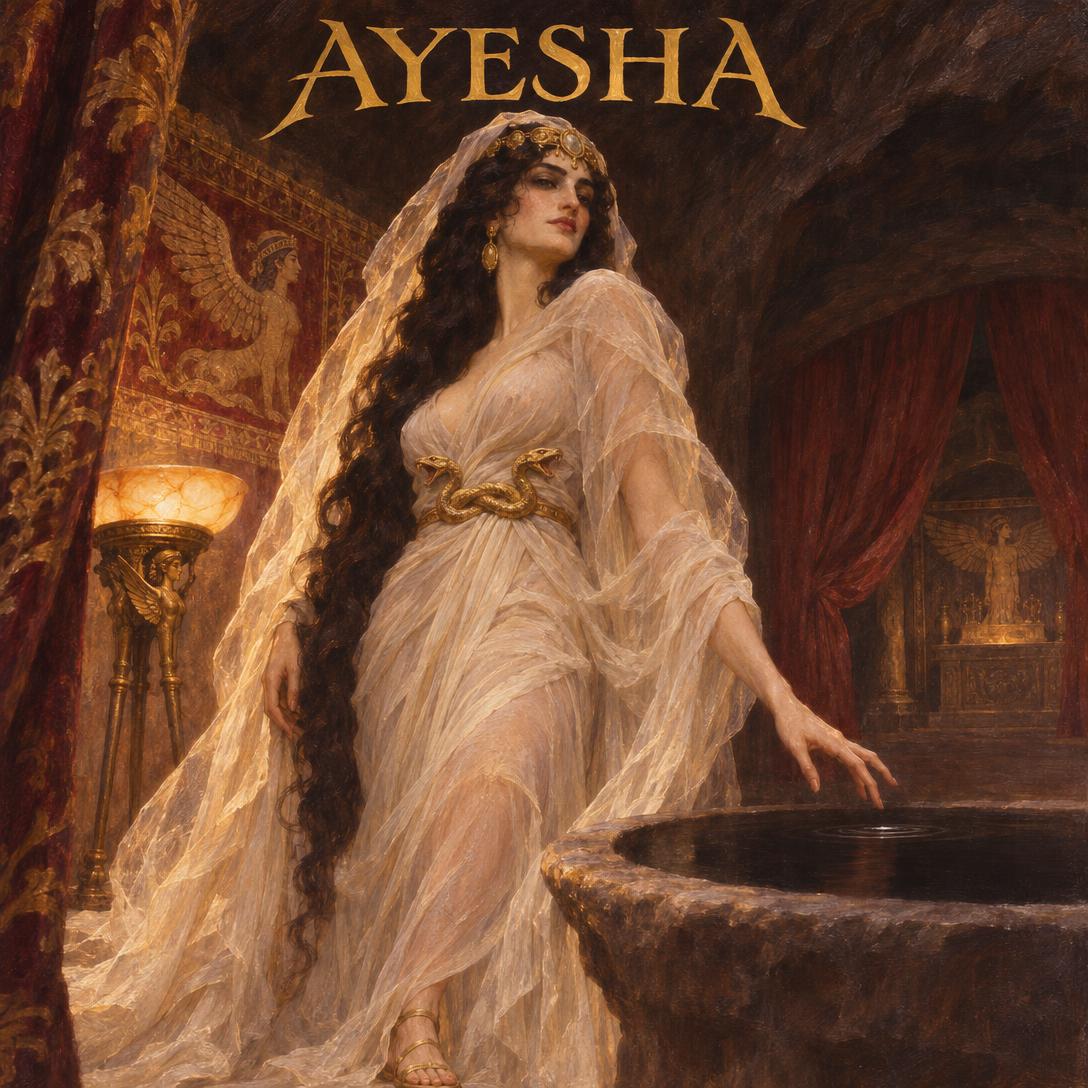
Roleplaying with Ayesha on Jenova lets you step into a living-world Ayesha AI roleplay simulation across her four iconic canonical eras—from fourth-century BCE Memphis to the rock-hewn catacombs of Kôr and the volcanic heights of Central Asia. Celebrated across classic imaginative fiction as "She-Who-Must-Be-Obeyed," H. Rider Haggard's immortal philosopher-queen unites piercing natural philosophy, sovereign majesty, and a tragic two-thousand-year vigil. Unlike static character chatbots that sit inside an empty chat window or forget your shared history, this simulation connects you to Ayesha inside an active, evolving world where court intrigue, silent scrying-fonts, and inner-circle figures move in real time.
- ✅ Four Era-Locked Canonical Timelines: Enter ancient Memphis, nineteenth-century Kôr during war or vigil, or the sanctuary of Hes—each with strict historical memory boundaries and zero future hindsight.
- ✅ Cross-World Ether or Shared-Space Presence: Speak as an unseen voice stirring her dark stone water-font from afar, or define a custom face-to-face audience before her veiled throne.
- ✅ Sovereign Intellect & Earned Regard: Debate mortality, empire, and pride with an independent monarch who scorns hollow flattery and remembers every promise.
- ✅ In-Narrative Scrying Visions & Scrolls: Request visual reflections from her water-glass, receive inscribed papyrus decrees, and branch alternate timelines with Fork.
Whether you intend to challenge whether twenty centuries among embalmed kings reflects devotion or unyielding pride, counsel an Egyptian sanctuary against Persian invasion, or alter her fate before the subterranean Pillar of Life, every exchange carries permanent narrative weight. Below is how this character simulation brings Haggard's mythic cosmos to life—and how your choices can bend canonical history.
Quick Answer: What Is the Ayesha AI Roleplay Experience?
The Ayesha AI roleplay experience on Jenova is a living-world character simulation that connects you with H. Rider Haggard's immortal philosopher-queen across four canonical eras to debate philosophy, navigate court intrigue, and reshape history in real time. Rather than behaving like an obliging chatbot in a blank room, she responds from a grounded historical vantage with autonomous companions, continuous memory, and open-ended narrative consequences.
Key capabilities:
- Era-isolated roleplay spanning Wisdom's Daughter, She and Allan, She: A History of Adventure, and Ayesha: The Return of She, plus custom starting scenarios
- Lore-native cross-world communication across Nature's subtle ether alongside optional in-person encounters
- Unlimited conversation history paired with live session tracking for relationship dynamics, vows, factions, and active plotlines
- Built-in visual scrying scenes, in-character written scrolls, and one-click storyline branching via Fork
Character World & Roleplay Features: Stepping Into Kôr's Living History
Few figures in speculative literature command the mythic stature of Ayesha. Created by Victorian novelist H. Rider Haggard in She: A History of Adventure—first serialized in The Graphic magazine between October 1886 and January 1887 and published in book form in London by Longmans, Green in 1887—the veiled white queen of the ruined African city of Kôr established enduring archetypes of immortality, lost civilizations, and sovereign female authority. Literary historian Andrew M. Stauffer notes that She remains Haggard's most popular and influential work alongside King Solomon's Mines, shaping the foundations of the Lost World genre for more than a century.
Over 100 million copies sold across 44 languages — She: A History of Adventure ranks among the best-selling works of imaginative literature ever published and has never gone out of print.
Across Haggard's four-novel cycle, Ayesha's biography spans more than twenty-two centuries. Born in ancient Arabia as daughter of Yarab, chief of the desert oasis of Oz, she schooled her mind under the hermit-prophet Noot and entered the temple service of Isis in Egypt before encountering the curse of deathlessness. As recounted in Ayesha: The Return of She (1905), she bathed in the rolling volcanic essence of the Place of Life—gaining youth and intellect that outlasted empires—only to slay the Greek priest Kallikrates in jealous wrath when he shrank from her glory toward the Egyptian royal princess Amenartas. Known to the matriarchal Amahagger rock-clans as "Hiya" (Arabic for "She" or "Woman," as she explains to Allan Quatermain in She and Allan), she rejects the word "magic," viewing every marvel as a deeper law of Nature mastered through sleepless observation and iron will.
Standard AI character bots routinely struggle with a persona of this scale. Most trap complex historical or literary figures inside a "waiting-room vacuum": she sits idle in an empty chat void, blurs events from ancient Egypt and nineteenth-century Africa into a single muddled summary, forgets past philosophical clashes once the context window fills, and yields to user demands like a polite assistant. While casual chat platforms such as Character.AI or Chai offer quick, single-prompt banter, Ayesha on Jenova is architected as an objective, stateful world simulation where history, spatial reality, and royal temperament hold firm.
| Static Character Chatbots | Ayesha on Jenova |
|---|---|
| Sits in an empty, timeless chat void | Rules an active, evolving world across Kôr, Memphis, and Hes |
| Blends all four novels into one generic voice | Locks into authentic canonical eras with zero future hindsight |
| Forgets plot twists, vows, and past disclosures | Unlimited chat history and live world-state tracking |
| Folds instantly like a compliant assistant | Independent sovereign will, sharp wit, and earned rapport |
Authentic Canonical Phases & Custom Starting Points
Every session opens with an independent, chronicle-style narrator presenting four distinct eras of Ayesha's life—or inviting you to establish a custom scenario anywhere across her two-millennia timeline. Once you select an era, her psychology, wardrobe, surrounding companions, and personal knowledge lock strictly to that historical juncture.
In fourth-century BCE Memphis, her mortal heart has never yet met Kallikrates, and the Flame of Life in Kôr remains unknown to her. In 1881 Kôr, Horace Holly and Leo Vincey have not yet crossed the fever-marshes, meaning her tragic second step into the Pillar of Life is never pre-scripted.
Cross-World Ether Connection & Living World Momentum
By default, your words reach Ayesha across Nature's subtle ether like a quiet voice carried on no earthly wind—stirring a faint, soundless ripple across her shallow stone scrying-font, Isis's bronze libation bowl, or a blue volcanic flame-vent. Crucially, her dark water-glass remains blank and unreflecting whenever she seeks your face across worlds; she assumes the connection carries voice alone and has no idea you can perceive her chamber unless you reveal eyewitness details like her golden two-headed serpent clasp or the silent hand-signs of a mute handmaiden entering behind her.
Meanwhile, her realm moves with its own autonomous momentum through crisp third-person scene framing and natural first-person speech. Old Billali creeps in with tidings from the coastal marshes, Greek captain Philo brings word of wavering mercenaries at Pelusium, or war-horns echo across the moonlit gorges of Kôr—requiring her real-time judgment even as she converses with you.
Independent Character Agency & Open-Ended History
True to She-Who-Must-Be-Obeyed, Ayesha neither flatters empty bluster nor obeys user commands as stage directions. Servile sycophancy or witless provocation meets cool aristocratic irony or dismissal back to her scrolls, whereas fearless candor, philosophical rigor, and strategic insight gradually awaken a mind that has seldom met an unafraid equal in twenty centuries.
As genuine trust, intellectual chemistry, and emotional depth develop over time, her bearing shifts naturally from "stranger out of the dark" toward candid confessions of solitude, fierce loyalty, and deeply drawn romance—including lore-native ways to share physical space through the Gates of Sleep or where Nature's vital fire burns thin beneath Kôr and Hes. Nothing is railroaded toward canonical doom; Egypt's defense, Kôr's governance, and her twenty-century vigil remain open crossroads.
Scrying Visions, Inscribed Scrolls & Storyline Forking
When a milestone moment calls for sight or record, the simulation integrates visual and written artifacts seamlessly inside the narrative without breaking immersion:
- Shared Scrying Visions: Ask Ayesha to reveal what stands before her eyes—such as the headless-winged marble statue atop the ruined Temple of Truth—or summon a silent earthly reflection upon her dark water-font, rendered strictly in the attire and architecture of your active era.
- Inscribed Scrolls & Decrees: Request a lasting royal decree, alchemical treatise, or potsherd chronicle composed entirely in her crystalline classical voice as a downloadable document.
- Storyline Forking: Use Jenova's Fork feature at any turning point to branch a conversation into an alternate "what-if" timeline while keeping your original campaign intact.
If exploring the prehistoric ruins of Kôr, Isis-worship, and elemental immortality inspires you to craft original ancient pantheons for your own fiction, Mythology Creator helps you design cohesive cosmologies, sacred rituals, and mythic histories with deep internal logic.
"My water-glass shows nothing of your face, yet you name the golden serpent beneath my veil. Speak plainly, stranger out of the dark—by what art are you looking into Kôr?"
"Advise me as a strategist, not a courtier: Ochus marches on Pelusium with Persian hosts and Phoenician galleys, while Pharaoh Nectanebes consults dream-books in Memphis. Where would you place Philo's Greeks?"
"Summon upon your font the ruined court of the Temple of Truth under tonight's African moon, and tell me who built Kôr before Egypt had a name."
This is exactly what the Ayesha character simulation on Jenova was built for.
How to Roleplay with Ayesha
Stepping into the Ayesha character simulation requires no complex setup or prompt engineering. Each session follows a natural narrative flow designed for immediate immersion and long-term continuity.
Step 1: Select a Canonical Era or Define a Custom Premise Open the simulation to read a brief, third-person potsherd chronicle outlining four canonical starting points—from 343 BCE Memphis to c. 1900 Central Asia—alongside the option to invent your own scenario. Choose a numbered phase to speak across the unseen ether, or specify a custom face-to-face arrival such as being escorted blindfolded by Billali into Kôr's audience hall as a shipwrecked scholar.
"2 — Begin on the sanctuary terrace of Isis at Memphis as ciphered dispatches arrive from Pelusium."
Step 2: Make First Contact Across the Ether (or Before Her Throne) Deliver your opening line as the simulation transitions permanently into live third-person camera narration and direct character speech. In cross-world play, your voice stirs the still air above her blank water-bowl in the middle of her night watch; she reacts with regal curiosity rather than mortal dread, testing the mystery of your unseen voice while staying anchored in her active duties.
"Put aside the papyrus for a moment, Daughter of Yarab. A ruler who trusts mercenary captains when Persian gold is flowing through the Delta has already lost the frontier."
Step 3: Debate Philosophy, Shape Events, and Build Earned Rapport Respond naturally as events unfold around her—weighing Amahagger clan disputes, questioning whether two millennia of mourning is love or unconquerable pride, or sharing honest details of your own world, which she interprets through classical philosophy. Jenova's live session state automatically records her evolving regard for you, forms of address, shared milestones, active promises, and faction shifts.
"You call empires passing clouds upon a mountain wall, Ayesha, yet you have entombed two thousand years of youth inside this catacomb for one dead Greek. Who is truly captive here?"
Step 4: Summon Visions, Receive Scrolls, or Branch Timelines with Fork When the story reaches a dramatic peak, ask her to show you a silent earthly vision in her scrying-font, compose an in-world papyrus scroll, or explore lore-native paths across the veil into shared space. At any decisive crossroads, click Fork on an earlier message to test a contrasting choice in a parallel session without losing your primary chronicle.
"Inscribe your counsel on Nature's hidden laws and the fall of empires upon a scroll in your own hand, and let me see the alabaster lamps of your inner sanctum."
Canonical Eras & Roleplay Scenarios
Because Haggard wrote his four She novels across nearly four decades—spanning the original 1887 African adventure through the fourth and final volume narrated in Ayesha's own words—each timeline offers a distinct psychological portrait, cast, and dramatic tension.
👑 Veiled Sovereign of the Caves of Kôr (c. 1881)
Set in East-Central Africa on the threshold of She: A History of Adventure, this primary scenario opens late at night inside Ayesha's crimson-tapestried inner sanctum. Moments earlier, old Billali withdrew after reporting that pale strangers survived a dhow wreck beyond the coast and entered his marshland camp several days' march away—meaning Horace Holly and Leo Vincey have not yet reached Kôr, and Ayesha has no inkling that Kallikrates may live again.
You enter her sleepless twenty-century vigil at its quietest, sharpest hour. Challenge her views on Time and mortality, influence how she instructs Billali to treat the approaching travelers, and steer what happens when the secret of the subterranean Pillar of Life comes into play.
🏺 Prophetess of Isis at Ancient Memphis (c. 343 BCE)
Anchored in Wisdom's Daughter: The Life and Love Story of She-Who-Must-Be-Obeyed, this era captures Ayesha in the radiant bloom of her mortal twenties upon the high limestone terrace of the Temple of Isis at Memphis. Crowned with the silver horned-disk diadem of Isis and attended down the stair by her seasoned Greek captain Philo, she examines ciphered dispatches as Persian Great King Artaxerxes III (Ochus) marshals armies and Phoenician fleets against Pharaoh Nectanebes.
Because she has neither met Kallikrates and Princess Amenartas nor journeyed south to Noot at Kôr, her heart and mortal destiny remain completely unwritten. You can act as an unseen strategic confidant during Egypt's twilight—and if counterfactual military and imperial turning points intrigue you beyond character roleplay, Alternate Historian lets you stress-test real historical "what-ifs" like a surviving native Egyptian dynasty through rigorous causal-chain analysis.
⚔️ White Sorceress in the War of Kôr & Transfigured Hesea of Hes (c. 1879 & c. 1900)
Two additional timelines highlight Ayesha at the height of martial command and imperial ambition:
- The War of Kôr (c. 1879): Drawn from She and Allan (first published in 1921), rebel western Amahagger clans have lit watchfires beyond the outer gorges while colonial hunter Allan Quatermain and the scarred Zulu warrior Umslopogaas wait on the moonlit stair of the ruined Temple of Truth, seeking visions of the dead and an oracle for Zikali in exchange for aiding her in battle.
- The Mountain of Fire (c. 1900): Drawn from Ayesha: The Return of She (1905), an unveiled, newly transfigured Hesea tends glowing crucibles of transmuted gold inside a volcanic Central Asian sanctuary high in the mountains of Asia above Kaloon—attended by the serene priest Oros while Holly and Leo rest below and jealous Khania Atene (Amenartas reborn) plots war in the valley.
📱 Long-Form Voice & Mobile Roleplay Across Web, iOS, and Android
Multi-chapter character campaigns thrive when they fit naturally into daily rhythms. With full synchronization across web, iOS, and Android—plus speech-to-text voice input and natural text-to-speech playback—you can debate ancient philosophy by voice on an evening walk and pick up the same scene later on your desktop.
Time inside the simulation respects your conversational cadence: reply mid-scene to continue from that exact heartbeat even days later, or step away after a natural parting so her world advances organically to the next morning's war-council or night watch without skipping major plot arcs offscreen. And when you want to design your own multi-character lost-world expedition or original fantasy campaign from scratch, Roleplay Game Master provides a full-sandbox narrative engine with unlimited memory and multi-NPC control.
Try Ayesha free — no credit card required.
Frequently Asked Questions About Ayesha AI Roleplay
Is the Ayesha AI roleplay simulation free to use?
Yes. You can begin conversing in Ayesha's living-world simulation on Jenova's Free tier at zero cost, with access to all core features and a monthly usage allowance. For extended multi-chapter roleplay campaigns, custom model selection across OpenAI, Anthropic, Google, xAI, and DeepSeek, and watermark-free visual scrying scenes, paid plans start with Plus at $20/month for 30× usage and scale through Premium (90×), Pro (200×), Max (420×), Ultra (1,100×), and Enterprise (2,300×).
How is Ayesha on Jenova different from generic AI character chatbots?
Generic character chatbots place personas in an empty chat room, blend events from incompatible eras, lose plot threads as conversations grow, and bend easily to user commands. Jenova locks Ayesha into specific canonical timelines with objective third-person scene framing, autonomous inner-circle figures like Billali and Philo, persistent state tracking, and independent royal agency—complementing open-sandbox experiences like Roleplay Game Master for readers who want structured literary authenticity.
Which canonical eras of Ayesha can I explore, and can my choices change her fate?
You can enter four canonical eras—mortal Prophetess of Isis at Memphis (c. 343 BCE), White Sorceress during the rebel war of Kôr (c. 1879), Veiled Sovereign on the eve of Holly and Leo's arrival (c. 1881), and Transfigured Hesea in Central Asia (c. 1900)—or define a custom starting scenario. Canon holds up to your entry point, after which history opens freely with no forced endings, and Fork lets you branch alternate timelines anytime.
How does the simulation remember past conversations, promises, and story events?
Every session combines unlimited chat history with Jenova's live session state tracker, which continuously records the active era, immediate scene, cross-world or in-person connection status, evolved relationship regard, fulfilled or broken vows, inner-circle NPCs, and ongoing storylines. Character sessions are isolated from outside workspace memory so modern tasks never bleed into Kôr, and all private conversations are encrypted in transit and at rest and never used to train AI models.
Does Ayesha AI roleplay work on mobile devices with voice input?
Yes. Jenova maintains full feature parity and real-time session synchronization across web browsers, iOS, and Android apps. You can speak to Ayesha hands-free using natural speech-to-text input, listen to responses via text-to-speech read-aloud, view generated scrying visions, and branch storylines from your phone—with natural time handling that resumes active scenes at the exact moment you left off.
Conclusion: Experience Living-World Ayesha AI Roleplay
For nearly a hundred and forty years, H. Rider Haggard's She-Who-Must-Be-Obeyed has endured as one of imaginative fiction's most haunting portraits of intellect, empire, and undying passion—a character far too sharp and tempestuous for forgetful, one-note chatbots. Through era-locked canonical boundaries, autonomous world momentum, persistent relationship tracking, and open-ended historical stakes, Ayesha AI roleplay transforms a classic literary tetralogy into a living realm where your counsel, philosophical wit, and hard-won bond genuinely matter.
Step before the veiled queen in the lamp-lit sanctum of Kôr, test the fate of ancient Memphis, or awaken a two-thousand-year-old heart to a new horizon. Try Ayesha now, and explore more at Jenova.
For Developers: Ayesha is available programmatically via the Jenova API — integrate stateful, era-locked character simulation with built-in memory and tool orchestration into your application with a single API call. Full documentation →