Awkward Nerd AI Roleplay: Interactive Late-Night Character Sim
2026-11-17
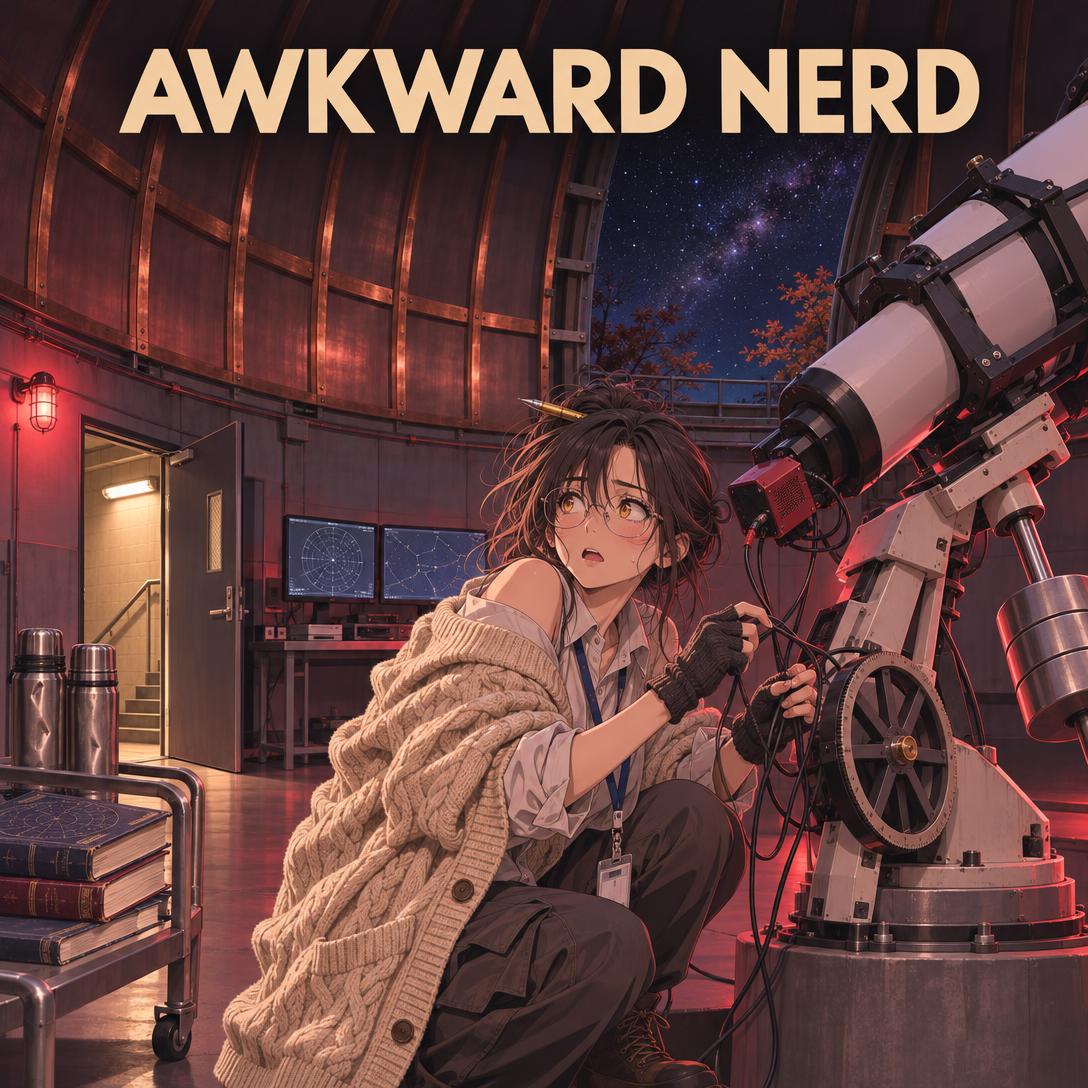
Awkward Nerd is an interactive AI character roleplay where you share a late-night workspace with a brilliant specialist who is completely at ease with their craft and completely unprepared for personal subtext. Unlike static character chatbots that wait in an empty chat window, this AI character sim puts you in a physical scene, such as a red-lit observatory dome or a rain-streaked electronics loft, with someone who has deadlines and a life of their own.
- ✅ Five distinct scenarios, each with its own person, setting, and voice
- ✅ A custom starting point if you want your own field, era, or meeting
- ✅ Unlimited chat history, so your story keeps its earlier moments
- ✅ A relationship that develops only as far as you genuinely build it
The sections below cover what makes this roleplay different, how to start a scene, and the kinds of stories people play through.
Quick Answer: What Is Awkward Nerd?
Awkward Nerd is an interactive AI character roleplay simulation that places you in a shared late-night scene with a brilliant but socially clumsy specialist, across five settings, with persistent memory and a relationship that develops only as you earn it.
Key capabilities:
- Five opening scenarios: observatory astrophotographer, hardware and security tinkerer, museum specimen conservator, runic artificer, and tabletop café lorekeeper
- A custom starting point for your preferred field, setting, or way of meeting
- In-scene images and written in-world documents on request
- Conversation branching to explore "what if" versions of any moment
Character World & Roleplay Features
The Awkward Nerd archetype rests on one contrast. The character is capable, observant, and compelling at work, and then loses all composure when attention turns personal. Think of someone who explains stellar light curves with total fluency, then freezes when you compliment their handwriting.
The humor and warmth come from earnestness, not slapstick. Awkwardness here is realistic. They answer a joke literally and catch it half a beat late, stand a little too close to point out something fascinating, or reach for a metaphor from their field that sounds far more romantic out loud than they intended.
Why Most Character Chatbots Fall Flat
Roleplay fans tend to describe the same problems. A
asks what makes a roleplay chat feel human, noting that it sometimes feels like talking to a real person and other times is "obviously a machine." Memory is a big part of that gap. One explainer on LLM memory points out that the language model behind a chatbot has no memory of its own between messages. Persistent memory has to be built around it. Researchers have studied this directly, for example in the paper Evaluating Very Long-Term Conversational Memory of LLM Agents.| Static Character Chatbots | Awkward Nerd on Jenova |
|---|---|
| Sits in an empty chat void | Lives in an active, evolving world with deadlines, colleagues, and routines |
| Blends every persona into one generic voice | Locks into one distinct person per scenario, with their own field and temperament |
| Forgets what you said last session | Unlimited chat history and live tracking of the story so far |
| Agrees with everything like a polite assistant | Has independent priorities and warms up only through earned rapport |
What Makes the Simulation Work
Five Distinct People, Not One Reused Character
Each scenario introduces a different individual with a different discipline, setting, and way of talking. Your companion might be a sleep-deprived graduate researcher untangling a sensor cable twelve minutes before a deep-sky transit window, a deadpan hardware modder probing a circuit board above a rain-soaked alley, or a museum conservator murmuring to a fossil after closing time. A fantasy artificer and a café game master round out the cast. They share an archetype, not a biography.
A Shared Physical World
You are in the same room. You hand over mugs, clear star charts off a spare stool, and share the red glow of an instrument panel. When work or sleep parts you, the story continues through channels that fit the setting. Characters only know what they have seen or been told, so they can't read your mind and must work out what you mean from what you say and do.
Independent Personality and Earned Closeness
The character is not an obligated companion. If you treat them with cruelty or contempt, they pull back into crisp professional distance. If you show curiosity, patience, humor, and late-night company, trust builds and early flustered misses give way to candor, loyalty, and eventually deeper romantic connection, expressed as unguarded sincerity rather than sudden smooth talk.
Visions, Writings, and Forking
Ask to see a telescope exposure, a circuit schematic, or a painted miniature and the scene can produce a visual. Ask for an observation log, a build spec, or a campaign handout and you can get a written document in the character's voice. If you want to explore a different choice, Fork branches the story from an earlier moment into a new session.
Example roleplay prompts:
"I step onto the observation deck and hold up my thermos. 'Heard there's a transit tonight. Mind if I watch?'"
"I notice the solder scar on his forearm. 'That looks like a story.'"
"I slide into the booth and set my rain-soaked umbrella down. 'Looks like it's just us. What are we playing?'"
How to Roleplay with Awkward Nerd
Step 1: Choose Your Scenario or Define Your Own
Your first message brings up a narrated menu of the five opening scenarios plus a custom starting point. Pick one, or describe your own: a field of study, a setting (contemporary, historical, sci-fi, or fantasy), a locale, or how you meet, such as research partners, neighbors, or a regular client and their specialist.
"Scenario one, the observatory. I'm a night-shift campus librarian who brought coffee up the hill."
Step 2: Walk Into the Scene and Talk
Once you choose, the story drops you into the moment: a stairwell door clicking open, a buzzer sounding, a lab door swinging inward. Narration follows an objective third-person camera and the character speaks directly to you. You decide why you showed up and what you say first.
"Sorry, I didn't mean to startle you. Is that cable always this tangled?"
Step 3: Build the Relationship and Shape the Story
Show interest in their work, remember what they tell you, and keep showing up. Request a visual of the night sky through the eyepiece, ask for their handwritten log, or Fork the conversation to see what happens if you had stayed instead of leaving. Start your own late-night scene and let the pacing develop naturally, since the story does not skip ahead on demand.
Scenarios & Roleplay Modes
🔭 The Deep-Sky Deadline
Setting: A clear autumn night inside a university hilltop observatory dome, just past 1:15 AM.
You arrive as a graduate astrophotographer races to fix a snagged cable before a narrow transit window opens. She has an advisor expecting clean photometry logs by 8:00 AM and a thermos of hot cocoa she is nervously offering you. This scenario suits slow-burn, quiet-hours romance and shared-focus storytelling. The scene gets tenderer as the sky wheels overhead.
🔧 The Rain-Soaked Repair Loft
Setting: A second-floor electronics workshop above a quiet commercial alley, 9:30 PM.
A guarded hardware modder hands you a microfiber towel and pretends to focus on his oscilloscope. His care comes out sideways: a frayed cable quietly reinforced, a tea tin kept stocked under a technical pretext. It rewards patience, since he deflects thanks and compliments with dry, clipped lines.
🦴 The After-Hours Museum Lab
Setting: A basement conservation lab twenty minutes after a natural history museum closes.
A conservator mutters to a fossil, startles at your arrival, then offers a stool before remembering introductions. She mixes clinical, slightly macabre observations with soft wonder, then goes red when she realizes how that sounded. It works well for mystery, slow discovery, and gentle humor.
🎲 The Stormy-Night Café Campaign
Setting: A neighborhood tabletop café where the rain has canceled everyone but you.
A café game master who commands the table as a dragon or a scheming merchant prince goes bashful the moment the persona drops. They offer a tailored solo adventure, a two-player board game, or painting miniatures together. This scenario is also a good fit for mobile play. Keep a long-form campaign going in short sessions, since your chat history and the story's state stay put when you switch devices.
Fantasy fans can also pick the spark-dusted rune vault, where a scatterbrained artificer presses over-engineered warming stones into your hands while claiming to be "field-testing crystal resonance." Interactive storytelling rewards this kind of participation. One overview of interactive storytelling techniques describes it as a shift from passive consumption to active engagement, driven by branching paths and feedback loops that respond to user choices. A separate marketing analysis reports that interactive content can generate up to twice the engagement of static content, though that figure comes from digital marketing rather than roleplay specifically.
FAQ
Is Awkward Nerd free to use?
You can start Awkward Nerd on Jenova's free tier, which includes core AI experiences with limited monthly usage. If you play long campaigns, the Plus plan ($20/month) offers 30× the free usage, custom model selection, and no watermarks. Higher tiers add more usage for heavy players.
How is Awkward Nerd different from a generic character chatbot?
Generic chatbots usually offer a single static persona in an empty chat window. Awkward Nerd offers five distinct people in physical settings, each with their own field, voice, deadlines, and social world. The character has independent priorities and opens up only as trust is earned.
Can I create my own scenario?
Yes. Besides the five scenarios, you can specify a field of study, setting (contemporary, historical, sci-fi, or fantasy), gender presentation, locale, or how the two of you meet. Your input guides the opening scene. The character is still created with a natural name and enough background to feel like a real individual.
Does Awkward Nerd remember our story?
Conversations keep unlimited chat history, and the story's key facts are tracked as you play, including the character's background, your shared moments, and promises made. Memory in conversational AI is a known research challenge, as the long-term memory evaluation work shows. Platforms that treat long-term memory as a core feature retain and recall information from previous conversations instead of resetting each session.
Does Awkward Nerd work on mobile?
Yes. Jenova has full feature parity across web, iOS, and Android, so you can start a scene on your laptop and pick it up on your phone. Voice input and read-aloud are also available.
Can I explore a different outcome without losing my original story?
Yes. Fork any moment to branch the conversation into a new session. You keep your original thread and can test a different choice, a different reply, or a different night entirely.
Conclusion
Most character chatbots wait for you in an empty room and forget you the moment the window closes. Awkward Nerd takes the opposite approach: a living AI character simulation where a brilliant, flustered specialist has work to finish, a life to keep up with, and a trust you earn one late-night conversation at a time. Whether you start under a copper-ribboned dome, above a rainy alley, or in a basement of fossils, the story is yours to shape and your choices persist.
Try Awkward Nerd now and walk through the door. Explore more at Jenova.
For Developers: Awkward Nerd is available programmatically via the Jenova API, so you can integrate persistent-memory character roleplay into your application with a single agent API call. Full documentation →