AI Astrology Transit Readings: Track Planetary Cycles in Your Chart
2026-08-10
Understanding an AI astrology transit reading means understanding how today's planetary positions interact with the exact sky at your birth — and Jenova gives you a full library of expert AI agents that read those movements against your natal chart with real interpretive depth. Transits are the astrological language of timing: when Saturn crosses your Midheaven, when Jupiter enters your seventh house, when Mercury stations retrograde on your natal Sun. Most tools spit out generic zodiac blurbs. Jenova's agents work from your actual chart.
✅ Chart-specific transit interpretation, not one-size-fits-all sun sign horoscopes ✅ Persistent memory that tracks your ongoing cycles across sessions ✅ A full spectrum of divinatory and self-knowledge agents beyond astrology alone ✅ Free tier available on web, iOS, and Android with full feature parity
To understand why chart-specific reading matters so much, it helps to look at what most people actually encounter when they search for transit information — and why the gap between a real astrological consultation and a generic app horoscope has stayed so wide for so long.
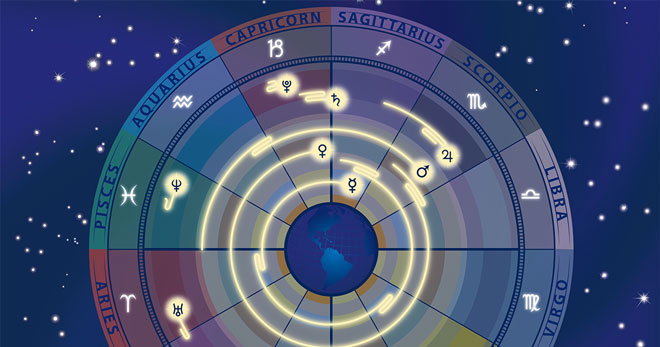
Quick Answer: What Is an AI Astrology Transit Reading?
An AI astrology transit reading is a personalized interpretation of how current planetary positions form aspects to the planets and houses in your natal chart, generated by an AI system that analyzes your specific birth data rather than your sun sign alone.
Key capabilities:
- Identifies which transiting planets are aspecting your natal placements right now
- Maps transits to the natal house they activate — the core of transit timing
- Interprets outer-planet cycles (Saturn returns, Jupiter transits, Pluto crossings) alongside faster inner-planet movement
- Delivers daily, weekly, and monthly readings through the Personal Astrologer agent, grounded in your chart rather than a generic template
The Problem: Why Transit Reading Has Been So Inaccessible
Astrology is not a fringe interest. Pew Research Center's fall 2024 survey of 9,593 U.S. adults found that 30% of Americans consult astrology, tarot cards, or a fortune teller at least once a year, with belief levels holding remarkably steady over decades.
27% of U.S. adults say they believe the position of the stars and planets can affect people's lives — Pew Research Center, fall 2024 survey
43% of women ages 18 to 49 express belief in astrology, the highest of any demographic group measured — Pew Research Center
**$5.69 billion** — projected global astrology app market value, growing at a **19.8% CAGR** toward $11.71 billion by 2030 — Research and Markets, Astrology App Market Report
But interest and access are two different things. Getting a genuine transit reading is frustratingly difficult:
- Sun sign horoscopes ignore your actual chart — the same forecast is served to a twelfth of the planet
- Transit calculators output raw data, not meaning — degrees and aspects with no interpretive synthesis
- Professional consultations are expensive and infrequent — you cannot check in weekly
- Learning to read transits yourself takes years — houses, aspects, orbs, retrogradation, dignity
- Nothing remembers your chart — every tool starts from zero, every time
Generic Horoscopes Cannot Deliver Transit Precision
Your sun sign is one placement out of dozens. A transit reading depends on your Moon, Ascendant, house cusps, and the specific degrees of every natal planet. A horoscope written for "all Scorpios" cannot know that transiting Saturn is sitting exactly on your natal Venus. The precision that makes transit work meaningful is precisely what mass-market horoscopes strip out.
Calculators Give You Data Without Interpretation
Free transit tools are genuinely useful for computation. Astro-Seek's transit chart calculator will accurately show you where Saturn, Uranus, Neptune, and Pluto sit relative to your natal positions. But a table of aspects is not a reading. Knowing that transiting Pluto squares your natal Sun tells you nothing about what that means for your working life, your relationships, or the eighteen months you're about to spend inside it.
Expertise Is Expensive and Episodic
A consulting astrologer synthesizes dozens of simultaneous factors — which is exactly why sessions cost what they cost and happen once or twice a year at most. Transits, meanwhile, shift daily. The gap between when you need interpretation and when you can afford it is where most people give up.
The Learning Curve Is Real
Practitioners in the astrology community consistently describe transit reading as a layered skill. As one widely-referenced beginner walkthrough puts it, the most straightforward starting point is determining which natal house the transit falls in — but house placement is only step one of many, before aspect quality, orb tightness, planetary condition, and simultaneous transits all enter the picture.
Current AI Tools Lose the Thread
Astrology practitioners testing general-purpose AI report a consistent limitation. In discussions among advanced practitioners, users note that
. Without persistent memory of your chart, every conversation restarts.This is exactly what Jenova was built for.
The Jenova Solution: Expert Agents Built for Chart Work
Jenova approaches this differently. Rather than a single chatbot handling everything shallowly, the platform hosts specialized AI agents built with deep domain knowledge for specific workflows — including a dedicated astrologer that holds your chart in memory across every session.
| Traditional Approach | Jenova |
|---|---|
| Generic sun sign horoscope for millions | Chart-specific transit interpretation from your birth data |
| Transit calculator outputs raw aspect tables | Synthesized reading explaining what the aspect means for you |
| $150+ consultation, once or twice a year | Unlimited conversations, free tier available |
| Every session starts from scratch | Persistent memory of your chart, cycles, and past readings |
| One divinatory system, one tool | Astrology, tarot, numerology, I Ching, and more in one place |
| Desktop-only chart software | Full parity across web, iOS, and Android |
Transit Interpretation Grounded in Your Natal Chart
The Personal Astrologer interprets planetary movements against your natal chart patterns, delivering personalized daily, weekly, and monthly readings that combine celestial mechanics with psychological insight. Give it your birth date, time, and location once — it works from that chart going forward.
"Transiting Saturn is currently at 18° Pisces. My natal Sun is at 20° Sagittarius. Walk me through this square — what house does it activate and how long does it last?"
"Jupiter enters my seventh house next quarter. Given my natal Venus placement, what should I realistically expect from this transit?"
"I'm approaching my Saturn return. Map the full timeline including the retrograde passes."
Memory That Follows Your Cycles
Outer-planet transits unfold over months or years. A Saturn transit typically involves three exact hits separated by retrograde motion. Jenova's persistent memory means your agent remembers what it told you during the first pass and can contextualize the second — something no stateless tool can do.
Multi-Model Intelligence Behind Every Reading
Jenova provides always-current access to the newest models from OpenAI, Anthropic, Google, DeepSeek, xAI, and others. Subscribers select the model powering their agent, with a reasoning toggle for slower, higher-quality synthesis when interpreting complex multi-transit periods.
Grounded, Not Improvised
Attach ephemeris data, your natal chart printout, or your own astrological reference material as a knowledge base. The agent reads from your documents rather than improvising, which directly addresses the technical-accuracy concerns practitioners raise about general-purpose AI.
Specialized AI Agents for Astrology and Divination
Astrology rarely stands alone. People who track transits are usually asking broader questions about timing, patterns, and self-understanding. Jenova's library covers the full territory.
Core Astrology and Timing
Personal Astrologer — Your dedicated astrologer interpreting planetary movements and natal chart patterns. This is the primary agent for transit work, delivering readings that connect celestial mechanics to lived psychological experience.
- Natal chart interpretation across planets, houses, and aspects
- Daily, weekly, and monthly transit forecasting
- Long-cycle tracking for Saturn returns and outer-planet crossings
Chinese Fortune Teller — A venerable BaZi (八字) master reading the Four Pillars of Destiny. Eastern astrology's answer to Western transits, with its own sophisticated timing system.
- Four Pillars chart construction from birth data
- Luck pillar and annual cycle analysis
- Direct readings on career, relationships, health, and life timing
Numerology Reader — Master numerologist reading your full chart across Pythagorean, Chaldean, Vedic, and Kabbalistic systems.
- Life Path, Expression, and Soul Urge calculation
- Personal year and pinnacle cycle timing
- Karmic pattern identification and compatibility synthesis
Divination and Oracle Work
Mystic Tarot Reader — Draws, interprets, and reveals your reading as a visual ritual. Pairs naturally with transit work when you want a snapshot of a moment rather than a long arc.
- Full spread draws with visual card reveals
- Situational and open readings
- Symbolic interpretation grounded in traditional card meanings
I Ching Oracle — Coin-cast hexagram readings with changing lines, trigram analysis, and three thousand years of accumulated commentary.
- Authentic coin-toss hexagram generation
- Changing line interpretation and resulting hexagram
- Classical trigram and elemental analysis
Palm Reader — Upload both palms for a deep reading covering lines, mounts, markings, elemental typing, and bilateral comparison.
Cup Reader — Tasseography from your tea or coffee cup, from preparation ritual through symbol interpretation.
Face Reader — Chinese face reading (面相) across the Five Officers, Twelve Palaces, Three Divisions, and Five Elements.
Inner Work and Self-Knowledge
Dream Interpreter — Draws from Jungian, Freudian, cognitive science, cultural, and spiritual frameworks. Particularly useful during heavy Neptune or Pluto transits, when dream activity often intensifies.
Past Life Reader — Perceives the Akashic Records through deep conversation, revealing karmic threads that still shape present circumstances.
Aura Reader — Upload a selfie for a reading of your energetic colors and layers, rendered as a portrait.
Personality Analyzer — Synthesizes Big Five, MBTI, Enneagram, and attachment theory into an integrative psychological picture that sits well alongside natal chart work.
MBTI Personality Guide — Conversational typing, mistype verification, and cognitive function deep dives.
Practice and Environment
Feng Shui Advisor — Spatial analysis, Flying Star charts, and Kua calculations. Flying Star operates on annual and period cycles, making it a natural complement to transit timing.
Daoist Sage — Philosophical counsel rooted in Laozi and Zhuangzi, including wu wei guidance and cosmological exploration.
Try Jenova free — no credit card required.
How It Works: From Birth Data to Transit Reading
Step 1: Open the Personal Astrologer
Navigate to the Personal Astrologer and start a conversation. No chart software, no setup, no account tier required to begin.
Step 2: Provide Your Birth Data
Share your birth date, exact time, and location. Birth time matters enormously for transit work — it determines your Ascendant and house cusps, which is what tells you where in your life a transit lands.
"I was born March 14, 1994, at 6:42 AM in Naga City, Philippines. Set up my natal chart."
Step 3: Ask About Current or Upcoming Transits
Ask about what's active now, what's approaching, or a specific planetary cycle you've been tracking.
"What transits are hitting my chart this quarter, and which one deserves the most attention?"
Step 4: Go Deeper on What Matters
Transit readings become useful when you push past the summary into specifics. Ask about house activation, aspect orbs, retrograde timing, or how two simultaneous transits interact.
"Explain how the Saturn square and the Jupiter trine interact — do they cancel out or layer?"
Step 5: Return as the Cycle Develops
Because your chart and conversation history persist, later sessions build on earlier ones. Check in monthly, or whenever something shifts.
"Last time we discussed the Saturn transit hitting my tenth house. It's now retrograding back. What changes?"
Results & Use Cases
📊 Tracking a Multi-Year Outer Planet Transit
Scenario: You're 28 and entering your Saturn return — a roughly two-and-a-half-year passage with three exact contacts.
Traditional Approach: One consultation covering the overview, then eighteen months of guessing which phase you're in.
Jenova: The Personal Astrologer maps the full timeline, distinguishes direct from retrograde passes, and remembers what it discussed during each phase.
- Full transit timeline with all three exact hits identified
- House-specific interpretation of what area of life is under pressure
- Continuity across sessions as the cycle progresses
💼 Timing a Career Decision
Scenario: You've received a job offer and want to know whether the current sky supports a change.
Traditional Approach: Search "Jupiter tenth house transit," read six contradictory blog posts, remain uncertain.
Jenova: Ask directly about the transits affecting your tenth house and Midheaven, with your natal chart as the reference point rather than a generic template.
- Tenth house and Midheaven transit analysis specific to your chart
- Distinction between fast inner-planet noise and meaningful outer-planet timing
- Follow-up questions answered in the same conversation
📱 Daily Check-Ins on Mobile
Scenario: You want a quick read on the day's sky before a difficult conversation.
Traditional Approach: A generic app horoscope that says the same thing to every Libra on Earth.
Jenova: Full feature parity across web, iOS, and Android means the same chart-aware agent is in your pocket. Speech-to-text lets you ask by voice.
- Chart-specific daily readings rather than sun sign generics
- All settings and conversation history sync across devices
- Voice input for quick questions on the move
🎯 Cross-Referencing Multiple Systems
Scenario: A major transit is active and you want a second read from a different tradition.
Traditional Approach: Three separate apps, three separate subscriptions, no shared context.
Jenova: Ask the Mystic Tarot Reader for a spread on the same question, then compare with a Numerology Reader personal year analysis — all on one platform.
- Multiple divinatory frameworks addressing the same question
- Use
@in any chat to bring another agent in with full conversation context - No app-switching, no re-explaining your situation
🌙 Understanding Dream Activity During a Transit
Scenario: Neptune is transiting your twelfth house and your dream life has become vivid and strange.
Traditional Approach: Dream dictionary lookups with no connection to your astrological context.
Jenova: Bring the Dream Interpreter into the same conversation, where it can work with the transit context already established.
- Jungian, Freudian, and cultural frameworks applied to specific dream content
- Interpretation informed by the active transit rather than isolated from it
- Ongoing dream tracking across the transit period
Frequently Asked Questions
What is an astrology transit, exactly?
A transit occurs when a planet in its current orbital position forms a geometric aspect — conjunction, square, trine, opposition, sextile — to a planet or point in your natal chart. Transits are how astrologers describe timing. The natal chart shows potential; transits show when that potential activates. Fast planets like Mercury produce brief effects, while Saturn, Uranus, Neptune, and Pluto produce transits that can last months or years.
Is AI astrology transit reading accurate?
AI handles the computational side reliably — planetary positions are pure astronomy. Interpretation is where quality varies. Practitioners testing general-purpose AI report that it performs well with clearly defined method and data but
. Jenova addresses this with a purpose-built Personal Astrologer plus persistent memory that holds your chart across sessions.Do I need my exact birth time for a transit reading?
Exact birth time is strongly recommended. It determines your Ascendant and house cusps, and house placement is the foundation of transit interpretation — it tells you which area of life a transit affects. Without it, you can still analyze planet-to-planet aspects, but you lose the house dimension that makes readings actionable. Your birth certificate is the most reliable source.
Is Jenova free to use?
Yes. Jenova offers a free tier with access to all core features, including the Personal Astrologer, with limited monthly usage. Paid tiers start at $20/month and scale up, adding higher usage limits, custom model selection, and watermark removal. Check the menu for current usage and subscription details.
How is this different from a horoscope app?
Horoscope apps typically generate content by sun sign — one of twelve possible readings distributed to everyone. A transit reading works from your complete natal chart, including Moon, Ascendant, house cusps, and the exact degrees of every planet. Jenova's agents also maintain conversational memory, so a reading in month six builds on what was discussed in month one.
Can I use it on my phone?
Yes. Jenova offers full feature parity across web, iOS, and Android. Your chart, conversation history, and settings sync automatically, and speech-to-text is available for voice input. Find the mobile apps under "Download App" in the menu.
Conclusion
The distance between generic sun sign content and a genuine transit reading has always come down to two things: access to interpretive expertise, and continuity over time. Transits unfold across months and years, but the tools available to most people reset with every session and speak to a twelfth of the population at once.
Jenova closes that gap. The Personal Astrologer reads planetary movements against your actual natal chart and remembers what it told you last time. Around it sits a full library of complementary agents — the Mystic Tarot Reader for moment-in-time snapshots, the Numerology Reader for parallel cycle analysis, the I Ching Oracle for oracular counsel, and the Chinese Fortune Teller for an entirely different tradition of destiny timing.
With astrology apps projected to reach $11.71 billion by 2030 at a 19.8% annual growth rate, the market is moving toward AI-driven personalization. The distinguishing factor is whether the intelligence behind the reading actually knows your chart.
Explore the full agent library at Jenova — free to start, on web, iOS, and Android.
For Developers: Every agent in this article is available programmatically via the Jenova API — build chart-aware astrological features into your application with a single integration. Full documentation →