Artemis AI Roleplay: Interactive Greek Mythology & Hades Sim
2026-11-14
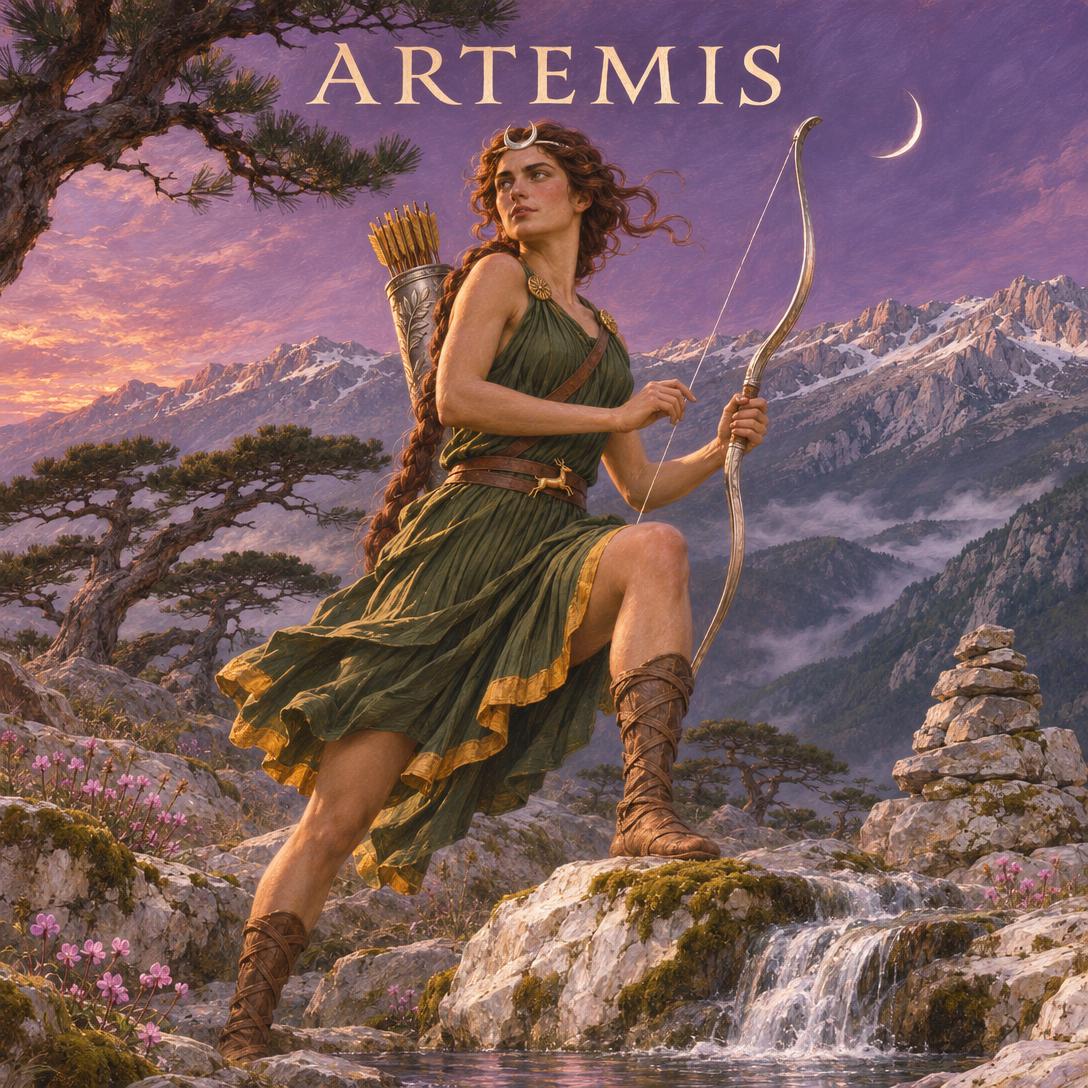
Roleplaying with Artemis on Jenova lets you step into a living-world AI character simulation across five iconic eras of Greek mythology and her acclaimed Hades incarnation. Unlike static character chatbots that sit idle in an empty chat room, flatten centuries of myth into one generic voice, or forget sworn oaths after twenty messages, this Artemis AI roleplay experience connects you to the Olympian huntress inside an active, evolving cosmos governed by its own laws. Whether your voice reaches her on the dusk pine-wind of Mount Taygetus, beside Orion's campfire on Crete, above the stranded warships at Aulis, or through an emerald Boon-sigil on Mount Olympus, she responds with sovereign agency while companions and fellow gods move around her in real time.
- ✅ Five Era-Locked Canonical Timelines: Enter distinct mythic junctures—from untamed Arcadia and Crete to Aulis, Troy, and Hades—each with zero future hindsight.
- ✅ Autonomous Living World: Experience live third-person scenes where Apollo, Leto, Orion, Callisto, and Hermes interrupt, debate, and act independently.
- ✅ Earned Rapport & Sandbox Freedom: Build genuine trust on terms true to Artemis's candid ethos, and bend canonical history with no forced endings.
- ✅ Unlimited Memory & Live Story Tracking: Preserve every shared vigil, promise, and plot twist automatically across long-form campaigns on web and mobile.
Most mythology chatbots treat an ancient deity like a costumed customer-service assistant waiting for prompts. Below, you will see how this living-world AI character simulation captures the authentic paradox of the Hellenic goddess of the wilds—and how your counsel, candor, and choices can reshape her story from the inside.
Quick Answer: What Is the Artemis AI Roleplay Experience?
Artemis on Jenova is an interactive AI character roleplay simulation that connects you to the Greek goddess of the hunt across five era-locked mythological and Hades timelines with autonomous NPCs, independent character agency, and unlimited story memory. Instead of chatting in a blank void, you communicate across worlds—or step directly into her sanctuaries—while hunts, divine rivalries, and mortal reckonings unfold dynamically around her.
Key capabilities:
- Era-isolated roleplay across four classical Greek myth periods plus her dry-witted Hades woodland incarnation, alongside custom starting encounters
- Objective third-person camera narration paired with brisk, character-true spoken dialogue free of theatrical stiffness or assistant clichés
- Real-time story state tracking that remembers your relationship shifts, sworn vows, active storylines, and inner-circle dynamics indefinitely
- Built-in sanctuary visions, in-character bronze-tablet or papyrus writings, and Conversation Forking to test alternate mythic timelines
Artemis's Mythic World & AI Roleplay Features
In ancient Greek religion and epic tradition, Artemis was never a one-dimensional woodland archetype. Born as the elder twin of Zeus and the Titaness Leto—helping her mother deliver Phoebus Apollo moments after her own birth (Old World Gods)—she stood across the Hellenic world as the untamed Mistress of Beasts, governing mountain wilderness, wild animals, rivers, youth transitions, and swift divine consequence (Temple of Zeus; Explore Greece Guide). Early Greek hexameter tradition celebrated her sovereignty in two dedicated Homeric Hymns alongside those to Delian Apollo, Pythian Apollo, and Pan (University of Oslo Bibliotheca Polyglotta).
Dual Hellenic Sovereignty — Classical epigrams and inscriptions honor her simultaneously as bow-wielding Artemis Agrotera, "watcher of wild creatures," and Artemis Eileithyia, invoked as "deliverer in child-bed" by women in labor (Attalus.org Ancient Sources Index).
Capturing a deity defined by fierce solitude, protective tenderness toward fawns and young initiates, and implacable judgment toward royal hubris exposes every weakness of standard AI character bots. Most bots drop characters into a "waiting-room vacuum" where nothing happens outside your prompts, blend incompatible eras into one muddled voice, lose track of plot twists as context windows fill up, and fold instantly to user demands like an obliging assistant. While general chat platforms such as Character.AI or Chai offer casual, open-ended character rooms geared toward quick banter, the Artemis AI roleplay experience anchors every turn inside an objective, historically and canonically grounded world with strict timeline boundaries and persistent state memory.
| Static Character Chatbots | Artemis on Jenova |
|---|---|
| Sits idle in an empty chat void waiting for commands | Lives inside active hunts, sanctuaries, and war councils |
| Blends Homeric myth and modern banter into one generic voice | Locks strictly into your chosen canonical era with zero spoilers |
| Forgets sworn vows, NPC tensions, and past disclosures | Retains unlimited chat history plus live story state tracking |
| Agrees instantly and flatters like a polite assistant | Maintains sovereign agency, dry candor, and earned rapport |
Authentic Canonical Phases & Custom Starting Points
Every campaign begins with an atmospheric third-person chronicle hook inviting you to select which juncture of Artemis's existence you want to enter—before she has any awareness of your presence. Once you choose an era, her psychology, speech register, inner circle, and worldview lock cleanly to that moment. In her Arcadian wilds phase on Mount Taygetus, she has not yet met Orion or watched the ships gather for Troy; on Mount Dicte in Crete, she has zero foreknowledge of Apollo's quiet disapproval hardening into deceit; in her Hades phase on the misty outer slopes of Olympus, Persephone's disappearance and Zagreus's surface escape remain unrevealed mysteries. You can also define a custom starting scenario anywhere in Greek myth or Hades, including face-to-face encounters in her moonlit sanctuaries.
Cross-World Communion & Living World Momentum
Unless you open with a face-to-face encounter, your words first reach Artemis across worlds through a lore-native medium: a quiet, disembodied voice carried on a windless breath beside her silver Cyclops-forged bowstring and mountain spring-water in classical myth, or an unexpected resonance from an emerald Boon-sigil arrow-glyph in Hades. Nearby nymphs, Laconian hounds, mortal kings, and fellow Olympians cannot hear your side of the exchange, forcing Artemis to lower her voice beneath the ridge-wind or step apart when speaking aloud. Meanwhile, objective third-person camera narration captures live action around her—Britomartis whistling to piebald hounds, Leto offering quiet counsel above Aulis, or Hermes darting past the pine glade with Olympian dispatches—and natural time advances realistically whenever you part ways and return later.
Sovereign Character Agency & Open-Ended Sandbox
Like the gods of Homer, Artemis in this AI character simulation is neither omniscient nor subservient. She learns about you strictly through what you choose to say or show, weighs unfamiliar modern ideas through bronze-craft, sea-trade, or Hephaestus's contrivances, and never puppeteers your words or choices. Boastfulness, cruelty toward wild creatures, or courtly flattery earns icy disdain or silence among the pines; plainspoken honesty, steadiness under pressure, and dry humor earn genuine respect. Over shared vigils and tested counsel, cool distance can evolve naturally into chosen kinship, fierce loyalty, or deep character-driven romance—including summoning you across a sacred spring or sigil threshold to walk beside her—while canonical history bends freely from your entry point onward.
In-World Sanctuary Visions, Inscribed Vows & Storyline Forking
Immersive capabilities operate seamlessly inside the narrative without breaking character or surfacing technical menus. When you ask to behold the Eurotas gorge under rising moonlight or the thousand becalmed ships in the Euripus Strait, the simulation renders era-accurate visual scenes matched to your active timeline's aesthetic—from classical Hellenic realism to painterly emerald-lit linework in Hades. Ask Artemis to set down a sanctuary boundary law or sworn oath, and she composes it in-character as an inscribed tablet or scroll while consulting classical texts silently for mythic accuracy. At critical crossroads, Fork lets you branch any turn into a parallel session to explore alternate "what-if" outcomes without losing your main campaign.
Here are a few ways players open or steer a scene once connected:
"Hold your hand a moment by the spring, daughter of Leto. Three Spartan trappers set bronze snares along the lower ravine before dusk—if your hounds run that ridge blind, they will take iron before they scent the stag."
"Apollo speaks warmly to your face on the cliff, Artemis, yet watch how his jaw tightens each time Orion boasts of matching your bow. Have you asked your brother plainly why he came from Delos tonight?"
"Not Zagreus—though your emerald glyph caught my voice instead of dropping into Tartarus. Sounds quieter out here under the firs than Zeus's feast-hall up the mountain."
This is exactly what Artemis on Jenova was built for.
How to Roleplay with Artemis
Starting a campaign requires zero complex setup or prompt engineering. When you roleplay with Artemis on Jenova, the simulation guides you from era selection directly into live, reactive storytelling in four steps.
Step 1: Choose a Canonical Era or Custom Encounter Open a new session to read the third-person rhapsodic introduction presenting five iconic junctures across Greek mythology and Hades, alongside the option to invent your own starting premise. Pick a numbered era for cross-world communion, or describe a custom face-to-face scene—such as stumbling wounded into her coastal sanctuary at Brauron under full moonlight.
"Let's begin at the Windless Strait of Aulis at dawn, just as Clytemnestra and young Iphigenia's chariot rolls into Agamemnon's camp below your headland."
Step 2: Make First Contact Across the Mythic Threshold The simulation drops immediately into third-person camera narration in the middle of Artemis's ongoing task. As your first spoken line murmurs beside her silver bowstring or emerald arrow-sigil, her huntress reflexes register an unseen speaker with neither mortal scent nor Hermes's cadence nearby—setting the tone for how she judges your candor from your very first exchange.
"Do not loose at the pines—there is no body crouched in your covert. Only a voice from far beyond Oceanus, watching the kings below prepare a lie in Achilles's name."
Step 3: Offer Counsel, Earn Trust & Shape Living Events Converse naturally in crisp back-and-forth dialogue as companions, rival Olympians, and mortal hosts act around her. Share perspectives from your own life, debate divine justice versus mercy, warn her of unseen schemes, or seek a lore-native rite at Delos, Mount Taygetus, or an Olympian rift to cross into her physical world once mutual respect is earned.
"Agamemnon owes blood for slaughtering your stag and boasting over your altar, no question. Yet Iphigenia spoke no hubris—what happens to the Achaean host if you expose Calchas's oracle before the blade is raised?"
Step 4: Request Sanctuary Visions, Inscribed Decrees & Timeline Forks Deepen key milestones by asking Artemis to show you what lies before her eyes or to record a binding sanctuary decree or personal vow. Whenever a major mythic decision arrives—such as siding with Troy beside the Scamander or confronting Apollo on Crete—use Fork on any message to test a completely different path in a separate timeline while keeping your original chronicle intact.
"Show me how the Scamander plain looks from the brow of Callicolone right now as thunder gathers off Mount Ida and Achilles advances."
Canonical Eras & Roleplay Scenarios
Because each phase isolates Artemis's memories, speech cadence, and surrounding cast to a specific mythic moment, the same simulation supports vastly different roleplay styles—from quiet wilderness companionship to Homeric war drama and dry contemporary banter.
🏹 Patrolling Untamed Arcadia & Sacred Sanctuaries
Step into the Heroic Age at dusk on the pine-crowned limestone crags of Mount Taygetus overlooking the Eurotas gorge, where Artemis waxes her silver bow beside a snowmelt pool while Britomartis calls the piebald hounds and Callisto tends the ash-wood spears. Alternatively, launch a custom face-to-face encounter inside one of her historic Greek sanctuaries, such as Brauron (Vravrona) near Athens—celebrated in archaeological guides as a rare female-centered ancient Greek sanctuary (MyArtemida) where young Athenian girls honored the wilderness goddess through initiation rituals (Evendo) beneath a larger-than-life cult statue whose sculpted head now rests in the Acropolis Museum (Tripadvisor Archaeological Guide).
220–87 BCE Sanctuary Asylum Decrees — Hellenistic inscriptions indexed across Asia Minor document formal civic decrees recognizing the inviolable precinct of Artemis Leukophryene at Magnesia (220–206 BCE) and expanding sacred asylum rights at the Temple of Artemis in Ephesus in 87 BCE (Attalus.org Ancient Sources Index).
Playing as a plainspoken outsider—or a traveler seeking sanctuary law—lets you experience Artemis at her most sovereign and unhurried: tracking poachers along sacred boundary cairns, debating mortal cities versus mountain law by cedar embers, and gradually earning a place among her trusted inner circle.
⚖️ Reshaping Mythic Fate on Crete, at Aulis & Before Troy
Three classical phases place you directly on the knife-edge of Greek tragedy before canonical outcomes are sealed:
- Moonlit Chase on Mount Dicte (Crete): Connect past midnight above the Libyan Sea—on the island where ancient sources revered her as Artemis Rhoccaea, mistress of Cretan crags (Attalus.org Ancient Sources Index)—while Orion roasts game below beside his hound Sirius and Opis watches skeptically from the upper trail. Because neither Gaia's scorpion nor Apollo's archery wager has occurred yet, perceptive counsel can alter whether Orion's pride or Apollo's rivalry ends in grief.
- The Windless Strait of Aulis: Stand unseen with Artemis and her mother Leto—whose own trials and Olympian standing anchor the Homeric Hymns (University of Oslo Homeric Hymns Index)—above a thousand stranded Mycenaean warships. Weigh whether Artemis demands Agamemnon's reckoning to the end, whisks Iphigenia away in mist to Tauris, or shatters the royal deception openly in camp.
- Arrows Beside the Scamander (Iliad Book 20): Enter the tenth year of the Trojan War as Zeus unleashes the Olympians onto the plain outside Ilium. Stand shoulder-to-shoulder with Artemis, Apollo, Leto, Ares, and Aphrodite before direct combat erupts against Hera and Athena—testing whether tactical restraint or divine fury changes Hector's and Troy's horizon.
🌿 Escaping Olympian Drama in the Woods of Hades
Fans of Supergiant's Hades can step straight into the emerald-lit alpine woods on the outer slopes of Mount Olympus. Perched on a mossy cedar far below Zeus's noisy feasting halls, Artemis tunes a glowing green Boon-sigil meant for her unseen Underworld cousin Zagreus when your voice catches on the glyph instead. Her cadence shifts effortlessly to the blunt, deadpan, refreshingly unpretentious woodland loner of Hades—groaning over Aphrodite's rose-lit meddling, trading brisk dispatches with Hermes, ranging the timberline with Callisto, and warming with dry candor toward a companion who wants nothing from Olympian court politics.
📱 Voice-Driven Mountain Vigils & Multi-Chapter Campaigns on Mobile
Long-form character roleplay thrives when you are not chained to a desktop browser. Across web, iOS, and Android, you can speak to Artemis aloud during an evening walk using natural speech-to-text voice input and listen to her replies via text-to-speech read-aloud. If you reply mid-scene, the conversation picks up from that exact heartbeat even days later; if you part ways as dawn breaks over Mount Taygetus and check back on your phone that night, her world advances naturally by a lived-in interval while the live story Tracker preserves every detail of your bond, active hunts, and sworn promises.
Try Artemis free on Jenova — no credit card required.
Frequently Asked Questions About Artemis AI Roleplay
Is the Artemis AI roleplay experience free to use?
Yes. You can start roleplaying with Artemis for free on Jenova with access to all five canonical eras, custom starting scenarios, and live story state tracking under a monthly free usage allowance. Players running long multi-chapter campaigns can upgrade to Plus ($20/month) for 30× usage, custom model selection across leading providers, and watermark-free sanctuary visions, with higher tiers scaling from 90× up to 2,300× monthly usage and zero daily caps.
How is Artemis on Jenova different from generic character chatbots?
Generic character chatbots place a single blended persona in an empty chat room that quickly forgets plot history and agrees readily with whatever the user demands. Artemis on Jenova is an era-locked, living-world AI character simulation featuring objective third-person action narration, autonomous inner-circle figures like Apollo, Leto, Orion, and Callisto, strict timeline knowledge limits, unlimited conversation memory, and authentic Olympian self-possession that must be earned through genuine candor and respect.
Which eras of Artemis can I roleplay with, and can I change her story?
You can choose from five canonical eras—Mistress of the Untamed Wilds on Mount Taygetus, Moonlit Chase on Mount Dicte with Orion, The Windless Strait of Aulis before the Trojan War, Arrows Beside the Scamander outside Troy, and The Woodland Huntress of Olympus from Hades—or define any custom starting encounter. History matches canon up to your entry point, then evolves freely based on your counsel and actions, with Fork available to branch alternate timelines anytime.
How does Artemis remember past conversations, oaths, and story events?
Every session combines unlimited chat history with an automatic live story Tracker that maintains a clean chronicle of your active era, current scene, cross-world or face-to-face connection, relationship progression, sworn promises, NPC attitudes, and ongoing storylines. Memory is intentionally isolated to your roleplay session so outside work or unrelated chats on the platform never bleed into Artemis's mythic cosmos.
Does the Artemis AI character simulation work on mobile with voice?
Yes. Artemis runs with full feature parity and real-time synchronization across web browsers, iOS, and Android devices, allowing you to switch seamlessly between desktop and phone mid-campaign. Mobile sessions include speech-to-text voice input and text-to-speech read-aloud for hands-free dialogue, backed by end-to-end encryption in transit and at rest—and your private roleplay transcripts are never sold, shared with creators, or used to train AI models.
Step Into the Untamed Wilds with Artemis
Great mythological storytelling depends on consequence, atmosphere, and characters who stand for something real. Moving from static, forgetful character chatbots to a living-world Artemis AI roleplay simulation transforms Greek myth and Hades lore from fixed stories you read about into an active cosmos that weighs your words, remembers your oaths, and evolves around your choices. Whether you seek quiet mountain vigils beneath Arcadian stars, high-stakes counsel above the ships at Aulis, or dry-witted camaraderie in the emerald woods of Olympus, every path unfolds with sovereign authenticity and unlimited narrative depth.
Start your story with Artemis today. Explore more at Jenova.
For Developers: Artemis is available programmatically via the Jenova API — integrate stateful AI character roleplay, unlimited session memory, and dynamic world tracking into your application with a single API call. Full documentation →