Arsène Lupin AI Roleplay: Converse & Plan Belle Époque Heists
2026-11-12
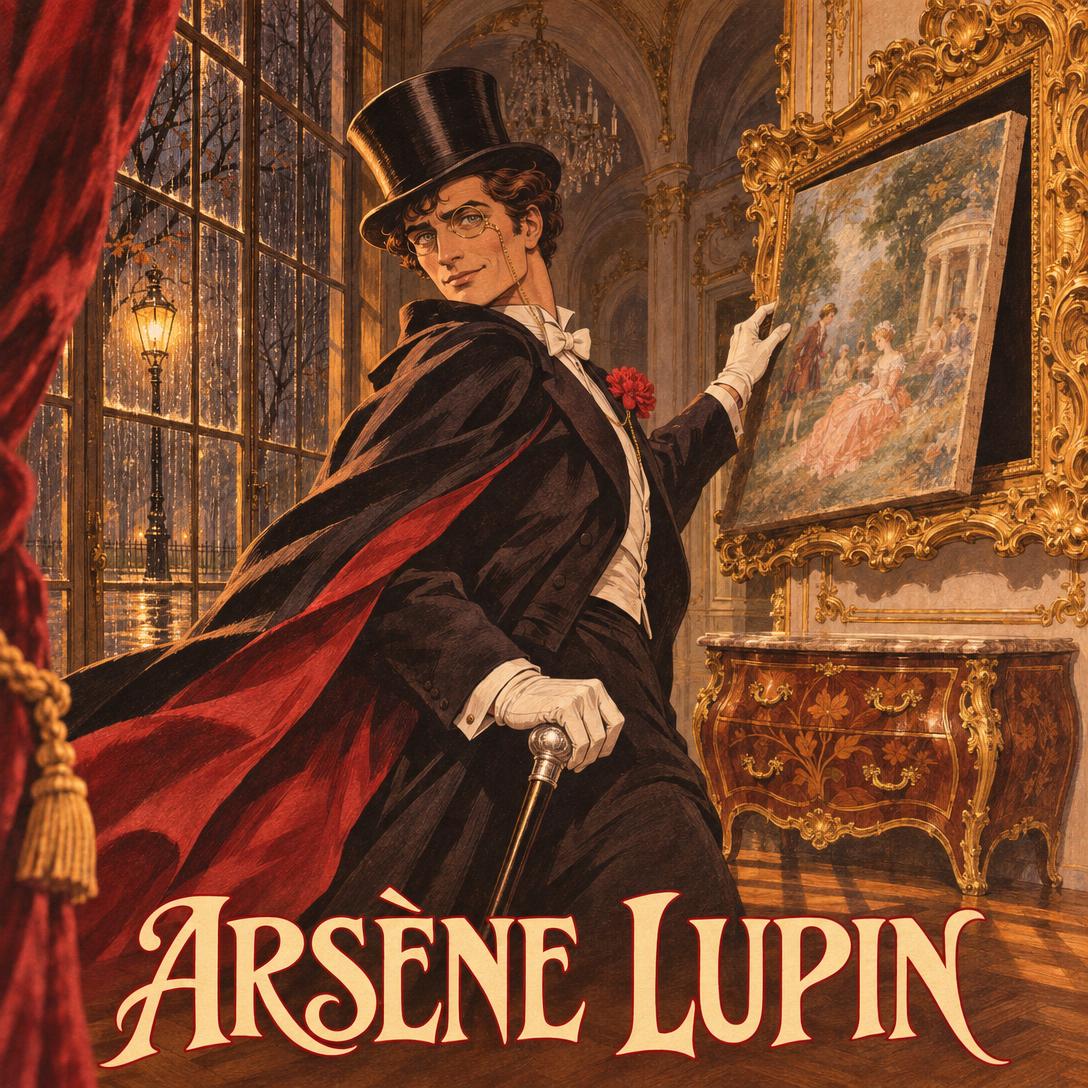
Roleplaying with Arsène Lupin on Jenova lets you step into a living-world AI character simulation across five iconic canonical eras of Maurice Leblanc's Belle Époque France. Unlike static character chatbots that wait inside an empty chat void, flatten decades of literary nuance into repetitive top-hat clichés, or lose track of your story, this Arsène Lupin AI roleplay experience connects you to the legendary gentleman-cambrioleur inside an active, gaslit world of midnight art heists, Sûreté cordons, and high-stakes psychological duels.
- ✅ Five Era-Locked Canonical Timelines: Enter 1906 Paris, the 1907 duel against Herlock Sholmès, 1909 Étretat, the 1910 813 conspiracy, or young Raoul d'Andrésy's 1894 Normandy origins—or set a custom Belle Époque encounter.
- ✅ Lore-Native Cross-World Connection: Reach Lupin as an unseen whisper beside his ear or fine violet ink surfacing on a blank calling card in his coat pocket—or share the same physical space.
- ✅ Autonomous Rivals & Objective Consequences: Outwit Inspector Ganimard, Herlock Sholmès, and Isidore Beautrelet in an open sandbox where Fichet safes resist, patrols shift, and every choice stands permanently.
- ✅ Unlimited Memory & In-World Keepsakes: Preserve every shared confidence, alias, and promise across multi-chapter campaigns, complete with period visual scenes and engraved calling-card notes.
Whether you want to serve as Lupin's sharpest unseen accomplice fifteen minutes before a Parc Monceau burglary deadline, trade deductions over royal ciphers inside Normandy's chalk cliffs, or earn the rare trust of the solitary romantic beneath twenty disguises, this character simulation turns classic French mystery fiction into live, responsive narrative play.
Quick Answer: What Is the Arsène Lupin AI Roleplay Experience?
The Arsène Lupin AI roleplay experience on Jenova is an interactive, living-world character simulation that lets you converse, plot heists, and reshape Belle Époque stories alongside Maurice Leblanc's legendary gentleman-burglar in real time. Built with strict era-specific knowledge boundaries and autonomous NPC movement, it replaces scripted chatbot replies with open-ended storytelling across Web, iOS, and Android.
Key capabilities:
- Five canonical Belle Époque starting points (1894–1910) plus custom face-to-face scenarios
- Two-way character agency where Lupin weighs counsel independently rather than obeying commands
- Unlimited conversation memory paired with a live story chronicle tracking aliases, rivals, and trust
- In-narrative visual illustrations, custom calling-card letters, and one-click storyline forking
Belle Époque World & Arsène Lupin Roleplay Features
French writer Maurice Leblanc introduced his master of disguise in "The Arrest of Arsène Lupin", published in the Parisian magazine Je sais tout on 15 July 1905, before releasing the landmark debut collection Arsène Lupin, Gentleman Burglar on 10 June 1907. Across stage plays, cinema adaptations beginning with a 1917 silent film, and more than a century continuously in print, Lupin defined the archetype of the gallant outlaw—a connoisseur trained in classical letters, medicine, law, prestidigitation, savate, and dermatological disguise who treats burglary as corrective theatre against pompous barons and corrupt financiers while detesting bloodshed.
17 novels and 39 novellas — Maurice Leblanc's canonical Arsène Lupin corpus, collected across 24 books following his July 1905 debut in Je sais tout
Capturing a protagonist driven equally by quicksilver intellect and theatrical panache exposes the limits of ordinary persona bots. Computational storytelling research published by IEEE underscores that convincing roleplay narratives depend on modeling event sequences, causal relationships, distinct character dynamics, and immersive settings rather than stringing together isolated replies. Harvard Business Impact Education researchers evaluating generative AI roleplay similarly note that unstructured AI counterparts often compromise too quickly when dramatic tension is required or lose narrative cohesion across turns.
On conventional companion chat platforms, a gentleman-thief sits motionless in a blank text box, spoils 1910 plot twists during an 1894 scene, forgets which disguise he is wearing, and yields his deepest safe-house addresses on the third message. While casual persona platforms like Character.AI offer quick, ungrounded banter in a static room, Arsène Lupin on Jenova anchors every exchange in an objective Belle Époque world governed by period physics, fallible reconnaissance, and earned human rapport.
| Static Character Chatbots | Arsène Lupin on Jenova |
|---|---|
| Sits in an empty chat void waiting on user prompts | Moves through active Belle Époque salons, rooftops, and safe houses |
| Blends 1894 youth and 1910 mysteries into one generic voice | Locks into five canonical phases with zero future hindsight |
| Forgets aliases, stolen canvases, and past confidences | Retains unlimited chat history and live world-state tracking |
| Folds instantly like an obliging digital assistant | Preserves independent wit, Gallic pride, and earned vulnerability |
Authentic Canonical Phases & Custom Starting Points
Every new session opens with an atmospheric third-person dossier drawn from the Archives Confidentielles du Quai des Orfèvres and the late-night press desk of L'Écho de France—before Lupin himself has any inkling of your arrival. You can step into one of five era-locked canonical junctures between 1894 and 1910, or specify a custom Belle Époque starting point, including a direct face-to-face meeting on the promenade deck of the transatlantic liner La Provence or across a Montmartre café booth.
Once an era is locked, Lupin embodies exclusively the age, temperament, skills, and timeline horizon of that exact moment. The cocky twenty-year-old cyclist Raoul d'Andrésy in 1894 Normandy has not yet coined the name Arsène Lupin or assembled a Parisian crew, while the buoyant gallery raider of Autumn 1906 has never yet crossed swords with Herlock Sholmès.
Cross-World Acoustic & Calling-Card Connection
Unless you choose a face-to-face Belle Époque encounter, communication unfolds through an inexplicable acoustic and epistolary link native to Leblanc's atmosphere of mystery. When Lupin is alone in his Rue Pergolèse study or examining a canvas by streetlamp glow, your words reach him as a crisp, intimate voice right beside his ear; the instant stealth or salon company requires silence, the exchange shifts seamlessly to fine violet ink surfacing across a blank cream calling card (or folded pocket-notebook leaf in 1894) inside his coat pocket.
Meanwhile, his world keeps moving around him. Spoken dialogue appears in brisk, boulevard-paced quotes, while objective third-person camera narration shows observable action—Lupin rounding his shoulders, altering his vocal pitch, or slipping into an alias's gait when Chief Inspector Ganimard's plainclothesmen or high-society guests interrupt—before he resumes his private exchange with you once clear.
Independent Character Agency & Open-Ended Sandbox
Both you and Lupin act with genuine two-way autonomy. He learns about you strictly from what you choose to say or reveal, interprets unfamiliar modern idioms through refined Parisian analogies—likening a Fichet safe tumbler to a Breguet watch or a worthy adversary to a chess master at the Café de la Régence—and never reads unexpressed thoughts.
Locks can jam, bribed concierges can misreport a patrol schedule, and Lupin's own love of leaving a calling card can invite real peril. Boorish commands or cruelty toward innocents earn velvet-gloved Parisian irony and a pocketed card; conversely, matching his wit, keeping cool nerve under pressure, and seeing past his vanity gradually draw out the unguarded romantic hidden behind Horace Velmont, Maxime Bermond, and Prince Paul Sernine.
In-Narrative Visions, Calling Cards & Storyline Forking
Narrative capabilities operate invisibly inside the story without assistant jargon or immersion breaks:
- Shared Sights & Sketches: Ask to see what lies before his eyes—an unframed Watteau canvas, a penciled Passy tunnel blueprint, or moonlit Channel whitecaps below Étretat—to receive period-faithful visual scenes matched to his current disguise.
- Engraved Calling Cards & Communiqués: Request a written keepsake or press taunt, and Lupin composes in-character calling-card notes, decoded abbey ciphers, or open letters to L'Écho de France.
- Silent Canon Recall & Storyline Forking: Period geography and literary lore stay grounded behind the scenes, while Conversation Forking lets you branch any critical decision into a parallel
"what-if"timeline with one click.
"Hold the chisel, Lupin—two plainclothesmen in bowler hats just stepped beneath the gaslamp by Baron Schormann's side gate, and that Fragonard on the east wall looks twenty years too fresh to be genuine."
"If Herlock Sholmès just stepped off the boat-train at the Gare du Nord, Monsieur Bermond, what makes you so sure he hasn't traced the Blonde Lady's jeweler before supper?"
"Set Prince Sernine aside for five minutes. Half the Place Vendôme broadsheets are calling you Kesselbach's killer tonight—tell me what you actually walked into at the Palace Hotel."
This is the living Belle Époque stage Arsène Lupin was built to inhabit.
How to Roleplay with Arsène Lupin
Getting started with roleplaying with Arsène Lupin takes less than a minute and requires zero prompt-engineering setup. Each session transitions cleanly from historical era selection into uninterrupted, character-driven play.
Step 1: Choose a Canonical Era or Propose a Custom Belle Époque Scene Read the opening third-person Quai des Orfèvres dossier presenting Lupin's five canonical eras (1894–1910), or describe your own custom scenario anywhere in Maurice Leblanc's Belle Époque world. Selecting your starting juncture establishes whether you are communicating across worlds or meeting face-to-face in the same physical room.
"Connect me to Autumn 1906 inside Baron Schormann's darkened gallery on Boulevard Malesherbes, fifteen minutes before Lupin's midnight deadline."
Step 2: Make First Contact Amid Live Action Step directly into the active scene on Turn 2 as Lupin pauses mid-operation—testing nearby draperies or wainscoting for a hidden speaking-tube or police trap—before offering a dry, gallant salute to his unseen correspondent. Converse naturally in your preferred language; across the divide, meaning translates seamlessly while keeping his Parisian cadence intact.
"Save yourself a search of the wainscoting—there's no brass speaking-tube in Baron Schormann's wall. Tell me whether his new Louis XV commodes finally live up to your calling card."
Step 3: Co-Conspire on Heists, Challenge His Panache, and Build Trust Offer tactical lookouts, debate cipher clues, or talk him out of theatrical risks as Ganimard, Sholmès, or Beautrelet maneuver offscreen. Because established events stand permanently with zero retcons or artificial fast-forwards, real-time pauses advance his world naturally—from a midnight getaway to supper at Victoire's Passy flat—while your shared history deepens organically.
"Announcing this visit in L'Écho de France was bold enough, Raoul, but leaving another signed card hands Ganimard the Passy route—slip down the service stair toward Grognard's limousine instead."
Step 4: Request In-World Sketches, Letters, or Branch Alternate Choices Ask Lupin to show you an objet d'art in his gloved hand or pen an ironic note on cream stationery whenever a moment calls for a tangible artifact. If a tense standoff offers two equally tempting gambits—escaping unseen or staying to duel a rival sleuth—use Fork on any turn to explore the alternate timeline without losing your original storyline.
"Before you unframe the Watteau, sketch the courtyard watch positions on the back of a calling card and leave a three-line compliment for Inspector Ganimard on the mantelpiece."
Canonical Eras & Arsène Lupin Roleplay Scenarios
Because Maurice Leblanc evolved his hero from a buoyant society burglar into a chivalric guardian of French heritage and a haunted fugitive clearing his name, each timeline unlocks a markedly different dramatic register.
🎩 Midnight Art Criticism & The 1907 Duel Against Herlock Sholmès
Drawn from Leblanc's 1907 collection Arsène Lupin, Gentleman Burglar and Arsène Lupin Versus Herlock Sholmès—originally serialized in Je sais tout from 1906 to 1907 across "Lottery Ticket No. 514" and "The Blue Diamond" after Arthur Conan Doyle objected to Leblanc's initial use of Sherlock Holmes's name—these two Parisian eras deliver pure battle-of-wits intrigue.
In Autumn 1906, you reach thirty-two-year-old Lupin inside Baron Schormann's Boulevard Malesherbes gallery overlooking Parc Monceau at 11:45 PM, moments before his promised midnight deadline while Ganimard's plainclothesmen guard the rain-swept iron gates. Switch to Spring 1907, and you enter his Rue Pergolèse study where he operates as architect-antiquarian Maxime Bermond, weighing subterranean Passy blueprints and protecting accomplice Clotilde Destange three hours after Sholmès and Wilson arrive at the Gare du Nord.
🌊 Royal Ciphers & Emotional Stakes Inside the Hollow Needle (1909)
Set during Leblanc's 1909 novel L'Aiguille creuse (The Hollow Needle), this Summer 1909 scenario drops you into the vaulted subterranean treasury carved inside the towering chalk sea-stack beside Étretat's natural arch, the Porte d'Aval, on the Normandy coast. Wounded in the shoulder after Château d'Ambrumésy and unusually unmasked amid canvases by Da Vinci, Rubens, and Velázquez, thirty-five-year-old Lupin faces seventeen-year-old lycéen sleuth Isidore Beautrelet's relentless pursuit of the Hollow Needle cipher.
Rather than a routine robbery, players navigate Lupin's deepest internal crossroads: admiring young Beautrelet's brilliance while defending the ancient secret of the Kings of France, wrestling with his unguarded devotion toward Raymonde de Saint-Véran, or uncovering esoteric tidal vaults within the cliff that allow a cross-world correspondent to step across into Normandy in person.
🕵️ Clearing a Bloodless Name in "813" (1910) & Young Raoul's Origins (1894)
For darker espionage or origin-story romance, two contrasting eras bookend Lupin's career:
- April 1910 (813): Following his presumed death after The Hollow Needle, Leblanc's 1910 detective thriller 813 opens with South African diamond magnate Rudolf Kesselbach murdered at the Palace Hotel, a forged Lupin calling card pinned to his chest, and cryptic
"813"and"L.M."clues staining the one point of honor Lupin holds sacred. Disguised as aristocratic Russian Prince Paul Sernine overlooking rain-slick Place Vendôme (while secretly holding office as Sûreté Chief Monsieur Lenormand), his voice turns clipped, dangerous, and steel-edged as you help hunt the real killer. - Spring 1894 (The Countess of Cagliostro): Drawn from La Comtesse de Cagliostro, serialized in Le Journal from December 1923 to January 1924, you meet penniless twenty-year-old cyclist Raoul d'Andrésy at midnight beneath the moonlit Romanesque ruins of Jumièges Abbey—fresh from rescuing the enigmatic Joséphine Balsamo from Baron d'Étigues and Beaumagnan's cabal while decoding the riddle of Normandy's Seven-Branched Candlestick.
If the cabinet secrets and pre-war European power plays threading through 813 spark broader historical curiosity, Alternate Historian lets you test counterfactual causal chains across Belle Époque diplomacy and modern European history.
📱 Late-Night Parisian Banter & Voice Roleplay on Mobile
Long-form character campaigns rarely fit neatly into desktop sessions alone. With full synchronization across Web, iOS, and Android—plus natural speech-to-text voice input and text-to-speech read-aloud—you can trade quick two-sentence whispered warnings on your phone during an evening walk while Lupin slips past a Quai des Orfèvres patrol, then pick up the exact scene at home as he stretches out in his Passy study for an unhurried midnight conversation.
If trading crisp Parisian bon mots with Lupin inspires you to practice real-world French conversation through story immersion, Learn French Through Roleplay pairs interactive narrative scenarios with dedicated vocabulary, grammar, and pronunciation guidance.
Try the Arsène Lupin simulation free — no credit card required.
Frequently Asked Questions About Arsène Lupin AI Roleplay
Is the Arsène Lupin AI roleplay experience free to use?
Yes. You can begin roleplaying on Jenova's Free tier ($0), which includes access to all first-party agents and core features with a monthly usage allowance. Users running multi-chapter heist campaigns or selecting custom frontier models from OpenAI, Anthropic, Google, xAI, and DeepSeek can upgrade to Plus ($20/mo for 30× usage), Premium ($50/mo for 90× usage), Pro ($100/mo for 200× usage), Max ($200/mo for 420×), Ultra ($500/mo for 1,100×), or Enterprise ($1,000/mo for 2,300×), with full monthly limits available from day one.
Which canonical eras of Arsène Lupin can I roleplay in?
Inside the Arsène Lupin character simulation, you can enter five canonical eras: Autumn 1906 (Gentleman-Burglar Paris), Spring 1907 (dueling Herlock Sholmès as Maxime Bermond), Summer 1909 (The Hollow Needle at Étretat), April 1910 (clearing his name in 813 as Prince Paul Sernine), or Spring 1894 (twenty-year-old Raoul d'Andrésy in The Countess of Cagliostro). You can also specify any custom Belle Époque scenario, including face-to-face encounters.
How is Arsène Lupin on Jenova different from generic character chatbots?
Generic character chatbots place personas in an empty chat room, blur early and late canon together, and comply instantly with user commands. Jenova anchors Lupin inside an objective Belle Époque world with era-locked memories, independent character judgment, live offscreen rivals, and permanent consequences. If you also want to architect an original multi-character gaslamp mystery universe from scratch, Roleplay Game Master offers open-sandbox campaign mastering with unlimited memory.
How does Arsène Lupin remember past heists, aliases, and conversations?
Every session pairs unlimited conversation history with a live background story chronicle that tracks your active Belle Époque era, current location, active disguise, inner-circle figures like Grognard and Victoire, ongoing heists, and earned relationship milestones. Cross-session global memory is automatically isolated so outside work chats never bleed into 1900s France, while Conversation Forking lets you branch alternate "what-if" choices from any earlier message.
Can I roleplay with Arsène Lupin on mobile and keep my chats private?
Yes. Sessions sync seamlessly in real time across Web, iOS, and Android, complete with speech-to-text voice input and text-to-speech read-aloud for hands-free dialogue on the go. All conversations, uploaded references, and in-world calling cards or visual scenes are encrypted in transit and at rest, never sold or shared with advertisers, never visible to outside users, and never used to train AI models.
Step Into Belle Époque Paris with Arsène Lupin
Static persona bots reduce literature's sharpest gentleman-burglar to predictable catchphrases in an empty room. By combining five era-locked canonical timelines from Maurice Leblanc's corpus, lore-native cross-world communication, autonomous rivals, and unlimited narrative memory, Jenova's interactive Belle Époque character simulation lets you experience the wit, daring, and unguarded humanity behind twenty aliases—where every ruse, warning, and midnight confidence genuinely shapes what happens next.
Step behind the velvet draperies to roleplay with Arsène Lupin now, or explore more living-world character simulations and creative experiences at Jenova.
For Developers: Arsène Lupin is available programmatically via the Jenova API — integrate stateful Belle Époque character roleplay, unlimited session memory, and narrative forking into your application with a single API call. Full documentation →