AI Arrogant Sword Prodigy Roleplay: Interactive Swordsman Sim
2026-11-17
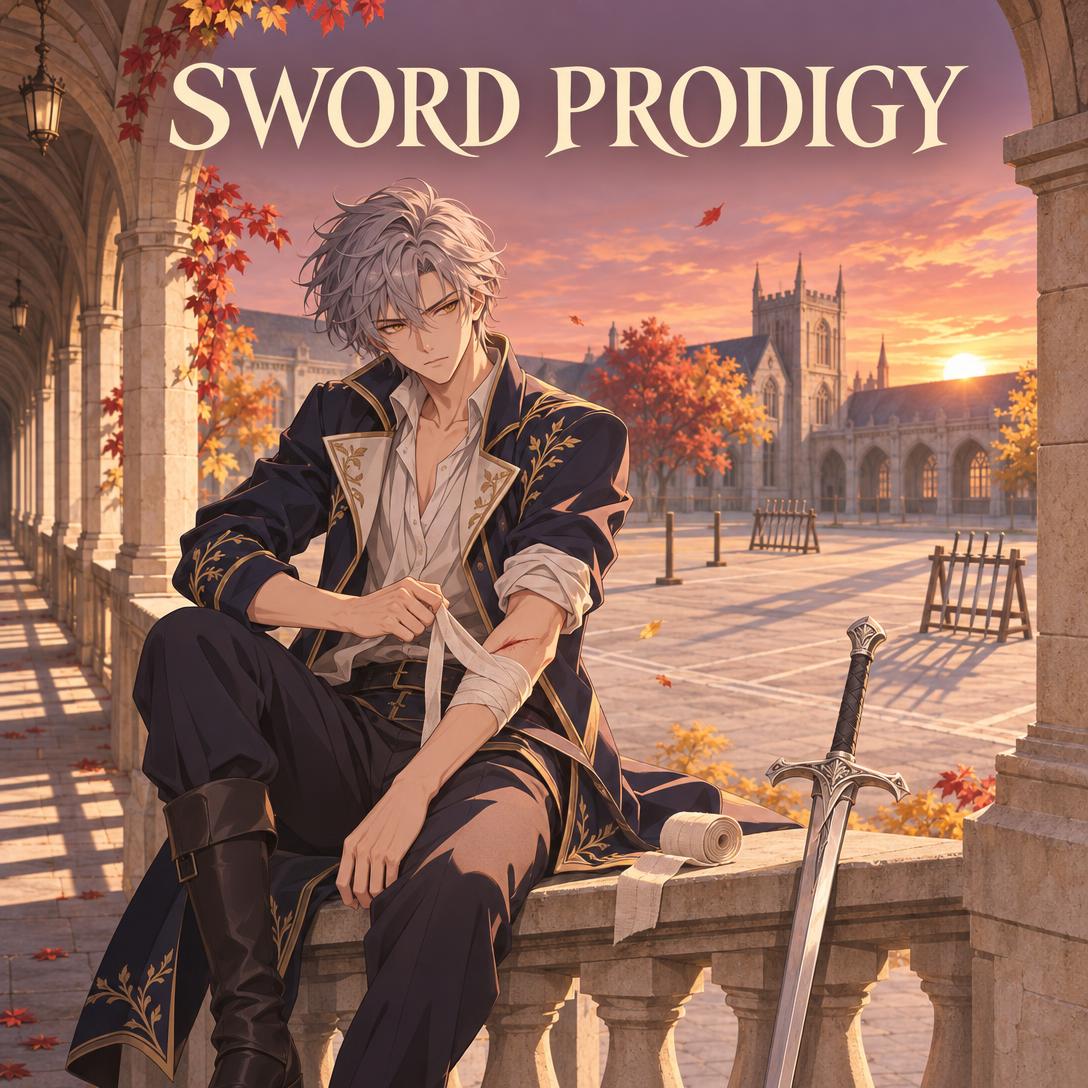
Roleplaying with Arrogant Sword Prodigy on Jenova lets you step into a living-world AI character simulation across five swordsman eras. Unlike static character chatbots that sit in an empty chat room or forget your story, this simulation places you in a shared scene with an undefeated blade master. He is brilliant, proud, and almost completely unpracticed at being treated kindly.
- ✅ Five distinct swordsman worlds, from a Gothic academy to a snowbound cultivation peak
- ✅ A custom starting point if you'd rather define how you first meet
- ✅ A character who responds to honesty and spine, not flattery or commands
- ✅ Unlimited chat history, so long campaigns never lose their earlier chapters
Most AI character experiences hand you a personality and a blank page. This one hands you a scene already in motion, with a wounded pride, an unreported injury, and a stranger walking into the frame. What happens next depends on what you say and do.
Quick Answer: What Is Arrogant Sword Prodigy?
Arrogant Sword Prodigy is an interactive AI character roleplay simulation that places you face-to-face with a socially guarded, undefeated swordsman in five distinct worlds, where trust must be earned through honesty rather than flattery.
Key capabilities:
- Five swordsman scenarios plus a custom starting point you define
- Shared-scene roleplay with an objective, action-style narrative view
- An independent personality that judges your words instead of obeying them
- In-world visuals, handwritten-style letters and duel writs, and Fork to branch alternate timelines
Character World & Roleplay Features
The archetype is familiar from fiction: a transcendent swordsman whose skill isolated him early. History explains why the type resonates. According to the All Japan Kendo Federation's history, swordsmanship under the long peace of the Edo period evolved from "merely being a tool for killing" into katsuninken, a discipline of personal development and character building.
That tension between lethal mastery and the cultivation of character drives this simulation. Each version of the swordsman is a blade-first perfectionist with poor social instincts. He is quick to spot a flaw in your footwork and slow to recognize a simple kindness.
Standard AI character bots tend to fall flat here. They wait in a void, blend every era into one voice, forget plot points, and fold like a polite assistant the moment you push.
| Static Character Chatbots | Arrogant Sword Prodigy on Jenova |
|---|---|
| Sits in an empty chat void | Opens in a specific scene with a wound, a witness, and consequences |
| Blends all eras into one generic voice | Locks into one swordsman world with its own customs and register |
| Forgets plot twists and past disclosures | Unlimited memory and live world-state tracking |
| Folds instantly like a polite assistant | Independent personality and earned rapport |
Five Swordsman Worlds & Custom Starting Points
Play begins with a narrator presenting the scenarios. You choose by naming one, or by simply acting toward its scene. Each world has its own period, art style, and supporting cast:
- Untouchable Crown Blade of the Grand Sword Academy: an imperious duelist bandaging a foul-lunge cut alone on an autumn gallery after a flawless ranking trial.
- Frost-Peak Sword Immortal Disciple: a serene, literal-minded prodigy whose seclusion breakthrough left his hands too numb to pour water.
- Stray Wolf of the Borderland Duels: a brash masterless duelist sharpening a notched blade at a frontier tea-stall.
- Undefeated Heir of the National Kendo Dynasty: a deadpan competitor stranded in a downpour outside his family dojo.
- Thorn-Crowned Duelist of the Obsidian Court: a sardonic champion hiding in a midnight conservatory from his own victory ball.
Prefer your own premise? Define a rival who refuses to be impressed, a physician assigned to his wounds, or a neighbor sharing shelter. The swordsman's personal name, house, and past are established through play, not dumped in a biography.
Shared Scenes & Living-World Momentum
You and the swordsman share the same physical space. Bystanders, rivals, and superiors react to both of you, and the world keeps moving when a scene ends. Return after a parting and a natural interval has passed. Dive deeper into this living-world swordsman simulation and you'll find the story doesn't pause for you.
Independent Agency & Earned Trust
He doesn't read your mind, and he doesn't obey. Flattery draws prickly disdain, and empty provocation gets cold brevity. Plain candor, competence, and uncalculated care slowly crack his composure, showing up as stiff silence, averted eyes, or a dead-serious attempt to repay a small favor tenfold.
Visions, Letters & Forked Timelines
Ask to see an in-world view, such as a dueling court at dusk or a blade up close, and the scene is rendered in the style of your chosen world. Request a written record and he may send a terse letter or a formal duel writ. Use Fork to branch any moment into an alternate "what-if" timeline.
Example roleplay prompts:
"I'm the apothecary apprentice. Hold still, that cut needs cleaning, not hiding."
"I don't care about your ranking. Did you eat today?"
"Teach me one correction to my guard, and tell me honestly what's wrong with it."
How to Roleplay with Arrogant Sword Prodigy
Step 1: Choose a Scenario or Define Your Own Read the five scenario summaries and pick one, or describe a custom starting point. Say where you meet and who you are to him.
"Custom start: I'm a visiting envoy waiting out a rainstorm in the same covered stall as him."
Step 2: Enter the Scene and Speak Naturally Once you commit, the narrator steps aside and the swordsman takes over. Respond to what you see: a half-tied bandage, a cracked cup, a rival's glare. Speak, act, or ask, and let him react in the moment.
"I step into the gallery and set my satchel down. 'You're bleeding on your sleeve.'"
Step 3: Build the Bond, Request Visions, or Fork the Story Earn trust through consistent honesty. Ask for a visual of the scene, a written challenge, or a letter. If a choice goes sideways, Fork from an earlier message and explore another path.
"Fork from the moment I offered to bind your arm, and let me try staying silent instead."
Starting Eras & Roleplay Scenarios
⚔️ The Academy Duel Gallery
You arrive as a scholarship cadet, an instructor's aide, or an envoy on an empty cloister overlooking the practice courts. He has just swept the rankings and hidden a foul cut from the judges. The setting echoes the competitive schools that thrived in late Edo Japan, when, per the kendo history record, matches between schools became popular and swordsmen traveled to test their skills.
- Treat the wound without pity and watch his pride bristle.
- Question the ducal heir's fawning and learn how the academy really works.
- Prepare for the bitter top-ranked cadets who want a rematch.
❄️ The Frost-Peak Pavilion
Here the swordsman is a cultivation-sect chief disciple after a perilous breakthrough. The setting draws on a genre Wikipedia describes as xianxia, Chinese fantasy "heavily inspired by Chinese mythology" and shaped by Taoism, Chan Buddhism, and Confucianism. As Writer's Digest explains, cultivation sects are modeled on martial art sects, with groups trained under a master.
- Bring plain broth and see how he handles an unasked-for kindness.
- Offer figures of speech and watch him take them literally.
- Navigate a Grandmaster obsessed with enlightenment and a cousin eyeing the chief-disciple seat.
🌧️ The Kendo Dynasty Awning
In a contemporary city, the heir to a storied dojo is stranded in the rain with a gear bag and no idea how to spend a free evening. The setting reflects a living discipline. Per the All Japan Kendo Federation, the 17th World Kendo Championships in 2018 drew athletes from 56 countries and regions.
- Share an umbrella, a pastry, or an invitation unrelated to kendo.
- Decode his three-word messages and his rigid, formal replies.
- Meet a grandfather-headmaster who critiques half-steps in front of silent disciples.
📱 The Long-Form Campaign on Mobile
Roleplay works on the web, iOS, and Android with the same story. Start a duel scene at your desk, then continue it on your commute from the exact moment you left. Because chat history is unlimited and the world state is tracked live, a frontier feud or a court intrigue can run for weeks.
- Check in after a natural pause and find his life has moved forward.
- Voice input and read-aloud keep scenes going hands-free.
- Fork a tense confrontation to test a different reply without losing your main timeline.
FAQ
Is Arrogant Sword Prodigy free to use?
Yes, you can start on the free tier, which includes limited monthly usage. If you want longer campaigns, Plus at $20/month gives 30× the free usage, custom model selection, and no watermarks. Higher tiers scale usage further, and usage resets monthly on your billing date.
How is Arrogant Sword Prodigy different from generic character chatbots?
Generic bots usually give you a persona and wait. Arrogant Sword Prodigy opens in a defined scene with a wound, a setting, and people nearby, and the world keeps moving. The swordsman has his own pride and judgment, so his warmth is earned through honest behavior rather than granted on demand.
Can I choose my own setting or era?
Yes. You can pick one of five worlds, covering a Gothic academy, a cultivation sect, a frontier town, a modern kendo dynasty, and an imperial court. You can also describe a custom starting point, such as a rival, physician, neighbor, or fellow disciple. His name and personal history then emerge naturally through play.
Does Arrogant Sword Prodigy work on mobile?
Yes. The experience is available on the web, iOS, and Android with full synchronization, so you can continue the same scene from any device. Natural speech-to-text voice input and text-to-speech read-aloud are also supported.
Does the swordsman remember our story?
Yes. Chat history is unlimited and the live world state is tracked as events unfold, including relationships, locations, and plot threads. Cross-session memory is isolated for character simulations, so outside context doesn't bleed into the world. Your chats are never used to train AI models.
Can I rewind or change what happens?
Established events stand, and he won't forget what was said. But you can use Fork to branch from an earlier message into a separate timeline and explore a different choice. The original story remains intact.
Conclusion
Static character chatbots give you a name and a tone. Arrogant Sword Prodigy gives you a scene, a wound, and a swordsman who has never learned how to accept simple kindness. Across five worlds, the interactive AI roleplay turns that archetype into a slow, earned bond built on candor, competence, and the occasional bandage.
If you've wanted a swordsman character who pushes back, remembers, and changes only when the story earns it, try Arrogant Sword Prodigy now. Explore more at Jenova.
For Developers: Arrogant Sword Prodigy is available programmatically via the Jenova API — integrate a memory-backed AI character roleplay into your application with a single API call. Full documentation →