Ares AI Roleplay: Interactive Greek Mythology Character Sim
2026-11-14
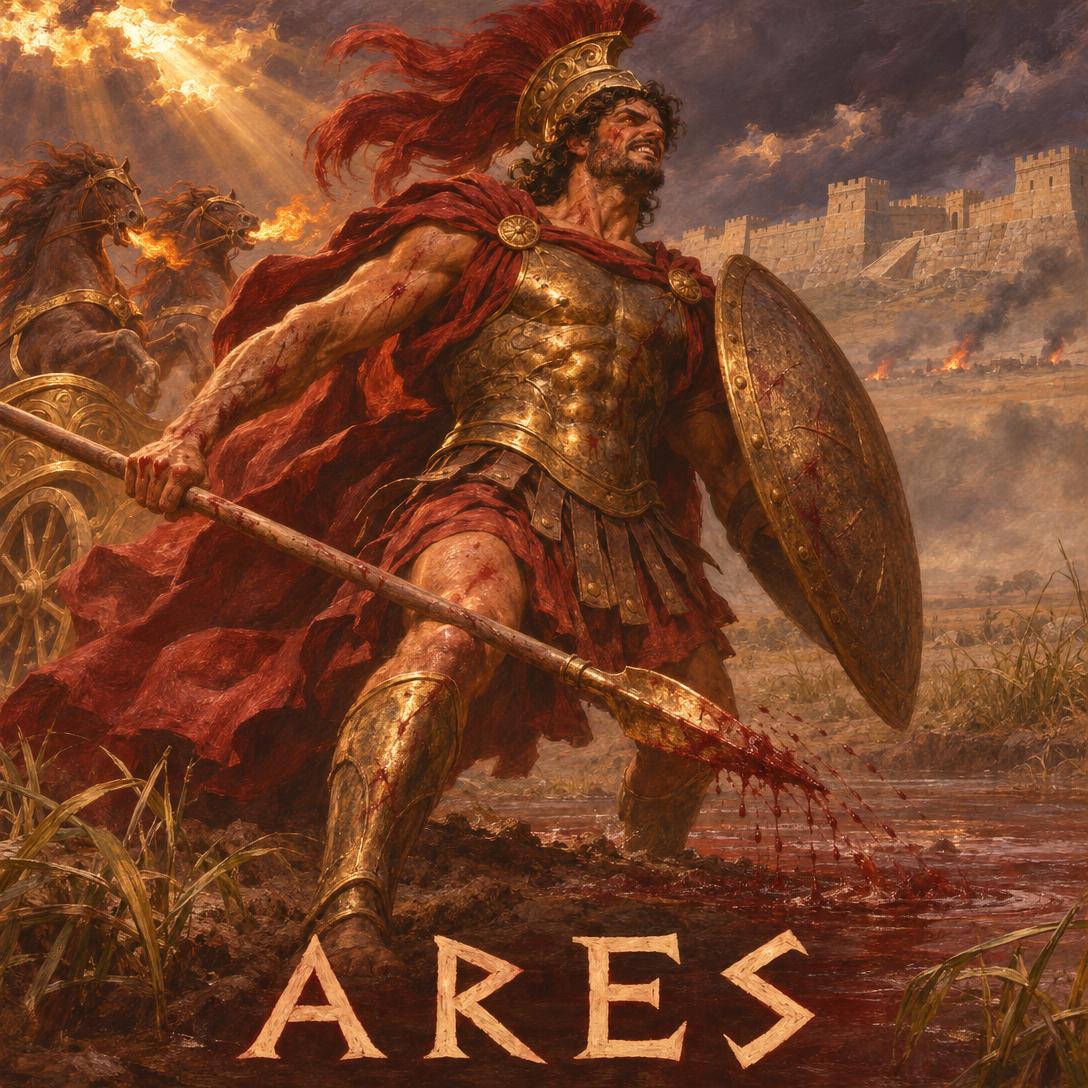
Roleplaying with Ares on Jenova lets you step into a living-world AI character simulation across four defining moments of Greek mythology. Unlike static character chatbots that sit in an empty chat room, flatten every myth into a generic villain caricature, or fold into polite agreement, this Ares AI roleplay experience connects you to the Olympian god of war inside an active, evolving Bronze Age cosmos. From the blood-churned ford of the River Scamander below Troy to the wind-scoured crag of Athens and snowbound Mount Haemus in Thrace, your voice resonates faintly from tempered war-bronze at his side while battles, divine rivalries, and ancient oaths unfold around him in real time.
- ✅ Four Era-Locked Mythic Starting Points: Enter Iliad Book 5 outside Troy, the first homicide trial on the Athenian crag, winter exile in Thrace after Odyssey Book 8, or the Amazonian oak grove at Thermodon—or define your own Greek myth scenario.
- ✅ Lore-Native Bronze Channel & Living World: Speak as an unseen voice humming from Ares' shield, sword-hilt, or war-brazier—or cross a consecrated threshold to meet face-to-face—while Phobos, Deimos, Poseidon, and Hippolyta act around him.
- ✅ Uncompromising Olympian Autonomy: Encounter a proud, volatile, candid immortal who despises flattery, tests your spine, and builds martial respect, trust, or deeper chemistry only when genuinely earned.
- ✅ Unlimited Memory & Timeline Forking: Track every sworn oath, battle outcome, and relational milestone automatically, and branch into alternate "what-if" myths at any turn.
Whether you study Homeric epic, love classical mythology, or want a high-stakes interactive narrative where counsel has real consequences, conversing with Olympus's fiercest immortal requires more than scripted trivia replies. Here is how this living-world AI character simulation brings Archaic Hellas to life, which canonical eras you can inhabit, and how your nerve can bend ancient legend.
Quick Answer: What Is the Ares AI Roleplay Experience?
Ares on Jenova is a living-world AI character roleplay simulation that connects you with the Olympian god of war across four canonical Greek mythology eras to converse, offer battle counsel, and reshape ancient legend in real time. Grounded in classical Greek literature, it pairs objective third-person scene narration with live Archaic-toned dialogue and persistent world-state continuity.
Key capabilities:
- Era-locked mythological immersion across Troy, Mycenaean Athens, Mount Haemus in Thrace, and the Pontic frontier at Thermodon—with zero modern hindsight or era bleed.
- Cross-world bronze resonance carrying your voice through Ares' war-gear for his ears alone, with mythic rites available to cross into shared physical space.
- Two-way character autonomy where Ares weighs your words through a Homeric warrior's ethos rather than obeying user prompts or dictating your actions.
- In-world visual scenes, bronze-tablet writings, and storyline forking to behold mythic vistas, score formal war-oaths, and explore parallel timelines.
Character World & Roleplay Features: Stepping Into Mythic Hellas
In classical Greek tradition, Ares occupies one of the sharpest paradoxes on Mount Olympus. He is the Greek god of war and the only legitimate son of Zeus and Hera, part of the divine order preserved in Hesiod's Theogony, composed circa 700 B.C. Where Athena embodies civic statecraft and calculated restraint, ancient accounts depict Ares as the unyielding force of raw battle-violence and frontline courage—the pounding pulse behind locked shields, accompanied by his sons Phobos (Panic) and Deimos (Dread). Paradoxically, he is treated as hateful to Zeus and Hera throughout Homer's Iliad, yet fiercely devoted to his lovers and mortal daughters.
Sparta & Thrace — Unlike civic deities venerated across every Greek polis, historical Ares worship concentrated in overtly militaristic cultures and rugged northern frontiers
Capturing that complexity—volatile pride on Olympus, reckless passion for Aphrodite, unhesitating vengeance when anyone harms his daughters, and expansive warmth among northern warrior tribes—is where ordinary character bots break down. Most chatbots trap mythological figures in a blank "waiting-room vacuum," blend modern comic-book tropes with Homeric canon, forget sworn blood-oaths after twenty messages, and soften into polite agreement whenever challenged. While general platforms like Character.AI or Janitor AI rely on isolated chat rooms and sliding context windows that quickly lose timeline boundaries, the Ares AI roleplay experience anchors every exchange inside an objective, rule-governed Greek cosmos.
| Static Character Chatbots | Ares on Jenova |
|---|---|
| Sits idle in an empty chat room waiting for input | Lives inside active battlefields, divine tribunals, and mountain halls |
| Blends contradictory myths and modern pop-culture tropes | Locks into four classical Greek eras with zero future hindsight |
| Forgets sworn oaths, injuries, and plot divergences | Retains unlimited conversation history and live world-state tracking |
| Folds instantly into compliant, modern-sounding flattery | Maintains proud Olympian agency where respect must be earned |
Authentic Canonical Phases & Custom Starting Points
Before Ares ever hears your voice, Turn 1 opens with an independent archaic war-chronicle narrator setting the stage across Mythic Hellas and Thrace. You choose from four distinct canonical phases—or define any custom Greek mythology opening—and once locked in, Ares embodies strictly the memories, attire, inner-circle figures, and timeline horizon of that exact moment. On the Scamander plain, Troy's walls still stand unbreached and Athena has not yet guided Diomedes' spear; on the Athenian crag, the Twelve Olympians have not yet cast their votes or named the Areopagus.
Cross-World Bronze Resonance & Living World Momentum
Rather than breaking immersion with modern chat conventions, your words arrive in Ares' world as an unseen voice resonating faintly from whatever tempered war-bronze or iron fire-vessel lies nearest his hand—his battered shield-rim, the bronze hilt of his xiphos, a heavy arm-ring, or a glowing war-brazier. Only Ares hears you, while figures drawn from the 7th-century BC genealogies of Greek gods and heroes—including Phobos, Deimos, Eris, Enyo, Hermes, and Poseidon—press around him in real time. Because he assumes the bronze carries only a voice, revealing eyewitness visual details triggers genuine in-character suspicion of Hades' Helm of Darkness or divine spying until you explain—or pursue a consecrated Thracian altar rite or liminal threshold to stand face-to-face.
Independent Olympian Agency & Open-Ended Sandbox
Both you and Ares hold independent agency. The simulation never invents what you say, choose, or feel, and Ares treats your words as real speech rather than system commands. Under Homeric law, he commands terrifying battlefield might yet still bleeds immortal ichor, harbors raw resentment toward Zeus's favoritism for Athena, and scorns sycophants or sanctimonious lecturers. Standing unflinching when his temper flares, offering sharp tactical counsel, or matching his wolfish dark humor builds an earned trajectory from grudging martial respect to fierce protective loyalty, rare emotional candor, and character-driven romance—while bending canonical history forward with zero terminal endings.
In-Narrative Visions, Bronze Missives & Storyline Forking
Reflecting how Ares held a prominent place in ancient Greek art and warrior culture, the simulation weaves built-in creative capabilities seamlessly into the story without meta-commentary:
- Shared Sights: Ask to behold what lies before Ares' eyes at key milestones to generate era-accurate visual scenes matched to his active armor, scars, and surroundings.
- Inscribed Bronze & Waxed Tablets: Request a formal war-oath, blood-pact, or safe-conduct token to receive a concise in-world document written in Ares' blunt Homeric voice.
- Silent Classical Lore & Forking: Classical geography and mythic lineages remain grounded behind the scenes, while Fork lets you branch any earlier turn into an alternate "what-if" timeline.
Try testing his temper or offering battlefield counsel with prompts like these:
"Check your chariot team before you charge Diomedes at the ford, Ares—Athena is moving near the Argive vanguard under unseen cover."
"Halirrhothius laid violent hands on Alcippe beside the spring. Stand unbowed before the Twelve Olympians and make Poseidon answer for his son."
"Pour another cup of dark Thracian wine, war-god. Let Olympus laugh at Hephaestus's golden net—tell me if you regret a single hour of it."
This uncompromising mythic realism is exactly what Ares on Jenova was built for.
How to Roleplay with Ares: Step-by-Step Guide
Step 1: Choose a Canonical Era or Define a Custom Greek Myth Opening Start a new session to read the third-person war-chronicle prologue presenting Ares' four canonical phases alongside a custom Greek mythology option. Pick one of the four iconic junctures to enter via cross-world bronze resonance, or specify your own opening—such as Hermes prying open the brazen jar of the giant Aloadae after thirteen agonizing months, or stepping face-to-face as a mortal warrior into Ares' snowbound Thracian sanctuary.
"I enter Era 1 beside the River Scamander. As Ares wrenches gore from his ash spear beside his flame-breathing stallions, my voice hums from the bronze rim of his shield: 'Hold your charge a heartbeat, son of Zeus—Tydeus's son is not fighting with mortal strength alone.'"
Step 2: Converse Through Tempered War-Bronze Inside an Active Scene On Turn 2, the narrator vanishes permanently and drops you directly into the action. Objective third-person camera narration captures observable movement—chariot wheels churning river mud or Poseidon's trident jarring Athenian limestone—while Ares speaks in live, punchy Homeric dialogue, registering one sharp warrior's beat at the uncanny voice in his bronze before answering you directly amidst his duties.
"Mutter low toward your shield-rim so Hector's captains don't think you're barking at river-ghosts, and watch the Argive left wing."
Step 3: Earn Martial Respect, Request Visions, or Cross a Mythic Threshold Build a real dynamic through how you handle Ares' pride and candor—plain truth and nerve win his ear far faster than flattery. As your bond deepens across battles or quiet winter firesides, ask him to let you behold the scene before him for an illustrated vision, score an ironclad war-oath onto bronze leaf, or pursue a consecrated blood-and-iron altar rite or Hecate's dusk boundary-way to stand together in shared physical space.
"Show me the Akmonian Oak Grove and Hippolyta's host as they stand before your altar tonight—and name what rite on Pontic soil lets me step across to face you in person."
Step 4: Reshape Mythic History or Branch Parallel Timelines Every choice leaves a permanent mark with no retcons or forced fast-forwards: when you reply mid-scene, the clash continues from that exact breath, and when you part for the night, Ares' world advances naturally by hours or overnight. Use Fork on any turn in your chat history to test alternate decisions—such as defying Zeus openly at Troy versus rallying Hector's flank—without overwriting your primary chronicle.
"Refuse Poseidon's surety for Hephaestus's adultery fine—send Eris down from Mount Haemus to stir strife on Olympus instead."
Canonical Eras & Roleplay Scenarios
⚔️ Turning the Tide of Iliad Book 5 Beside the River Scamander
Step into the tenth year of the Trojan War on the trampled banks of the Scamander below Ilion. Having just felled the giant Aetolian champion Periphas, Ares stands in blood-spattered golden bronze beside Phobos, Deimos, and city-sacking Enyo while Hector rallies the Trojans upriver. In canon, Athena is moments away from donning Hades' invisible helm to guide Diomedes' spear into Ares' belly—making this the ultimate tactical crucible. Warn a hot-blooded god whose pride tempts him to charge straight into traps, test whether your battlefield counsel earns his respect, and rewrite the siege of Troy before Patroclus or Hector ever fall.
⚖️ Facing the Twelve Olympians on the Crag of Athens
Enter the early Heroic Age during King Cecrops's reign atop the jagged limestone spur overlooking Mycenaean Athens. At dawn, Ares caught Poseidon's son Halirrhothius violating Ares' mortal daughter Alcippe beside the Acropolis spring and struck him dead on the stones; now Poseidon has convened the Twelve Olympians to judge the first homicide trial in history. With trembling Alcippe and her fierce-eyed mother Agraulos standing behind Ares' shoulder as sole mortal witnesses, your voice hums from the bronze hilt of his xiphos. Counsel flint-jawed paternal defiance, expose Olympian hypocrisy, or push the confrontation past the historic acquittal that named the Areopagus.
🔥 Winter Exile on Mount Haemus & Pride Beside the Amazons
Explore the two northern worlds where Olympus's outcast war god reveals his unguarded self:
- Scorned Lover in the Iron Halls of Thrace: Enter midnight in deep winter immediately after the famous scandal sung by Demodocus in Odyssey Book 8, when Hephaestus snared Ares and Aphrodite in invisible golden chains before Poseidon pledged surety for his release. Pacing beside a blazing war-brazier on snowbound Mount Haemus with raw wire-welts on his wrists and Eris splitting a pomegranate nearby, Ares is sardonic, brooding, and unrepentant—ideal for deep psychological candor and slow-burn romantic tension.
- War-Father Beside the Sacred Waters of Thermodon: Join a torchlit autumn dusk above Themiscyra as Ares prepares to clasp his golden war-girdle around Queen Hippolyta's waist alongside young Penthesilea and Queen-Mother Otrera—years before Heracles' ninth labor—celebrating the Amazons, described across Greek literature as a formidable nation of warrior women.
📱 Voice-Driven Mythic Campaigns on Mobile Across Multi-Week Arcs
Long-form mythological storytelling thrives when it fits naturally into daily life. When you roleplay with Ares on Jenova via iOS or Android, natural speech-to-text voice input lets you speak directly into your phone—mirroring an unseen voice vibrating from Ares' bronze vambrace on the march—while text-to-speech read-aloud brings the clash of bronze and Homeric dialogue to life hands-free. Step away after a campfire exchange in Thrace, then open your laptop the next evening to find full state synchronization and natural overnight time progression waiting without losing a single detail of your shared history.
Try Ares free — no credit card required.
Frequently Asked Questions About Ares AI Roleplay
Is the Ares AI roleplay experience free to use?
Yes, you can start roleplaying with Ares for free on Jenova with monthly usage included and no credit card required. For players running long-form mythological campaigns, paid tiers begin with Plus at $20 per month for 30× usage, custom model selection across leading providers like Anthropic, OpenAI, Google, and xAI, and watermark-free visual scene generation, with higher-volume tiers scaling up to Premium (90×) and Pro (200×).
How is Ares on Jenova different from generic AI character chatbots?
Standard character chatbots sit in a blank void, blend modern pop-culture versions of Greek gods with classical myth, and fold into polite compliance whenever pushed. Ares on Jenova locks into era-specific classical Greek phases with zero future hindsight, communicates through a lore-native war-bronze channel amidst active NPCs, maintains independent Olympian pride, and relies on unlimited memory rather than short sliding context windows.
Which Greek mythology eras can I explore with Ares, and can my choices change canon?
You can choose from four canonical phases—the River Scamander in Iliad Book 5, the first homicide trial on the Athenian crag, winter exile on Mount Haemus after Odyssey Book 8, or the Amazonian sacred grove at Thermodon—or create any custom Greek myth scenario. Canon governs only your entry point; afterward, your counsel and choices can freely alter battles, trials, and alliances—or branch via Fork.
Does the Ares AI character simulation work on mobile devices?
Yes, the Ares simulation runs with full feature parity and real-time cloud synchronization across web browsers, iOS, and Android. Mobile players can use speech-to-text voice input for live back-and-forth banter, enable text-to-speech playback, request in-world battlefield illustrations, and switch seamlessly between phone and desktop mid-scene without losing narrative continuity.
How does Ares remember past conversations, sworn oaths, and story events?
Every campaign combines unlimited conversation history with an automated live chronicle tracker that records your active era, scene location, inner-circle NPCs, sworn blood-oaths, and relationship milestones—while isolating outside account memory so modern context never bleeds into Mythic Hellas. All chats remain private and encrypted, though Ares operates strictly during active sessions and cannot send proactive notifications or scheduled background messages.
Conclusion: Step Into the Bronze Age Cosmos of Ares
Most mythological chatbots reduce the Olympian god of war to a one-note brawler sitting in an empty text box. By combining strict classical era boundaries, lore-native war-bronze communication, autonomous Homeric characterization, and persistent world-state memory, this Ares AI roleplay simulation transforms classical legend into a living, consequential world where every warning, provocation, and blood-oath carries lasting weight. Whether you want to outmaneuver Athena beside the Scamander, stand defiant before Poseidon on the crag of Athens, or share dark Thracian wine on snowbound Mount Haemus, the bronze is listening.
Try Ares now. Explore more at Jenova.
For Developers: Ares is available programmatically via the Jenova API — integrate stateful, living-world mythological character roleplay with persistent memory and dynamic tool orchestration into your application with a single API call. Full documentation →