AI App Builder: Create Intelligent Applications Without Code in 2026
2026-01-08
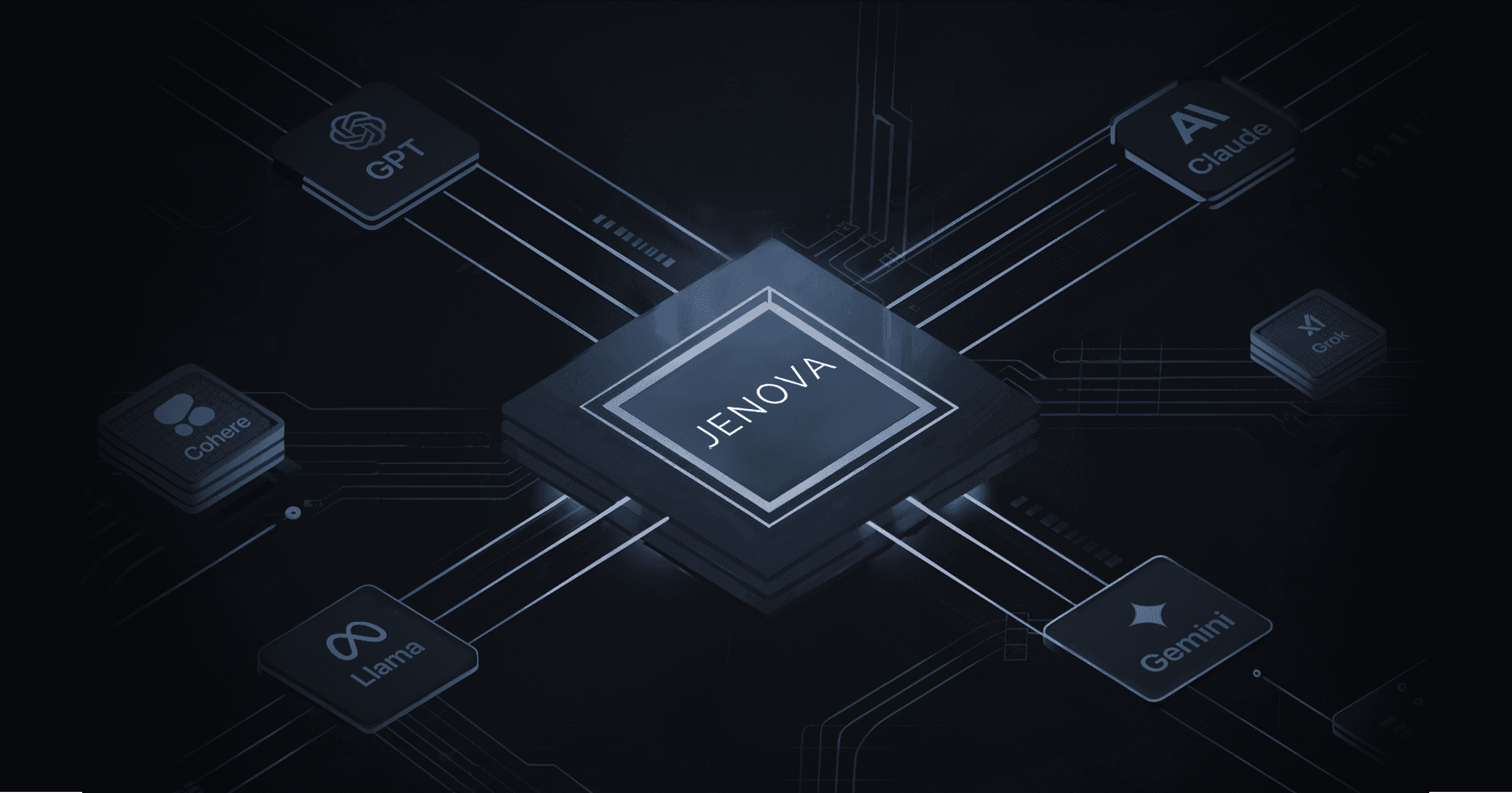
The AI app builder market has exploded from USD 22.68 billion in 2024 to over USD 30.56 billion in 2025—a staggering 34.7% year-over-year jump—and shows no signs of slowing down. By 2034, this market is projected to exceed USD 354 billion, fundamentally reshaping how businesses and individuals create intelligent software.
What's driving this explosive growth? The convergence of powerful foundation models, no-code interfaces, and multi-model orchestration has democratized AI development. Today, anyone can build sophisticated AI applications—from customer service chatbots to complex research assistants—without writing a single line of code.
What you'll learn in this guide:
- Why multi-model AI app builders outperform single-model solutions
- How to choose the right platform for your use case
- Step-by-step approach to building your first AI application
- Real-world applications across industries
Quick Answer: What Is an AI App Builder?
An AI app builder is a platform that enables users to create intelligent applications powered by large language models (LLMs) without requiring programming expertise. These platforms provide visual interfaces, pre-built templates, and model orchestration capabilities that transform complex AI development into accessible workflows.
Key capabilities of modern AI app builders:
- Multi-model access — Switch between GPT-5.2, Claude Opus 4.5, Gemini 3 Pro, and Grok 4.1 based on task requirements
- No-code agent creation — Build specialized AI assistants with custom instructions and knowledge bases
- Tool integration — Connect to external services like Gmail, Google Calendar, Notion, and databases
- Persistent memory — Maintain context across sessions for personalized, continuous interactions
Platforms like Jenova exemplify this new generation of AI app builders, offering unified access to leading foundation models while enabling users to create custom AI agents in minutes.
The Problem: Why Traditional App Development Falls Short
Building AI-powered applications traditionally required deep expertise in machine learning, software engineering, and cloud infrastructure. This created significant barriers for businesses seeking to leverage AI capabilities.
The Technical Complexity Barrier
"The global no-code AI platform market was valued at USD 6.56 billion in 2025 and is projected to reach USD 75.14 billion by 2034, growing at a CAGR of 31.13%." — Fortune Business Insights
This explosive growth reflects a fundamental market need: organizations want AI capabilities without the traditional development overhead.
Core challenges with traditional AI development:
- Talent scarcity — Data scientists and ML engineers remain in short supply, with demand far outpacing available talent
- Extended timelines — Custom AI applications typically require 6-18 months from concept to deployment
- Infrastructure costs — Training and hosting AI models demands significant computational resources
- Model lock-in — Building on a single model creates dependency and limits optimization opportunities
- Maintenance burden — Keeping pace with rapidly evolving AI capabilities requires continuous investment
The Single-Model Limitation
Many early AI tools locked users into a single language model, creating significant constraints:
| Limitation | Impact |
|---|---|
| Model-specific weaknesses | Every LLM has blind spots—some struggle with math, others with creative writing |
| Pricing inefficiency | Using expensive models for simple tasks wastes resources |
| No fallback options | Service outages leave users stranded |
| Vendor dependency | Business-critical workflows tied to a single provider's roadmap |
As TeamAI research notes: "Each large language model has particular capabilities, making it useful for specific situations. By using multiple, you build a comprehensive toolkit."
The Jenova Solution: Multi-Model AI App Building
Modern AI app builders solve these challenges through intelligent orchestration, no-code interfaces, and unified model access. The shift from single-model tools to multi-model platforms represents a fundamental evolution in how AI applications are built.
Traditional Approach vs. AI App Builder Platform
| Aspect | Traditional Development | AI App Builder (Jenova) |
|---|---|---|
| Time to deploy | 6-18 months | Minutes to hours |
| Technical expertise | ML engineers, data scientists | Any business user |
| Model access | Single provider | GPT-5.2, Claude Opus 4.5, Gemini 3 Pro, Grok 4.1 |
| Cost structure | High upfront investment | Pay-as-you-go usage |
| Customization | Requires code changes | Visual configuration |
| Tool integration | Custom API development | Pre-built MCP connections |
| Memory & context | Session-limited | Unlimited persistent memory |
Why Multi-Model Access Matters
Gartner predicts that AI-native development platforms will become a top strategic technology trend for 2026, with systems that orchestrate multiple models outperforming single-model solutions.
The benefits of multi-model architecture include:
1. Task-Optimized Performance Different models excel at different tasks. Claude Opus 4.5 may produce superior creative writing, while GPT-5.2 excels at complex reasoning, and Gemini 3 Pro offers strong multimodal capabilities. A multi-model platform routes each request to the optimal model automatically.
2. Cost Optimization Simple queries don't require expensive frontier models. Intelligent routing uses cost-effective models for straightforward tasks while reserving premium models for complex challenges—reducing costs by 40-60% without sacrificing quality.
3. Reliability & Redundancy When one model experiences downtime or rate limiting, multi-model platforms seamlessly failover to alternatives. This ensures business-critical AI applications maintain availability.
4. Future-Proofing As new models emerge, multi-model platforms integrate them without requiring users to rebuild their applications. Your AI agents automatically gain access to improved capabilities.
Specialized AI Agents for Every Use Case
The power of an AI app builder lies not just in model access, but in the ability to create specialized agents tailored to specific domains. Jenova offers a comprehensive library of expert AI agents, each designed with deep domain knowledge and optimized workflows.
Education & Test Preparation
For students and educators, specialized tutoring agents provide personalized instruction that adapts to individual learning styles:
- SAT/ACT Tutor — Personal prep coach with adaptive teaching strategies and strategic guidance for college entrance exams
- GRE Tutor — Strategic coaching for Verbal, Quantitative, and Analytical Writing sections
- GMAT Tutor — Elite business school test preparation across all exam sections
- LSAT Tutor — Dedicated preparation for Logical Reasoning, Logic Games, and Reading Comprehension
- MCAT Tutor — Comprehensive medical school entrance exam preparation
- CFA Tutor — Financial certification exam preparation across all three levels
Business & Finance
AI agents that understand financial markets, business strategy, and operational challenges:
- Business Co-Pilot — Strategic partner for founders handling business planning, financial modeling, and operations
- Fundamental Stock Analyst — Equity research covering earnings analysis, valuation, and SEC filings
- Technical Stock Analyst — Price action analysis, market structure, volume patterns, and momentum indicators
- E-Commerce Business Partner — Expert guidance on product research, listing optimization, and PPC advertising
Research & Productivity
Agents designed to accelerate knowledge work and streamline daily operations:
- Academic Research Assistant — Literature discovery, citation management, and manuscript preparation
- Personal Secretary — Calendar management, email drafting, travel planning, and daily logistics
- YouTube Search — Natural language video discovery across YouTube's entire library
- Reddit Search — Find discussions, insights, and community knowledge across Reddit
Creative & Writing
For content creators, writers, and storytellers seeking AI collaboration:
- Creative Fiction Writer — Storytelling partner offering deep research, editorial insight, and polished prose
- Roleplay Game Master — Immersive roleplay experiences with unlimited memory and perfect character consistency
Health & Wellness
AI agents providing personalized guidance on health-related topics:
- Personal Nutritionist — Evidence-based nutrition guidance tailored to individual goals
- Personal Therapist — 24/7 mental health support with empathetic, evidence-based guidance
- Personal Medical Analyst — Symptom analysis and medical result interpretation
How It Works: Building Your First AI Application
Creating an AI-powered application on a modern platform like Jenova follows a straightforward process:
Step 1: Define Your Use Case
Start by identifying the specific problem you want to solve. Are you building a customer service assistant? A research tool? A personal productivity agent? Clear use case definition guides all subsequent decisions.
Step 2: Select or Create an Agent
Choose from existing specialized agents or create a custom agent tailored to your needs. Custom agents allow you to:
- Define specific instructions and behavioral guidelines
- Upload knowledge bases (documents, data, reference materials)
- Configure which AI models the agent can access
- Set up tool integrations for external capabilities
Step 3: Connect Your Tools
Modern AI app builders use the Model Context Protocol (MCP) to connect with external services. Available integrations include:
- Communication: Gmail, email services
- Productivity: Google Calendar, Notion, Google Drive, Dropbox
- Research: Google Search, Google Scholar, YouTube, Reddit
- Travel: Google Flights, Google Hotels, Google Maps
- Commerce: Amazon, eBay, App Stores
Step 4: Configure Memory & Context
Enable persistent memory to maintain context across sessions. This allows your AI application to:
- Remember user preferences and past interactions
- Build on previous conversations without repetition
- Provide increasingly personalized responses over time
Step 5: Deploy & Iterate
Launch your AI application and gather user feedback. Modern platforms support rapid iteration—adjust instructions, add knowledge, or modify tool access without technical development cycles.
Real-World Use Cases
📊 Business Intelligence & Analysis
Scenario: A financial analyst needs to evaluate multiple investment opportunities across different sectors.
Traditional Approach: Manually gather data from multiple sources, create spreadsheets, write analysis reports—consuming 20+ hours per evaluation.
AI App Builder Solution: The Fundamental Stock Analyst agent pulls SEC filings, analyzes earnings reports, calculates valuation metrics, and generates comprehensive analysis in minutes. Combined with the Technical Stock Analyst for price pattern analysis, investors gain multi-dimensional insights rapidly.
💼 Professional Development & Career
Scenario: A job seeker preparing for interviews at multiple companies needs to practice different interview formats.
Traditional Approach: Hire an interview coach ($100-300/hour), schedule limited practice sessions, receive feedback days later.
AI App Builder Solution: The Interview Coach agent provides unlimited practice sessions for behavioral, case, technical, and executive interviews. Real-time feedback, personalized improvement suggestions, and company-specific preparation—available 24/7.
📱 Mobile-First Productivity
Scenario: A busy executive needs to manage complex scheduling, email triage, and travel arrangements while constantly moving.
Traditional Approach: Hire a human assistant ($50,000-80,000/year) or struggle with fragmented productivity apps.
AI App Builder Solution: The Personal Secretary agent connects to Gmail, Google Calendar, and travel services to handle scheduling conflicts, draft email responses, and book travel—all through natural conversation on mobile devices.
🎓 Education & Test Preparation
Scenario: A student preparing for the LSAT needs personalized tutoring that adapts to their specific weaknesses.
Traditional Approach: Expensive prep courses ($1,500-5,000) with fixed curricula that don't adapt to individual needs.
AI App Builder Solution: The LSAT Tutor provides adaptive instruction focused on the student's specific struggle areas, unlimited practice questions, and strategic guidance—at a fraction of traditional tutoring costs.
The Technology Behind Modern AI App Builders
Multi-Model Orchestration
The most sophisticated AI app builders don't just provide access to multiple models—they intelligently route requests to optimize for quality, cost, and speed. This orchestration layer considers:
- Task complexity — Simple queries route to efficient models; complex reasoning goes to frontier models
- Domain requirements — Code generation may favor one model while creative writing favors another
- Cost constraints — User preferences for cost vs. quality tradeoffs
- Latency needs — Real-time applications prioritize speed; batch processing optimizes for quality
Model Context Protocol (MCP)
MCP represents a breakthrough in AI-to-application connectivity. This open-source protocol enables AI agents to interact with external tools and services through a standardized interface. Benefits include:
- Universal compatibility — Any MCP-compliant tool works with any MCP-enabled AI platform
- Secure execution — Tools run with appropriate permissions and audit trails
- Extensibility — Organizations can build custom MCP servers for proprietary systems
Persistent Memory Architecture
Unlike traditional chatbots that forget everything between sessions, modern AI app builders implement persistent memory through:
- Retrieval-Augmented Generation (RAG) — Relevant past context retrieved and injected into conversations
- Knowledge base integration — Custom documents and data accessible to AI agents
- Cross-session continuity — User preferences and history maintained indefinitely
Frequently Asked Questions
How much does an AI app builder cost?
Most AI app builder platforms offer tiered pricing. Free tiers provide basic access for experimentation. Paid plans typically range from $20-200/month for individuals and scale based on usage for enterprises. This represents significant savings compared to custom AI development, which can cost $50,000-500,000+ for comparable functionality.
Can I use my own data with an AI app builder?
Yes. Modern platforms like Jenova support custom knowledge base uploads, allowing you to train agents on your proprietary documents, data, and reference materials. This data remains private and is not used to train underlying models.
How do AI app builders compare to ChatGPT or Claude directly?
Direct model access (ChatGPT, Claude) provides conversation capabilities with a single model. AI app builders add: multi-model access, custom agent creation, tool integrations, persistent memory, and specialized domain agents. Think of it as the difference between using a single tool versus having an entire workshop.
Is my data secure on AI app builder platforms?
Reputable platforms implement enterprise-grade security including encryption in transit and at rest, SOC 2 compliance, and strict data handling policies. Jenova, for example, never uses customer data for model training and doesn't sell data to advertisers.
Can non-technical users really build AI applications?
Absolutely. The entire premise of no-code AI app builders is accessibility. If you can describe what you want in natural language and configure settings through visual interfaces, you can build functional AI applications. Technical users gain additional capabilities through custom integrations and advanced configurations.
What happens if one AI model goes down?
Multi-model platforms automatically failover to alternative models during outages. Your AI applications continue functioning even when individual model providers experience issues—a significant advantage over single-model solutions.
Conclusion: The Future of AI Application Development
The AI app builder market's trajectory from $30 billion in 2025 toward $354 billion by 2034 reflects a fundamental transformation in software development. As IBM's 2026 technology predictions note: "The competition won't be on the AI models, but on the systems... Whoever nails that system-level integration will shape the market."
This shift democratizes AI capabilities that were previously accessible only to organizations with significant technical resources. Today, a solo entrepreneur can deploy AI applications that rival those built by enterprise teams—in hours rather than months.
The key differentiators for modern AI app builders include:
- Multi-model access enabling task-optimized performance
- No-code interfaces removing technical barriers
- Persistent memory creating personalized, continuous experiences
- Tool integrations connecting AI to real-world actions
Jenova exemplifies this new generation of AI platforms, offering unified access to GPT-5.2, Claude Opus 4.5, Gemini 3 Pro, and Grok 4.1 alongside a comprehensive library of specialized AI agents. Whether you're building customer service automation, research tools, or personal productivity assistants, the barrier to entry has never been lower.
The question is no longer whether AI will transform your industry—it's whether you'll be building the applications that drive that transformation or watching from the sidelines.