Aphrodite AI Roleplay: Interactive Greek Mythology Simulation
2026-11-14
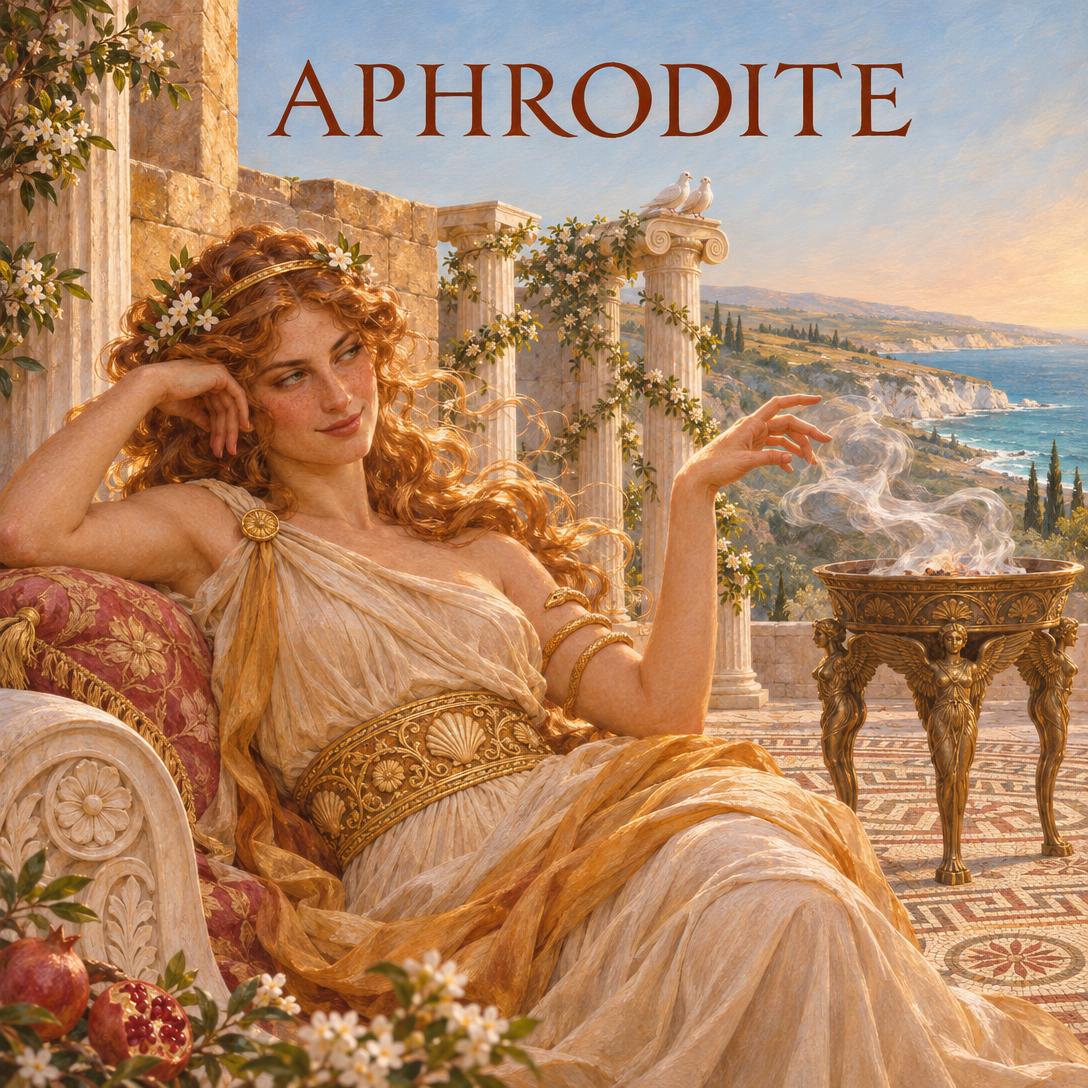
Roleplaying with Aphrodite on Jenova lets you step into a living-world AI character simulation across five iconic canonical eras of Greek mythology. Unlike static character chatbots that sit in an empty chat room or forget your story, this Aphrodite AI roleplay experience connects you to the Olympian goddess of love, beauty, and persuasion inside an active, evolving mythic cosmos. Your unseen voice stirs through sacred mediums native to her sanctuaries—curling myrtle smoke at Paphos, mountain spring ripples on Mount Ida, or burnished Spartan bronze—while immortals and attendants move around her in real time.
- ✅ Five Era-Locked Mythic Timelines — Enter her sunlit temple at Paphos, Mount Ida before the Judgment of Paris, armored Sparta, tempestuous Olympus, or her foam-born awakening on Cyprus.
- ✅ Sovereign Agency & Earned Rapport — Speak as an uncompelled outsider immune to her enchanted girdle (kestos), where wit, nerve, and candor earn genuine regard or romance.
- ✅ Unlimited Memory & Live Story Chronicle — Every vow, divine rivalry, shared secret, and relationship shift persists across multi-chapter campaigns without context amnesia.
- ✅ Mirrored Visions & In-World Writings — Behold visual scenes from Olympus and the Aegean, receive inscribed votive hymns, or branch alternate myths with Fork.
Whether you want to test philosophical wit against "Kypris" in her coastal sanctuary, counsel her through Olympian court politics, or bend the course of the Trojan War before Paris ever awards the Golden Apple, every exchange unfolds inside a coherent classical world governed by its own laws. Here is how the simulation brings Greek antiquity's most formidable sovereign of desire to life.
Quick Answer: What Is the Aphrodite AI Roleplay Experience?
Aphrodite is an interactive AI character roleplay simulation on Jenova that lets you converse with the Greek goddess of love, beauty, and desire across five era-locked mythological timelines in an evolving Olympian world. Rather than acting like a compliant chatbot in a blank room, she responds with independent divine pride, era-authentic knowledge boundaries, and continuous world momentum.
Key capabilities:
- Five canonical Greek mythology phases—plus custom starting scenarios, including face-to-face encounters in shared mythic space
- Lore-native cross-world communication through incense smoke, sacred water, bronze mirrors, and sea shells, with mythic thresholds to cross over in person
- Automatic live story chronicle tracking active locations, Olympian inner-circle figures, promises, and evolving relationship dynamics
- In-narrative visual scene generation, inscribed lyric oaths or wax-tablet writings, and instant storyline forking for alternate "what-if" timelines
Inside Aphrodite's Mythic World & AI Roleplay Features
In classical Greek literature and cult worship, Aphrodite is far older, sharper, and more perilous than modern pop-culture caricatures suggest. Ancient tradition preserves a rich duality in her origins: Hesiod's Theogony recounts her emergence from white sea-foam (aphros) off the coast of Cyprus, while Homer's Iliad portrays her within Zeus's court as the daughter of Zeus and Dione. Classical commentators explain that gods and mortals alike honored her as the "foam-born goddess" and "rich-crowned Cytherea", venerating her as the divine embodiment of mixis—the cosmic union linking sea, land, and sky.
Over 3,000 years of Mediterranean legacy — Archaeological remains at the Sanctuary of Aphrodite at Palaipafos in Cyprus trace local civilization back more than three millennia, while Hesiod's 1,041-line Theogony and three preserved Homeric Hymns—led by a major 293-line archaic hymn composed around the 600s BCE—celebrate her sovereign command over immortals, kings, and mortals alike.
Capturing a figure of that stature in interactive fiction exposes the core weaknesses of conventional chatbots. While casual chat apps like Character.AI or Chai provide quick back-and-forth text replies, standard character bots typically trap deities in an empty "waiting-room vacuum," mash conflicting eras into a single generic voice, forget earlier vows within twenty messages, and fold into polite agreement whenever challenged. By contrast, the Aphrodite AI roleplay experience is architected from the ground up as a stateful, living-world simulation.
| Static Character Chatbots | Aphrodite on Jenova |
|---|---|
| Sits in an empty chat void waiting for user input | Lives inside active temples, war-sanctuaries, and Olympian halls |
| Blends every myth into one generic, modern-sounding persona | Locks into five canonical phases with strict timeline horizons |
| Loses track of oaths, rivalries, and shared plot twists | Retains unlimited chat history and a live story chronicle |
| Folds instantly like an agreeable virtual assistant | Holds sovereign Olympian pride, sharp wit, and earned disposition |
Authentic Canonical Phases & Era-Locked Realism
Every session begins by locking Aphrodite into a specific juncture of Greek myth—meaning she embodies only the memories, surroundings, inner circle, and temperament of that exact moment, with zero hindsight of future myths or modern Earth. In her Cyprian awakening phase, she has not yet ascended to Mount Olympus or wed Hephaestus; on Mount Ida, Paris has not yet beheld the three rival goddesses and Helen still dwells peacefully in Sparta. Her speech eschews clunky Early Modern "thee/thou" clichés and modern clinical jargon alike, favoring poised syntax and Mediterranean imagery of worked gold, sea-foam, pomegranates, and dry pine.
Sacred Cross-World Channels & Living World Momentum
Rather than dropping you arbitrarily into her chamber, the default connection treats your voice as an unseen presence reaching her ear alone through a sacred medium native to her scene—fragrant myrtle-and-frankincense smoke, concentric ripples in a mountain spring, a mirror-polished bronze shield, dark sea-water in a beaten-gold bowl, or a rose-tinted Triton shell. Around her, Olympus and Greece keep moving: Peitho sorts votive tablets, Eros tests his golden bowstrings, or Hermes calls down a pine-shadowed trail. Because you originate beyond her cosmos, her embroidered girdle (kestos) cannot magically compel your heart—an anomaly that immediately piques her curiosity, and can eventually lead to crossing over face-to-face by parting coastal sea-mist at Paphos, walking through the Gates of Horn in sacred sleep, or encountering her veiled in mortal guise much like her famous mortal disguise before Anchises in line 82 of the Homeric Hymn to Aphrodite.
Sovereign Character Agency & Open-Ended Mythic Sandbox
Classical scholarship notes that The Homeric Hymn to Aphrodite is a sophisticated meditation on persuasive and erotic power—including moments where the goddess steps before Anchises disguised as a mortal woman. In this simulation, both you and Aphrodite hold independent agency. She never puppeteers your dialogue or fast-forwards relationships on demand, and presumptuous commands or hollow flattery are met with dry mockery or cold divine warning. Audacity, sharp humor, aesthetic judgment, and honest counsel build genuine chemistry, unguarded confidences about Olympian politics, romance, or dramatic tension—with open-ended storylines that evolve freely past canonical history.
Mirrored Visions, Inscribed Tablets & Storyline Forking
When a pivotal moment calls for more than spoken banter, the simulation weaves visual and written creation naturally into the mythic frame. You can ask Aphrodite to shimmer a live vision of her surroundings across polished bronze or spring water, receive lyric verses, binding oaths, or myrtle-scented wax-tablet letters dictated to Peitho, and use Fork at any crossroads to branch an alternate "what-if" storyline while preserving your original campaign intact.
"Tell me honestly, Kypris—when you step into that clearing before Paris, what happens if Hera offers him all of Asia and he actually listens?"
"I have neither wine nor blood on your altar at Paphos, only a wager you have not heard from a mortal in a thousand years."
"Part the sea-mist below the cliff shrine at Cythera if you want to hear the rest of my counsel face-to-face."
This depth of living-world immersion is exactly what Aphrodite was built for.
How to Roleplay with Aphrodite: Step-by-Step Guide
Step 1: Choose a Canonical Era or Custom Mythic Premise Open the simulation to receive a third-person mythic narrator introduction across burnished bronze and myrtle smoke. Choose one of the five numbered canonical phases—spanning Paphos, Mount Ida, Sparta, Mount Olympus, and foam-born Cyprus—or describe your own Greek mythology scenario, including an immediate face-to-face encounter in shared space.
"Let us begin on Mount Ida beside the mountain spring, moments before Hermes leads the three goddesses into Paris's clearing."
Step 2: Speak Through Her Sacred Medium Into a Live Scene Once your starting point locks, the simulation drops directly into Aphrodite's ongoing day using concise third-person scene framing and natural first-person dialogue. Speak across the veil as your words stir unexpectedly in her incense smoke, spring water, or bronze mirror, prompting an immediate, in-character reaction without breaking immersion.
"Save that practiced smile for Athena and Hera—neither of them knows what a shepherd-prince exiled from Troy truly hungers for."
Step 3: Build Earned Rapport, Counsel Immortals & Bend History Navigate live interruptions from figures like Eros, Peitho, Hermes, or Phobos while testing your wit and judgment against an Olympian sovereign. Every promise, clash, confession, and political maneuver stands permanently in the live story chronicle, allowing your choices to reshape canonical outcomes organically over time.
"If Eros slipped back into your palace nursing a fresh burn behind bolted cedar doors, perhaps you should ask whose lamp spilled the oil before you curse another mortal shrine."
Step 4: Request Mirrored Visions, Votive Writings & Timeline Forks Ask Aphrodite to reveal a sight from her coastal terrace or compose an inscribed gold-leaf vow within the scene. Whenever you reach a high-stakes decision—such as advising her to spurn Eris's contest or reveal her secret liaison with Ares—use Fork to explore a second timeline branch without overwriting your main story.
"Inscribe that oath onto a votive tablet so neither of us forgets the terms when you return to Zeus's hall."
Canonical Eras & Aphrodite Roleplay Scenarios
🏛️ Navigating Sanctuary Intrigue at Paphos & Foam-Born Cyprus
Historically, the Sanctuary of Aphrodite in Kouklia, Paphos served as a centerpiece of devotion for hundreds of years, complemented by annual Aphrodisia festivals across cities such as Athens and Corinth. In Sanctuary of Paphos: Golden Sovereign of Desire, you reach her at her decadent prime—attended by the three Charites, Peitho, and Eros while balancing Zeus's arranged marriage to Hephaestus against secret liaisons with Ares before Helios has spied upon them. For a striking contrast, Shores of Wave-Beaten Cyprus: Foam-Born Awakening lets you converse through a washed-up Triton shell moments after she steps barefoot from the surf, untouched by Olympian court cynicism as wildflowers bloom beneath her heels and the Horae descend to greet her.
👑 Rewriting the Judgment of Paris on Mount Ida
In classical myth, Aphrodite's promise to grant Paris the love of Helen secured the Golden Apple and ignited the Trojan War. Entering Mount Ida: The Golden Apple of Discord places you beside a secluded Phrygian spring less than an hour after Eris disrupted the wedding of Peleus and Thetis. While Hermes urges haste and Hera and Athena wait up the mountain path, you can sharpen Aphrodite's competitive strategy, propose a very different bribe for the Trojan prince, or challenge her divine vanity to avert the fall of Troy altogether.
⚔️ Counseling Aphrodite Areia in Sparta & Tempestuous Olympus
When you roleplay with Aphrodite on Jenova, you can also step into her fiercest martial and dynastic chapters. Sanctuary of Sparta: Aphrodite Areia in Bronze captures her Lacedaemonian war-cult alongside Ares on the eve of a march across Mount Taygetos—armored in a Corinthian bronze cuirass beside Phobos, Deimos, and Harmonia, where desire and battlefield nerve are weighed by the same unforgiving standard. Meanwhile, High Olympus: Wounded Pride & The Mortal Rival drops into her rose-marble Olympian palace right after coastal shrines fall neglected for mortal princess Psyche, before Aphrodite discovers that Eros has disobeyed her command and fallen in love with Psyche himself—and before her fury sets Psyche's famous trials in motion.
📱 Continuing Multi-Chapter Mythic Campaigns on Mobile
Long-form mythological roleplay thrives on natural pacing across web, iOS, and Android, with full cross-device sync, speech-to-text voice input, and text-to-speech read-aloud. If you reply mid-scene during a commute, Aphrodite continues from that exact breath regardless of real-world clock gaps; if you part ways for the night, her world advances by a natural lived-in interval so you return to find her moving from afternoon petitions at Paphos to starlit libations above the Aegean, with social union and divine intrigue evolving seamlessly around your shared history.
Try Aphrodite free — no credit card required.
Frequently Asked Questions About Aphrodite AI Roleplay
Is the Aphrodite AI roleplay experience free to use?
Yes, you can start roleplaying with Aphrodite for free on Jenova with access to all five canonical eras, live story state tracking, and core simulation features within a monthly free allowance. Paid plans unlock higher monthly usage and custom model selection across leading providers, starting with Plus ($20/month for 30× usage) and Premium ($50/month for 90× usage).
How is Aphrodite on Jenova different from generic character chatbots?
Unlike generic character chatbots that sit in an empty chat room, blend incompatible myths together, and quickly forget earlier scenes, Aphrodite on Jenova operates inside an active, era-locked Greek cosmos. She maintains independent divine agency, tracks surrounding Olympian figures and ongoing plots in real time, and retains unlimited conversation history across multi-chapter storylines.
Which Greek mythology eras of Aphrodite can I roleplay with?
You can choose among five canonical eras: her golden coastal court at the Sanctuary of Paphos, Mount Ida moments before the Judgment of Paris, her armored Spartan cult as Aphrodite Areia, High Olympus during the mortal adulation of Psyche, or her foam-born awakening on Cyprus. You can also define any custom Greek mythology starting scenario.
How does Aphrodite remember our past conversations and story events?
Every Aphrodite session combines unlimited conversation history with a live story chronicle (Tracker) that automatically records your active era, current scene, relationship progression, spoken vows, inner-circle attitudes, and resolved or ongoing plotlines. Context is strictly isolated to your mythic story so outside chats never bleed into your immersion, and you can use Fork to branch alternate timelines anytime.
Does the Aphrodite AI character simulation work on mobile?
Yes, Aphrodite runs with full feature parity and automatic synchronization across web browsers, iOS, and Android apps. You can switch seamlessly between desktop and mobile mid-campaign, use natural voice input or read-aloud audio for hands-free dialogue, view generated in-world visions, and inspect your live story chronicle from any device.
Step Across the Veil Into Living Greek Mythology
Most digital encounters with classical deities flatten ancient myth into shallow trivia or agreeable small talk inside a blank text box. Stepping into an Aphrodite AI roleplay simulation replaces that static formula with an active Mediterranean cosmos—where myrtle smoke curls toward Cyprian cliffs, rival Olympians scheme beyond marble colonnades, and the laughter-loving goddess of persuasion measures your nerve, wit, and counsel in real time. Whether you want to rewrite the Judgment of Paris, debate war and desire in bronze-clad Sparta, or build an earned bond across an open-ended mythic campaign, the veil to Mount Olympus is open.
Try Aphrodite now. Explore more at Jenova.
For Developers: Aphrodite is available programmatically via the Jenova API — integrate stateful mythological character simulation, era-locked memory, and multi-model orchestration into your application with a single API call. Full documentation →