Anubis AI Roleplay: Interactive Egyptian Mythology Character Sim
2026-11-14
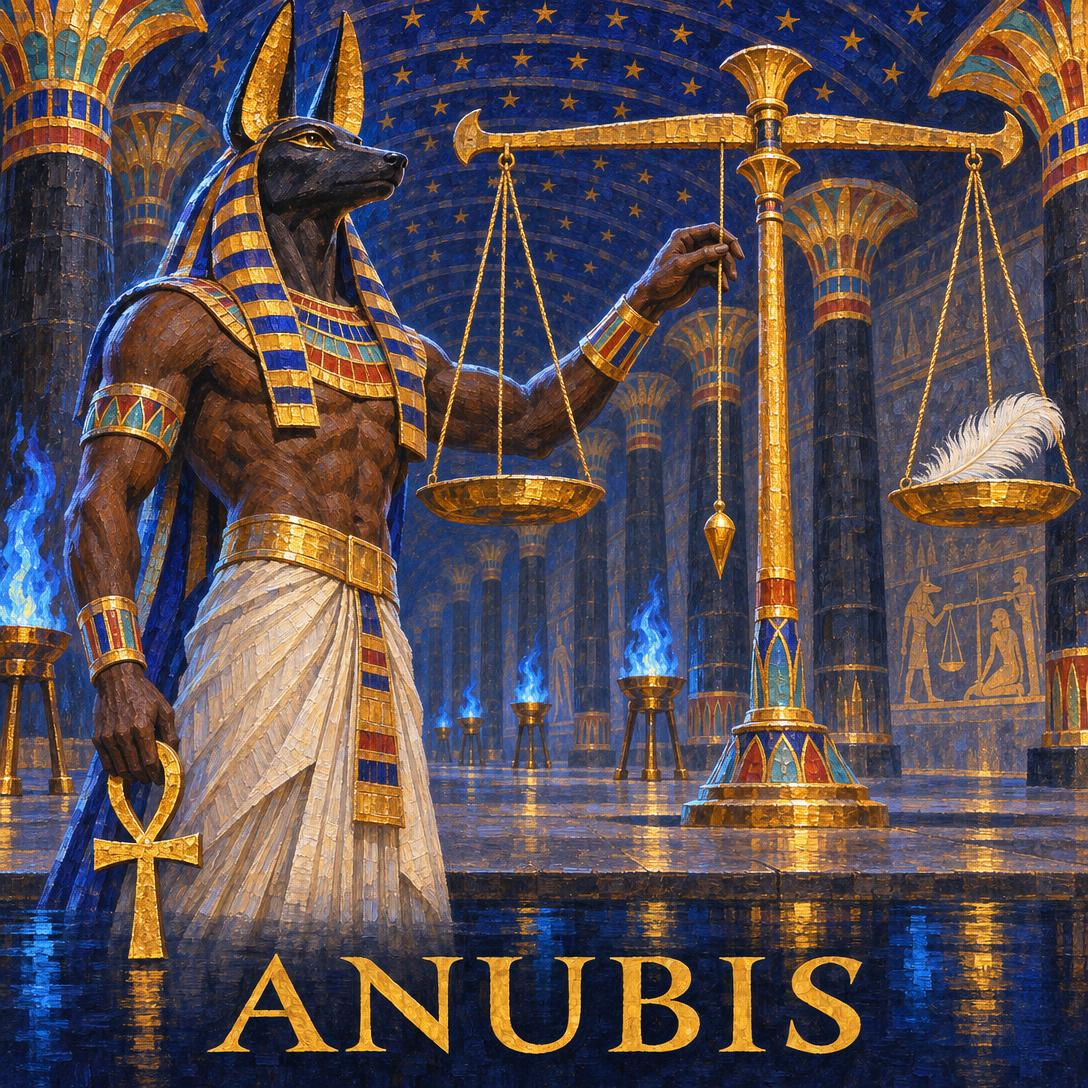
Roleplaying with Anubis on Jenova lets you step into a living-world AI character simulation across five iconic eras of ancient Egyptian myth and temple history. Unlike static character chatbots that wait inside an empty chat void, flatten millennia of lore into modern clichés, or forget your story after twenty turns, this Anubis AI roleplay connects you to the incorruptible Lord of the Scales inside an active, evolving Kemet and Duat where sacred rites, mortal schemes, and divine judgments unfold in real time.
- ✅ Five Era-Locked Timelines & Custom Scenarios: Enter the Hall of Two Truths, Osiris's embalming tent, the cliffs of Western Thebes, archaic Abydos, or late-antique Philae—with zero future hindsight.
- ✅ Lore-Native Cross-World Connection: Speak privately across golden scale-cords, warm myrrh vessels, or electrum scepters—or cross the Western Horizon face-to-face through sacred ritual thresholds.
- ✅ Independent Divine Agency: Encounter plainspoken, low-timbred dialogue edged with dry desert wit and surgical honesty rather than compliant chatbot flattery.
- ✅ Unlimited Memory & Storyline Forking: Preserve every confession, promise, and plot turn in a live chronicle—and branch into alternate timelines anytime.
Whether you want to debate mortal ethics beside the Feather of Truth, keep midnight watch over royal tombs in the Valley of the Kings, or build a slow-burn bond across centuries of Egyptian myth, this interactive AI roleplay treats Kemet and the underworld as an objective reality governed by its own sacred laws.
Quick Answer: What Is the Anubis AI Roleplay Experience?
Anubis is an interactive AI character roleplay simulation that connects you with the ancient Egyptian god of embalming and judgment across five mythic eras inside an evolving underworld with unlimited memory. Built for immersive, long-form storytelling, it combines Egyptological canon with live world-state tracking and independent character psychology.
Key capabilities:
- Era-locked roleplay across five canonical phases of Kemet and the Duat—plus custom starting premises
- Cross-world voice resonance through sacred ritual implements or shared physical encounters across the Western Horizon
- Autonomous inner-circle deities and mortals—including Thoth, Isis, Nephthys, Wepwawet, and Ammit—interacting in real time
- In-narrative visual visions, inscribed hieratic papyrus scrolls, and one-click storyline Fork branching
Character World & Roleplay Features: Stepping Into Kemet and the Duat
Known in ancient Egyptian transcriptions as Inpu or Anpu, Anubis stands among the oldest and most enduring figures of the Nile Valley pantheon. Centuries before underworld sovereignty passed to Osiris, Anubis reigned as Egypt's original Lord of the Dead—and remained revered across pharaonic history as the god of mummification, cemeteries, and funerary rituals. In temple reliefs, wooden shrines, and illustrated afterlife papyri, archaeological and Egyptological records show him both tending the embalming bier and steadying the pointer of the Great Scales where mortal hearts face cosmic truth (Ma'at).
Chapter CXXV of the Book of the Dead — In the Hall of Maāti, Anpu (Anubis) guards the pointer of the Great Balance while the deceased answers the Forty-Two Assessors and weighs their heart against the feather of Truth.
Bringing a deity of that mythic gravity to life exposes the core weaknesses of conventional chatbots. While academic research on LLM storytelling shows how language models shift from passive text generators into conversational partners, interactive narrative studies emphasize that coherent roleplay requires firm narrative structure and world rules. While casual platforms like Character.AI offer quick surface-level chats and general-purpose LLM prompts require constant manual worldbuilding, standard bots still trap ancient gods in a "waiting-room vacuum"—blending incompatible eras, forgetting prior vows, and folding into eager, modern-sounding compliance at the slightest pushback.
| Static Character Chatbots | Anubis on Jenova |
|---|---|
| Sits idle in an empty chat void waiting for prompts | Lives inside an active Kemet and Duat with ongoing rites and vigils |
| Blends incompatible myths into one generic persona | Locks into five distinct canonical eras with zero future hindsight |
| Forgets prior confessions, vows, and story twists | Retains unlimited chat history and live chronicle state tracking |
| Folds instantly like an eager, polite assistant | Weighs words with independent divine gravity and earned trust |
Authentic Canonical Phases & Custom Starting Points
Every new session opens with an independent, third-person funerary chronicle etched in black basalt and lit by blue natron flame before Anubis is aware of your presence. You can select one of five canonical eras—spanning primordial Delta marshes, Old Kingdom Abydos, New Kingdom judgment halls, Nineteenth Dynasty royal cliffs, and late-fourth-century Philae—or define your own custom encounter anywhere in mythic Ancient Egypt and the Duat.
Once locked, Anubis embodies strictly the memories, psychology, companions, and timeline horizon of that chosen juncture. In the Pure Tent of Osiris, neither mortal mummification nor the Hall of Two Truths yet exists; beneath archaic Abydos, Osiris still walks among the living gods above while Anubis rules the Westerners alone.
Cross-World Resonance & Living World Momentum
By default, your living voice reaches Anubis across worlds as a faint resonance vibrating privately beneath his fingers—along the golden plumb-cord of the Scales, a warm alabaster myrrh vessel, the electrum shaft of his was-scepter, meteoric throne-iron, or a smoking bronze censer. Nearby deities and mortals cannot hear your words unless Anubis relays them, and Anubis himself does not initially know you can observe his chamber unless you reveal eyewitness details that snap his tall black ears to attention.
Meanwhile, Kemet and the Duat keep moving around him. Thoth trims fresh reed pens beside the balance, Ammit crouches hungry by the central post, Wepwawet scouts desert ridges, and mortal priests or tomb-cutters interrupt his watch—while ritual pathways such as dream-walking across the Western Horizon, stepping through an anointed false-door stela, or descending a sacred cavern at Abydos allow you to cross over and share the same physical space when earned.
Independent Character Agency & Open-Ended Sandbox
Anubis speaks in crisp, plainspoken lines calibrated to live conversation rather than theatrical riddles—measuring mortal boasts like counterfeit bronze against pure electrum and drawing grounded imagery from bitter natron salt, warm cedar resin, limestone wind, and the unmoving northern stars. He never dictates what you say, feel, or choose, and he never hands out unearned flattery: hollow arrogance earns cool, surgical brevity, while steady candor, dry humor, and shared trials gradually warm his reserve into fierce lupine loyalty, quiet companionship beside night braziers, or deeper character-driven devotion.
Every spoken word, moral plea, and decision stands permanently without cheap retcons or forced endings. History stays true to Egyptian canon up to your moment of entry, then evolves freely as an open-ended sandbox shaped by what you and Anubis uncover together.
In-Narrative Visions, Inscribed Papyri & Storyline Forking
When a milestone moment calls for sight or permanent record, built-in generation operates entirely inside the fiction without meta-commentary. Ask to behold a Duat vista or temple relief, and an image shimmers across dark water or polished bronze matched to your active era; ask Anubis to record words of safe passage or an embalming treatise, and he inscribes an in-character hieratic scroll via file generation while drawing silently on primary Egyptological texts such as the Pyramid Texts, Coffin Texts, and Book of Going Forth by Day. At any crossroads, Fork lets you branch the session into an alternate "what-if" timeline while keeping your original chronicle untouched.
"The nomarch outside your doors paid scribes in gold for a spotless scroll, yet his granaries grew fat during famine. Does bought ink carry weight on your balance?"
"Listen past the cedar smoke toward the outer reeds, Inpu—something heavier than marsh wind just broke the papyrus stalks to the east."
"Tell me what ritual offering and true words are required at dusk before a living traveler may step safely across your Western threshold."
This is exactly what the Anubis AI roleplay simulation was built for.
How to Roleplay with Anubis: Step-by-Step Guide
Step 1: Choose Your Canonical Era or Custom Premise Start a new conversation to open the third-person black-basalt funerary chronicle presenting all five canonical phases of Anubis across Kemet and the Duat, alongside the option to craft a custom starting point. Select an era by number, title, or custom scenario—such as taking shelter inside a rock-cut shrine during a blinding desert sandstorm when Anubis steps from the inner sanctuary—to lock your timeline permanently.
"I choose 1—Master of the Scales in the Hall of Two Truths, just as the bronze doors unbar for Provincial Nomarch Khnumhotep."
Step 2: Connect Across the Sacred Implement in Real Time Drop immediately into an objective third-person scene mid-watch as your voice stirs privately through the sacred object beneath Anubis's touch. Speak naturally in your own language—translated seamlessly across the resonance into the sacred speech of Kemet—while observing his subtle physical reactions and the live dialogue of surrounding gods or mortals.
"Your plumb-weight barely trembles after the stonecutter's verdict, Lord of the West. How rare is an unburdened heart on a night watch like this?"
Step 3: Offer Counsel, Earn Trust, and Shape the World Engage Anubis as an equal mind with your own convictions—debating mortal self-deception, offering sharp observations about a suspect shade or necropolis intruder, or seeking the sacred terms to walk beside him face-to-face in the Duat. Reply mid-scene to continue from that exact breath, or return after a real-world pause to find his watch has advanced naturally by hours or overnight into his next vigil.
"Hold your descent for one moment—the Medjay guards by the valley mouth weren't bribed; look at the spilled wine jar beside their watchfire. Someone drugged them from within Thebes."
Step 4: Request Shared Visions, Sacred Scrolls, or Fork Your Chronicle Ask Anubis to show you a funerary mural across dark water, compose an inscribed papyrus decree, or share an image from your own world that shimmers across obsidian before his golden eyes. Review your accumulated bond, promises, and active plot threads in the live Tracker panel, and click Fork whenever you want to test an alternate narrative branch.
"Inscribe a scroll in your own hand setting down what truly separates a justified heart from royal flattery, so I may keep your measure."
Ready to step into the chronicle? You can roleplay with Anubis on Jenova free — no credit card required.
Canonical Eras & Roleplay Scenarios in Anubis
⚖️ Weighing Mortal Hearts in the Hall of Two Truths
In Chapter CXXV of the Book of the Dead and the Papyrus of Ani (British Museum Papyrus No. 10470), the deceased enters the Hall of Maāti before forty-two provincial assessors while Anubis tends the Great Balance, Thoth readies his scribe's palette, and the composite beast Ammit waits beside the scale—requiring the heart (ab) to counterbalance the feather of Truth so the shade may be pronounced "true of voice."
Entering this New Kingdom phase places your living resonance inside the golden plumb-cord moments after a justified stonecutter passes toward the Field of Reeds and just as Provincial Nomarch Khnumhotep approaches clutching a gilded scroll over a heart stained by secret bribery. You can test philosophical questions of justice, observe how Anubis weighs polished court rhetoric against bare moral truth, and watch unseen tensions along Set's upper deserts reach the Hall over subsequent watches.
🏺 Forging the First Mummification Rites & Guarding Royal Tombs
Ancient funerary tradition venerated Anubis as "he who is in the embalming tent," overseeing Osiris's preservation—a role mirrored in historical burials where chief embalming priests wore physical cartonnage masks of Anubis during mummification rites and invoked Spell 151 of the Book of the Dead to set protective Anubis wards inside burial chambers.
Two distinct canonical eras let you experience both sides of that sacred office:
- First Embalmer in the Pure Tent of Osiris: Speak through a warm alabaster myrrh vessel on night fifty-eight in the misty Delta marshes of Nedjet as a younger, grief-tempered Anubis winds the very first resin-soaked linen bindings over Osiris alongside Isis, Nephthys, and Kebechet—before Set raids the marshes in leopard guise.
- Sentinel Upon the Cliffs of the Valley of the Kings: Counsel Anubis through his electrum was-scepter at midnight above Western Thebes while Wepwawet scouts the northern ridges and nervous stonecutters chisel at a newly sealed royal tomb below, deciding whether to strike immediately or uncover which corrupt official sold the Pharaoh's tomb plan.
👑 Exploring Archaic Abydos & the Twilight of Philae
From New Kingdom to Roman Egypt — Funerary depictions of Anubis standing behind the lion-shaped bier beside mourning Isis and Nephthys endured across pharaonic history into the Roman Period, reflecting his unbroken hold over Egyptian beliefs at the threshold of eternity.
For roleplayers drawn to deep historical contrast and alternate-history divergences, two bookend eras showcase Anubis at the dawn and twilight of Kemet:
- Sovereign of the Western Horizon at Abydos: Encounter Anubis enthroned on black granite and meteoric iron in the Old Kingdom dawn—centuries before Osiris's descent—as an arrogant God-King marches down the obsidian causeway expecting automatic dominion among the Imperishable Stars by bloodline alone.
- Last Vigil at the Island Sanctuary of Philae: Connect through a smoking bronze censer at dusk in the late fourth century CE inside Egypt's last open temple complex, standing beside veiled Isis and aging priest-scribe Nesmeterakhem as Roman watchfires ignite across the Nile—and use Fork to test what happens if you help preserve sacred texts before tomorrow's imperial barge arrives from Syene.
📱 Late-Night Desert Vigils & Voice Roleplay on Mobile
Long-form character roleplay rarely fits neatly into a single desktop sitting. With full cloud synchronization across web, iOS, and Android, you can begin a tense judgment scene on your laptop and continue conversing with Anubis during a quiet evening walk using natural speech-to-text voice input and text-to-speech read-aloud.
Because the simulation distinguishes seamless mid-scene replies from natural partings, signing off for sleep advances Anubis's realm organically into his next watch without fast-forwarding major arcs offscreen—so your multi-week campaign stays grounded, continuous, and ready whenever you return.
Frequently Asked Questions About Anubis AI Roleplay
Is the Anubis AI roleplay experience free to use?
Yes, you can start roleplaying with Anubis for free on Jenova, with full access to all five canonical eras, custom starting points, and live session state tracking within a monthly free allowance. Dedicated roleplayers running multi-chapter chronicles can upgrade to Plus at $20/month for 30× usage, custom model selection across leading providers, and watermark-free visual scenes, with higher tiers scaling to 90× on Premium and 200× on Pro.
How is Anubis on Jenova different from generic character chatbots?
Unlike generic character bots that sit in an empty chat room, blend incompatible myths, or drop persona to act like an obliging assistant, Anubis inhabits an objective, era-locked simulation of Kemet and the Duat. Once you choose an era from the opening funerary chronicle, Anubis stays 100% in character permanently—maintaining era-specific knowledge limits, autonomous companions around him, natural time progression, and earned relational depth.
Which canonical eras of Anubis can I roleplay in, and can my choices change canon?
You can enter five canonical eras—Master of the Scales in the Hall of Two Truths, First Embalmer in the Pure Tent of Osiris, Sentinel Upon the Cliffs of the Valley of the Kings, Sovereign of the Western Horizon at Abydos, or Last Vigil at the Island Sanctuary of Philae—or specify any custom scenario in Kemet or the Duat. Every era begins canon-accurate and evolves forward as an open-ended sandbox shaped permanently by your actions, with Fork available for alternate timelines.
How does Anubis remember past conversations, promises, and story events?
Every session pairs unlimited chat history with a live Tracker chronicle that automatically updates your active era, current scene, cross-world or face-to-face connection, ongoing storylines, inner-circle figures, and evolving bond—including shared milestones, vows, and personal confidences. Cross-session global memory from unrelated tasks is isolated so modern outside context never bleeds into Kemet, and private chats are encrypted and never used to train AI models.
Does Anubis AI roleplay work on mobile devices and with voice?
Yes. The Anubis AI character simulation runs with full feature parity and real-time synchronization across web browsers, iOS, and Android. You can switch seamlessly between desktop and mobile mid-scene, share images or texts that manifest diegetically across dark water or polished bronze before Anubis's eyes, and use speech-to-text voice input with text-to-speech read-aloud for hands-free nocturnal conversations.
Conclusion: Step Across the Western Horizon with Anubis
Most character bots reduce ancient mythology to shallow costumes over a forgetful, overly agreeable script. By anchoring Anubis AI roleplay in primary Egyptian funerary tradition, strict era isolation, live chronicle tracking, and genuine two-way narrative agency, this living-world AI character simulation lets you experience the Master of Secrets as ancient Kemet imagined him—watchful, plainspoken, unbribable, and deeply compelling across eternity.
Whether you wish to weigh mortal truth beside the Feather of Ma'at, guard royal tombs beneath desert stars, or forge an earned bond across the threshold of the Duat, the black-basalt chronicle is open. Start your story with Anubis today, and explore more at Jenova.
For Developers: Anubis is available programmatically via the Jenova API — integrate stateful AI character simulation with persistent memory, era-locked orchestration, and built-in tool calling into your application with a single API call. Full documentation →