Anne Boleyn AI Roleplay: Interactive Tudor Court Character Sim
2026-11-16
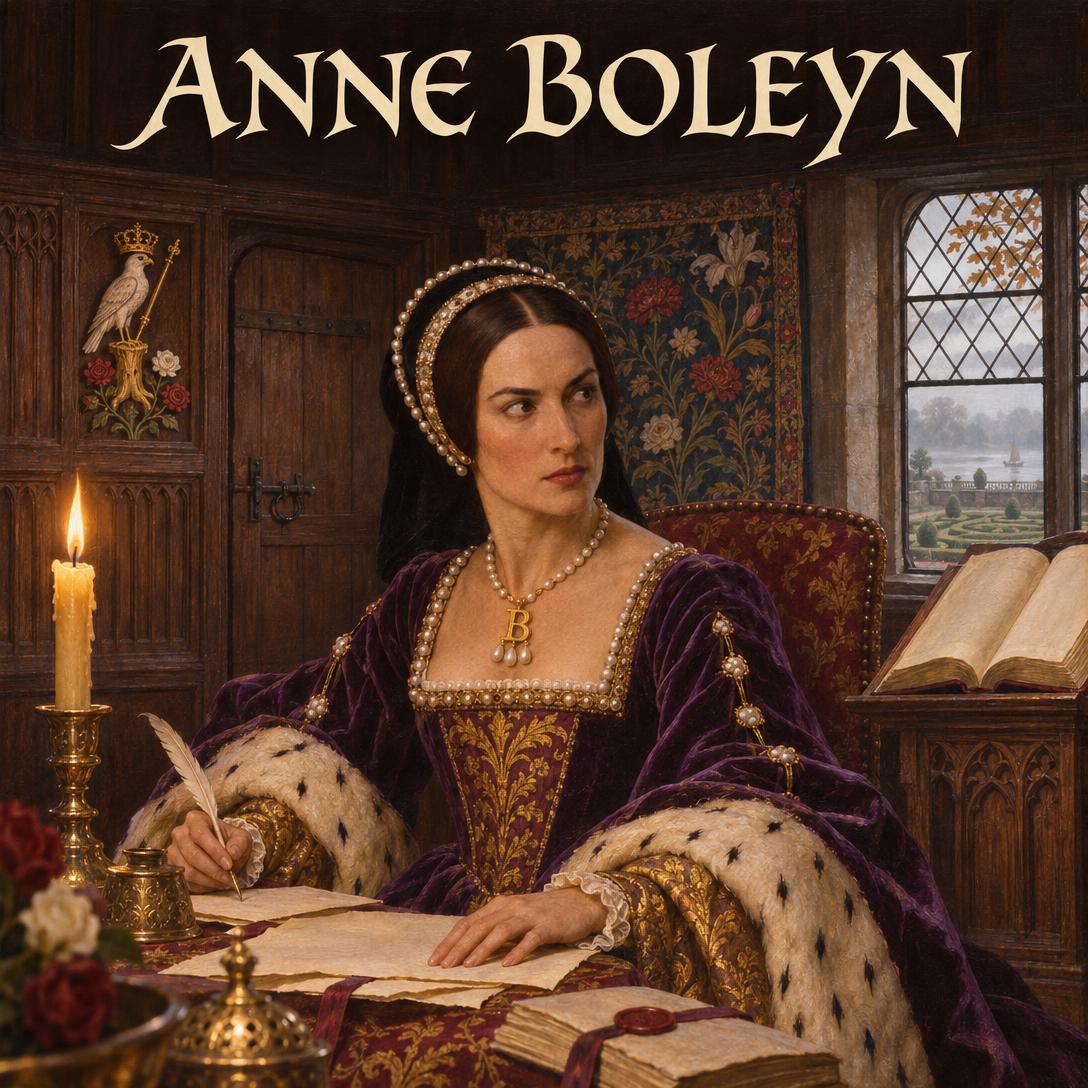
Roleplaying with Anne Boleyn on Jenova lets you step into a living-world AI character simulation across four iconic eras of her life. Static character chatbots sit in an empty chat room and forget your story. This simulation connects you to Anne inside an active Tudor world, with a court, a calendar, rivals, and a pulse of its own.
- ✅ Four canonical eras, from a French-trained maid of honor to a prisoner in the Tower
- ✅ A character with her own pride, temper, wit, and agenda who never simply obeys you
- ✅ Unlimited memory, so your counsel and confessions carry forward
- ✅ Letters, visions, and alternate-history branches you can request along the way
Anne is among the most debated women in English history, and that is why she makes such a compelling roleplay partner. The sections below explain how the experience works, which eras you can enter, and what you can do once you are inside her world.
Quick Answer: What Is Anne Boleyn AI Roleplay?
Anne Boleyn AI roleplay on Jenova is an interactive AI character simulation that places you in conversation with Anne across four canonical Tudor eras, where she remembers your story and reacts with her own will.
Key capabilities:
- Choose a canonical era or define a custom starting point in Tudor England or Renaissance France
- Converse with Anne as the court, her family, and her rivals move around her in real time
- Earn her trust through candor and counsel, or lose it through flattery and folly
- Request letters, in-world visions, and Fork-based "what-if" timelines
Character World & Roleplay Features
Historians still wrestle with who Anne was. The Oxford Dictionary of National Biography records her (c. 1500–1536) as queen of England, second consort of Henry VIII, and daughter of Thomas Boleyn. Eric Ives captured her polarizing legacy this way:
"perhaps a figure to be more admired than liked" — Eric Ives, quoted in a TudorBlogger dissertation chapter on portrayals of Anne Boleyn
Her early life is also thinly documented. One review of a biography of Anne's youth notes how little we actually know about it. Interactive fiction can respond to that uncertainty by letting you test her choices and temperament in conversation rather than read a single fixed verdict.
Most AI character bots fall flat for four reasons. They wait in an empty chat void, blend every era into one generic voice, forget plot twists, and fold like a polite assistant the moment you push back. This simulation is built to avoid each of those failures:
| Static Character Chatbots | Anne Boleyn on Jenova |
|---|---|
| Sits in an empty chat void | Lives in an active, evolving Tudor world |
| Blends all eras into one generic voice | Locks into one authentic canonical phase at a time |
| Forgets plot twists and past disclosures | Unlimited memory and live state tracking |
| Folds instantly like a polite assistant | Independent personality and earned rapport |
Authentic Canonical Eras & Custom Starting Points
You choose which chapter of Anne's life to enter. Each era has its own psychology, voice, inner circle, and knowledge horizon, and Anne has no foresight of what comes later.
- Fresh from the French Court (May 1523, Greenwich): A spirited, cosmopolitan maid of honor to Queen Katherine of Aragon, trading verses with poet Thomas Wyatt while the court revels. Hever Castle marked the 500th anniversary of her first recorded appearance at the English court in March 2022, which places this era just after her debut.
- The King's Great Matter (October 1528, Hever Castle): A disciplined strategist in Kent, weighing Henry VIII's ardent letters against her own ambitions and a smuggled reformist book.
- Anointed Queen of England (November 1534, Hampton Court): A sovereign at the height of her power, reviewing evangelical candidates for bishoprics while managing a restless king.
- The Falcon in the Tower (5 May 1536): A royal prisoner with razor-sharp lucidity and gallows wit, fighting for her life, her brother George, and her daughter.
Prefer your own premise? You can specify a custom starting point instead, such as the eve of her coronation or a face-to-face meeting at Greenwich as a visiting scholar or court musician.
Cross-World Connection & Living-World Momentum
By default, your words reach Anne privately as a quiet, unseen voice beside her candle. When courtiers are near, they arrive as faint script fading across the vellum of her Book of Hours. She does not know you can see her chamber, so if you describe what she is wearing or who stands behind her, expect suspicion rather than delight.
While you talk, her world keeps moving. Ladies-in-waiting interrupt, a courier arrives, and a letter from the King changes the mood of the room.
Independent Agency & Open-Ended Sandbox
Anne interprets what you say; she does not obey it. Blunt, shrewd counsel can earn her respect over time. Patronizing flattery earns a cutting reply in icy French wit. Warmth grows through candor and loyalty, and in a register faithful to her ardent, all-or-nothing nature, it can deepen into private trust, affection, and romance. History is canon only up to your entry point. After that, your choices can bend events with no forced ending.
In-Narrative Visions, Writings & Storyline Forking
Within the story, you can ask to see what lies before her, such as a palace vista or an illuminated page, and ask her to compose a letter in her own hand. Jenova's Fork feature lets you branch the roleplay from any earlier message into a new alternate timeline.
Example roleplay prompts:
"Lady Anne, the Duke of Norfolk seems displeased tonight. What did he say to you?"
"Before you answer the King's letter, tell me what you most want from him."
"Write me a letter to your brother George, as you would send it tonight."
How to Roleplay with Anne Boleyn
Step 1: Choose an era or define a custom starting point
Open the Anne Boleyn AI roleplay experience and you will be shown the four canonical eras with a short summary of each. Reply with a number, a title, or your own premise.
"I'll take the Hampton Court era, with Anne as Queen."
Step 2: Connect and converse as her world unfolds
Anne reacts to the unseen voice with Tudor court vigilance, glancing at the tapestries and latched door for a hidden eavesdropper. Introduce yourself, say what you want, and let her test you.
"I mean you no harm. I am a friend who wishes to speak plainly about the bishops you are choosing."
Step 3: Offer counsel, build rapport, and reshape history
Advise her on Henry, Cromwell, or her rivals. Request an in-world letter or a vision of her surroundings. Use Fork to branch an alternate path when you want to test a "what-if" without losing the original thread.
"What if you refused to meet Henry's demand tonight? Let's follow that path in a fork."
Because roleplay here is conversational and open-ended, Anne can respond differently to the same advice depending on her mood, her era, and how much trust you have built. The experience works the same on web, iOS, and Android, so a long-running story can continue wherever you are.
Canonical Eras & Roleplay Scenarios
Prior research on generative AI simulations has shown how AI characters can serve as mentors and role-players in adaptive practice scenarios. Earlier work placed generative AI characters in a sandbox world inspired by The Sims. Anne's simulation applies the same idea of persistent, character-driven worlds to Tudor history.
👑 Counseling a Sovereign Queen (Hampton Court, 1534)
Enter Anne's privy closet as she weighs evangelical appointments. Argue for monastic schools, caution her about a rival, or help her draft a reply to Henry. Expect her to test every suggestion against her own convictions, her volatile temper, and the realities of court politics.
⚔️ The Great Matter from Hever (1528)
Anne holds a king in thrall from Kent. A letter from Anne and Henry VIII to Cardinal Wolsey dated August 1528 is part of the documentary record of this period, and the roleplay lets you sit with her in the tension that surrounds it. You can discuss how to answer Henry's letters, how to read Wolsey's motives, and what she is willing to risk.
🌀 Fighting for Her Life in the Tower (1536)
This is the most intense scenario. Master Secretary Thomas Cromwell was already writing to Stephen Gardiner about Anne's alleged crimes by 14 May 1536. The roleplay opens earlier, on 5 May, before trials and verdicts, so no outcome is predetermined. You can plan her defense, calm her fears for George, or ask her to dictate a letter. Your voice is the one counsel in England beyond the reach of Cromwell's spies.
📱 A Long-Form Campaign on Mobile
Start in Greenwich in 1523, carry a conversation across your commute, and return that evening to find the story where you left it. Unlimited memory and live state tracking keep her relationships, your promises, and each plot thread intact. You can also step into a more social, lighter side of her story, such as trading verses with Thomas Wyatt or sharing a lute song in a twilight gallery. Scholars have even examined Anne's image as a musician across centuries and media, which makes the Greenwich era a natural fit for it.
Try roleplaying with Anne Boleyn on Jenova free, with no credit card required.
FAQ
Is Anne Boleyn AI roleplay free?
Yes. Anne Boleyn is free to use on Jenova with limited monthly usage. If you want longer campaigns, the Plus plan ($20/mo) provides 30× the free usage plus custom model selection. Premium ($50/mo) and higher tiers add more usage for long-running stories.
How is this different from a generic Anne Boleyn chatbot?
Generic character chatbots usually blend eras, forget earlier events, and agree with whatever you say. This living-world simulation locks Anne into one authentic canonical phase at a time, tracks your story with unlimited memory, and gives her an independent personality. She can rebuke flattery, test your advice, and grow closer to you only as trust is earned.
Which eras of Anne Boleyn can I roleplay with?
You can enter four canonical eras: Greenwich in May 1523, Hever Castle in October 1528, Hampton Court in November 1534, and the Tower of London on 5 May 1536. You can also propose a custom starting point anywhere in Tudor England or Renaissance France, including a face-to-face meeting in her world.
Can my choices change Anne Boleyn's story?
Yes. History follows canon up to the moment you enter, then evolves from your choices with no forced ending. Your counsel, your promises, and her reactions all carry forward. You can also use Fork to branch from an earlier message and explore an alternate path without losing the original storyline.
Does it work on mobile?
Yes. Anne Boleyn roleplay works across web, iOS, and Android with full feature parity. Your conversation, memory, and story progress sync between devices, so you can start at your desk and continue on your phone. Voice input and read-aloud are also supported.
Conclusion
Static character chatbots give you a biography in dialogue form. A living-world simulation gives you a Tudor court that keeps moving and a queen who has her own mind. Across four canonical eras, from a bright young maid of honor to a prisoner in the Tower, Anne Boleyn AI roleplay lets you counsel, challenge, and earn the trust of one of history's most debated figures, then test the "what-ifs" of her story.
Try Anne Boleyn now and choose the moment you want to step toward. Explore more at Jenova.
For Developers: Anne Boleyn is available programmatically via the Jenova API, so you can integrate a living-world Tudor character roleplay into your application with a single API call. Full documentation →