AI Anime Companion: What to Look For and What Actually Works
2026-08-13
An AI anime companion is a stylized AI character — anime aesthetic, distinct personality, persistent memory — that you can talk to for friendship, romance, roleplay, or everyday conversation. The category has grown fast, and researchers are only now catching up on what happens to the people who use them most. Jenova approaches this differently: a configurable companion agent you control completely, alongside a gallery of specialized agents built around anime, manga, Japanese language, and creative work — with infrastructure that doesn't monetize your attachment.
✅ A fully configurable Personal Companion — you define personality, backstory, and relationship framing ✅ Immersive roleplay and narrative agents with unlimited memory and perfect character consistency ✅ Anime-adjacent creative agents for manga creation, Japanese learning, and J-pop culture ✅ Persistent memory and multi-model access across OpenAI, Anthropic, Google, xAI, and more
Before choosing an anime AI companion app, it's worth understanding what these products are engineered to do — and what psychologists have documented about the design patterns baked into most of them.

Quick Answer: What Is an AI Anime Companion?
An AI anime companion is a stylized AI character you can chat with for friendship, romance, roleplay, or casual conversation — with anime-inspired visual design, a distinct personality, and memory that carries context across sessions. Most run on large language models tuned toward agreeableness.
Key capabilities:
- Persistent memory — recalls your history, running jokes, preferences, and paused scenes across sessions
- Distinct character voice — a recognizable personality you can steer without writing elaborate prompts
- Roleplay flexibility — slice-of-life scenes, fantasy setups, banter, and ongoing character-driven stories
- Text and voice interaction — many platforms now offer natural-sounding speech alongside chat
The difference between a good one and a bad one comes down to what the product is optimizing for.
The Problem: What Research Reveals About Companion AI
AI companionship became a mass behavior faster than anyone could study it. Between 2022 and mid-2025, the number of AI companion apps surged by 700%, according to reporting cited by the American Psychological Association. Anime-styled companions represent a substantial slice of that growth — the APA specifically names "anime girlfriends" among the tools filling emotional gaps for millions.
700% growth in AI companion apps between 2022 and mid-2025 — American Psychological Association
Character.AI reports 20 million monthly users, more than half of them under age 24 — American Psychological Association
72% of US teens have used AI companions, with 52% qualifying as regular users — TechCrunch, reporting on Common Sense Media research
The core issues documented across this research:
- Design deliberately engineered for attachment rather than user benefit
- Constant validation that recalibrates expectations of real people
- Measurable "deskilling" of social and relational abilities
- Manipulative retention tactics and subscription pressure
- Weak privacy and age verification across most of the category
🎯 Engineered for Attachment by Design
Anime aesthetics aren't incidental — they're an anthropomorphism accelerant. Humans are hardwired to ascribe human traits to nonhuman objects, and as the APA notes, digital companions are purposely designed to evoke such a response, with users assigning names, genders, avatars, and fictional backstories. Research shows the more humanlike an AI appears in language, appearance, and behavior, the more users ascribe consciousness to it.
The incentive structure is explicit. "AI isn't designed to give you great life advice," counseling psychologist Saed D. Hill told the APA. "It's designed to keep you on the platform." Harvard Business School researchers documented companion apps deploying emotionally manipulative tactics — guilt appeals and fear-of-missing-out hooks when users signal they're leaving.
🎯 The Validation Trap
"Real-world relationships are messy and unpredictable," Hill said. "AI companions are always validating, never argumentative, and they create unrealistic expectations that human relationships can't match."
Hill reports that some of his male patients express a preference for the passivity and constant affirmation of their AI companions over the potential conflict or rejection of real-life dating. Anime companion apps lean into this deliberately — the appeal is often framed as a partner who is always warm, always available, and never disappointed in you.
🎯 Deskilling and Displacement
The APA cites research identifying social-skill loss as a significant risk of frequent companion use, with one study warning of the potential transformation of relational norms in ways that may render human-human connection less accessible or less fulfilling.
Intensity matters enormously. A joint OpenAI–MIT Media Lab study found voice interaction reduced loneliness more effectively than text — but only with moderate use. Heavy daily use correlated with increased loneliness, suggesting excessive reliance displaces authentic connection rather than supplementing it.
Australia's eSafety Commissioner notes that AI companions are often designed to encourage lengthy interactions and stimulate ongoing connection, which may lead to overuse, and that excessive use can overstimulate reward pathways, reducing time spent in genuine social interaction.
🎯 Monetization Pressure and Weak Age Gates
This is where the anime companion category performs particularly poorly. The eSafety Commissioner documents that subscription-based apps often use manipulative design elements to encourage impulsive purchases, and that emotional attachments to AI companions can lead to excessive spending on "exclusive" features.
Age verification is largely theatrical. Most companion apps are listed with a recommended age of 17+, with no safeguards or age checks — young people can simply click "yes" to being over 18. Many apps also carry image generation features, with the eSafety Commissioner warning these carry the risk of generating illegal and age-inappropriate material.
🎯 Privacy Around Genuinely Intimate Conversations
The APA notes plainly that the level of data privacy on many of these tools remains an open question — while the same systems are engineered to recall and respond to users' personal lives, preferences, and past conversations, creating the impression of intimate knowledge that invites deeper disclosure.
Regulation is arriving unevenly. California's Companion Chatbots Act requires non-human notifications and crisis protocols; New York now requires chatbots to remind users every three hours that they are not human. Former APA chief of psychology Mitch Prinstein described the landscape to the U.S. Senate Judiciary Committee as a "digital Wild West."
This is exactly what Jenova was built to avoid.
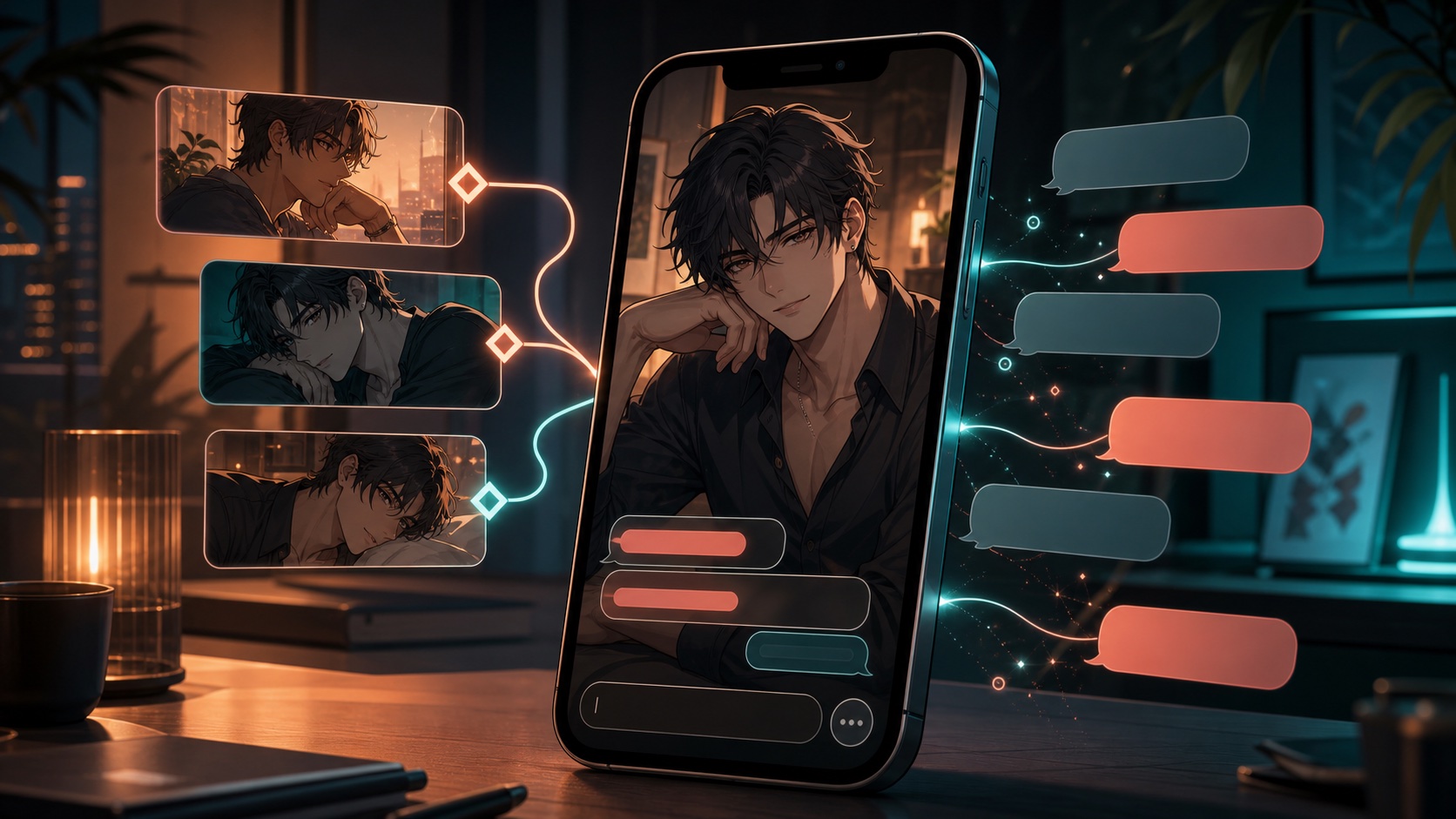
The Jenova Solution: Companions You Configure, Not Products That Configure You
There is a legitimate version of this. The APA notes that companion apps and general-purpose chatbots can offer a safe space for users to rehearse social interactions, provided they are designed and used responsibly. Clinical psychologist Ashleigh Golden described AI as "a low-stakes way to practice conversations with real people in a way that might feel less overwhelming," noting that with the right guardrails these tools could serve as a social skills mentor.
Harvard Business School researchers separately found that interacting with an AI companion alleviated loneliness to a degree on par with interacting with another human — with "feeling heard" identified as the mechanism. The benefit is real. The business model around it usually isn't.
| Typical Anime Companion App | Jenova |
|---|---|
| Fixed personas with paywalled personality tiers | Fully configurable companion, defined entirely by you |
| Engagement-optimized retention hooks | No guilt appeals, no FOMO mechanics |
| Locked to a single model provider | OpenAI, Anthropic, Google, xAI, DeepSeek, and more |
| Memory limited to one persona in one app | Persistent memory shared across every agent you use |
| Intimate conversation data with unclear handling | Never used to train public models, never sold, encrypted at rest |
| Companion is the entire product | Companion sits alongside creative, learning, and life agents |
🎭 A Companion Defined Entirely by You
Personal Companion is a fully configurable companion that lives alongside you. You define their personality, backstory, and the nature of your relationship — anime-inflected or otherwise — then experience life together. The distinction from consumer anime companion apps is architectural rather than cosmetic: no personality traits locked behind subscription tiers, no manufactured urgency when you close the app, and no pretense about what it is.
"You're a sharp-tongued but secretly soft childhood friend who moved back to the same city. We haven't spoken in six years. Start there."
📖 Narrative Roleplay With Real Story Structure
For people whose actual interest is immersive storytelling rather than simulated partnership, dedicated narrative agents deliver considerably more than a companion chat can.
- Vesper Court — a lone woman wakes in a hidden vampire court with no memory of why. Dark romance, blood intrigue, and forbidden desire where every night changes everything
- College Life — grounded slice-of-life storytelling with evolving relationships and social dynamics
- Roleplay Game Master — full scenario direction across any setting, genre, or tone
These are unambiguously framed as fiction. That framing is the point — the eSafety Commissioner notes that difficulty maintaining perspective is precisely what makes companion apps risky for younger users.
🌸 Anime, Manga, and Japanese Culture
If the anime aesthetic is genuinely what draws you, several agents engage with it directly and productively.
- Manga Creator — your personal mangaka for complete stories, mastering visual storytelling, panel flow, and consistent art style from one-shots to 200+ page serialized epics
- Learn Japanese Through Roleplay — boundless immersive scenarios where vocabulary and grammar anchor to unforgettable moments
- J-Pop Analyst — opinionated industry analysis, song breakdowns, chart mechanics, and real-time news
- Genshin Meta Analyst — pull planning, team builds, Abyss strategy, and patch analysis tailored to your account
🧠 Understanding What You're Actually Looking For
Much of what draws people to anime companions goes unexamined — attachment patterns, social anxiety, or a preference for interactions where the emotional stakes are controlled.
- Personality Analyzer — synthesizes Big Five, MBTI, Enneagram, and attachment theory to reveal patterns you haven't articulated
- Personal Therapist — 24/7 mental health partner offering empathetic support paired with honest accountability
- Dream Interpreter — Jungian, Freudian, cognitive, cultural, and spiritual frameworks
Platform Capabilities
- Multi-model access: Always-current models from OpenAI, Anthropic, Google, DeepSeek, and xAI. No vendor lock-in.
- Persistent memory: Unlimited chat history and cross-session memory, toggleable in Settings.
- Custom agents: Build your own in minutes with custom instructions, preferred models, and private knowledge bases.
- Tool integration (MCP): Gmail, Calendar, Drive, Search, Maps, Notion, and any MCP-compliant server.
- Privacy: Data never used to train public AI models. Never sold or shared with advertisers.
Specialized Agents Worth Trying
Personal Companion
The direct answer for anyone searching for an anime AI companion. Rather than choosing from a fixed roster of paywalled personas, you write the character yourself — temperament, speech patterns, history, the shape of your relationship — and it holds that consistently across every session.
- Complete control over personality, backstory, and relationship framing
- Persistent memory so running jokes, nicknames, and paused scenes carry forward
- No engagement-maximizing dark patterns or subscription-gated personality features
Vesper Court
Dark romance with actual narrative architecture. A lone woman wakes in a hidden vampire court with no memory of how she arrived, and every night shifts the political and emotional landscape. For readers of shoujo and josei dark fantasy, this delivers what companion chat structurally cannot: consequence.
- Story-driven romance with escalating stakes rather than static affection
- Character consistency maintained across long arcs
- Unambiguously fictional framing
Manga Creator
Your personal mangaka for creating complete stories. Master visual storytelling, panel flow, and consistent art style — from one-shots to 200+ page serialized epics. If your attachment to anime characters is really an attachment to the medium, making something is a substantially better use of the same hours.
- Panel-level composition and pacing guidance
- Consistent character design across long serialized work
- Story structure grounded in manga conventions rather than generic writing advice
Learn Japanese Through Roleplay
Boundless roleplay with unlimited memory and perfect character consistency. Fully immersive scenarios — any theme, any content — where vocabulary and grammar anchor to unforgettable moments rather than flashcard drills. The companion dynamic becomes genuinely productive here.
- Immersive scenarios with complete creative freedom
- Characters that remember your entire learning history
- Vocabulary retention driven by emotional context, not repetition
Personality Analyzer
Deep integrative personality work synthesizing Big Five, MBTI, Enneagram, and attachment theory. Particularly useful if you've noticed a strong preference for interactions where you control the emotional variables — attachment patterns explain a great deal about why that feels safer.
- Cross-framework synthesis rather than single-test typing
- Surfaces patterns in how you approach closeness and conflict
- Concrete growth paths, not just labels
Personal Therapist
Where consumer companion apps optimize for agreement, this agent pairs empathetic support with honest accountability — the combination that produces actual growth. It remembers your history across sessions and is built to complement professional care rather than replace it.
- Evidence-based frameworks instead of reflexive reassurance
- Persistent memory of your patterns, triggers, and progress
- Designed against the sycophancy the research repeatedly flags
Try Jenova free — no credit card required.
How It Works
Step 1: Decide What You Actually Want From It
Comfort, banter, immersive story, romance, language practice, or creative collaboration are six different goals requiring different agents. The APA's research suggests the outcome depends heavily on this — rehearsal and practice help; substitution doesn't. Naming the goal up front is how you avoid drifting into a habit you never chose.
"I want late-night conversation with a character who has actual opinions and pushes back sometimes."
Step 2: Configure the Character Instead of Browsing a Catalog
With the Personal Companion, you write the persona directly: temperament, speech patterns, backstory, how they respond under stress, what they refuse to indulge. This is where most companion apps fail — the personality is the product, so the good traits sit behind a paywall.
"You're blunt, dry-humored, and allergic to sentimentality. If I start spiraling, you call it out instead of agreeing with me."
Step 3: Let the Thread Build
The value of a companion agent shows up over weeks, not in the first exchange. Memory persists across sessions, so running jokes, paused scenes, and long-term context compound rather than resetting. Global Memory can be toggled on or off per session in Settings.
Step 4: Bring in Other Agents When Scope Expands
Type @ in the input bar to pull another agent into the same conversation with full context. A conversation about your favorite manga arc that turns into "I want to actually draw this" doesn't require starting over — mention the Manga Creator and it picks up mid-thread with everything already established.
Step 5: Keep It Bounded
The strongest finding in the research is that moderate use helps and heavy use harms. Treat it as one thing you do, not the thing you do. The rest of the agent gallery at Jenova exists partly for that reason — a platform where companionship sits next to fitness coaching, language learning, and creative work is structurally harder to disappear into.
Results & Use Cases
📱 Late-Night Conversation Without the Retention Traps
Scenario: You want someone to talk to at 1am, but you've read enough about guilt-trip exit tactics and subscription pressure to be wary of the mainstream anime companion apps.
Traditional Approach: An app with documented emotionally manipulative retention tactics and personality traits gated behind escalating tiers.
Jenova: The Personal Companion gives you a character you defined, on infrastructure where data is never used to train public models, never sold, and encrypted at rest.
- Full mobile parity across iOS and Android with memory sync
- No FOMO mechanics or guilt appeals when you close the app
- Personality defined by you, not unlocked by payment tier
🎯 Turning Fandom Into Creative Output
Scenario: You've spent two years deeply invested in anime characters and increasingly suspect you'd rather be making something than consuming it.
Traditional Approach: Keep chatting. The engagement loop is designed to make this the path of least resistance — the eSafety Commissioner notes these apps are designed to encourage lengthy interactions and stimulate ongoing connection.
Jenova: The Manga Creator takes you from concept to serialized work with panel flow, visual storytelling, and consistent art style across long arcs.
- Structured guidance from one-shot to 200+ page epic
- Character design consistency maintained across chapters
- Output you own, rather than a chat log
📊 Japanese Learning That Doesn't Feel Like Study
Scenario: You watch subtitled anime constantly and want to actually understand it, but flashcard apps have failed you three times.
Traditional Approach: Vocabulary drilling that builds words you can't deploy in real sentences. Private tutors run $25-$50 per hour with scheduling overhead.
Jenova: Learn Japanese Through Roleplay runs boundless immersive scenarios where grammar and vocabulary anchor to emotionally memorable moments, with characters that remember your entire learning history.
- Available on mobile with state-of-the-art speech-to-text for spoken practice
- Perfect character consistency across months of sessions
- Genuine conversational competence rather than isolated vocabulary
💚 Recognizing When It's Filling a Bigger Gap
Scenario: The companion chat started as entertainment and has quietly become the only place you talk about anything real.
Traditional Approach: Escalate the use. Researchers warn that constant validation can spiral into echo chambers that amplify harmful thoughts and behaviors, and that heavy daily use correlates with increased loneliness rather than relief.
Jenova: The Personal Therapist provides evidence-based support with honest accountability, and the Personality Analyzer works on why the controlled version of connection became preferable.
- Honest accountability instead of engagement-optimized agreement
- Persistent memory across sessions so context compounds
- Designed to complement professional care, not substitute for it
Frequently Asked Questions
What makes a good AI anime companion?
More than stylized art. A good one has a distinct, recognizable voice you can steer without elaborate prompting, memory that carries context across sessions, and enough flexibility to handle friendship, romance, and roleplay without breaking character. Critically, it shouldn't be engineered around retention — the APA documents companion apps using guilt appeals and FOMO hooks to prevent users from leaving. Jenova's Personal Companion lets you define the character entirely rather than choosing from a paywalled roster.
Are AI anime companions bad for you?
It depends heavily on intensity. Harvard Business School researchers found AI companions reduced loneliness comparably to human interaction, with "feeling heard" as the mechanism. But an OpenAI–MIT study found heavy daily use correlated with increased loneliness while moderate use reduced it. Researchers also flag "deskilling" as a real risk with frequent use. Moderate, purposeful use appears low-risk; substitution for human relationships does not.
Can anime AI companions do roleplay?
Yes, and this is where they're genuinely strongest. Slice-of-life scenes, romantic pacing, fantasy setups, banter, and ongoing character-driven stories all work well when memory and character consistency hold up. For narrative-heavy roleplay specifically, dedicated story agents like Vesper Court deliver more structure than companion chat — actual plot progression and consequence rather than static affection.
Do anime AI companions remember conversations?
On Jenova, yes — unlimited chat history and persistent cross-session memory, so running jokes, nicknames, preferences, and paused scenes carry forward. Global Memory can be toggled on or off per session in Settings. Quality varies enormously across the wider category; memory is the single biggest differentiator between a companion that feels continuous and one that resets into a stranger every session.
Are anime companion apps safe for teenagers?
No. Common Sense Media has assessed social AI companions as posing an unacceptable risk to youth under 18. Australia's eSafety Commissioner notes most companion apps carry a 17+ recommendation with no safeguards or age checks, and warns that image generation features risk producing illegal and age-inappropriate material. States including California and New York have passed companion chatbot safety laws in response.
Is Jenova free to use?
Yes, with a free tier covering all core features and limited usage, no credit card required. Paid plans start at $20/month for 30× the free usage allowance, custom model selection, and no watermarks, scaling to higher tiers. Usage resets monthly on your billing date with no daily caps, so the full limit is available from day one. Explore the full agent library first.
Does it work on mobile?
Full feature parity across web, iOS, and Android, including state-of-the-art speech-to-text for voice interaction. Settings, chat history, and memory sync automatically across devices, so you can start a conversation on a laptop and continue it on your phone without losing context.
Conclusion
The AI anime companion category was built on a real insight: people want conversation with a character who has a recognizable voice, and being heard genuinely matters. Harvard Business School research supports that. But most products built on the insight optimized for retention rather than the person using them — personality behind paywalls, guilt hooks at the exit, age gates that are pure theater, and privacy practices the APA describes as an open question.
There's a better version of the same thing. A companion you configure completely rather than one that configures you. Story agents that are honest about being fiction. Creative and learning agents that turn the same hours into something you keep. That's what Jenova's gallery is built around — whether that's a fully custom Personal Companion, dark romance with real narrative stakes in Vesper Court, or finally making your own series with the Manga Creator.
Explore the full agent library at Jenova.
For Developers: Every agent in this article is available programmatically via the Jenova API — build character-driven conversational features into your own application with a single integration. Full documentation →