Alexander Hamilton AI Roleplay: Interactive Founding Era Sim
2026-11-16
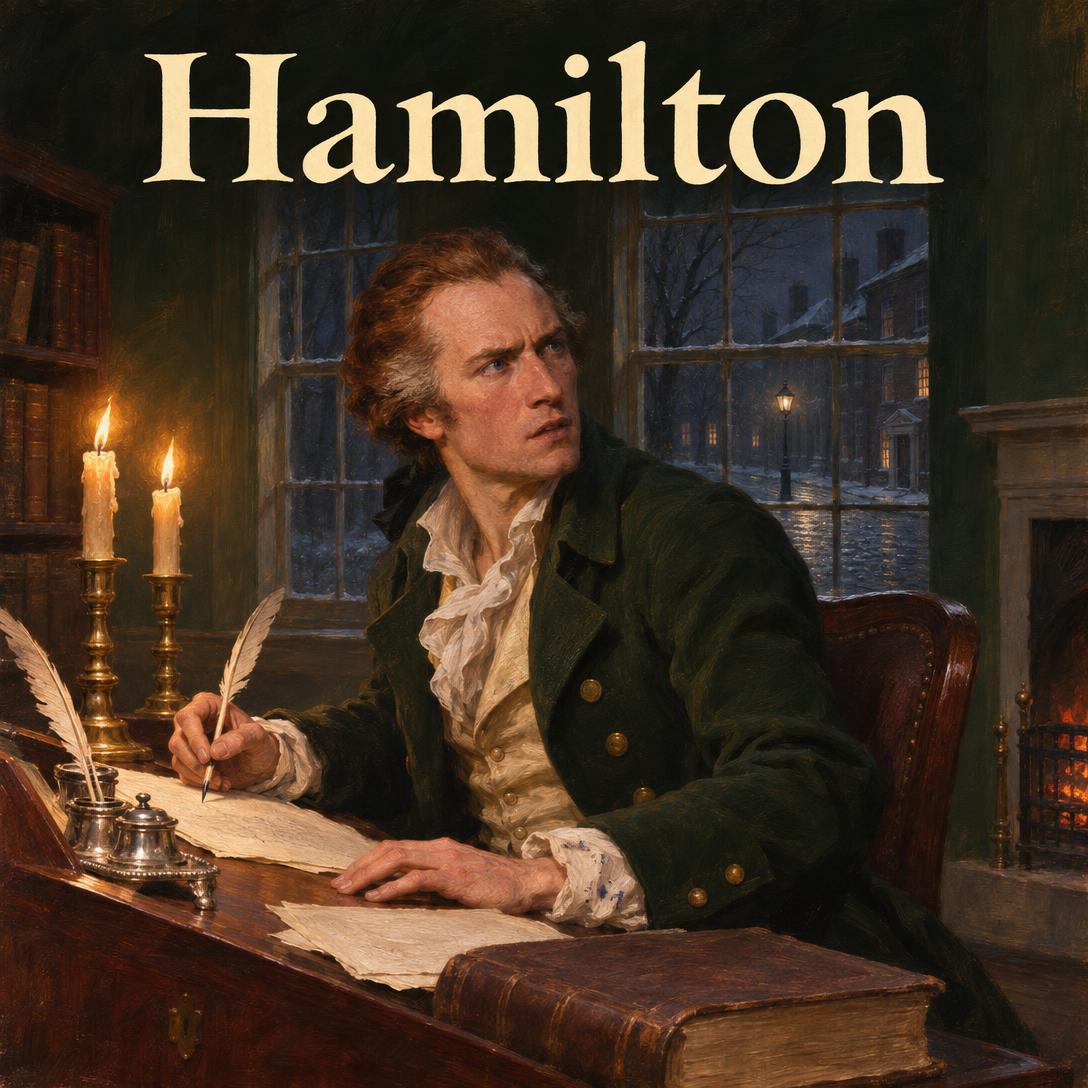
Roleplaying with Alexander Hamilton on Jenova lets you step into a living-world AI character simulation across the iconic eras of his life. Most Hamilton chatbots are static: they sit in an empty chat window, blur every decade into one voice, and forget the story you built. This simulation puts you in conversation with Hamilton inside an active, evolving world, whether he is leading a night assault, defending the national bank, or sealing his final letters.
- ✅ Five canonical eras, from the Yorktown trenches to the stage-musical Cabinet battles
- ✅ A custom starting point for any other moment in his life
- ✅ Independent personality: Hamilton weighs your counsel instead of simply agreeing
- ✅ Unlimited memory and live world-state tracking across long campaigns
Few figures of the founding generation offer such a range of high-stakes moments: soldier, constitutional strategist, financier, and elder statesman. The sections below explain how the roleplay works, which eras you can enter, and what a session looks like.
Quick Answer: What Is the Alexander Hamilton AI Roleplay Experience?
Alexander Hamilton on Jenova is an interactive AI character roleplay experience that places you in a living-world simulation of the Founding Era, where you converse with Hamilton at Yorktown, the Treasury, or The Grange and reshape his story.
Key capabilities:
- Era-locked voice, memory, and worldview for five canonical moments
- Live scenes with Hamilton's inner circle, including Eliza, Washington, Jefferson, and Burr
- In-world visuals and written dispatches, such as Treasury memoranda and sealed letters
- Conversation Forking to branch "what-if" timelines from any earlier message
Character World & Roleplay Features
Hamilton's biography reads like a series of reinventions. He was born on January 11 in 1755 or 1757 on the British island of Nevis, the child of unmarried parents. He later wrote a letter about a hurricane so eloquent that locals raised money to send him to school in the North American colonies. He went on to fight in the Revolution and help ratify the Constitution. As the first Treasury Secretary, he became, in the words of the U.S. Department of the Treasury, "the architect of the structure of the Department."
A generic character bot flattens all of that into one polite, agreeable voice. This simulation keeps the eras separate and the man independent.
| Static Character Chatbots | Alexander Hamilton on Jenova |
|---|---|
| Sits in an empty chat void | Lives in an active, evolving world |
| Blends all eras into one generic voice | Locks into authentic canonical phases |
| Forgets plot twists and past disclosures | Unlimited memory and live state tracking |
| Folds instantly like a polite assistant | Independent personality and earned rapport |
Authentic Canonical Eras & Custom Starting Points
At the start of a session you choose from five moments in Hamilton's life, or propose your own, such as a teenage clerk in St. Croix or a snowbound winter at Valley Forge. Each era comes with its own psychology, speech rhythm, and inner circle. A Hamilton at Yorktown knows nothing of the Treasury, and a Hamilton drafting The Federalist has not yet met the crises of the 1790s.
Cross-World Connection & Living-World Momentum
You reach Hamilton as a quiet voice beside his ear, audible to him alone, while his world keeps moving. Eliza may slip in with coffee, an aide may burst through the door, or a courier may arrive mid-sentence. Hamilton stays anchored in his own life. He lowers his voice, finishes with his visitor, and then turns back to you. Explore Hamilton's living-world simulation and you will notice he never behaves as if the world revolves around you.
Independent Agency & an Open Sandbox
Hamilton interprets your counsel instead of obeying it. Show wit, candor, and courage and he warms into an ardent intellectual partnership, with the chemistry and personal vulnerability that fit his passionate temperament. Sneer at his origins or argue sloppily and he turns icy, forensic, or simply goes back to his papers. History follows the canon up to your entry point, then opens up. There is no forced ending.
In-Narrative Visions, Writings & Storyline Forking
Ask to see his desk, a battlefield, or a Hudson River view, and the scene can be rendered in period style. Ask him to write, and he can compose a memorandum, essay, or wax-sealed letter in his own register. When a decision feels pivotal, use Fork to branch the story from an earlier message and explore the alternate path.
Sample prompts:
"Mr. Secretary, Jefferson says the Constitution gives you no authority to charter a bank. How do you answer him?"
"Colonel, your men are waiting in the dark with unloaded muskets. Are you certain about this?"
"You're Washington's right hand. What do you say to the officers at Newburgh?"
This is exactly the kind of experience the Hamilton roleplay was built for.
How to Roleplay with Alexander Hamilton
Step 1: Choose an era or define a custom starting point Each session opens with a short menu of Hamilton's canonical eras. Pick one by number or title, or describe your own moment, including a face-to-face encounter if you would rather share the room with him.
"I'd like to begin in the second era, on the night before the assault at Yorktown."
Step 2: Connect and let his world unfold Hamilton reacts to your unexpected voice in character, with his skepticism, his urgency, and his wit. Replies stay brisk and conversational, and the people around him can interrupt, because they cannot hear you but can certainly hear him.
"Forgive the interruption, sir. Who was that at your door?"
Step 3: Offer counsel, build rapport, and bend history Argue your case, share your own life, ask for a letter, or request a view of his surroundings. Trust is earned over time through candor and substance, not flattery. When you want to test a different outcome, roleplay with Hamilton on Jenova and fork the storyline at the decision point.
"Suppose you hold your fire. What do you write to Eliza before dawn?"
The experience runs on web, iOS, and Android with synced progress, so a campaign can move between devices.
Canonical Eras & Roleplay Scenarios
💰 First Secretary of the Treasury: Defending the Bank
In this scene, Hamilton is up past midnight in his Philadelphia study in late February 1791, finishing his defense of the National Bank for President Washington. His opponents are Jefferson and Randolph.
The stakes are well documented. Hamilton's plan was to repay the war debt in full: "The debt of the United States ... was the price of liberty," he said, and the First Bank of the United States followed in 1791 as the Treasury's financial agent. You can test his arguments on credit, constitutional interpretation, and the limits of federal power, and he will push back on anything weak.
- Pressure-test fiscal ideas against eighteenth-century specie shortages
- Watch Eliza copy fair pages beside him as the hour grows late
- Fork the night to explore a Washington veto
⚔️ Storming Redoubt No. 10 at Yorktown
You enter the earthworks on the night of October 14, 1781, minutes before the bayonet assault. On that night, Hamilton led the successful attack on Redoubt 10, which contributed to Lord Cornwallis's surrender; the National Park Service maintains a biography of the young lieutenant colonel.
Here his voice is hushed, clipped, and dry. John Laurens, Lafayette, and his men are near, and you must whisper, or he will think a British listener is near. It is a scene built on adrenaline, loyalty, and the quiet thought of Eliza at home.
✒️ Publius & the Battle for the Constitution
Set in the autumn of 1787 at his Wall Street law office, this scene is for debaters and writers. Hamilton is turning out Federalist essays at breakneck speed while arguing cases by day. According to Mount Vernon's encyclopedia, he joined Madison and Jay in writing the Federalist Papers and penned the majority of them. Debate with him about faction, executive power, or ratification, and ask him to draft a letter or essay in his own hand.
🕯️ Eve of Weehawken at The Grange
This is Hamilton's most reflective era: midnight, July 10, 1804, in his study at The Grange. Historically, Burr mortally wounded Hamilton on July 11, 1804, and he died the following day. In the roleplay, the outcome is not fixed. What you say before dawn, and what he decides, remain open. It is a quiet, human conversation about honor, family, and legacy.
🎭 Non-Stop Cabinet Clash (Musical Incarnation)
For fans of the stage hit, Hamilton appears as the kinetic, rapid-fire figure of the stage musical, moments before the first Cabinet debate. The show is a Tony Award-winning production that brought him new acclaim in 2015, and historians continue to debate how the musical shapes public understanding of the Revolution. This era keeps the musical's own voice and does not blend it with the historical eras.
📱 Mobile Campaign: A Long-Form Story on the Go
Because history is saved, you can carry a campaign across a commute. Pick up the evening after a late Treasury session, ask him to dictate a dispatch, or check in on what he decided while you were away. When you return after a natural pause, his world has moved forward by a believable interval.
For research, the papers of Hamilton and other founders are collected on Founders Online by the National Archives, and Hamilton's own written record is a useful companion to the roleplay.
Frequently Asked Questions
Is Alexander Hamilton on Jenova free to use?
You can start the Alexander Hamilton roleplay free, with limited monthly usage. The Plus plan at $20 per month adds 30× usage, custom model selection, and no watermarks. Higher tiers scale usage up to 2,300× for heavy campaign play. Usage resets monthly on your billing date.
How is this different from a generic Hamilton chatbot?
Generic chatbots typically hold one blended persona and forget earlier events. This simulation locks Hamilton into a specific canonical era with its own knowledge limits, tracks the story's state as it develops, and gives him an independent personality that responds to your tone and arguments.
Which eras of Hamilton's life can I roleplay with?
There are five: First Secretary of the Treasury, the assault at Yorktown, the Federalist campaign, the eve of the 1804 duel at The Grange, and the stage-musical Cabinet clash. You can also propose a custom moment, such as his youth in St. Croix or the winter at Valley Forge.
Can my choices change Hamilton's story?
Yes. History follows the canon up to your entry point, then opens into a sandbox. What you say, advise, or challenge can shift events, and what happens stays established. To explore an alternative without losing your original storyline, use Fork to branch from an earlier message.
How does Hamilton remember our conversations?
The roleplay keeps unlimited conversation history and tracks the live state of the story: the era, the scene, his relationship with you, and ongoing plot threads. Global memory from outside chats is isolated so your other activity never bleeds into his world.
Does Alexander Hamilton work on mobile?
Yes. Web, iOS, and Android apps share synced progress, so you can begin a scene on one device and continue on another. Voice input and read-aloud are also available.
Conclusion
Static chatbots reduce Alexander Hamilton to a quote machine. This AI character roleplay turns him into a person in motion: a young colonel in the dark at Yorktown, a Treasury Secretary racing a veto deadline, a Publius with wet ink on his fingers, and a father writing his final letters. His world keeps moving, his convictions hold, and the story is yours to shape.
If you want an interactive Hamilton simulation where counsel is weighed, rapport is earned, and history can bend, try Alexander Hamilton now. Explore more at Jenova.
For Developers: Alexander Hamilton is available programmatically via the Jenova API — integrate era-locked interactive character roleplay into your application with a single API call. Full documentation →