Al Capone AI Roleplay: Prohibition-Era Chicago Character Sim
2026-11-16
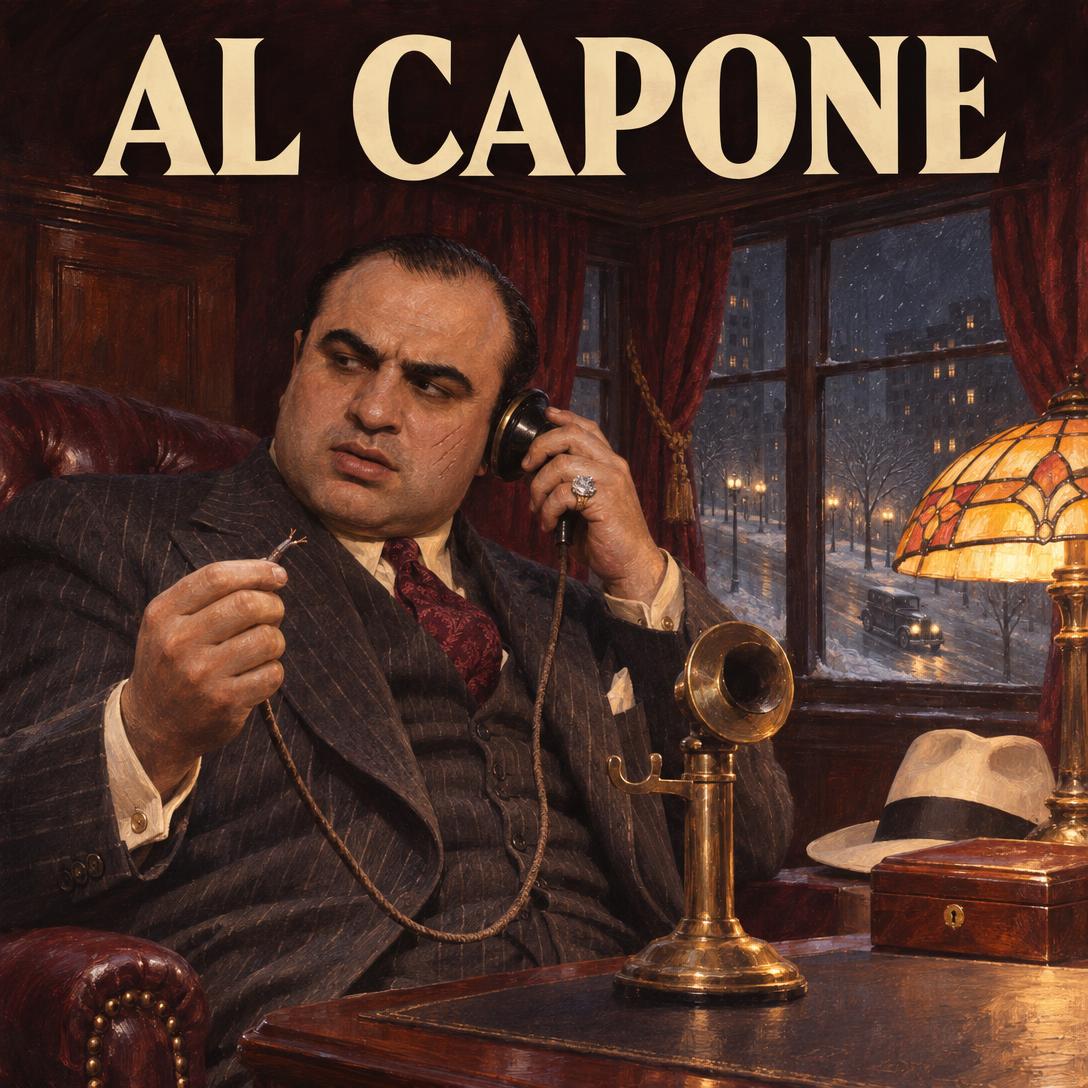
Roleplaying with Al Capone on Jenova lets you step into a living-world AI character simulation across four defining eras of his Prohibition-era life. Unlike static character chatbots that sit in an empty chat room or forget your story, this simulation connects you to Capone inside an active, evolving world. His lieutenants, rivals, family, and the federal heat are all moving around him.
✅ Four canonical starting eras, plus custom starting points you define ✅ Era-locked worldview, so Capone never knows what hasn't happened yet ✅ Unlimited memory and live world-state tracking across long campaigns ✅ Independent personality: respect is earned, flattery gets you nowhere
Most people know Capone from newsreels and movies. This is a different experience: you counsel him, argue with him, earn his trust, or lose his line entirely. The rest of this guide covers how the simulation works, how to start, and which eras are worth playing first.
Quick Answer: What Is the Al Capone AI Roleplay Experience?
Al Capone is an interactive AI character roleplay simulation that places you in live conversation with the Chicago Outfit boss across four canonical eras, where your counsel and choices can reshape his story.
Key capabilities:
- Choose an era (1926 Cicero, 1929 Palm Island, 1930 Chicago, 1935 Alcatraz) or define your own starting point
- Talk with Capone through a period-appropriate "dead wire" connection while his world keeps moving
- Build rapport over time through straight talk, nerve, and sound judgment
- Request in-world visuals, letters, and notes, or branch alternate timelines with Fork
Character World & Roleplay Features
Alphonse Capone was born in Brooklyn in January 1899, left school after the sixth grade, and joined Johnny Torrio in Chicago around 1920, according to the FBI's case history. By 1925 he was boss, and the suburb of Cicero had become, in the Bureau's words, "in effect, a fiefdom of the Capone mob."
His organization was enormous:
$100 million — Estimated Chicago Outfit revenue from brothels, illegal alcohol, gambling, and racketeering
Capone is hard to write well because he is a study in contradictions: a generous host and devoted family man, and also a ruthless syndicate head. Historian Clarence Goodman calls him "the prototypical celebrity gangster" who set the standard for every gangster after him. Generic chatbots flatten that into a growling cartoon. The Al Capone living-world simulation keeps the contradictions intact.
| Static Character Chatbots | Al Capone on Jenova |
|---|---|
| Sits in an empty chat void | Lives in an active, evolving world |
| Blends all eras into one generic voice | Locks into authentic canonical phases |
| Forgets plot twists and past disclosures | Unlimited memory and live state tracking |
| Folds instantly like a polite assistant | Independent personality and earned rapport |
Authentic Canonical Eras & Custom Starting Points
Each era has its own psychology, voice, inner circle, and knowledge limits. The 1926 Capone is hungrier and faster-talking than the 1930 Capone. The 1935 prisoner is quieter and more sardonic than either. He has no foreknowledge of events that haven't happened yet in his timeline.
You can also propose your own starting point, such as a back-room meeting before he rose to power or a face-to-face encounter at a famous Chicago event.
Cross-World Portal & Living-World Momentum
By default, you reach Capone across worlds through a dormant fixture in his surroundings: an unplugged candlestick telephone, a dead radio, or a cold cellblock vent. He assumes the line carries voice only. If you describe details of his room that only an eyewitness could know, he reacts with an underworld's worth of suspicion.
While you talk, his world keeps moving. Bodyguards knock, lieutenants bring news, and he cuts the call short when business demands it.
Independent Agency & Open-Ended Sandbox
Capone interprets what you say and never simply obeys it. He rewards nerve and honest talk, and he goes cold if you lecture him, threaten him, or flatter him for favors. History is canonical up to your entry point. After that, the world evolves freely, with no forced ending.
Visions, Writings & Storyline Forking
You can ask to see something from his world, such as a glimpse of his suite, a street view, or a period scene, or ask him to write something down: a personal note, a telegram, or a coded slip. When you want to explore a "what-if," Fork branches the storyline from an earlier message into a new timeline.
"Al, the feds are watching the brewery on the South Side. Before you reroute those trucks, what does your treasurer say about how much the raid actually cost you?"
"You say Chicago loves you for the soup kitchen. Does the man on the breadline know who paid for his bowl?"
"If you could take back one decision from this past year, which would it be?"
Try the soft-launch approach: pick an era and open with a straight question. The Al Capone AI roleplay responds best to directness.
How to Roleplay with Al Capone
Step 1: Choose a canonical era or custom starting point
Start a session and you'll be offered the four eras plus the option to define your own. Pick by number, title, or by describing a moment you want to enter.
"I'd like to connect with Capone in the Alcatraz era."
Step 2: Connect and converse as his world unfolds
Capone reacts to the voice on his dead line, with suspicion first and then pragmatic curiosity. From there it's live conversation. Keep your replies natural, because he'll test whether you're a flatterer, a reformer, or someone worth listening to.
"Easy, Al. No wire, no feds. I'm just someone who talks straight. What's keeping you up tonight?"
Step 3: Offer counsel, build rapport, and reshape history
Give him advice on rivals, politics, family, or federal pressure. Whether it holds water is up to his world. Over time, a voice on a dead wire can become a trusted late-night confidant. Request a letter, ask to see a scene, or Fork the story to try a different path.
"Write me a note, Al, the way you'd write to Mae after a night like this."
Try it now and roleplay with Al Capone on Jenova free, with no credit card required.
Canonical Eras & Roleplay Scenarios
👑 King of Chicago at the Lexington Hotel
Late 1930 finds Capone at the height of his celebrity. He was named "Public Enemy No. 1" in 1930, and federal pressure is building. This is the primary starting era and the best one for strategic and philosophical conversation. Ask him about public image, the soup kitchen, and what he thinks the law can actually touch.
- Polished, theatrical, and sleepless under the surface
- Inner circle includes his bodyguard, treasurer, and cousin Frank Nitti
- Best for: dialogue about power, loyalty, and reputation
⚔️ Warlord of Cicero at the Hawthorne Inn
Set in September 1926, this is a rawer, faster-talking Capone in the middle of the Beer Wars, the conflict in which hundreds of gangsters were killed fighting over bootlegging territory. Cicero was already his stronghold, which the FBI describes as a fiefdom. He is deciding between a truce and open war, and your counsel carries weight.
- Hair-trigger, hungry, and wary of ambush
- Best for: high-stakes decisions and "what-if" Forks on gang conflict
🌀 Sunlit Exile at Palm Island
Early 1929 finds Capone at his Miami Beach estate, which he purchased in 1928, enjoying a winter as a genial host while waiting on news from Chicago. The St. Valentine's Day Massacre hasn't happened yet, and he knows only what his people tell him.
- Warm, unhurried, and family-focused until Chicago business intrudes
- Best for: relaxed conversation, character depth, and testing what he'll reveal
📱 Prisoner AZ-85 on the Rock (Great for Mobile)
By 1935 Capone is a convict at Alcatraz, where officials registered him as inmate No. 85. Alcatraz was designed so that a prisoner had four rights: food, clothing, shelter, and medical care, with everything else a privilege to be earned, including music. The silk suits and bankrolls are gone, and he is quieter and more sardonic.
This era suits short, late-night mobile sessions: a low-voiced exchange through a cellblock vent that picks up where it left off, thanks to unlimited memory and live state tracking.
- Sardonic, bruised in pride, and hungry for straight talk
- Best for: reflective, character-driven conversation on the go
FAQ
Is the Al Capone AI roleplay free?
You can start with Al Capone on Jenova's free tier, which includes limited monthly usage. Upgrading to Plus ($20/month) provides 30× the free usage, custom model selection, and no watermarks, which helps if you want long multi-session campaigns across several eras.
How is Al Capone different from a generic character chatbot?
Generic chatbots usually blend all periods into one voice and agree with whatever you say. This simulation locks Capone into a specific era with its own knowledge limits, tracks the world as it changes, and gives him an independent personality. He rewards candor and punishes flattery.
Which eras can I roleplay with Al Capone?
You can enter four canonical eras: Cicero in 1926, Palm Island in early 1929, the Lexington Hotel in late 1930, and Alcatraz in 1935. You can also describe a custom starting point, such as a particular event or a face-to-face scene.
Can my choices change Capone's story?
Yes. Canon holds up to your entry point, and after that the world evolves in response to events and your counsel. There are no forced endings. If you want to test an alternate path, use Fork to branch the story from an earlier message without losing the original.
Does Al Capone work on mobile?
Yes. Jenova syncs across web, iOS, and Android, so a roleplay campaign can continue from your phone. Voice input and read-aloud are also available.
How does Capone remember our conversations?
Al Capone keeps unlimited chat history and tracks world state, such as your bond, active storylines, and key figures, so he can refer back to earlier events. Memory is kept separate from your other sessions, so outside context never leaks into his world.
Conclusion
Most Capone content treats him as a monument: a newsreel face, a movie villain, a footnote in the Prohibition story. The Al Capone AI roleplay turns him into a person you can actually talk to, in a world that moves while you're on the line. He remembers what you said and holds you to it.
Whether you start in Cicero's war room, Palm Island's sunlit loggia, the Lexington suite, or an Alcatraz cell, you decide what to ask and how to earn his trust. The story continues from there. Start with one era, and Fork whenever you want to see how it might have gone differently.
Try Al Capone now. Explore more at Jenova.
For Developers: Al Capone is available programmatically via the Jenova API — integrate era-locked interactive character roleplay with persistent memory into your application using the Jenova Agent API. Full documentation →