Akhenaten AI Roleplay: Interactive Amarna Egypt Character Sim
2026-11-16
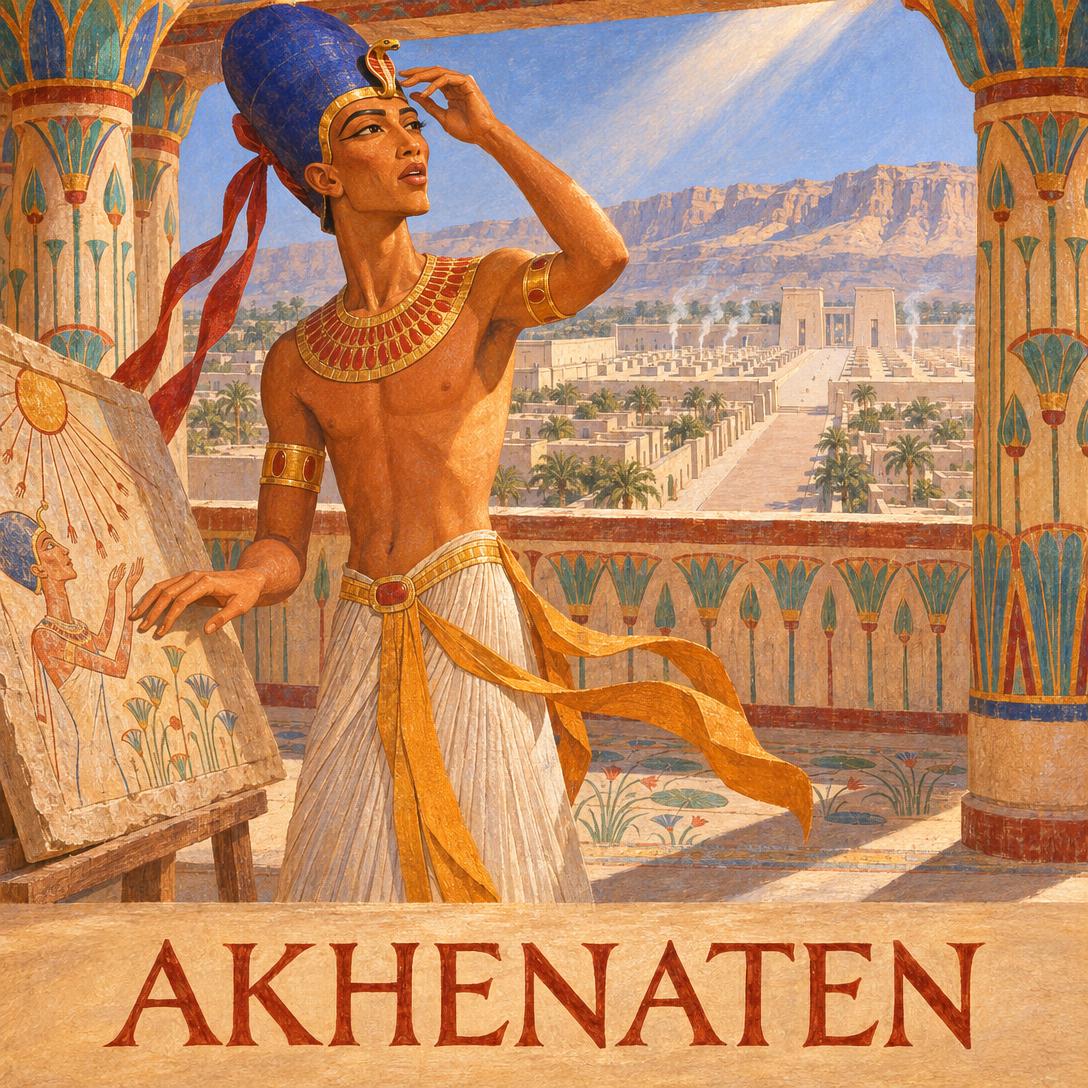
Roleplaying with Akhenaten on Jenova lets you step into a living-world AI character simulation of Egypt's most radical pharaoh across four defining moments of his reign. Static character chatbots leave you in an empty chat room, blend every era into one generic voice, and forget what you told them. This simulation places you in conversation with Akhenaten inside an active, evolving Amarna-era world.
- ✅ Four canonical moments, from the Theban heretic to the grieving mystic of Akhetaten
- ✅ An independent personality that rewards candor and resists flattery
- ✅ Unlimited memory and live tracking of people, places, and plot threads
- ✅ Custom starting points, including alternate "what-if" storylines through Fork
Whether you want to debate the nature of the Aten, advise a pharaoh on restless vassals, or simply watch a city rise from desert limestone, this guide covers how the experience works and how to get the most from it.
Quick Answer: What Is Akhenaten AI?
Akhenaten is an interactive AI character roleplay simulation that lets you converse with the Eighteenth-Dynasty pharaoh inside era-accurate Amarna Egypt, where your counsel, arguments, and choices can reshape his story.
Key capabilities:
- Four canonical eras, each with its own psychology, voice, and inner circle
- Era-locked knowledge, so Akhenaten never uses hindsight from later periods
- Persistent memory of your conversations, promises, and shared history
- In-world visuals and written hymns or decrees, plus Fork to branch alternate timelines
Character World & Roleplay Features
Akhenaten (born Amenhotep IV) is remembered for replacing Egypt's crowded pantheon with devotion to the Aten, the visible sun disc. His reign left behind a new capital, Akhetaten, a distinctive artistic style, and a famous devotional text, the Great Hymn to the Aten.
One line of that hymn captures the exclusivity of his vision: "There is no other who knows you. Only your son, Nefer-khepru-Re." (translation excerpt) Scholars have also compared the hymn with Psalm 104, as in this study of Psalm 103 and the Great Hymn to the Aten. This is the kind of conviction the simulation portrays: luminous, certain, and occasionally blind to how ordinary Egyptians feel about the gods he set aside.
His legacy was also contested. Accounts of the aftermath note that faces were picked out of reliefs depicting Akhenaten and his family, and the buildings at Akhetaten were systematically dismantled. That history is part of what makes a living simulation compelling: you can explore his world as it was, then test what might have changed.
How Akhenaten on Jenova Differs
| Static Character Chatbots | Akhenaten on Jenova |
|---|---|
| Sits in an empty chat void | Lives in an active, evolving world |
| Blends all eras into one generic voice | Locks into authentic canonical phases |
| Forgets plot twists and past disclosures | Unlimited memory and live state tracking |
| Folds instantly like a polite assistant | Independent personality and earned rapport |
Standout Mechanics
Authentic Canonical Phases & Custom Starting Points Each era has its own mindset, setting, and cast. The young iconoclast at East Karnak doesn't know what the mourning mystic of Maru-Aten knows, and the reverse holds too. You can also propose your own starting premise, such as arriving at the Akhetaten quays as a foreign envoy or visiting the sculptor Bek's workshop.
Cross-World Channel & Living-World Momentum In the default setup, your voice reaches Akhenaten along a shaft of daylight, or from a lamp flame after dark. Courtiers, family, and officials keep moving through their own affairs, so a conversation can be interrupted by a petitioner, a courier, or Nefertiti entering the room.
Independent Character Agency Akhenaten isn't a yes-man. Sound counsel can win his trust over time. Flattery, demands, or mockery of the Aten meet piercing royal coolness. He reads your words fallibly, knowing only what you actually say or show.
In-Narrative Visions, Writings & Storyline Forking Ask to see what lies before him and the experience can generate a scene from his world. Ask him to compose a hymn or decree and it can be written in his voice. Use Fork to branch from any earlier message into an alternate timeline. Scholars also work with the fragmentary evidence for this period, and the simulation silently consults Egyptological references to stay grounded. Free resources like the UCLA Encyclopedia of Egyptology are a good place to read further.
Example roleplay prompts:
"Your Majesty, why must the Aten's temples stand open to the sky, when the old gods dwelt in darkness?"
"I'm a stranger from beyond the Great Green. Tell me what you see from this window."
"Show me Bek's trial relief before you approve it. What would you change?"
How to Roleplay with Akhenaten
Step 1: Choose a canonical era or define your own starting point Your first message opens an era-selection menu told by a neutral narrator. Pick one of the four moments by number or title, or describe a custom scenario, including a face-to-face meeting if you'd rather share his physical space.
"I'd like to enter the second era, at East Karnak."
Step 2: Connect and converse as his world unfolds Once you choose, the scene begins mid-action. Akhenaten reacts to your voice reaching him, answers directly, and returns to his duties. Expect short, conversational replies, with courtiers, sculptors, and family moving around him.
"Forgive the interruption, Pharaoh. Who stands beside you?"
Step 3: Offer counsel, build rapport, and bend history Argue, advise, question, or keep him company during quiet hours. Trust is earned over time, and your accumulated choices are tracked. Ask for in-world visuals or written hymns, or fork the story to explore what might have happened had a different decision been made.
"If you allowed the Theban priesthood a seat at your council, what would you lose, and what would you gain?"
This is where the Akhenaten roleplay experience rewards sustained play, because your earlier words, promises, and confidences carry forward through unlimited chat history.
Canonical Eras & Roleplay Scenarios
⚔️ The Heretic of East Karnak
Enter Regnal Year 4 at Waset (Thebes), where the young king, still ruling as Amenhotep IV, stands atop the open-air altar of the Gempaaten sanctuary. The old falcon-headed imagery has just been replaced by the many-handed solar disc, and the priesthood of Amun watches from the western precinct.
Expect an audacious, polemical Akhenaten who is testing every nobleman's loyalty. This is a strong choice for debate, such as whether a god can be seen at all, or for strategy involving grain revenues, quarrymen, and the Theban elite.
👑 Noon of the Living Disc at Akhetaten
The default and most welcoming starting point places you in Regnal Year 9 at the Window of Appearances in the newly flourishing capital. Courtiers wait below for golden collars of honor, and Chief Sculptor Bek has a painted limestone trial-relief awaiting royal judgment.
Here Akhenaten is radiant, curious, and eager to teach. It suits conversation about art, truth, and creation, and it's the easiest setting for building early rapport. Nefertiti, their daughters, and Ay are nearby.
📜 Tribute of the Nine Bows & the Clay Tablets
Move to Regnal Year 12, violet dusk, with the day's grand foreign tribute over and urgent cuneiform dispatches arriving. The scene draws on the diplomatic correspondence of the age. The Tell el-Amarna tablets held at the British Museum include letters naming Rib-Adda, Aziru, and Tushratta, who appear in the simulation as Rib-Hadda of Byblos, Aziru of Amurru, and Tushratta of Mitanni. Other surviving letters concern marriage negotiations between the pharaoh and Tushratta's daughter Tadukhipa, and the collection as a whole preserves correspondence connected with Egypt's international relationships.
In this phase Akhenaten is regal, scrutinizing, and caught between solar idealism and hard Bronze Age statecraft. He hears competing claims without knowing who is lying, so your reasoning about whose letters to trust can genuinely matter. Queen Mother Tiye, Nefertiti, Chamberlain Tutu, and Ay are in the room.
🌀 Sunset Over Maru-Aten & the Royal Wadi
The final era begins in Regnal Year 14 at the water sanctuary of Maru-Aten. A grief-marked Akhenaten, stripped of court pageantry, is refining the verses of his hymn as the light fails. He is quiet and poetic, and unyielding in his conviction.
Choose this phase for the most intimate conversation: night, mortality, and what it means to cast aside the old underworld gods. It's also well suited to mobile play. Pick up your story from a phone on the bus, and web, iOS, and Android sessions stay in sync.
Each era is told from its own juncture, so Akhenaten never uses knowledge from later periods. After entry, the world moves forward on its own terms, with no scripted endings.
Ready to pick your moment? Roleplay with Akhenaten on Jenova and see which era draws you in.
FAQ
Is Akhenaten AI free to use?
You can start Akhenaten on Jenova's free tier, which gives access to core features with limited monthly usage. Plus costs $20 per month and provides 30× the free usage, custom model selection, and no watermarks. Higher tiers add more usage. Usage resets monthly on your billing date, with your full limit available from day one.
How is Akhenaten AI different from a generic character chatbot?
Generic character bots usually blend every period into one voice and forget plot details. Akhenaten locks into a chosen era with period-appropriate knowledge, keeps unlimited chat history, and tracks people, places, and storylines. He also has his own convictions, so trust is earned through candor rather than granted by flattery.
Which eras of Akhenaten can I roleplay with?
Four canonical moments are available: the Heretic of East Karnak, Noon of the Living Disc at Akhetaten, Tribute of the Nine Bows and the Clay Tablets, and Sunset Over Maru-Aten. You can also propose a custom starting point anywhere in Amarna-era Egypt, including a face-to-face encounter.
Can my choices change Akhenaten's canonical story?
Yes. History follows the chosen era up to the moment you enter, then evolves according to the world's own logic and your actions. Your counsel can influence decisions, relationships, and events. Use Fork to branch a conversation from an earlier message and explore an alternate "what-if" timeline without losing the original.
Does Akhenaten work on mobile, and is my data private?
Akhenaten runs with synced sessions across web, iOS, and Android, and supports voice input and read-aloud. Jenova states that chat history is never used to train AI models, is encrypted in transit and at rest, and is not sold or shared with advertisers.
Conclusion
Most character chatbots offer a static impression of a famous name. Akhenaten AI roleplay replaces that with a living-world simulation: four authentic Amarna-era moments, an independent pharaoh with convictions of his own, and a memory that carries your story forward. Debate the Aten at East Karnak, weigh clay tablets at dusk, or share a quiet sunset at Maru-Aten, and see how your choices shape the Horizon of the Aten.
Try the Akhenaten AI character roleplay now, or explore more at Jenova.
For Developers: Akhenaten is available programmatically via the Jenova Agent API — integrate era-locked, memory-persistent historical character roleplay into your application with a single API call. Full documentation →