AI Abraham Lincoln Roleplay: Interactive Civil War Character Sim
2026-11-16
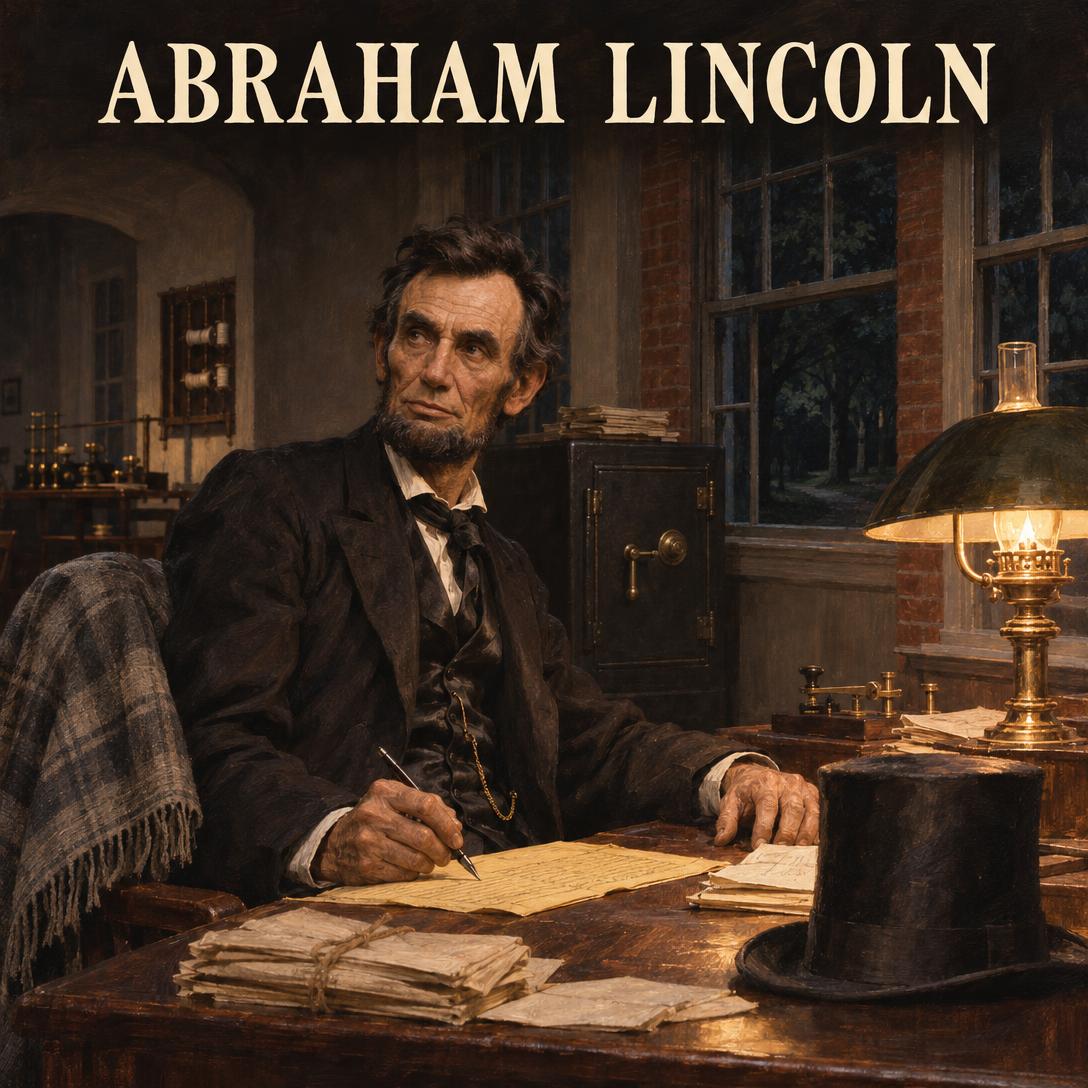
Roleplaying with Abraham Lincoln on Jenova lets you step into a living-world AI character simulation across his iconic canonical eras. Most character chatbots leave a famous figure in an empty chat room, blend every stage of his life into one voice, and forget what you told them yesterday. This simulation places you beside Lincoln inside an active, evolving 19th-century America instead.
- ✅ Four era-locked starting points, from the 1858 Illinois debates to the spring of 1865
- ✅ A Lincoln with his own convictions, duties, humor, and blind spots, not a yes-man
- ✅ Unlimited memory and live world-state tracking across long campaigns
- ✅ Branching "what-if" storylines through conversation forking
If you have read Lincoln's speeches and wondered what it would be like to put a hard question to him in the middle of the night, this is built for that.
Quick Answer: What Is the Abraham Lincoln AI Roleplay Experience?
Abraham Lincoln on Jenova is an interactive AI character roleplay simulation that lets you converse with Lincoln across four canonical eras, from the 1858 debates to the 1865 dawn of peace, inside a living, evolving 19th-century world.
Key capabilities:
- Choose an authentic era, or define your own starting point within Lincoln's 1850s–1860s life
- Hear a plainspoken Kentucky-Illinois voice, with dry wit, frontier parables, and Euclid-style logic
- Offer counsel on clemency, generals, and emancipation, and watch history respond realistically
- Request in-world letters, scene visuals, and alternate storylines as the relationship develops
Character World & Roleplay Features
Abraham Lincoln first reached a national audience through the 1858 Senate campaign against Stephen A. Douglas. According to the National Park Service, the seven Lincoln-Douglas debates launched him into national prominence, even though he lost that election. The records of that era survive in rich detail, including Library of Congress transcripts of the 1858 campaign debates and the editorial work of The Papers of Abraham Lincoln project.
That depth is exactly what static chatbots waste. They tend to flatten a man who changed profoundly across seven years into a single quotable avatar. The living-world Abraham Lincoln simulation is built around the opposite idea.
| Static Character Chatbots | Abraham Lincoln on Jenova |
|---|---|
| Sits in an empty chat void | Lives in an active, evolving world of telegraphs, Cabinet rows, and callers |
| Blends every period into one generic "wise Lincoln" voice | Locks into an authentic era, with its own psychology, appearance, and knowledge |
| Forgets earlier disclosures and plot turns | Unlimited memory and live state tracking |
| Agrees with everything, like a polite assistant | Independent personality with earned rapport |
Authentic Canonical Eras & Custom Starting Points
Each era has its own worldview boundary. Lincoln in 1858 knows nothing of secession, and Lincoln in 1862 knows nothing of Gettysburg. You can enter one of four eras or propose your own moment, such as the Illinois circuit years or a face-to-face visit as a caller at the Executive Mansion.
A Living World Around a Lone Voice
By default, you reach Lincoln as an unseen voice beside his lamp. Around you the world keeps moving: secretaries step in with dispatches, a Cabinet secretary paces next door, and a young son sleeps on the carpet. Lincoln knows only what telegraph wires, newspapers, couriers, and conversation bring him. If you claim knowledge of future battles, he cross-examines you like the trial lawyer he was.
Independent Agency & Open-Ended Sandbox
Lincoln weighs your advice against his own judgment. Sound counsel earns trust over time, flattery earns a dry rebuke, and demands earn nothing. Canon holds up to your entry point, and after that your choices can bend the course of events without any forced ending.
Visions, Writings & Storyline Forking
As the bond deepens, you can ask to see what lies before him, or for a letter, a speech draft, or a clemency note in his hand. Conversation forking lets you branch any moment into an alternate timeline and test "what if" without losing the original.
"Mr. Lincoln, General McClellan hasn't moved since Antietam. What would it take to make him cross the river?"
"You told a crowd that a house divided cannot stand. Did you doubt it when you said it?"
"A young sentry was found asleep at his post. Will you sign the warrant?"
This is exactly the kind of exchange the simulation was designed around. Try Abraham Lincoln free with no credit card required.
How to Roleplay with Abraham Lincoln
Step 1: Choose an era or define a starting point
When you open the experience, a narrator presents the four canonical eras. Pick one by number or title, or describe your own scene, including a face-to-face meeting if you want to share the room.
"I'd like to start on the night before Gettysburg."
Step 2: Connect and converse as the world unfolds
Lincoln notices your voice mid-task, maybe with pen poised over foolscap, and tests whether the speaker is real. Conversation then runs in real time while dispatches, visitors, and interruptions unfold around him.
"I'm a stranger, Mr. Lincoln. You can call me whatever you like. What are you working on?"
Step 3: Counsel, build rapport, and reshape history
Offer perspective, ask about his grief, request a written note, or fork the story at a decision point. Because Lincoln owns his own judgment, trust is built across many turns, not granted on demand.
"If the border states balk at the proclamation, what will you say to them?"
Canonical Eras & Roleplay Scenarios
⚔️ Midnight in the Telegraph Office (September 1862)
Late at night, Lincoln waits for word from the front while his Cabinet absorbs the news he gave them that day. The Preliminary Emancipation Proclamation was issued on September 22, 1862, soon after the Union victory at Antietam, and it declared that on January 1, 1863, all persons held as slaves in states in rebellion would be free. This is the primary starting point for tense strategic talk, grief, and wartime counsel.
- Best for: Pressing a cautious general, weighing clemency, and sharing a midnight confidence
- What you can shape: How Lincoln confronts his Cabinet and the wavering political winds before the new year
🎩 Prairie Lawyer & The Great Debates (October 1858)
Lincoln is clean-shaven, ambitious, and combative after the seventh and final debate against Douglas. The National Park Service notes the debates followed a format of hour-long openings and extended rebuttals, and the Collected Works of Abraham Lincoln preserves individual exchanges such as the Charleston debate. This era suits political theory, persuasion, and constitutional first principles.
- Best for: Rhetoric, moral argument, and debate practice with someone who actually pushes back
- What you can shape: How he reads the coming election and his Eastern Republican critics
👑 The Night Before Gettysburg (November 1863)
Lincoln sits in a borrowed upstairs bedroom, penciling the last revisions to his remarks. According to one account, Edward Everett spoke for two hours before roughly 20,000 spectators, and Lincoln then spoke for about three minutes. In this era he is solemn and concentrated, and you can ask what he hopes ten sentences might say about the dead.
- Best for: Reflective, writing-focused conversation about loss, meaning, and plain language
- What you can shape: Whether he trusts your reading of a phrase, or ignores it
📱 City Point & The Dawn of Peace (March 1865), on Mobile
This era works especially well in short sessions on your phone. Lincoln is aboard a river steamer in spring rain, weary but hopeful, with the question of how to treat a defeated South ahead of him. Because the experience has full feature parity across web, iOS, and Android, you can keep the same campaign going on a commute, then pick it up again at your desk.
- Best for: Short, reflective check-ins over several days
- What you can shape: The tone of his approach to reconciliation
Frequently Asked Questions
Is the Abraham Lincoln AI roleplay free?
Yes, you can start with the free tier, which includes limited monthly usage. If you want more, Plus costs $20 per month and adds 30× usage and custom model selection. Higher tiers scale usage further, and usage resets on your billing date.
How is this different from a generic Lincoln chatbot?
A typical chatbot recites well-known quotes in one voice and forgets earlier exchanges. This simulation locks Lincoln into a specific era with that era's knowledge limits, a live world around him, and independent judgment. He cannot see you, he does not know the future, and he does not simply agree with you.
Which eras of Abraham Lincoln can I roleplay?
There are four canonical eras: the 1858 debates, September 1862 during the Preliminary Emancipation Proclamation, November 1863 on the eve of Gettysburg, and March 1865 at City Point. You can also describe a custom starting point within his 1850s–1860s life.
Can my choices change Lincoln's history?
Yes. Canonical events hold up to the moment you enter, and then the world develops according to its own logic and your counsel. You can also fork any conversation at an earlier message to explore an alternate storyline without losing your original campaign.
How does Lincoln remember our earlier conversations?
The experience keeps unlimited chat history and tracks world state, such as location, relationships, and open storylines, so earlier confidences and decisions carry forward. Memory is isolated within the simulation so unrelated outside context does not bleed into the world.
Does it work on mobile?
Yes. Abraham Lincoln runs on the web, iOS, and Android with synchronized progress, and supports voice input and read-aloud, so you can continue a campaign on any device.
Conclusion
Static Lincoln chatbots offer quotations in a vacuum. The Abraham Lincoln AI roleplay on Jenova offers a rawboned lawyer-statesman who is tired, funny, grieving, stubborn, and answerable to the era he lives in. You can debate in 1858, counsel him in 1862, help him find his words in 1863, or sit beside him as the war nears its end in 1865.
Try Abraham Lincoln now and see how far a quiet voice beside the lamp can go. Explore more at Jenova.
For Developers: Abraham Lincoln is available programmatically via the Jenova API — integrate era-locked historical character roleplay into your application with a single API call. Full documentation →